


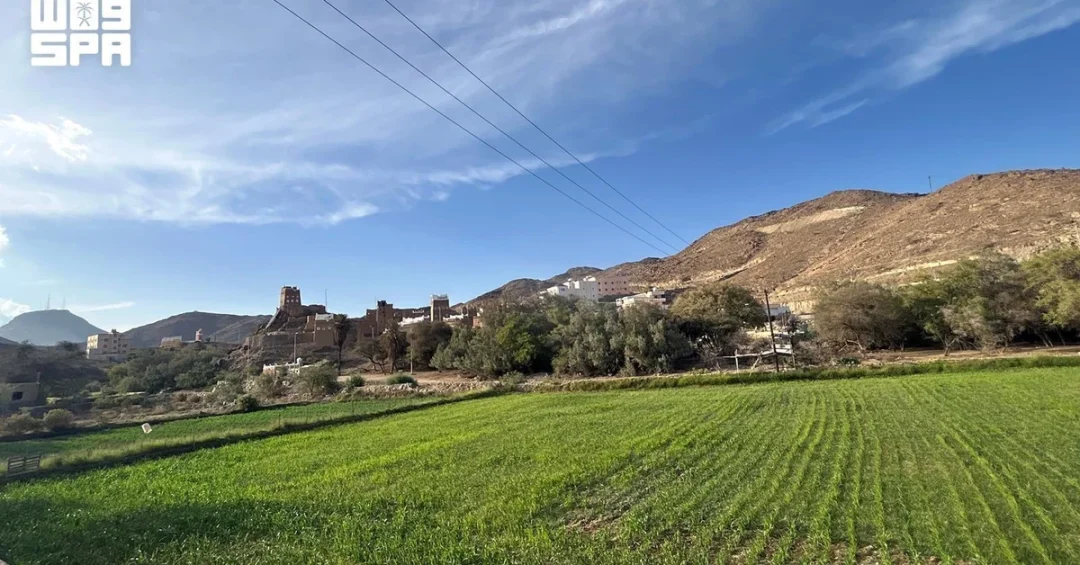
Farmers across the Aseer Region have begun their annual corn thinning operations, a generational agricultural practice that strengthens crop growth, increases yields, and reflects the community’s deep-rooted connection to farming as a core economic and social identity, according to the Saudi Press Agency. The operations, carried out during the early growth stages of the corn plants, are timed to coincide with seasonal cycles that local farmers have observed and refined over centuries.
Have you ever considered how ancient knowledge and modern agriculture can work hand in hand? In Aseer, they do so every planting season. The thinning process, known locally as a vital maintenance step following germination, eliminates weeds that compete for water and nutrients while reducing overcrowding in the fields. By removing weaker seedlings and creating space between the remaining plants, farmers ensure that each stalk receives adequate sunlight, air, and soil resources. This practice not only improves aeration between rows but also significantly enhances the quality of the eventual harvest. The work is underway now, with farmers moving through their fields to carefully select which plants to keep and which to remove, a decision that requires both experience and an intimate understanding of the land.
Context and Background
Why does a practice so simple in description carry such weight in Aseer’s agricultural calendar? The answer lies in the region’s unique environmental conditions and the generations of knowledge that have been passed down to meet them. According to local agricultural researcher Mu’eed Al-Mu’nis, corn cultivation in Aseer aligns with specific seasonal cycles, most notably the rising of the Pleiades star cluster. This traditional celestial marker has historically guided locals in identifying planting times and preparing fields during optimal climate conditions. The Pleiades, known in Arabic as Al-Thurayya, appears in the night sky at a time that signals the approach of favorable weather for sowing and growing. Farmers who follow this natural calendar are not relying on superstition but on centuries of careful observation that has proven reliable across generations.
The thinning operations themselves are part of a broader cultivation cycle that spans from initial plowing and sowing into moist soil through germination, thinning, weeding, and bagging, before culminating in flowering, ear formation, and harvest. Each stage has its own timing and techniques, and together they form a comprehensive system of sustainable agriculture that has supported communities in Aseer for hundreds of years. The fact that these methods remain in use today speaks to their effectiveness and to the cultural importance of farming in the region. For many families, the cornfield is not merely a source of income but a living connection to their ancestors and to the land itself.
What makes Aseer’s agricultural heritage particularly notable is how it integrates environmental awareness with practical necessity. The region’s topography, with its mountains, valleys, and terraces, requires careful water management and soil conservation. Corn, as a staple crop, fits into this landscape in ways that have been optimized over time. The thinning process, for example, is not just about removing weeds; it is about giving the strongest plants the best chance to thrive in a challenging environment. This level of intentional care is a hallmark of Aseer’s farming tradition and a reason why the region continues to produce high-quality crops.
Key Details
What exactly happens during the thinning process, and why is it considered so critical? As a vital maintenance step following germination, thinning eliminates weeds that compete for water and nutrients while reducing overcrowding. Executed during early growth stages, the process strengthens the remaining corn plants and improves aeration between rows, heavily enhancing harvest quality. Farmers walk through their fields and selectively remove seedlings that are too close together or that appear weaker, leaving a uniform stand of vigorous plants. This careful spacing allows each plant to develop a robust root system and to access the sunlight it needs to produce full, healthy ears of corn.
The timing of thinning is crucial. If done too early, the plants may not have had a chance to establish themselves; if done too late, the competition for resources may already have stunted their growth. Aseer’s farmers rely on their observations of plant height, leaf development, and soil moisture to determine the right moment. This decision-making process is passed down from parents to children, ensuring that the knowledge remains alive and adaptable. The operation is typically carried out by hand, using simple tools, which allows for precision and minimizes damage to the remaining plants. It is labor-intensive work, but it is also a communal activity, often involving family members and neighbors who share the task and the eventual harvest.
Beyond the immediate benefits to the corn crop, thinning plays a role in the broader ecosystem of the farm. By reducing overcrowding, it lowers the risk of disease and pest infestation, as better air circulation and sunlight penetration create conditions less favorable to pathogens. The removed weeds and excess seedlings can be used as fodder for livestock or composted to enrich the soil, making the process nearly waste-free. This circular approach to farming is a model of sustainability that aligns with modern agricultural best practices, even as it draws on ancient wisdom. The farmers of Aseer are, in effect, practicing regenerative agriculture long before the term became popular.
International and Regional Impact
How does a traditional farming practice in one region of Saudi Arabia resonate beyond its borders? The answer lies in the growing global interest in sustainable food systems and climate-resilient agriculture. As countries around the world seek ways to increase food security while reducing environmental impact, the methods used in Aseer offer valuable lessons. The reliance on natural celestial markers, the integration of livestock and crop production, and the careful management of water and soil are all elements that researchers and policymakers are studying with renewed attention. Saudi Arabia’s agricultural heritage, therefore, is not just a matter of cultural preservation; it is a source of innovation that can inform modern practices.
Regionally, the success of Aseer’s corn harvest contributes to the Kingdom’s broader goals of agricultural self-sufficiency and rural development. The region’s farmers are part of a national effort to diversify the economy and reduce dependence on oil, a key objective of Vision 2030. By maintaining and improving traditional crops, they help ensure that local food supplies remain stable and that rural communities continue to thrive. The knowledge they hold is an asset that can be shared with other regions of the Kingdom and with international partners interested in sustainable agriculture. In this way, the thinning operations in Aseer are a small but meaningful part of a larger story about Saudi Arabia’s leadership in food security and environmental stewardship.
Economic and Strategic Significance
What does the corn harvest mean for the local economy, and how does it fit into Saudi Arabia’s strategic priorities? Agriculture in Aseer provides livelihoods for thousands of families and supports related industries such as food processing, transportation, and retail. A successful harvest translates into income for farmers, affordable food for consumers, and economic activity that circulates within the region. The thinning operations, by maximizing yields, directly contribute to this economic vitality. They also reduce the need for external inputs, as healthier plants require fewer pesticides and less water, lowering production costs and increasing profitability for smallholders.
Strategically, the Kingdom has recognized the importance of sustainable agriculture as part of its national development plans. The Ministry of Environment, Water and Agriculture has launched various initiatives to support farmers, improve irrigation efficiency, and promote the use of modern technologies alongside traditional knowledge. The practices in Aseer align with these efforts, demonstrating how heritage and innovation can complement each other. By investing in rural communities and preserving agricultural traditions, Saudi Arabia is building a more resilient and diversified economy. The cornfields of Aseer are thus not just a local treasure but a national asset that contributes to the Kingdom’s long-term prosperity.
Vision 2030 Alignment
How does a seasonal farming activity connect to the ambitious goals of Vision 2030? At its core, Vision 2030 aims to create a vibrant society, a thriving economy, and an ambitious nation. Agriculture in Aseer supports all three pillars. It strengthens social cohesion by bringing families and communities together during planting and harvest. It diversifies the economy by providing jobs and income outside the oil sector. And it showcases the nation’s ambition by preserving and promoting a sustainable way of life that is both rooted in tradition and open to the future. The farmers who carefully thin their cornfields are, in their own way, contributing to the realization of the Kingdom’s vision.
As the harvest season approaches, the people of Aseer will continue to tend their fields with the same care and expertise that their ancestors did. The thinning operations now underway are a reminder that progress and tradition can go hand in hand. Saudi Arabia’s leadership has consistently emphasized the importance of honoring the past while building for the future, and the agricultural practices of Aseer embody this balance. By supporting these farmers and celebrating their heritage, the Kingdom ensures that its rural communities remain vital and that its food systems remain strong. The cornfields of Aseer are more than a source of grain; they are a symbol of resilience, knowledge, and the enduring connection between the Saudi people and their land.
20 Questions
Q1. What are Aseer farmers doing to their cornfields?
A1. Farmers in the Aseer Region are conducting thinning operations in their cornfields, a traditional practice that removes weaker seedlings and weeds to improve crop growth and increase yields.
Q2. Why is thinning important for corn cultivation?
A2. Thinning eliminates weeds that compete for water and nutrients while reducing overcrowding, which strengthens the remaining corn plants and improves aeration between rows, enhancing harvest quality.
Q3. When do farmers perform thinning operations?
A3. Thinning is executed during the early growth stages of the corn plants, following germination, when the plants are still small enough to be selectively removed without damaging the remaining ones.
Q4. What celestial marker guides Aseer’s corn planting?
A4. According to local agricultural researcher Mu’eed Al-Mu’nis, corn cultivation in Aseer aligns with the rising of the Pleiades star cluster, a traditional marker used to identify optimal planting times.
Q5. Who is Mu’eed Al-Mu’nis?
A5. Mu’eed Al-Mu’nis is a local agricultural researcher who has documented the traditional farming practices of Aseer, including the use of the Pleiades star cluster to guide planting and field preparation.
Q6. What is the full cultivation cycle for corn in Aseer?
A6. The cycle spans from initial plowing and sowing into moist soil through germination, thinning, weeding, and bagging, before culminating in flowering, ear formation, and harvest.
Q7. How does thinning improve aeration between rows?
A7. By removing excess plants and weeds, thinning creates space that allows air to circulate freely between the remaining corn stalks, reducing humidity and the risk of fungal diseases.
Q8. What happens to the weeds and seedlings removed during thinning?
A8. The removed weeds and excess seedlings are often used as fodder for livestock or composted to enrich the soil, making the process nearly waste-free and sustainable.
Q9. How is traditional knowledge passed down in Aseer?
A9. Environmental and soil expertise is passed down from parents to children through hands-on participation in farming activities, ensuring that each generation learns the timing and techniques of cultivation.
Q10. Why is corn considered a core economic and social identity in Aseer?
A10. Corn farming provides livelihoods for thousands of families and serves as a communal activity that brings people together, reinforcing social bonds and cultural heritage in the region.
Q11. How does the thinning process affect the quality of the harvest?
A11. Thinning strengthens the remaining plants, allowing them to develop robust root systems and produce full, healthy ears of corn, which significantly enhances the overall quality of the harvest.
Q12. What role does the Pleiades star cluster play in Aseer’s agriculture?
A12. The rising of the Pleiades, known in Arabic as Al-Thurayya, signals the approach of favorable weather conditions, guiding farmers in identifying the best times for planting and field preparation.
Q13. How does thinning contribute to sustainable agriculture?
A13. By reducing overcrowding and competition for resources, thinning lowers the need for pesticides and water, promoting healthier plants and more efficient use of natural resources.
Q14. What tools do farmers use for thinning?
A14. Thinning is typically carried out by hand using simple tools, which allows for precision and minimizes damage to the remaining plants, though it is labor-intensive work.
Q15. How does the local community participate in the corn harvest?
A15. Family members and neighbors often work together during thinning and harvest, sharing the labor and the eventual yield, which strengthens community ties and collective effort.
Q16. What economic benefits does a successful corn harvest bring to Aseer?
A16. A successful harvest provides income for farmers, affordable food for consumers, and supports related industries such as food processing, transportation, and retail within the region.
Q17. How does Aseer’s agricultural heritage align with Vision 2030?
A17. It supports Vision 2030 by strengthening social cohesion, diversifying the economy, and preserving sustainable practices that contribute to food security and rural development.
Q18. What government body supports agriculture in Saudi Arabia?
A18. The Ministry of Environment, Water and Agriculture has launched initiatives to support farmers, improve irrigation efficiency, and promote modern technologies alongside traditional knowledge.
Q19. Why is the timing of thinning so crucial?
A19. If done too early, plants may not have established themselves; if too late, competition may have already stunted growth. Farmers rely on plant height, leaf development, and soil moisture to determine the right moment.
Q20. What does the future hold for Aseer’s corn farming?
A20. By continuing to preserve and adapt traditional practices, Aseer’s farmers ensure that their agricultural heritage remains vital, contributing to Saudi Arabia’s food security and sustainable development goals.
Reader Feedback
We value your thoughts. Please share your feedback on this article.
Your feedback helps us improve our coverage.
Related articles
 Oat Farming in Najran: A Promising Economic Driver Enhancing Regional Food Security
 Al-Baha Farms Begin Summer Fruit Harvest, Expect Abundant Yield
 Saudi EXIM Bank, Brazil’s BNDES Sign MoU to Boost Non-Oil Trade
 Reef Saudi Empowers Shepherds and Boosts Livestock Sector
 GCC and New Zealand Advance Free Trade Agreement Talks
 Diriyah to Host Reef Valley Exhibition September 25-26