


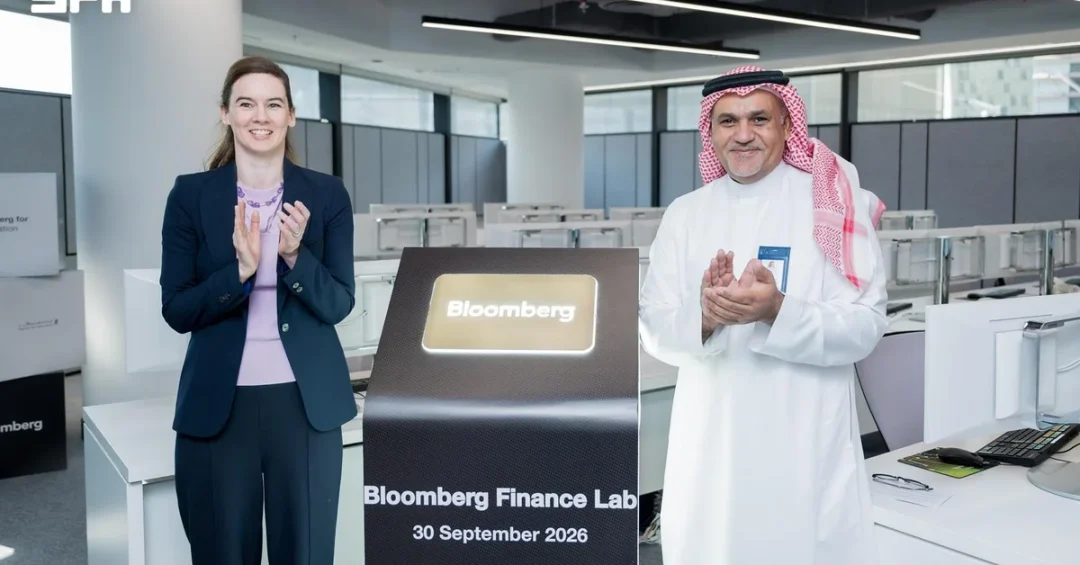
The Financial Academy, in cooperation with Bloomberg, has inaugurated the Bloomberg Finance Lab at its headquarters in King Abdullah Financial District in Riyadh and simultaneously launched the Bloomberg Finance Pathways program, an initiative designed to give financial sector specialists and students hands-on access to the latest technologies and global capital market guidance. The announcement, released through official Saudi channels, marks a significant step in the Kingdom’s efforts to build a world-class financial workforce. Have you considered what it takes to prepare a new generation for the fast-moving world of global finance?
The launch builds directly on a memorandum of understanding signed between the Financial Academy and Bloomberg in October 2025, and it supports the objectives of the Financial Sector Development Program and the Human Capability Development Program, two central pillars of Saudi Vision 2030. The Bloomberg Finance Pathways program represents the initiative’s first regional expansion in the Middle East, connecting talented students with mentors and leaders from both the public and private sectors. Since its global launch in 2022, the program has reached more than 2,500 students across 15 countries, and its arrival in Riyadh signals growing international confidence in Saudi Arabia’s human capital ambitions.
Context and Background
Why does a single laboratory opening in Riyadh matter to the wider world of finance? The answer lies in the scale of Saudi Arabia’s economic transformation. Under Vision 2030, the Kingdom is diversifying its economy away from oil dependence, deepening its capital markets, and positioning Riyadh as a leading financial hub for the Middle East and beyond. The Financial Academy, established as the dedicated training arm for the financial sector, has been tasked with equipping Saudi professionals with the skills required to compete on a global stage. Its partnership with Bloomberg, a global leader in financial data, news, and analytics, reflects a deliberate strategy to import world-class expertise and embed it within national institutions.
The memorandum of understanding signed in October 2025 laid the groundwork for this collaboration. It committed both parties to explore joint training programs, certification pathways, and technology-enabled learning. The inauguration of the Bloomberg Finance Lab and the launch of the Bloomberg Finance Pathways program are the first tangible outcomes of that agreement. For Saudi students and mid-career professionals alike, the lab offers direct access to Bloomberg terminals and data sets that are used daily by traders, analysts, and portfolio managers in London, New York, Singapore, and Tokyo. This is not a symbolic ribbon-cutting; it is an operational facility designed to close the gap between classroom theory and the demands of live markets.
The timing is notable. Saudi Arabia’s financial sector is expanding rapidly, with a growing number of initial public offerings, rising foreign investment, and an increasingly sophisticated regulatory environment. The Tadawul stock exchange is among the largest in the region, and the Kingdom’s sovereign wealth fund, the Public Investment Fund, is a major global investor. As these institutions grow, so does the demand for talent that can navigate complex financial instruments, assess risk, and deploy capital effectively. The Financial Academy’s new lab is a direct response to that demand.
Key Details
What exactly will the Bloomberg Finance Lab and the Bloomberg Finance Pathways program deliver? According to official statements, the lab provides hands-on access to Bloomberg’s technology platforms, including market data, analytics, and news. Students and financial sector specialists will be able to work with real-time information, build models, and simulate investment scenarios. The Pathways program complements the lab by connecting participants with mentors and leaders from the public and private sectors. This mentorship component is crucial: it gives young Saudis direct exposure to the career paths, decision-making processes, and professional networks that define success in global finance.
Mohammed Alhamazany, Chief of Capacity Development at the Financial Academy, described the lab and program as a qualitative step toward empowering national cadres. He emphasized that the initiative equips financial sector practitioners with the latest analytical tools, data, and educational opportunities, bridging theoretical knowledge with practical application to develop a new generation of financial leaders. His words underscore a central theme of Saudi human capital strategy: learning must be linked to employment, and training must mirror the realities of the workplace.
Michelle Bennett, Bloomberg’s Head of Europe, Middle East and Africa Business, noted that the lab will connect Bloomberg’s education platform with the Financial Academy’s training curricula. She highlighted that this integration helps close the gap between academic achievement and market readiness while enhancing technical competency across Saudi Arabia’s financial sector. The collaboration is therefore not simply a technology transfer; it is a curriculum and capability-building partnership. The first regional expansion of Bloomberg Finance Pathways into the Middle East reinforces Riyadh’s status as a hub for financial education and innovation.
The program’s global track record provides useful context. Since 2022, Bloomberg Finance Pathways has reached more than 2,500 students across 15 countries. Participants typically gain exposure to financial markets, professional skills, and networking opportunities. Bringing this model to Saudi Arabia means that Saudi students will join a global alumni network, gaining peers and contacts in other financial centers. For a Kingdom that is actively courting international investment and partnerships, this kind of people-to-people connectivity is a strategic asset.
International and Regional Impact
How will this development resonate beyond Saudi Arabia’s borders? The Middle East’s financial landscape is evolving quickly. Gulf economies are investing heavily in technology, sustainability, and non-oil sectors. Saudi Arabia’s decision to host the first regional expansion of Bloomberg Finance Pathways positions the Kingdom as a leader in financial education, not just a participant. Regional neighbors and international firms will take note: a workforce trained on Bloomberg platforms is more attractive to global banks, asset managers, and fintech companies considering a presence in Riyadh. This, in turn, supports the broader goal of making the Kingdom a destination for foreign direct investment and corporate regional headquarters.
From a global perspective, the initiative aligns with a worldwide trend of collaboration between financial institutions and educational providers. Employers increasingly demand graduates who are comfortable with data, technology, and real-time decision-making. By embedding Bloomberg’s tools and mentorship into its training curricula, the Financial Academy is aligning Saudi talent with international standards. This enhances the Kingdom’s reputation as a serious, forward-looking player in global finance. It also strengthens ties with a major international company, Bloomberg, whose presence and investment in Saudi human capital signal confidence in the country’s long-term direction.
Economic and Strategic Significance
Why should investors and policymakers pay attention to a training lab? Because human capital is the foundation of every advanced economy. Saudi Arabia’s Vision 2030 aims to increase the private sector’s contribution to GDP, boost non-oil exports, and create rewarding jobs for citizens. Financial services are a key part of that equation. A deeper, more skilled talent pool supports the growth of asset management, insurance, capital markets, and fintech. It also improves the quality of decision-making within government entities, sovereign funds, and family businesses. The Bloomberg Finance Lab is therefore an economic enabler, not just an educational facility.
The strategic significance extends to Saudi Arabia’s regional and global role. As the Kingdom hosts major international events, attracts global companies, and expands its financial markets, the availability of local expertise becomes a competitive advantage. The Financial Academy’s partnership with Bloomberg helps ensure that Saudi professionals can operate at the highest levels, whether they are negotiating cross-border deals, managing portfolios, or regulating complex products. This capacity-building effort also supports the Financial Sector Development Program, which seeks to create a diversified and efficient financial sector that can channel capital into productive investments. By investing in people, Saudi Arabia is investing in the durability of its economic transformation.
Vision 2030 Alignment
How does this initiative fit into the larger story of Saudi Vision 2030? The Financial Sector Development Program and the Human Capability Development Program are two of the Vision’s most important delivery vehicles. The first aims to enhance the efficiency and depth of the financial sector; the second seeks to prepare Saudis for the jobs of the future. The Bloomberg Finance Lab and the Bloomberg Finance Pathways program sit at the intersection of both. They provide practical, market-relevant training that supports employment, entrepreneurship, and professional excellence. They also reinforce the Kingdom’s commitment to lifelong learning and to partnerships with leading global institutions.
Looking ahead, the Financial Academy’s collaboration with Bloomberg is expected to expand, potentially reaching more students and professionals across the Kingdom. The lab’s presence in King Abdullah Financial District, Riyadh’s dedicated financial hub, places it at the heart of the sector it serves. As Saudi Arabia continues its journey toward a diversified, knowledge-based economy, initiatives like this demonstrate that the Kingdom is not only building infrastructure and attracting investment but also nurturing the human talent that will sustain its progress. The launch is a clear signal that Saudi Arabia is preparing its people to lead in the global financial system of tomorrow.
20 Questions
Q1. What is the Bloomberg Finance Lab?
A1. The Bloomberg Finance Lab is a new facility at the Financial Academy’s headquarters in King Abdullah Financial District, Riyadh. It provides hands-on access to Bloomberg’s technology, data, and analytics platforms for financial sector specialists and students.
Q2. What is the Bloomberg Finance Pathways program?
A2. It is a program that connects talented students with mentors and leaders from the public and private sectors. It was launched globally in 2022 and has reached over 2,500 students in 15 countries.
Q3. When was the memorandum of understanding signed?
A3. The Financial Academy and Bloomberg signed the memorandum of understanding in October 2025. The lab and program are the first outcomes of that agreement.
Q4. Who inaugurated the lab?
A4. The Financial Academy, in cooperation with Bloomberg, inaugurated the lab. Official statements were released via the Saudi Press Agency.
Q5. Where is the lab located?
A5. The lab is located at the Financial Academy’s headquarters in King Abdullah Financial District in Riyadh, Saudi Arabia’s dedicated financial hub.
Q6. What does the lab offer students?
A6. It offers hands-on access to Bloomberg terminals, real-time market data, analytics tools, and educational resources. Students can build models and simulate investment scenarios.
Q7. How does the program support Vision 2030?
A7. It supports the Financial Sector Development Program and the Human Capability Development Program by building a skilled workforce and enhancing the financial sector’s efficiency.
Q8. Who is Mohammed Alhamazany?
A8. Mohammed Alhamazany is the Chief of Capacity Development at the Financial Academy. He described the lab and program as a qualitative step toward empowering national cadres.
Q9. Who is Michelle Bennett?
A9. Michelle Bennett is Bloomberg’s Head of Europe, Middle East and Africa Business. She noted the lab will connect Bloomberg’s education platform with the academy’s curricula.
Q10. Is this the first time Bloomberg Finance Pathways has expanded regionally?
A10. Yes, this marks the initiative’s first regional expansion in the Middle East. It brings the program’s global network and resources to Saudi Arabia.
Q11. How many students has the program reached globally?
A11. Since its launch in 2022, Bloomberg Finance Pathways has reached more than 2,500 students across 15 countries, including the new participants in Saudi Arabia.
Q12. What is the Financial Academy?
A12. The Financial Academy is a Saudi institution dedicated to training and developing professionals for the financial sector. It operates under the umbrella of Saudi Vision 2030 initiatives.
Q13. Why is this launch important for Saudi Arabia’s economy?
A13. It strengthens human capital, which is essential for diversifying the economy, growing capital markets, and attracting international investment. It supports long-term economic resilience.
Q14. What is the Financial Sector Development Program?
A14. It is a Vision 2030 program aimed at creating a diversified and efficient financial sector. It seeks to enhance capital markets and channel investment into productive areas.
Q15. What is the Human Capability Development Program?
A15. It is a Vision 2030 program focused on preparing Saudis for the jobs of the future. It emphasizes education, training, and lifelong learning.
Q16. How does the lab bridge theory and practice?
A16. By giving students access to real market data and tools used by professionals worldwide. This practical exposure complements classroom learning and builds job-ready skills.
Q17. Will the program include mentorship?
A17. Yes, the Bloomberg Finance Pathways program connects students with mentors and leaders from the public and private sectors, providing career guidance and networking opportunities.
Q18. What technology will students use?
A18. Students will use Bloomberg’s industry-standard platforms for market data, news, analytics, and trading simulations. These are the same tools used by global financial institutions.
Q19. How does this benefit international companies in Saudi Arabia?
A19. It creates a pipeline of local talent trained on global standards, making it easier for international firms to hire skilled professionals and expand their operations in the Kingdom.
Q20. What is the long-term goal of this initiative?
A20. The goal is to develop a new generation of Saudi financial leaders who can drive the Kingdom’s economic transformation and compete globally, supporting Vision 2030 objectives.
Reader Feedback
We value your thoughts. Please share your feedback on this article.
Your feedback helps us improve our coverage.
Related articles
 Jazan Coffee: Over One Million Trees Anchor Heritage
 Commerce Ministry Conducts 58,000 Inspections in September
 Saudi Ministry Offers Tropical Fruit City Investment in Jazan
 Riyadh Forum to Study Expo 2030, World Cup 2034 Returns
 Saudi Quality Mark Boosts Consumer Protection
 Saudi Istitlaa Platform Opens Feedback on 31 Projects