


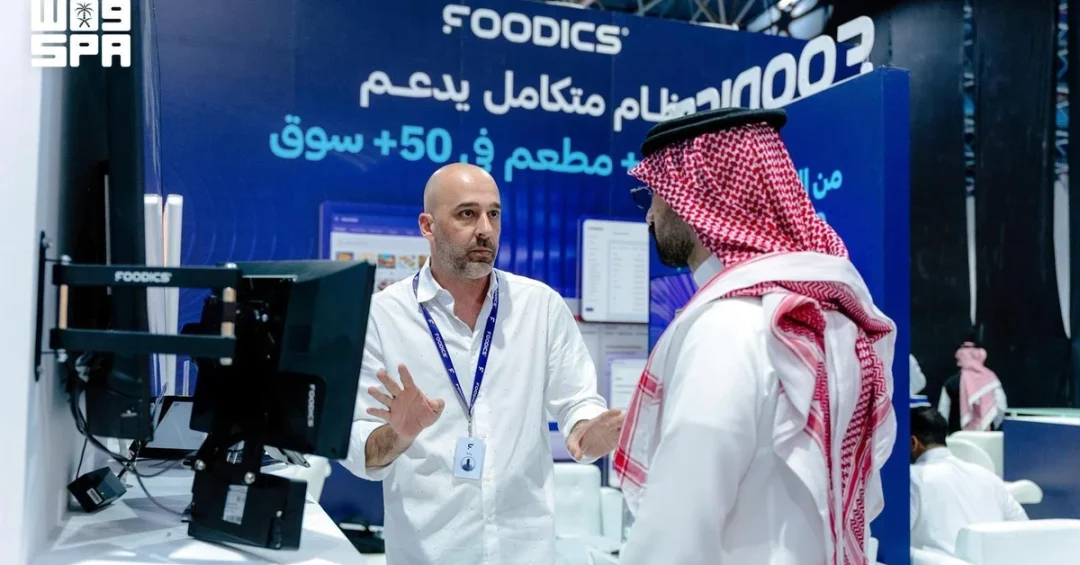
The fourth edition of the International Franchise Opportunities Exhibition (iFOE), organized by the Jeddah Chamber, concluded on September 5, 2026, at the Jeddah Center for Exhibitions and Events, following three days of activity held from September 3 to 5. The event brought together international brands and local entrepreneurs, reinforcing the exhibition’s standing as a leading destination for companies seeking to expand within the Saudi market and for investors exploring franchise opportunities in one of the region’s fastest-growing economies.
Have you ever wondered why global brands are increasingly turning their attention to Saudi Arabia’s franchise sector? The exhibition offered a clear answer: a combination of regulatory modernization, government support for small and medium enterprises, and a consumer market undergoing rapid transformation under Vision 2030. Visitors explored diverse and innovative franchise models, built partnerships, and engaged directly with brands looking to enter or expand in the Kingdom. The event also featured specialized sessions and workshops on expansion strategies, brand management, and customer experience, equipping entrepreneurs and investors with practical tools to assess franchise opportunities. According to information released via official Saudi channels, including the Saudi Press Agency, the exhibition forms part of a broader national effort to strengthen the franchise ecosystem and encourage investment in national brands.
Context and Background
Why has the franchise sector become such a strategic priority for the Kingdom? Saudi Arabia has spent the past several years building one of the most structured franchise environments in the Middle East. The introduction of the Franchise Law provided a clear legal framework governing franchise agreements, protecting both franchisors and franchisees, and setting standards for disclosure, registration, and dispute resolution. This regulatory foundation, developed alongside government initiatives aimed at encouraging investment in national brands, has given international companies greater confidence to enter the Saudi market and has given Saudi entrepreneurs a clearer path to operating proven business models.
The Jeddah Chamber, which organized the exhibition, has been a consistent advocate for the development of the franchise sector in the western region of the Kingdom. By hosting iFOE for a fourth consecutive edition, the Chamber has established the event as a recurring platform where international brands, local investors, and government stakeholders meet to discuss expansion strategies and forge commercial relationships. The continuity of the exhibition itself signals maturity: rather than a one-off promotional event, iFOE has become part of the annual business calendar in Jeddah, a city that serves as a commercial gateway to the Red Sea region and a historic hub for trade and entrepreneurship.
The timing of this fourth edition is significant. It follows a period in which Saudi Arabia has accelerated efforts to diversify its economy away from oil dependence, with the franchise model emerging as an efficient mechanism for transferring know-how, creating jobs, and expanding the small and medium enterprise base. For international readers, understanding this context is essential: the exhibition is not merely a trade show but a reflection of a deliberate national strategy to embed global best practices within a growing local business ecosystem.
Key Details
What exactly did the fourth edition of iFOE offer to participants and visitors? Held at the Jeddah Center for Exhibitions and Events from September 3 to 5, the exhibition featured a broad range of international brands alongside Saudi franchise concepts. Visitors had the opportunity to explore diverse and innovative franchise models, compare investment requirements, and engage in direct discussions with brand representatives. The presence of international brands underscored the exhibition’s role as a gateway for companies seeking to expand in the Saudi market, while the participation of local brands highlighted the growing ambition of Saudi entrepreneurs to scale their concepts nationally and regionally.
The program included sessions and workshops focused on expansion strategies, brand management, and customer experience. These sessions were designed to help entrepreneurs and investors assess franchise opportunities in practical terms, moving beyond general presentations to address operational realities such as site selection, supply chain integration, staff training, and quality control. By combining an exhibition floor with structured learning sessions, iFOE created an environment where business conversations could progress from initial interest to concrete planning.
The event also served as a networking platform. Partnerships formed at exhibitions of this kind often translate into franchise agreements, joint ventures, and distribution arrangements that can take months to negotiate through conventional channels. For small and medium enterprises, access to established brands and proven operating systems can reduce the risks associated with starting a new business, while for international franchisors, local partners provide market knowledge, cultural insight, and operational capacity. The Jeddah Chamber’s organization of the event ensured that these interactions took place within a structured, professionally managed setting.
International and Regional Impact
Why should international brands and observers beyond the region pay attention to an exhibition in Jeddah? Saudi Arabia represents one of the largest consumer markets in the Middle East, with a young population, rising disposable incomes, and a rapidly evolving retail and hospitality landscape. For international franchisors, the Kingdom offers scale that few regional markets can match. The regulatory clarity provided by the Franchise Law reduces uncertainty, while government initiatives aimed at encouraging investment in national brands create a supportive environment for both foreign and domestic operators. The fourth edition of iFOE therefore functions as a signal to the global franchise community that Saudi Arabia is open for business and that the pathway to entry is increasingly well defined.
Regionally, the exhibition reinforces Jeddah’s position as a commercial hub linking the Kingdom to markets across the Red Sea, the wider Gulf, and beyond. Franchise models that succeed in Saudi Arabia often become platforms for regional expansion, and the partnerships formed at iFOE can have ripple effects across the Middle East and North Africa. For Saudi Arabia’s neighbors, the Kingdom’s franchise growth represents both competition and opportunity: competition for brand attention and investment, but also opportunity for cross-border collaboration, supply chain integration, and the development of regional franchise networks. The event thus contributes to a broader dynamic of economic integration and knowledge transfer in the region.
Economic and Strategic Significance
How does the franchise sector contribute to Saudi Arabia’s economic transformation? Franchising offers a structured route to business creation. By pairing local capital and market knowledge with proven brands and operating systems, it lowers the barriers to entry for Saudi entrepreneurs and increases the survival rate of new ventures. This, in turn, supports the growth of small and medium enterprises, which are a critical source of employment and innovation in any diversified economy. The exhibition’s emphasis on supporting SME growth aligns directly with national objectives to expand the private sector’s contribution to GDP and to create jobs for a young and growing workforce.
The strategic significance extends beyond individual business deals. Franchise networks transfer skills, standards, and technology. When international brands enter the Saudi market through franchising, they bring training programs, quality assurance systems, and management practices that raise the overall capabilities of the local business environment. Saudi franchise brands that expand abroad, meanwhile, project the Kingdom’s commercial creativity and cultural identity into new markets. The fourth edition of iFOE, by bringing these two flows together, acts as a catalyst for both inward investment and outward expansion, strengthening the Kingdom’s position as a hub for franchise activity in the region.
Vision 2030 Alignment
In what ways does the exhibition reflect the ambitions of Vision 2030? Vision 2030 seeks to diversify the Saudi economy, empower the private sector, and create a vibrant society with expanding opportunities for its citizens. The franchise sector touches on all three dimensions. It diversifies economic activity by adding new service and retail categories, empowers the private sector by enabling entrepreneurs to operate proven business models, and contributes to a vibrant society by introducing new consumer experiences, dining concepts, retail formats, and entertainment offerings. The Jeddah Chamber’s organization of iFOE for a fourth consecutive year demonstrates how Saudi institutions are translating the vision’s broad goals into practical, recurring programs that connect local and international businesses.
Looking ahead, the continued development of the franchise ecosystem will depend on maintaining regulatory clarity, expanding access to financing for franchisees, and deepening the pipeline of Saudi brands capable of scaling. The fourth edition of the International Franchise Opportunities Exhibition has once again shown that the Kingdom offers a welcoming, well-regulated, and ambitious environment for franchise growth. As Saudi Arabia advances toward its Vision 2030 objectives, platforms like iFOE will remain essential in linking global brands with Saudi partners and in showcasing the Kingdom’s progress to the world. The exhibition’s successful conclusion is not an endpoint but a milestone in a long-term national journey toward economic diversification and global engagement.
20 Questions
Q1. What was the fourth edition of the International Franchise Opportunities Exhibition?
A1. It was a three-day event organized by the Jeddah Chamber, held from September 3 to 5, 2026, at the Jeddah Center for Exhibitions and Events, showcasing franchise opportunities and international brands seeking to expand in the Saudi market.
Q2. Who organized the International Franchise Opportunities Exhibition?
A2. The exhibition was organized by the Jeddah Chamber, which has hosted the event for four consecutive editions as part of its efforts to support business growth and investment in the western region of Saudi Arabia.
Q3. Where was the exhibition held?
A3. It took place at the Jeddah Center for Exhibitions and Events in Jeddah, a city known as a commercial gateway on the Red Sea and a historic hub for trade and entrepreneurship in the Kingdom.
Q4. When did the fourth edition of the exhibition take place?
A4. The event ran from September 3 to 5, 2026, concluding on September 5. The dates were confirmed in information released via official Saudi channels, including the Saudi Press Agency.
Q5. What kinds of brands participated in the exhibition?
A5. The exhibition featured international brands alongside local franchise concepts, giving visitors the chance to explore diverse and innovative franchise models and to build partnerships with companies looking to expand in Saudi Arabia.
Q6. What opportunities did visitors have at the exhibition?
A6. Visitors could explore franchise models, compare investment requirements, meet brand representatives, build partnerships, and attend sessions designed to help them assess franchise opportunities in practical and informed terms.
Q7. What topics were covered in the sessions and workshops?
A7. The program included sessions and workshops on expansion strategies, brand management, and customer experience, helping entrepreneurs and investors understand operational realities such as site selection, training, and quality control.
Q8. How does the exhibition support small and medium enterprises?
A8. By connecting SMEs with proven brands and operating systems, the exhibition lowers barriers to entry, reduces business risk, and helps Saudi entrepreneurs grow their ventures within a structured and supportive commercial environment.
Q9. Why is the franchise sector growing in Saudi Arabia?
A9. Growth is supported by the development of the regulatory environment, the introduction of the Franchise Law, and government initiatives aimed at encouraging investment in national brands and expanding the private sector’s role in the economy.
Q10. What is the Franchise Law and why does it matter?
A10. The Franchise Law provides a clear legal framework for franchise agreements in Saudi Arabia, covering disclosure, registration, and dispute resolution, which gives both international franchisors and local franchisees greater confidence and certainty.
Q11. How does the exhibition help international brands enter Saudi Arabia?
A11. It offers a structured platform where international brands can meet potential local partners, present their models, and negotiate agreements, reducing the time and uncertainty typically involved in entering a new market.
Q12. What is the significance of holding the exhibition in Jeddah?
A12. Jeddah is a historic commercial hub and gateway to the Red Sea region, making it a natural location for an event that connects international brands with Saudi investors and entrepreneurs from across the Kingdom.
Q13. How many editions of the exhibition have been held?
A13. The event in September 2026 was the fourth edition, demonstrating the exhibition’s continuity and its establishment as a recurring fixture on Jeddah’s annual business and investment calendar.
Q14. What role does the Jeddah Chamber play in the franchise sector?
A14. The Jeddah Chamber organizes the exhibition, advocates for business development, and provides a platform where international brands, local investors, and government stakeholders can meet and forge commercial relationships.
Q15. How does franchising create jobs in Saudi Arabia?
A15. Franchise networks require staff for operations, management, marketing, and customer service. As new outlets open across the Kingdom, they generate employment opportunities and support the growth of a skilled local workforce.
Q16. What benefits do Saudi brands gain from the exhibition?
A16. Saudi brands gain visibility, access to potential investors and partners, and exposure to international best practices in brand management and expansion, helping them scale nationally and potentially into regional markets.
Q17. How does the exhibition align with Vision 2030?
A17. It supports economic diversification, private sector empowerment, and the growth of small and medium enterprises, all of which are central objectives of Vision 2030 and Saudi Arabia’s long-term development strategy.
Q18. What happens after the exhibition concludes?
A18. Partnerships formed during the event often develop into franchise agreements, joint ventures, and distribution arrangements, contributing to the continued expansion of the franchise sector in the months and years that follow.
Q19. Why should international readers follow Saudi Arabia’s franchise sector?
A19. Saudi Arabia offers one of the largest consumer markets in the Middle East, with a young population and rising incomes. Its regulatory modernization makes it an increasingly attractive destination for global franchise investment.
Q20. What does the future hold for franchising in Saudi Arabia?
A20. With continued regulatory clarity, financing support, and a growing pipeline of Saudi brands, the franchise sector is expected to keep expanding, contributing to job creation, innovation, and the Kingdom’s broader economic transformation.
Reader Feedback
We value your thoughts. Please share your feedback on this article.
Your feedback helps us improve our coverage.
Related articles
 Al-Jawf Province fig production exceeds 880 tons annually
 Jeddah to Host First Syrian Industries Exhibition SYRIX
 Saudi-China Investment Ties Deepen at CMF Shanghai 2026
 Jazan mountains transition to new development framework
 Monsha’at and SDAIA conclude AI Week in Riyadh
 Al-Jouf Province fig production exceeds 880 tons annually