


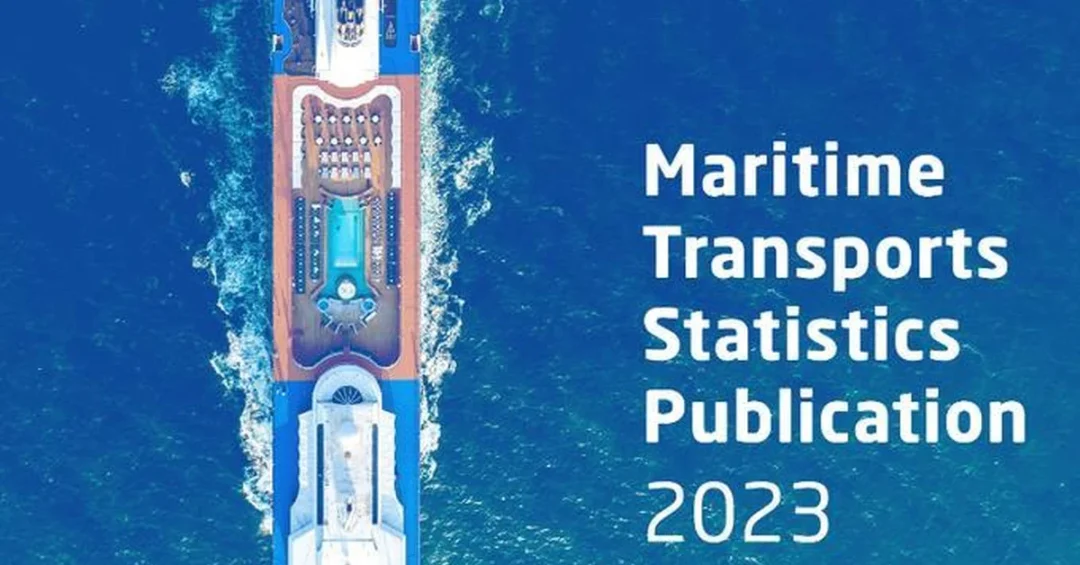
Container traffic at Saudi ports rose 14.6% in 2023 compared to 2022, according to the General Authority for Statistics (GASTAT). The increase underscores the Kingdom’s growing role as a global logistics hub and reflects the ongoing success of Vision 2030 initiatives to diversify the economy and enhance trade infrastructure.
Context and Background
The General Authority for Statistics (GASTAT), Saudi Arabia’s official statistical agency, released its Maritime Transport Statistics Publication for 2023 on September 18, 2024. The report provides comprehensive data on container throughput, ship traffic, passenger numbers, and port infrastructure across the Kingdom. This annual publication is a key resource for understanding the performance of Saudi Arabia’s maritime sector, which is vital to the nation’s economic diversification goals.
Key Details
According to GASTAT, total inbound and outbound container traffic exceeded 5 million TEUs (twenty-foot equivalent units), with inbound containers reaching 3.4 million TEUs and outbound containers at 2.2 million TEUs. Ship traffic at Saudi ports increased by 33.8% to 19,082 vessels. King Fahad Industrial Port in Yanbu recorded the highest ship traffic with 6,538 ships, followed by Jeddah Islamic Port with 4,411 ships and King Abdulaziz Port in Dammam with 2,516 ships. Passenger numbers also rose by 11.5%, surpassing 1 million, with Jazan Port handling the highest number of arriving and departing passengers at 484,598.
Implications and Impact
The surge in container and ship traffic highlights the increasing efficiency and capacity of Saudi ports, positioning the Kingdom as a pivotal link in global trade routes. This growth supports Saudi Arabia’s ambition to become a leading logistics hub connecting Asia, Europe, and Africa. The rise in passenger traffic also indicates the expanding role of maritime transport in tourism and pilgrimage, facilitating the movement of people for Hajj, Umrah, and leisure travel. These developments contribute to economic diversification by boosting non-oil revenues and creating job opportunities in the maritime and logistics sectors.
Vision 2030 Alignment
This achievement aligns with Saudi Vision 2030’s objective to transform the Kingdom into a global logistics and trade hub. Under the National Industrial Development and Logistics Program (NIDLP), Saudi Arabia is investing in port infrastructure, digitalization, and streamlined customs procedures to enhance competitiveness. The increase in container traffic and ship visits demonstrates tangible progress toward these goals, reinforcing the Kingdom’s commitment to economic diversification and sustainable growth.
20 Questions
Q1. What was the percentage increase in container traffic at Saudi ports in 2023?
A1. Container traffic at Saudi ports increased by 14.6% in 2023 compared to 2022, as reported by the General Authority for Statistics (GASTAT).
Q2. How many TEUs were handled at Saudi ports in 2023?
A2. Total inbound and outbound container traffic exceeded 5 million TEUs, with inbound at 3.4 million TEUs and outbound at 2.2 million TEUs.
Q3. Which Saudi port had the highest ship traffic in 2023?
A3. King Fahad Industrial Port in Yanbu recorded the highest ship traffic with 6,538 ships, followed by Jeddah Islamic Port with 4,411 ships.
Q4. What was the increase in ship traffic at Saudi ports in 2023?
A4. Ship traffic increased by 33.8% in 2023, reaching a total of 19,082 ships, according to GASTAT.
Q5. How many passengers traveled through Saudi ports in 2023?
A5. Passenger numbers exceeded 1 million in 2023, an increase of 11.5% compared to 2022.
Q6. Which port handled the most passengers in 2023?
A6. Jazan Port recorded the highest number of arriving and departing passengers, with 484,598 passengers.
Q7. When was the GASTAT Maritime Transport Statistics Publication released?
A7. The report was released on September 18, 2024, providing data for the year 2023.
Q8. What does TEU stand for in shipping?
A8. TEU stands for Twenty-foot Equivalent Unit, a standard measure of container capacity.
Q9. How does this increase in container traffic benefit Saudi Arabia?
A9. It strengthens Saudi Arabia’s position as a global logistics hub, boosts non-oil revenues, and supports economic diversification under Vision 2030.
Q10. What is the significance of King Fahad Industrial Port in Yanbu?
A10. King Fahad Industrial Port is a major industrial port that handles significant ship traffic, contributing to Saudi Arabia’s trade and industrial activities.
Q11. How does the rise in passenger traffic support Saudi tourism?
A11. Increased passenger traffic facilitates the movement of tourists and pilgrims, supporting the growth of the tourism and pilgrimage sectors, key to Vision 2030.
Q12. What role does GASTAT play in Saudi Arabia?
A12. GASTAT is the official statistical agency responsible for collecting and publishing accurate data to support decision-making and monitor progress toward Vision 2030 goals.
Q13. What other information does the Maritime Transport Statistics Publication include?
A13. The publication also provides details on cargo volumes, port infrastructure, and crane capacities at Saudi ports.
Q14. How does this growth align with Vision 2030?
A14. It aligns with Vision 2030’s goal to transform Saudi Arabia into a global logistics hub, enhancing trade connectivity and economic diversification.
Q15. Which ports are mentioned in the GASTAT report?
A15. The report mentions King Fahad Industrial Port in Yanbu, Jeddah Islamic Port, King Abdulaziz Port in Dammam, and Jazan Port.
Q16. What is the significance of Jeddah Islamic Port?
A16. Jeddah Islamic Port is a key gateway for trade and pilgrimage, serving as a major hub for container and passenger traffic on the Red Sea.
Q17. How does the increase in ship traffic impact the Saudi economy?
A17. Higher ship traffic indicates increased trade activity, which boosts economic growth, creates jobs, and enhances Saudi Arabia’s global trade connectivity.
Q18. What are the future prospects for Saudi ports?
A18. Saudi ports are expected to continue growing, driven by ongoing investments in infrastructure, technology, and Vision 2030 initiatives to expand capacity and efficiency.
Q19. How does GASTAT ensure data accuracy?
A19. GASTAT employs rigorous data collection methods, including coordination with port authorities and verification processes, to ensure reliable statistics.
Q20. What is the National Industrial Development and Logistics Program (NIDLP)?
A20. NIDLP is a Vision 2030 program aimed at developing industry, mining, energy, and logistics to diversify the economy and position Saudi Arabia as a global logistics hub.
Reader Feedback
We value your thoughts. Please share your feedback on this article.
Your feedback helps us improve our coverage.
Related articles
 Fifth Saudi Maritime and Logistics Congress Kicks off in Dammam
 MEWA Oversees Madinah Dates Season Auctions
 Saudi EXIM Bank Hosts GARP Meeting on Risk Management
 7,000 Italian Companies Set Sights on Saudi Market
 SAUDI EXPORTS and Al Nahdi Partner to Boost Saudi Made Products
 SAMA Reduces Repo and Reverse Repo Rates by 50 Basis Points