


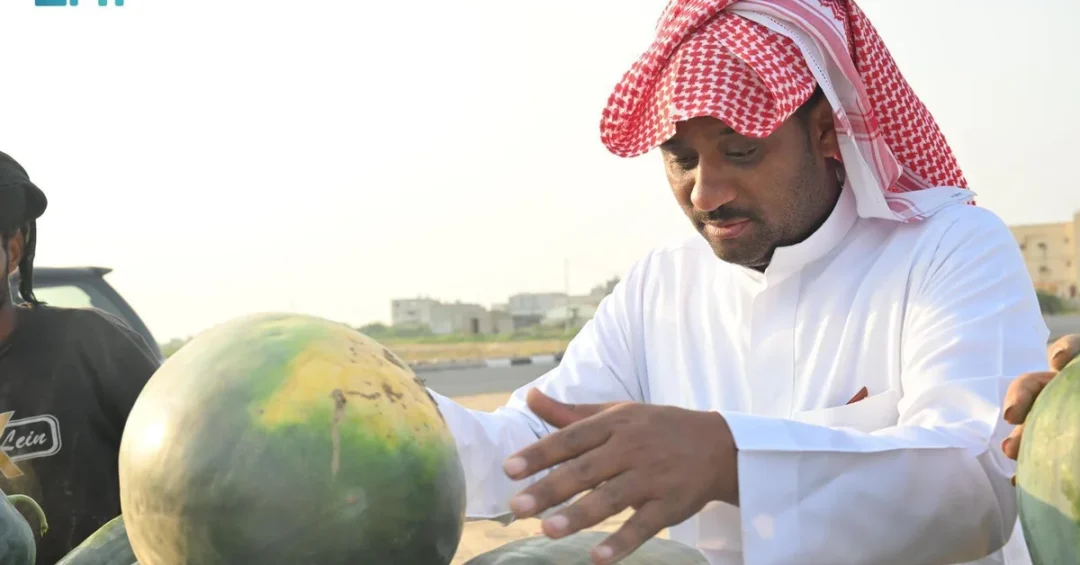
Watermelon farmers across the Jazan region have begun harvesting and marketing their crops, with official Saudi projections pointing to a significantly larger yield this year to meet high domestic demand, particularly during the holy month of Ramadan. According to the Saudi Press Agency, the region has 14,000 hectares under cultivation and expects to produce more than 15,000 tons of watermelons, a harvest that retailers are already moving to wholesale and retail outlets in regions and governorates throughout the Kingdom. The crop, prized for its refreshing qualities in hot weather, arrives as Saudi Arabia continues to strengthen its agricultural resilience and food security under Vision 2030. Prices are determined by size and quality, reflecting a market that rewards careful cultivation and efficient distribution.
Could a single seasonal fruit tell a larger story about how the Kingdom is rethinking its food systems, its rural economy, and its regional supply chains? For Jazan, a fertile southwestern region known for its agricultural diversity, the watermelon season is more than a commercial moment. It is a test of how well local farms, government programs, and modern marketing channels work together to deliver fresh, high-quality produce to consumers across Saudi Arabia. A Saudi Press Agency tour of farms in Sabya governorate and local markets revealed an abundance of watermelons, with retailers already transporting the harvest to various regions and governorates. The scene captures a sector in motion: farmers harvesting, traders negotiating, and consumers preparing for a season of generous tables and family gatherings.
Context and Background
Why does Jazan, a region better known for its mountains and Red Sea coastline, play such an important role in Saudi Arabia’s fruit supply? The answer lies in its climate, soil, and farming tradition. Watermelon cultivation in the region follows a roughly 90-day cycle that begins with planting seeds after rainfall or through controlled irrigation. The crop is relatively resilient to drought and humidity, thriving in light, well-drained, sandy soil rich in organic matter. Each vine can extend up to three meters and yield five to seven fruits, a productivity profile that makes watermelons attractive to small and medium-sized farms alike. Jazan’s warm conditions allow the crop to mature efficiently, positioning the region to supply the Kingdom at a time of peak seasonal demand.
The timing of the harvest is strategically significant. Ramadan is a period of heightened demand for fresh fruit, as families gather for iftar and suhoor and seek hydrating, nutritious foods. Watermelons, which are rich in vitamins, boost immunity, support brain health, and may help prevent dehydration, fit naturally into those meals. By bringing more than 15,000 tons to market, Jazan’s farmers are not only meeting a seasonal spike in consumption but also demonstrating the capacity of Saudi agriculture to respond to predictable, culturally important demand cycles. The Ministry of Environment, Water and Agriculture, through its Sustainable Agricultural Rural Development Program, known as Saudi Reef, is working to boost watermelon production efficiency, enhance food security, and expand cultivation across the Kingdom.
Key growing regions beyond Jazan include Riyadh, Al-Jouf, Hail, Makkah, and Qassim, creating a nationwide production map that reduces reliance on a single area and smooths supply across the seasons. This geographic spread is a deliberate feature of Saudi agricultural planning: it diversifies risk, shortens transport distances to major consumption centers, and gives consumers access to fresher produce. For Jazan, the result is a prominent place in the national food system and a source of local pride. For the Kingdom, it is another step toward a more resilient, self-reliant agricultural base that supports rural incomes and strengthens the non-oil economy.
Key Details of the Jazan Harvest
What exactly does this year’s Jazan watermelon season look like on the ground? The numbers are substantial. With 14,000 hectares under cultivation, the region expects to produce over 15,000 tons of watermelons. Retailers are already transporting the harvest to various regions and governorates across the Kingdom, supplying wholesale and retail outlets. Prices are determined by size and quality, a market-based approach that encourages farmers to focus on fruit development, grading, and presentation. The Saudi Press Agency tour of farms in Sabya governorate and local markets revealed an abundance of watermelons, with vendors reporting strong early interest from buyers preparing for Ramadan.
The cultivation process itself is a blend of tradition and technique. Planting takes place after rainfall or under controlled irrigation, and the 90-day cycle requires careful water management, soil preparation, and pest monitoring. Watermelons are relatively resilient to drought and humidity, but consistent quality depends on attentive farming. Each vine can extend up to three meters and yield five to seven fruits, meaning a well-managed field can produce a dense, high-value harvest. Farmers in Jazan have refined these practices over generations, and the current season reflects both inherited knowledge and access to modern inputs, extension services, and market information.
Distribution is equally important. The movement of watermelons from Jazan to markets across Saudi Arabia involves a network of transporters, wholesalers, and retailers who must coordinate quickly because the fruit is perishable and demand is time-sensitive. The fact that retailers are already transporting the harvest to various regions and governorates indicates a functioning logistics chain that connects southwestern farms to consumers in Riyadh, the Eastern Province, and beyond. This chain is supported by road infrastructure and cold-chain investments that have improved in recent years, helping farmers capture more value and reducing post-harvest losses.
International and Regional Impact
How does a strong Saudi watermelon season resonate beyond the Kingdom’s borders? For regional markets, it signals reliability. Saudi Arabia is a major consumer market and an increasingly capable agricultural producer, and its ability to supply seasonal fruits domestically reduces the need for imports during peak periods. That, in turn, can influence trade flows and pricing in neighboring countries. A robust domestic harvest also supports food security objectives that are shared across the Gulf, where governments are investing in agricultural technology, water efficiency, and local production to buffer against global supply disruptions.
For international audiences, the Jazan harvest offers a window into how Saudi Arabia is balancing tradition with modernization. The Kingdom is not pursuing agricultural self-sufficiency at any cost; instead, it is targeting smart, efficient production in crops where it has comparative advantages, while conserving water and protecting natural resources. Watermelons, which are relatively resilient to drought and humidity, fit that strategy well. The Saudi Reef program’s focus on production efficiency and expanded cultivation reflects a broader policy of sustainable rural development, one that seeks to raise incomes, create jobs, and strengthen the non-oil economy in line with Vision 2030.
Regional cooperation is also part of the picture. Saudi agricultural authorities exchange expertise with counterparts in the Gulf and beyond, and Saudi products increasingly appear in regional markets. The watermelon season, though seasonal, contributes to the Kingdom’s reputation as a dependable supplier of fresh produce. It also reinforces the message that Saudi Arabia is open for business, investment, and partnership in agri-food sectors, from farming and processing to logistics and retail.
Economic and Strategic Significance
Why should economists and policymakers pay attention to a fruit harvest? Because agriculture is a meaningful component of Saudi Arabia’s diversification agenda. The Ministry of Environment, Water and Agriculture, through Saudi Reef, aims to boost watermelon production efficiency, enhance food security, and expand cultivation across the Kingdom. Every additional ton of domestically grown produce reduces import dependence, supports rural employment, and keeps value within the local economy. Watermelon production also generates demand for inputs, equipment, transport, and retail services, creating a multiplier effect that extends well beyond the farm gate.
The market structure matters too. Prices determined by size and quality reward farmers who invest in better seeds, irrigation, and post-harvest handling. That incentive structure encourages continuous improvement and helps professionalize the sector. As farmers adopt more efficient practices, yields per hectare can rise, water use can fall, and product quality can become more consistent. These gains are essential for a country that must balance agricultural ambitions with limited water resources. Watermelons are relatively resilient to drought and humidity, making them a sensible crop for areas where water efficiency is a priority.
To coincide with the watermelon season, the ministry organizes watermelon festivals, often featuring exhibitions, entertainment, cultural events, and agricultural workshops. These initiatives support local farmers, facilitate product marketing, and seek to increase local watermelon production, contributing to the goals of Vision 2030 to diversify the economy and boost non-oil domestic product. Festivals are not mere celebrations; they are market-development tools that connect producers with buyers, showcase best practices, and attract visitors who spend in local economies. For Jazan, the festival circuit adds a tourism and cultural dimension to the agricultural calendar.
Vision 2030 Alignment
How does a bumper watermelon crop connect to the Kingdom’s long-term transformation? Vision 2030 calls for a diversified economy, a thriving private sector, and a high quality of life for citizens and residents. Agriculture contributes to all three. A productive, efficient farming sector supports food security, creates jobs in rural areas, and strengthens local supply chains. It also reduces the economy’s reliance on oil by adding value in sectors such as agri-processing, logistics, and tourism. The Jazan watermelon season, with its 14,000 hectares under cultivation and more than 15,000 tons expected, is a concrete example of these principles in action.
The Sustainable Agricultural Rural Development Program, Saudi Reef, is a key instrument of this strategy. By targeting production efficiency, enhancing food security, and expanding cultivation across the Kingdom, the program helps farmers modernize while preserving the cultural heritage of Saudi agriculture. The ministry’s watermelon festivals further reinforce this by combining exhibitions, entertainment, cultural events, and agricultural workshops that support local farmers and facilitate product marketing. Together, these efforts contribute to the goals of Vision 2030 to diversify the economy and boost non-oil domestic product, while ensuring that Saudi families have access to fresh, nutritious, locally grown food.
As the harvest moves from Jazan’s fields to markets across the Kingdom, the season offers more than refreshment. It demonstrates the Kingdom’s capacity to plan, produce, and distribute food at scale; to support rural communities; and to align agricultural policy with broader national objectives. For international observers, the message is clear: Saudi Arabia is investing in a resilient, modern, and sustainable food system, and its regions are active participants in that journey. The watermelon farmers of Jazan are not just growing fruit; they are growing the future that Vision 2030 envisions.
20 Questions
Q1. What is the main development reported in Jazan’s agricultural sector?
A1. Watermelon farmers in the Jazan region have begun harvesting and marketing their crops, with expectations of a significantly larger yield this year to meet high demand, particularly during the holy month of Ramadan, according to the Saudi Press Agency.
Q2. How many hectares are under watermelon cultivation in Jazan?
A2. The Jazan region has 14,000 hectares under watermelon cultivation, a substantial area that supports the region’s role as a key producer for the Kingdom’s domestic market during peak seasonal demand.
Q3. How many tons of watermelons does Jazan expect to produce this year?
A3. Jazan expects to produce over 15,000 tons of watermelons this season, a volume intended to meet high demand, especially during Ramadan, and to supply wholesale and retail outlets across Saudi Arabia.
Q4. Where are the watermelons being transported?
A4. Retailers are already transporting the harvest to various regions and governorates across the Kingdom, supplying wholesale and retail outlets and ensuring that consumers nationwide can access fresh Jazan watermelons.
Q5. How are watermelon prices determined in the market?
A5. Prices are determined by size and quality, a market-based approach that rewards farmers for producing well-graded, high-quality fruit and encourages continuous improvement in cultivation and post-harvest handling.
Q6. What did the Saudi Press Agency tour reveal?
A6. A Saudi Press Agency tour of farms in Sabya governorate and local markets revealed an abundance of watermelons, prized for their refreshing qualities, especially in hot weather, and rich in vitamins that boost immunity and support brain health.
Q7. How long is the watermelon cultivation process?
A7. The cultivation process takes about 90 days, beginning with planting seeds after rainfall or through controlled irrigation, and requires careful water management, soil preparation, and monitoring to ensure a healthy, high-quality harvest.
Q8. What soil conditions are best for watermelon cultivation?
A8. Watermelons thrive in light, well-drained, sandy soil rich in organic matter. They are relatively resilient to drought and humidity, making them suitable for regions with warm climates and careful irrigation management.
Q9. How many fruits can each watermelon vine yield?
A9. Each vine can extend up to three meters and yield five to seven fruits, a productivity profile that makes watermelons attractive to small and medium-sized farms and supports efficient use of cultivated land.
Q10. What is the role of the Ministry of Environment, Water and Agriculture?
A10. The ministry, through its Sustainable Agricultural Rural Development Program known as Saudi Reef, aims to boost watermelon production efficiency, enhance food security, and expand cultivation across the Kingdom in line with national objectives.
Q11. Which other regions grow watermelons in Saudi Arabia?
A11. Key growing regions include Riyadh, Al-Jouf, Hail, Makkah, Qassim, and Jazan. This geographic spread diversifies production, shortens transport distances, and helps ensure a steady supply across the Kingdom.
Q12. What are the health benefits of watermelons mentioned in the report?
A12. Watermelons are rich in vitamins, boost immunity, support brain health, and may help prevent dehydration, making them especially valued during hot weather and the fasting and feasting cycles of Ramadan.
Q13. What events coincide with the watermelon season?
A13. The ministry organizes watermelon festivals, often featuring exhibitions, entertainment, cultural events, and agricultural workshops. These initiatives support local farmers, facilitate product marketing, and seek to increase local watermelon production.
Q14. How do watermelon festivals support farmers?
A14. Festivals connect producers with buyers, showcase best practices, and attract visitors who spend in local economies. They also provide platforms for agricultural workshops that help farmers improve techniques and market their products more effectively.
Q15. How does watermelon production contribute to Vision 2030?
A15. It contributes to the goals of Vision 2030 to diversify the economy and boost non-oil domestic product by strengthening agriculture, enhancing food security, creating rural jobs, and supporting local supply chains and agri-tourism.
Q16. Why is the Ramadan timing significant for the harvest?
A16. Ramadan is a period of heightened demand for fresh, hydrating fruit as families gather for iftar and suhoor. The Jazan harvest is timed to meet this seasonal spike, ensuring ample supply for consumers across the Kingdom.
Q17. What is Saudi Reef and what does it aim to achieve?
A17. Saudi Reef is the Sustainable Agricultural Rural Development Program of the Ministry of Environment, Water and Agriculture. It aims to boost production efficiency, enhance food security, and expand cultivation across the Kingdom.
Q18. How does the Jazan harvest support food security?
A18. By producing over 15,000 tons of watermelons domestically, Jazan reduces reliance on imports during peak periods, strengthens local supply chains, and helps ensure that Saudi consumers have access to fresh, nutritious food.
Q19. What does the harvest mean for Jazan’s local economy?
A19. The harvest generates income for farmers, creates demand for transport and retail services, and supports rural employment. It also reinforces Jazan’s reputation as an important agricultural region within the Kingdom’s diversified food system.
Q20. What is the broader significance of this year’s watermelon season?
A20. It demonstrates Saudi Arabia’s capacity to plan, produce, and distribute food at scale, supports rural communities, and aligns agricultural policy with Vision 2030 objectives for a resilient, modern, and sustainable economy.
Reader Feedback
We value your thoughts. Please share your feedback on this article.
Your feedback helps us improve our coverage.
Related articles
 Saudi-Jordanian Business Council Boosts Economic Ties
 Commerce Minister Inaugurates Makkah Halal Forum
 Million-Riyal Truffle Season Thrives in Northern Borders
 Japanese Stocks Close Higher as Nikkei and TOPIX Gain
 Saudi Economy Minister Meets Swiss Private Sector Leaders
 Makkah Halal Forum Concludes, Reaffirming Saudi Role