


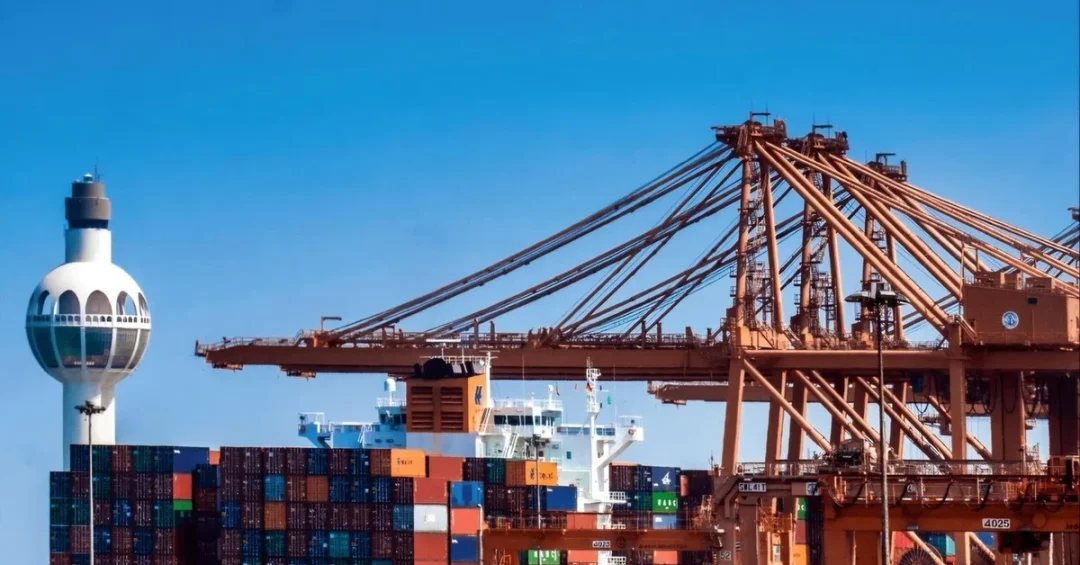
Saudi Ports Authority announced on August 13, 2026, that the Gemini Cooperation alliance’s AE15 and AE19 shipping routes will be added to Jeddah Islamic Port, with both routes updated to pass through the Bab el-Mandeb Strait and the Suez Canal. This strategic move underscores Jeddah Islamic Port’s pivotal role as a major hub in the Red Sea, reflecting its advanced infrastructure and operational excellence.
Context and Background
The decision to designate Jeddah Islamic Port as a primary hub for these routes comes as part of Saudi Arabia’s ongoing efforts to enhance its maritime sector and boost trade connectivity. The port, located on the Red Sea coast, has long been a gateway for goods entering and leaving the Kingdom, and its selection highlights its growing importance in global shipping networks. This development aligns with the Kingdom’s Vision 2030, which aims to diversify the economy and strengthen its position as a global logistics hub.
Key Details
The AE15 route connects Jeddah Islamic Port with major ports in China (Qingdao, Ningbo), South Korea (Gwangyang), Malaysia (Tanjung Pelepas), Egypt (Said and Damietta via the Suez Canal), Sri Lanka (Colombo), and Singapore. The AE19 route links Jeddah to Shanghai, Qingdao, and Ningbo in China, Busan in South Korea, Tanjung Pelepas in Malaysia, and also passes through the Suez Canal, calling at Said, Tangier in Morocco, and Singapore. Both routes have been optimized to reduce the overall transit time from 16 weeks to 14 weeks, while maintaining weekly service frequency.
Implications and Impact
The addition of these routes is expected to significantly enhance trade flows between Asia, the Middle East, and Europe, leveraging the strategic location of Jeddah Islamic Port at the crossroads of major shipping lanes. This will likely increase cargo volumes, boost economic activity, and create new opportunities for businesses in the region. The move also strengthens the port’s competitive edge, potentially attracting more shipping lines and reinforcing Saudi Arabia’s role as a key player in global maritime trade.
Vision 2030 Alignment
This initiative directly supports Saudi Arabia’s Vision 2030 by advancing the Kingdom’s logistics sector, improving connectivity, and promoting economic diversification. By positioning Jeddah Islamic Port as a premier transshipment hub, the country is taking concrete steps toward becoming a global logistics center, which is a central goal of the Vision 2030 National Transformation Program. This development not only benefits the Saudi economy but also fosters international cooperation and trade, showcasing the Kingdom’s commitment to sustainable growth and regional integration.
20 Questions
Q1. What is the announcement made by the Saudi Ports Authority?
A1. The Saudi Ports Authority announced that the Gemini Cooperation alliance’s AE15 and AE19 shipping routes will be added to Jeddah Islamic Port, with both routes passing through the Bab el-Mandeb Strait and the Suez Canal.
Q2. When was this announcement made?
A2. The announcement was made on August 13, 2026, according to the Saudi Press Agency.
Q3. Which two routes are being added to Jeddah Islamic Port?
A3. The AE15 and AE19 routes are being added to Jeddah Islamic Port.
Q4. What is the significance of Jeddah Islamic Port being selected?
A4. Jeddah Islamic Port was selected as a primary hub due to its strategic location on the Red Sea, excellent operational capabilities, and advanced infrastructure.
Q5. Which ports are connected by the AE15 route?
A5. The AE15 route connects Jeddah with Qingdao, Ningbo, Gwangyang, Tanjung Pelepas, Said, Damietta, Colombo, and Singapore.
Q6. Which ports are connected by the AE19 route?
A6. The AE19 route connects Jeddah with Shanghai, Qingdao, Ningbo, Busan, Tanjung Pelepas, Said, Tangier, and Singapore.
Q7. How has the transit time changed with these route adjustments?
A7. The transit time has been reduced from 16 weeks to 14 weeks, shortening the overall cycle.
Q8. What is the frequency of the services on these routes?
A8. The services will maintain a weekly frequency, as stated in the announcement.
Q9. Why are Bab el-Mandeb Strait and Suez Canal important for these routes?
A9. These waterways are crucial for connecting Asia and Europe, and using them ensures efficient transit for the shipping routes.
Q10. How does this development support Saudi Arabia’s Vision 2030?
A10. It supports Vision 2030 by enhancing the logistics sector, boosting trade, and positioning Saudi Arabia as a global logistics hub.
Q11. What is the Gemini Cooperation alliance?
A11. The Gemini Cooperation is a shipping alliance that operates these routes, focusing on efficient and reliable maritime services.
Q12. What is the role of Jeddah Islamic Port in the Red Sea?
A12. Jeddah Islamic Port plays a strategic role as a major transshipment hub in the Red Sea, facilitating trade between East and West.
Q13. How might this affect trade volumes at Jeddah Islamic Port?
A13. The addition of these routes is likely to increase cargo volumes and attract more shipping lines, boosting the port’s throughput.
Q14. What are the benefits for businesses in Saudi Arabia?
A14. Businesses will benefit from improved connectivity, shorter transit times, and increased trade opportunities, enhancing their competitiveness.
Q15. Are there any other ports in Saudi Arabia that might be affected?
A15. While the focus is on Jeddah, other ports may see indirect benefits from overall improvements in the logistics sector.
Q16. How does this align with the National Transport and Logistics Strategy?
A16. It aligns with the strategy by enhancing maritime connectivity and positioning Saudi Arabia as a leading logistics center, a key component of Vision 2030.
Q17. What does the Bab el-Mandeb Strait signify for global trade?
A17. It is a critical chokepoint for shipping, and its inclusion in the routes highlights the importance of secure and efficient passage.
Q18. Could this lead to lower shipping costs?
A18. Yes, reduced transit times and improved efficiency may lead to cost savings for shippers, making trade more economical.
Q19. How does Jeddah Islamic Port’s infrastructure support these routes?
A19. The port’s advanced facilities and operational excellence ensure it can handle increased traffic and provide efficient services.
Q20. What is the expected impact on regional trade?
A20. The enhanced connectivity is expected to strengthen regional trade, fostering economic growth and cooperation in the Middle East and beyond.
Reader Feedback
We value your thoughts. Please share your feedback on this article.
Your feedback helps us improve our coverage.