


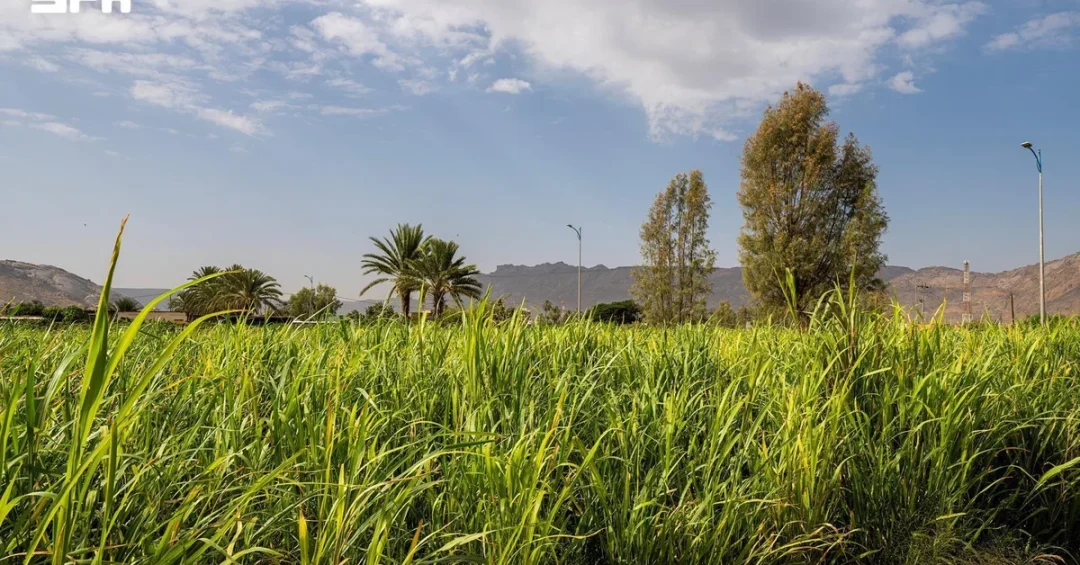
Seasonal fodder cultivation in the Najran region is playing a vital role in strengthening Saudi Arabia’s agricultural resilience and food security, with approximately 990 hectares dedicated to fodder crops producing around 16,000 tons annually, according to the Saudi Press Agency (SPA). The sector supports both farming and livestock activities, underscoring the Kingdom’s commitment to sustainable local production and optimal use of natural resources in arid environments.
Context and Background
Najran, located in southwestern Saudi Arabia, has long been an agricultural heartland, benefiting from its unique climate and terrain. Fodder crops such as alfalfa and sorghum are central to the region’s farming identity. Alfalfa is particularly prized for its high nutritional value, serving as a staple feed for livestock, while sorghum’s drought tolerance, low water consumption, and fiber content have made it increasingly attractive to local growers. This dual focus on nutritional quality and resource efficiency reflects a deep-rooted understanding of the region’s environmental constraints and opportunities.
The strategic importance of fodder cultivation extends beyond immediate agricultural output. It underpins the livestock sector, which is a key component of Saudi Arabia’s efforts to diversify its economy and reduce reliance on imports. By ensuring a steady supply of high-quality animal feed, Najran’s farmers contribute directly to national food security objectives and the broader goals of Vision 2030.
Key Details
According to official SPA information, the region’s 990 hectares of fodder crops yield approximately 16,000 tons each year. Alfalfa and sorghum dominate this production. Alfalfa’s role as a staple feed is well established, while sorghum’s agronomic advantages—drought tolerance, minimal water requirements, and beneficial fiber content—have driven strong local demand. These characteristics make sorghum particularly suitable for Najran’s arid conditions, aligning with water conservation priorities.
Local growers are increasingly adopting water-saving technologies and precise irrigation management. They are also optimizing planting schedules to match the region’s climate patterns. These modernization efforts are part of a broader commitment to agricultural sustainability, balancing robust crop yields with the conservation of vital water resources. Such practices are essential for long-term environmental and livestock needs, ensuring that agricultural productivity does not come at the expense of ecological balance.
Implications and Impact
The advancements in Najran’s fodder sector have significant implications for Saudi Arabia’s agricultural economy and rural development. By enhancing local production, the region reduces dependence on imported fodder, contributing to national food security and economic stability. The adoption of sustainable practices also serves as a model for other agricultural regions in the Kingdom, demonstrating how innovation can harmonize productivity with environmental stewardship.
Furthermore, the growth of the livestock sector, supported by reliable fodder supplies, can stimulate related industries such as meat and dairy processing, creating jobs and fostering entrepreneurship in rural communities. This aligns with Vision 2030’s objectives of economic diversification, private sector growth, and improved quality of life for Saudi citizens.
Vision 2030 Alignment
The development of seasonal fodder cultivation in Najran exemplifies Saudi Arabia’s strategic drive to achieve food security and agricultural sustainability under Vision 2030. By leveraging modern technologies, optimizing resource use, and supporting local farmers, the Kingdom is building a resilient agricultural sector capable of meeting future challenges. As Najran continues to innovate, its success will contribute to the nation’s broader goals of economic prosperity, environmental conservation, and enhanced global standing.
20 Questions
Q1. What is the primary focus of seasonal fodder cultivation in Najran?
A1. The primary focus is to support food security and strengthen local production in both the farming and livestock sectors, ensuring a reliable supply of animal feed while promoting sustainable agricultural practices in the region.
Q2. How many hectares are dedicated to fodder crops in Najran?
A2. Approximately 990 hectares are dedicated to fodder crops in Najran, according to official sources. This significant area reflects the region’s commitment to agricultural productivity and its role in supporting the Kingdom’s livestock industry.
Q3. What is the annual yield of fodder crops in Najran?
A3. The annual yield is approximately 16,000 tons. This substantial output highlights the efficiency of local farming practices and the region’s capacity to contribute to national food security and agricultural self-sufficiency.
Q4. Which crops lead fodder production in Najran?
A4. Alfalfa and sorghum are the leading fodder crops. Alfalfa is valued for its high nutritional content, while sorghum is favored for its drought tolerance, low water consumption, and beneficial fiber content, making both ideal for the region.
Q5. Why is alfalfa considered a staple feed?
A5. Alfalfa is considered a staple feed because of its high nutritional value, which supports livestock health and productivity. Its consistent quality makes it a preferred choice for farmers aiming to maintain robust animal herds.
Q6. What advantages does sorghum offer to farmers in Najran?
A6. Sorghum offers drought tolerance, low water consumption, and high fiber content. These traits make it well-suited to Najran’s arid climate, enabling farmers to conserve water while still producing reliable and nutritious animal feed.
Q7. How are local growers modernizing fodder farming?
A7. Local growers are modernizing by implementing water-saving technologies, adopting precise irrigation management, and optimizing planting schedules. These efforts aim to balance crop yields with water conservation, ensuring long-term sustainability in the region.
Q8. What role does water conservation play in Najran’s fodder cultivation?
A8. Water conservation is central to Najran’s fodder cultivation, given the region’s arid conditions. By using efficient irrigation and drought-resistant crops like sorghum, farmers reduce water usage while maintaining productivity, supporting environmental sustainability.
Q9. How does fodder cultivation support food security in Saudi Arabia?
A9. Fodder cultivation supports food security by ensuring a steady supply of animal feed, which sustains the livestock sector. This reduces reliance on imports and strengthens the Kingdom’s self-sufficiency in meat and dairy production.
Q10. What is the significance of the livestock sector in Najran?
A10. The livestock sector is vital to Najran’s economy and rural livelihoods. It provides income for farmers, supplies meat and dairy products, and contributes to national food security, aligning with Saudi Arabia’s economic diversification goals.
Q11. How do sustainable practices benefit Najran’s environment?
A11. Sustainable practices such as water-saving technologies and optimized planting help preserve vital water resources and soil health. They reduce environmental impact, ensuring that agricultural activities remain viable for future generations in Najran.
Q12. What government support exists for fodder farmers in Najran?
A12. The Saudi government supports fodder farmers through various initiatives under Vision 2030, including agricultural subsidies, training programs, and infrastructure development, aimed at enhancing productivity and promoting sustainable farming methods across the Kingdom.
Q13. How does fodder cultivation in Najran align with Vision 2030?
A13. It aligns with Vision 2030 by promoting agricultural sustainability, food security, and economic diversification. These efforts support the Kingdom’s goals of reducing import dependence and fostering rural development through innovation and efficient resource management.
Q14. What economic impact does fodder cultivation have on local communities?
A14. Fodder cultivation creates jobs, supports related industries like meat and dairy processing, and stimulates local commerce. It enhances rural incomes and contributes to the economic vitality of Najran and surrounding areas.
Q15. How does sorghum’s drought tolerance benefit Najran’s agriculture?
A15. Sorghum’s drought tolerance allows it to thrive in Najran’s arid climate with minimal water. This reduces irrigation needs, lowers production costs, and ensures a stable feed supply even during dry periods, enhancing agricultural resilience.
Q16. What are the key challenges in Najran’s fodder sector?
A16. Key challenges include water scarcity and climate variability. However, through modern irrigation techniques and the cultivation of drought-resistant crops like sorghum, farmers are effectively mitigating these challenges and maintaining productive yields.
Q17. How does fodder production in Najran compare to other regions?
A17. Najran’s fodder production is notable for its focus on sustainable practices and crop selection suited to arid conditions. While specific comparisons vary, its 990 hectares and 16,000-ton yield demonstrate a significant and efficient contribution to the Kingdom’s agricultural output.
Q18. What future developments are expected in Najran’s fodder sector?
A18. Future developments likely include further adoption of smart irrigation, expanded use of drought-resistant crops, and enhanced research into sustainable practices. These will boost productivity and align with Vision 2030’s agricultural and environmental objectives.
Q19. How can international audiences benefit from understanding Najran’s fodder cultivation?
A19. International audiences can gain insights into sustainable agriculture in arid regions, learning how Saudi Arabia balances productivity with water conservation. This knowledge supports global efforts in food security and climate resilience.
Q20. What is the long-term vision for agriculture in Najran?
A20. The long-term vision is to sustain a thriving agricultural sector that ensures food security, conserves natural resources, and drives economic growth. This aligns with Vision 2030’s goals of prosperity and environmental stewardship for the Kingdom.
Reader Feedback
We value your thoughts. Please share your feedback on this article.
Your feedback helps us improve our coverage.