


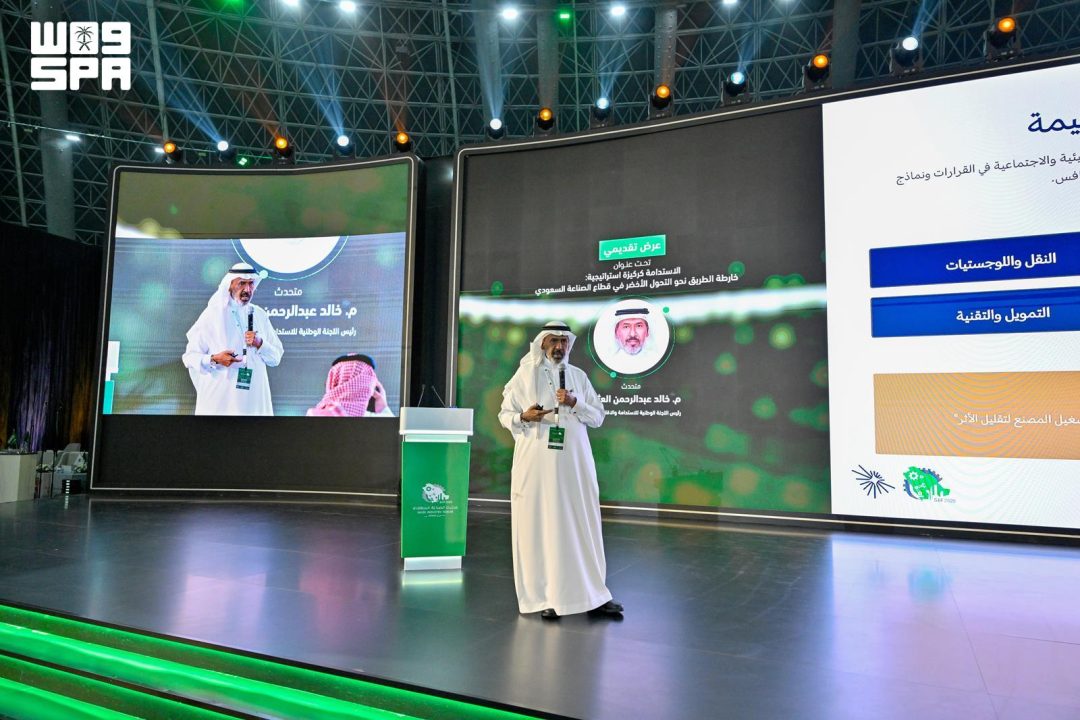
Jeddah hosted the review of a roadmap for transitioning toward a more sustainable and competitive Saudi industrial sector during the second day of the Saudi Industry Forum 2026.
According to SPA, Eng. Khalid Al-Othman, Chairman of the National Committee for Sustainability and Green Economy, stated that sustainability is a factor in improving industrial efficiency, competitiveness, and sustainable growth rather than just an environmental obligation.
Al-Othman noted that the transition requires integrated roles from government and regulatory bodies, the private and industrial sectors, the financial sector, and providers of innovation and technology to build a supporting ecosystem.
Challenges identified for industrial enterprises include limited data and measurement, varying readiness levels, difficulty translating goals into operational actions, and project readiness regarding market connection, supply chains, and financing.
Targets for 2030 include expanding circular economy applications, fostering digitalization and innovation, enhancing resource and production efficiency, and increasing project investment readiness. The goals also involve developing value chains and improving access to financing to boost global competitiveness.
What are the 2030 targets for the Saudi industrial sector? The targets for 2030 include boosting global competitiveness and improving the industrial sector’s access to financing. Additionally, the goals focus on developing value chains, increasing project investment readiness, expanding circular economy applications, fostering digitalization and innovation, and enhancing the efficiency of production and resources.
What challenges do Saudi industrial enterprises currently face? Industrial enterprises face challenges such as limited data and measurement and varying levels of readiness. They also struggle with translating goals into operational actions and ensuring project readiness to secure financing and connect with supply chains and markets.
Who must collaborate to support the transition to industrial sustainability? Building an integrated ecosystem for this transition requires the integrated roles of government and regulatory bodies alongside the private and industrial sectors. Furthermore, collaboration is needed from the financial sector and providers of technology and innovation to enhance national industry competitiveness.