


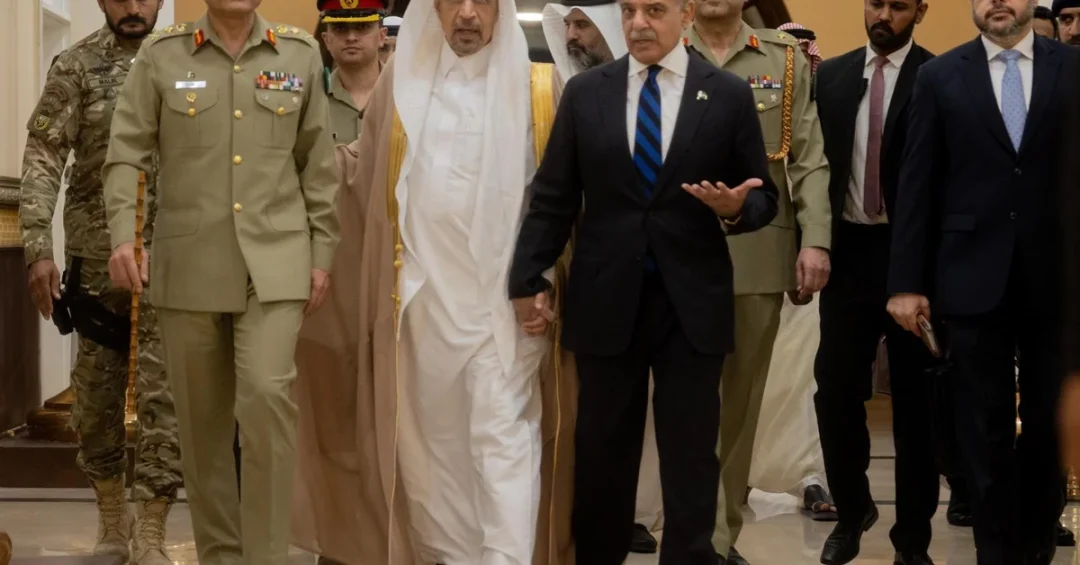
Pakistani Prime Minister Shehbaz Sharif received Saudi Minister of Investment Khalid Al-Falih and a high-level delegation from the Kingdom’s public and private sectors at his office in Islamabad on October 11, 2024. The meeting underscored the deepening economic ties between Saudi Arabia and Pakistan and highlighted the Kingdom’s commitment to expanding investment across vital sectors. The delegation’s visit, part of an official mission to Pakistan, also included participation in the Saudi-Pakistani Business Forum, where both sides explored new avenues for collaboration. The Pakistani prime minister expressed gratitude to the Custodian of the Two Holy Mosques, King Salman bin Abdulaziz Al Saud, and His Royal Highness Prince Mohammed bin Salman, Crown Prince and Prime Minister, for their unwavering support of Pakistan and for reinforcing bilateral cooperation. This high-level engagement reflects the strong fraternal bonds and strategic partnership between the two nations.
How does this visit signal a new chapter in Saudi-Pakistani economic relations? The meeting comes at a time when both countries are seeking to diversify their economies and deepen trade links. Saudi Arabia, under Vision 2030, is expanding its global investment footprint, while Pakistan aims to attract foreign direct investment to boost key industries. The presence of a large Saudi delegation, including business leaders, demonstrates the Kingdom’s serious intent to translate diplomatic goodwill into tangible economic projects. The discussions focused on sectors such as agriculture, minerals, mining, food security, and infrastructure, aligning with Pakistan’s development priorities and Saudi Arabia’s strategic interests.
Context and Background
What historical ties underpin the current Saudi-Pakistani relationship? Saudi Arabia and Pakistan have enjoyed decades of close diplomatic, economic, and cultural relations, rooted in shared religious and cultural heritage. The Kingdom has consistently supported Pakistan’s development through financial assistance, energy supplies, and investment. In recent years, both nations have sought to institutionalize economic cooperation through forums like the Saudi-Pakistani Business Forum, which brings together entrepreneurs and government officials to foster partnerships. The visit by Minister Al-Falih and his delegation builds on previous high-level exchanges, including the Saudi-Pakistan Supreme Coordination Council, established to enhance collaboration across various fields. These efforts are part of a broader strategy to strengthen South-South cooperation and regional stability.
The timing of this visit is significant, as Pakistan navigates economic challenges and seeks to attract foreign investment to stabilize its economy. Saudi Arabia, with its abundant resources and Vision 2030-driven diversification, is a natural partner. The Kingdom has already made substantial investments in Pakistan, including a $5 billion deposit to support Pakistan’s foreign reserves and various energy projects. The current delegation’s focus on agriculture, mining, and infrastructure indicates a shift toward long-term, productive investments that can create jobs and stimulate growth. This aligns with Saudi Arabia’s goal of expanding its non-oil investments globally and Pakistan’s need for sustainable development.
Key Details of the Meeting
What specific outcomes emerged from the discussions? During the meeting, Prime Minister Shehbaz Sharif expressed satisfaction with the fruitful discussions held at the Saudi-Pakistani Business Forum and invited the Saudi side to invest in Pakistan’s aviation sector. He noted that the dialogue between the business communities has facilitated the development of new investments, emphasizing that the visit represents a significant event in expanding and diversifying economic relations. Minister Al-Falih reiterated the Kingdom’s determination to promote investment in Pakistan in vital fields, especially agriculture, minerals, mining, food security, and infrastructure. The delegation included representatives from both the public and private sectors, reflecting a comprehensive approach to economic engagement.
The Saudi-Pakistani Business Forum, held on the sidelines of the visit, provided a platform for companies from both countries to explore joint ventures and sign agreements. According to official sources, several memoranda of understanding were discussed, covering areas such as agricultural processing, mineral exploration, and logistics. The aviation sector invitation is particularly notable, as Pakistan seeks to modernize its airports and airlines, and Saudi investors have shown interest in airport development and cargo services. These initiatives are expected to enhance trade connectivity and people-to-people exchanges. The minister’s visit also included meetings with key Pakistani ministers and business leaders, further solidifying the economic partnership.
International and Regional Impact
How does this partnership resonate beyond the two countries? The strengthening of Saudi-Pakistani economic ties has significant implications for regional stability and prosperity. As two influential members of the Organization of Islamic Cooperation (OIC), their collaboration can drive investment in neighboring countries and foster greater integration in South Asia and the Middle East. Saudi Arabia’s investment in Pakistan’s infrastructure and energy sectors could also enhance connectivity between the Gulf and Central Asia, supporting China’s Belt and Road Initiative and other regional trade corridors. Moreover, the partnership serves as a model for South-South cooperation, demonstrating how resource-rich and labor-rich economies can complement each other.
On the international stage, this visit reinforces Saudi Arabia’s role as a global investor and peacemaker. The Kingdom’s commitment to Pakistan’s economic stability contributes to broader efforts to combat extremism and promote moderate development. For Pakistan, closer ties with Saudi Arabia provide a diplomatic and economic anchor amid shifting geopolitical dynamics. The United States, China, and other powers are closely watching these developments, as they impact regional balances. The Saudi-Pakistani axis is likely to grow in importance, especially in energy, trade, and security cooperation. This visit thus represents more than a bilateral meeting; it is a strategic alignment with far-reaching consequences.
Economic and Strategic Significance
What economic benefits can Pakistan expect from this engagement? The focus on agriculture, mining, and infrastructure addresses critical gaps in Pakistan’s economy. Saudi investment in agriculture can boost food security and export potential, while mining ventures could unlock Pakistan’s vast mineral wealth, including copper, gold, and coal. Infrastructure projects, such as roads, ports, and special economic zones, will improve connectivity and attract further investment. The aviation sector invitation opens doors for Saudi expertise in airport management and airline expansion. These investments are expected to create jobs, transfer technology, and increase Pakistan’s export capacity. For Saudi Arabia, these ventures offer profitable returns and secure supply chains for food and minerals.
Strategically, the partnership enhances Saudi Arabia’s influence in South Asia and provides a reliable partner in a volatile region. Pakistan gains a steadfast ally that can advocate for its interests in international forums. The economic cooperation also complements military and counterterrorism ties, creating a comprehensive relationship. Both countries are members of the Islamic Military Counter Terrorism Coalition, and their economic synergy supports shared security goals. As Saudi Arabia pursues Vision 2030, it seeks stable partners like Pakistan to diversify its investments and reduce dependence on oil. This mutually beneficial relationship is poised to deepen in the coming years, with regular high-level visits and business forums.
Vision 2030 Alignment
How does this visit reflect Saudi Arabia’s Vision 2030 objectives? Vision 2030 aims to diversify the Kingdom’s economy, expand non-oil investments, and strengthen global partnerships. Investing in Pakistan’s agriculture, mining, and infrastructure aligns with these goals by creating new revenue streams and enhancing food security. The Public Investment Fund (PIF) and Saudi private sector companies are increasingly looking abroad for opportunities, and Pakistan offers a large market with untapped potential. The visit by Minister Al-Falih, who also chairs the Saudi-Pakistani Business Council, underscores the Kingdom’s commitment to economic diplomacy. By fostering such partnerships, Saudi Arabia positions itself as a leader in South-South cooperation and a catalyst for regional development.
Furthermore, Vision 2030 emphasizes the importance of international collaboration in achieving sustainable development. The Saudi-Pakistani partnership exemplifies this by combining Saudi capital and expertise with Pakistan’s human and natural resources. The aviation sector invitation, in particular, could lead to joint ventures that enhance connectivity and tourism, another Vision 2030 priority. As Saudi Arabia continues to open up to the world, its relationship with Pakistan will serve as a testament to the power of fraternal ties and strategic vision. This visit marks another step toward a more prosperous and interconnected future for both nations.
20 Questions
Q1. Who received the Saudi Minister of Investment in Islamabad?
A1. Pakistani Prime Minister Shehbaz Sharif received Saudi Minister of Investment Khalid Al-Falih and his delegation at his office in Islamabad on October 11, 2024.
Q2. What was the purpose of the Saudi delegation’s visit to Pakistan?
A2. The visit aimed to strengthen bilateral economic ties, explore investment opportunities, and participate in the Saudi-Pakistani Business Forum. It focused on sectors like agriculture, mining, and infrastructure.
Q3. Which Saudi leaders did the Pakistani Prime Minister thank?
A3. Prime Minister Shehbaz Sharif thanked the Custodian of the Two Holy Mosques, King Salman bin Abdulaziz Al Saud, and Crown Prince Mohammed bin Salman for their unwavering support of Pakistan.
Q4. What sectors did the Saudi Minister of Investment highlight for potential investment?
A4. Minister Khalid Al-Falih emphasized agriculture, minerals, mining, food security, and infrastructure as key areas for Saudi investment in Pakistan.
Q5. What is the Saudi-Pakistani Business Forum?
A5. It is a platform that brings together business leaders from both countries to discuss and facilitate new investments and economic partnerships. It was held during the delegation’s visit.
Q6. What invitation did the Pakistani Prime Minister extend to Saudi investors?
A6. Prime Minister Shehbaz Sharif invited Saudi investors to invest in Pakistan’s aviation sector, recognizing its potential for growth and modernization.
Q7. How did the Pakistani Prime Minister describe the visit’s significance?
A7. He described it as a significant event in expanding and diversifying economic relations and investment between the two countries, reflecting the depth of their fraternal bonds.
Q8. What did the Saudi Minister of Investment reiterate regarding investment in Pakistan?
A8. Minister Al-Falih reiterated the Kingdom’s determination and commitment to promote investment in Pakistan across vital fields, underscoring Saudi Arabia’s serious intent.
Q9. How does this visit align with Saudi Arabia’s Vision 2030?
A9. It aligns with Vision 2030’s goals of diversifying the economy, expanding non-oil investments, and strengthening global partnerships, particularly in agriculture and mining.
Q10. What are the historical ties between Saudi Arabia and Pakistan?
A10. The two countries share decades of close diplomatic, economic, and cultural relations rooted in shared religious and cultural heritage, with Saudi Arabia consistently supporting Pakistan.
Q11. What economic challenges is Pakistan facing that this investment could address?
A11. Pakistan seeks foreign direct investment to stabilize its economy, create jobs, and boost key industries like agriculture and mining. Saudi investment can provide crucial capital and expertise.
Q12. What role does the Saudi-Pakistani Business Council play?
A12. The council, chaired by Minister Al-Falih, facilitates business dialogue and partnerships between the two countries, promoting trade and investment opportunities.
Q13. What specific agreements or MoUs were discussed during the visit?
A13. Several memoranda of understanding were discussed, covering agricultural processing, mineral exploration, and logistics, though details are still being finalized.
Q14. How can Saudi investment in Pakistan’s aviation sector benefit both countries?
A14. It can modernize Pakistan’s airports and airlines, enhance connectivity, and create joint ventures in cargo and passenger services, benefiting trade and tourism.
Q15. What is the significance of Saudi Arabia’s investment in Pakistan’s mining sector?
A15. Pakistan has vast untapped mineral resources like copper and gold. Saudi investment can unlock this wealth, generate revenue, and create jobs, while providing Saudi Arabia with valuable resources.
Q16. How does this partnership impact regional stability?
A16. It promotes economic integration and prosperity in South Asia and the Middle East, serving as a model for South-South cooperation and enhancing regional stability.
Q17. What are the implications for food security?
A17. Saudi investment in Pakistan’s agriculture can boost food production and exports, helping both countries achieve greater food security and reduce import dependence.
Q18. How does this visit reflect Saudi Arabia’s global investment strategy?
A18. It demonstrates Saudi Arabia’s proactive approach to diversifying investments abroad, seeking profitable opportunities, and building strategic partnerships in key regions.
Q19. What future steps can be expected from this meeting?
A19. Follow-up meetings, signing of agreements, and implementation of joint projects in agriculture, mining, and infrastructure are expected, with continued high-level exchanges.
Q20. How does this event showcase Saudi-Pakistani brotherhood?
A20. The warm reception and mutual respect displayed during the visit highlight the deep fraternal bonds and shared aspirations for prosperity between the two nations.
Reader Feedback
We value your thoughts. Please share your feedback on this article.
Your feedback helps us improve our coverage.
Related articles
 Reef Saudi Launches International Training Program for Farmers
 Egyptian Investment Minister Meets with Saudi General Authority of Foreign Trade Undersecretary
 SOCPA to Host Accounting Technologies Conference on October 16-19
 FII Institute to Hold News Conference on October 15 for 8th FII
 Estidamah Launches New Program for Sustainable Greenhouse Crops
 Biban24: Over 40 Entities to Empower Entrepreneurs in Riyadh