


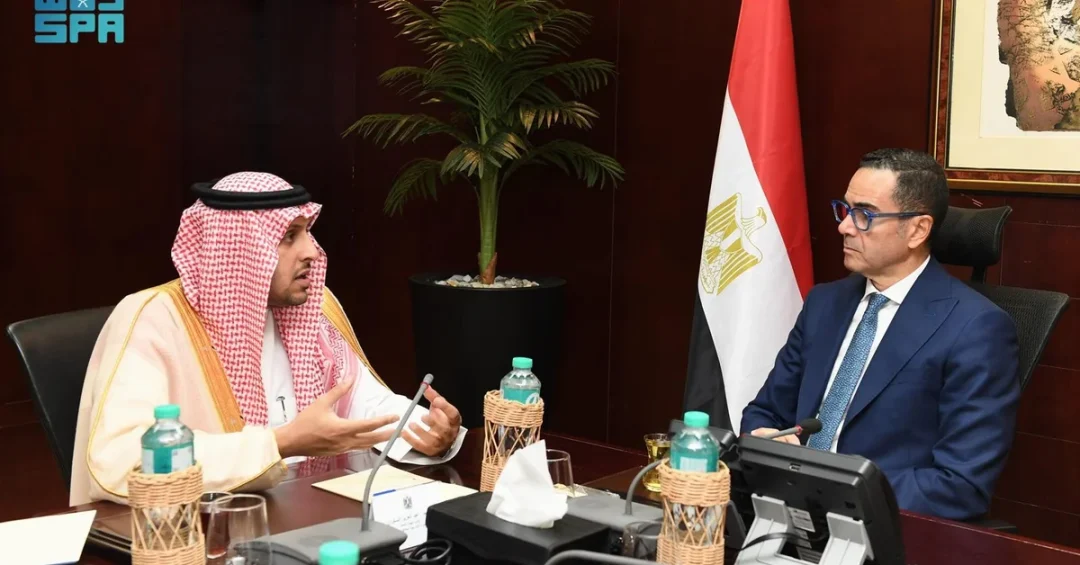
Egyptian Minister of Investment and Foreign Trade Eng. Hassan Al-Khatib met with Saudi General Authority of Foreign Trade Undersecretary for International Relations Abdulaziz bin Omar Al-Sakran in Cairo on October 9-10, 2024, on the sidelines of the technical follow-up team meeting of the Saudi-Egyptian Joint Committee. The meeting underscored the enduring economic partnership between the Kingdom of Saudi Arabia and the Arab Republic of Egypt, two pivotal nations whose cooperation continues to shape regional prosperity. The discussions focused on enhancing bilateral trade and investment ties, with both sides commending the positive outcomes achieved by the technical team. The encounter reflects the shared commitment of Saudi Arabia and Egypt to advancing mutual economic interests under the framework of the Saudi-Egyptian Joint Committee.
What does this high-level engagement signal about the future of Saudi-Egyptian economic relations? The meeting, attended by Commercial Attaché at the Saudi embassy in Egypt Anwar bin Hasusah, highlighted the robust institutional mechanisms that drive collaboration between the two countries. It comes amid a broader push by Saudi Arabia, under the leadership of the Custodian of the Two Holy Mosques King Salman bin Abdulaziz Al Saud and His Royal Highness Crown Prince Mohammed bin Salman, to deepen ties with key Arab partners and promote sustainable development across the region. The technical follow-up team’s work is essential for translating high-level agreements into tangible economic outcomes.
Context and Background
How did the Saudi-Egyptian Joint Committee become a cornerstone of bilateral relations? Established to foster cooperation across a wide spectrum of sectors, the committee has long served as a platform for dialogue and coordination between the two nations. Over the years, it has facilitated agreements in trade, investment, industry, energy, and infrastructure, among other areas. The technical follow-up team, which met on October 9-10, plays a critical role in monitoring the implementation of these agreements and ensuring that commitments are met in a timely and effective manner. This meeting in Cairo is part of a regular schedule of consultations that keep the partnership dynamic and responsive to emerging opportunities.
The relationship between Saudi Arabia and Egypt is rooted in shared history, culture, and strategic interests. Both countries are members of the Arab League and the Organization of Islamic Cooperation, and they have consistently supported each other on regional and international issues. Economically, Saudi Arabia is one of Egypt’s largest trading partners and a major investor, with Saudi companies active in sectors ranging from banking and real estate to agriculture and retail. In recent years, the two nations have intensified their efforts to boost trade volumes and diversify economic cooperation, aligning with their respective national development plans.
Eng. Hassan Al-Khatib, who assumed the role of Egyptian Minister of Investment and Foreign Trade in July 2024, has been a strong advocate for attracting foreign investment and enhancing Egypt’s trade competitiveness. His meeting with Abdulaziz bin Omar Al-Sakran, a seasoned Saudi diplomat and trade expert, reflects the personal commitment of both leaders to advancing the bilateral agenda. The presence of Commercial Attaché Anwar bin Hasusah further underscores the importance Saudi Arabia places on its economic diplomacy in Egypt. Together, these officials are working to remove obstacles to trade and investment and to create new avenues for collaboration.
Key Details of the Meeting
What specific topics were on the agenda during the Cairo talks? While the official statement did not disclose a detailed list, the discussions are understood to have covered ways to increase bilateral trade, facilitate investment flows, and enhance cooperation in priority sectors. The Egyptian minister commended the strong relations between the two countries and lauded the positive results achieved by the technical follow-up team, signaling satisfaction with the pace of implementation of joint initiatives. The meeting also provided an opportunity to review progress on previously signed agreements and to explore new areas of mutual interest, such as renewable energy, digital economy, and logistics.
The Saudi-Egyptian Joint Committee has been instrumental in driving projects that benefit both economies. For example, Saudi investments in Egypt span key sectors including petroleum, petrochemicals, banking, and real estate. Egyptian companies, meanwhile, have found opportunities in the Saudi market, particularly in construction, food processing, and professional services. The technical follow-up team’s role is to ensure that such projects move forward smoothly, addressing any regulatory or logistical challenges that may arise. By meeting regularly, officials from both sides can maintain momentum and adapt to changing economic circumstances.
The timing of this meeting is significant, as it follows a series of high-level exchanges between Saudi and Egyptian leaders. Earlier in 2024, both countries reaffirmed their commitment to deepening strategic ties during various bilateral and multilateral forums. The Cairo meeting builds on these engagements and sets the stage for further cooperation. It also comes as Egypt continues to implement economic reforms aimed at stabilizing its economy and attracting foreign direct investment, with Saudi Arabia playing a supportive role. The Kingdom has consistently backed Egypt’s economic stability, recognizing that a prosperous Egypt contributes to regional security and growth.
International and Regional Impact
Why does the Saudi-Egyptian partnership matter beyond the two countries? As two of the largest and most influential Arab economies, Saudi Arabia and Egypt play a pivotal role in shaping regional economic trends. Their cooperation can drive integration across the Middle East and North Africa, creating a more interconnected and resilient economic bloc. Enhanced trade and investment flows between them can serve as a model for other Arab nations, demonstrating the benefits of collective action. Moreover, a strong Saudi-Egyptian axis can amplify the region’s voice in global economic forums and attract greater international investment.
On the international stage, the partnership aligns with broader efforts to promote stability and development in the Arab world. Saudi Arabia’s Vision 2030 and Egypt’s Vision 2030 share common objectives: economic diversification, private sector growth, and sustainable development. By working together, the two countries can leverage their complementary strengths—Saudi Arabia’s financial resources and strategic location, and Egypt’s large market and skilled workforce. This synergy not only benefits both nations but also contributes to the prosperity of the wider region. The Cairo meeting is a testament to the enduring strength of this relationship and its potential to deliver tangible results.
Economic and Strategic Significance
What economic gains can be expected from closer Saudi-Egyptian cooperation? Bilateral trade between Saudi Arabia and Egypt has been growing steadily, with significant potential for further expansion. Key Saudi exports to Egypt include petroleum products, plastics, and chemicals, while Egyptian exports to the Kingdom include fresh produce, textiles, and electrical goods. Investment flows are equally important: Saudi Arabia is a leading investor in Egypt, with cumulative investments exceeding billions of dollars. The meetings of the joint committee and its technical team help to identify and address barriers to trade, such as customs procedures and standards, making it easier for businesses to operate across borders.
Strategically, the relationship is vital for regional security and stability. Egypt’s geographical position as a bridge between Africa, the Middle East, and Europe makes it a key partner for Saudi Arabia’s trade and logistics ambitions. The Kingdom’s Vision 2030 includes goals to become a global logistics hub, and cooperation with Egypt can support this objective by enhancing connectivity and facilitating trade routes. Similarly, Egypt benefits from Saudi investment and expertise in developing its infrastructure and industrial base. The collaborative efforts extend to areas such as maritime transport, aviation, and digital connectivity, all of which are essential for economic modernization.
The meeting also highlights the importance of people-to-people ties and institutional linkages. The presence of Commercial Attaché Anwar bin Hasusah at the meeting underscores the role of diplomatic missions in fostering economic relations. Saudi Arabia maintains a robust commercial presence in Egypt, and Egyptian professionals and workers contribute to the Kingdom’s economy. These exchanges build trust and understanding, which are essential for long-term partnership. As both countries continue to implement their reform agendas, the Saudi-Egyptian relationship is poised to grow even stronger, delivering benefits for citizens and businesses alike.
Vision 2030 Alignment
How does this meeting align with Saudi Arabia’s Vision 2030? The Kingdom’s ambitious plan to transform its economy and society relies heavily on international partnerships and regional cooperation. Egypt, as a brotherly nation and strategic ally, is a key partner in this journey. By strengthening economic ties, Saudi Arabia can access new markets, diversify its investments, and promote its expertise in areas such as renewable energy and smart cities. The technical follow-up team’s work directly supports Vision 2030’s objectives of expanding non-oil trade, attracting foreign investment, and enhancing the Kingdom’s global competitiveness.
Furthermore, Vision 2030 emphasizes the importance of building strong regional alliances to ensure stability and prosperity. The Saudi-Egyptian Joint Committee is a concrete example of this approach, demonstrating how coordinated action can yield positive results. As Saudi Arabia continues to lead in regional diplomacy, its partnership with Egypt will remain a cornerstone of its foreign economic policy. The Cairo meeting is not just a routine consultation; it is a reaffirmation of the enduring bonds between two nations committed to a shared future of progress and prosperity. It reflects the visionary leadership of the Kingdom and its dedication to fostering a more integrated and dynamic Arab world.
20 Questions
Q1. What was the main purpose of the meeting between the Egyptian Minister of Investment and Foreign Trade and the Saudi General Authority of Foreign Trade Undersecretary?
A1. The meeting aimed to discuss ways to strengthen bilateral trade and investment ties between Saudi Arabia and Egypt, and to review the positive results achieved by the technical follow-up team of the Saudi-Egyptian Joint Committee.
Q2. Where and when did the meeting take place?
A2. The meeting was held in Cairo on October 9-10, 2024, on the sidelines of the technical follow-up team meeting of the Saudi-Egyptian Joint Committee.
Q3. Who represented Saudi Arabia at the meeting?
A3. Saudi Arabia was represented by Abdulaziz bin Omar Al-Sakran, Undersecretary for International Relations at the Saudi General Authority of Foreign Trade, and Commercial Attaché Anwar bin Hasusah from the Saudi embassy in Egypt.
Q4. Who represented Egypt at the meeting?
A4. Egypt was represented by Eng. Hassan Al-Khatib, Minister of Investment and Foreign Trade.
Q5. What is the Saudi-Egyptian Joint Committee?
A5. The Saudi-Egyptian Joint Committee is a bilateral mechanism established to enhance cooperation across various sectors, including trade, investment, industry, and energy, and to monitor the implementation of joint agreements.
Q6. What role does the technical follow-up team play?
A6. The technical follow-up team is responsible for monitoring the progress of joint initiatives and ensuring that agreements between Saudi Arabia and Egypt are implemented effectively and on schedule.
Q7. How did the Egyptian minister describe the relations between the two countries?
A7. Eng. Hassan Al-Khatib commended the strong relations between Egypt and Saudi Arabia and praised the positive results achieved by the technical follow-up team.
Q8. What are some key areas of Saudi-Egyptian economic cooperation?
A8. Key areas include trade, investment, industry, energy, infrastructure, renewable energy, digital economy, and logistics, among others.
Q9. How significant is Saudi Arabia as an investor in Egypt?
A9. Saudi Arabia is one of the largest investors in Egypt, with cumulative investments in sectors such as petroleum, petrochemicals, banking, real estate, and agriculture, totaling billions of dollars.
Q10. What benefits does the Saudi-Egyptian partnership bring to the region?
A10. The partnership promotes regional economic integration, stability, and prosperity, and serves as a model for cooperation among Arab nations, enhancing the region’s global competitiveness.
Q11. How does this meeting align with Saudi Vision 2030?
A11. The meeting supports Vision 2030 by fostering international partnerships, expanding non-oil trade, attracting investment, and strengthening regional alliances, all of which are key objectives of the Kingdom’s transformation plan.
Q12. What is the significance of the commercial attaché’s attendance?
A12. The presence of Commercial Attaché Anwar bin Hasusah highlights the role of Saudi diplomatic missions in facilitating economic relations and supporting Saudi businesses in Egypt.
Q13. What are the main Saudi exports to Egypt?
A13. Saudi Arabia’s main exports to Egypt include petroleum products, plastics, and chemicals.
Q14. What are the main Egyptian exports to Saudi Arabia?
A14. Egypt’s main exports to Saudi Arabia include fresh produce, textiles, and electrical goods.
Q15. How often does the Saudi-Egyptian Joint Committee meet?
A15. The committee meets regularly, with technical follow-up team meetings held periodically to review progress and address any challenges in the implementation of joint initiatives.
Q16. What economic reforms is Egypt implementing, and how does Saudi Arabia support them?
A16. Egypt is implementing reforms to stabilize its economy and attract foreign investment. Saudi Arabia supports these efforts through investments, trade, and financial assistance, recognizing that a stable Egypt benefits regional prosperity.
Q17. What is the expected impact of this meeting on future Saudi-Egyptian relations?
A17. The meeting is expected to further strengthen bilateral ties, leading to increased trade and investment flows, and deeper cooperation in priority sectors, ultimately benefiting both nations.
Q18. How does the Saudi-Egyptian partnership contribute to regional security?
A18. By promoting economic stability and development, the partnership helps reduce regional tensions and fosters a more secure environment conducive to growth and prosperity.
Q19. What sectors offer the greatest potential for future Saudi-Egyptian cooperation?
A19. Promising sectors include renewable energy, technology, tourism, logistics, and manufacturing, where both countries can leverage their complementary strengths.
Q20. What message does this meeting send to the international community?
A20. The meeting demonstrates the enduring strength of Saudi-Egyptian relations and their shared commitment to economic cooperation, setting a positive example for regional partnerships and global engagement.
Reader Feedback
We value your thoughts. Please share your feedback on this article.
Your feedback helps us improve our coverage.
Related articles
 SOCPA to Host Accounting Technologies Conference on October 16-19
 FII Institute to Hold News Conference on October 15 for 8th FII
 Estidamah Launches New Program for Sustainable Greenhouse Crops
 Biban24: Over 40 Entities to Empower Entrepreneurs in Riyadh
 Saudi Ministry Promotes Broiler Pigeon Breeding for Food Security
 KSIADC, ewpartners Sign MoU for E-commerce Logistics Zone