


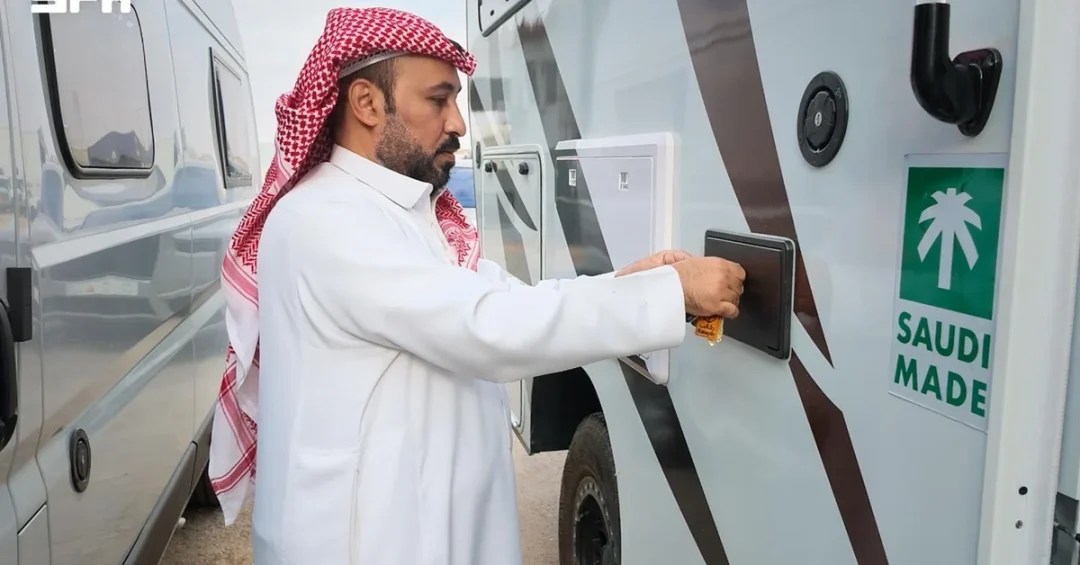
Qassim Region has solidified its position as a leading hub for the manufacturing of caravans and mobile residential trailers, leveraging decades of accumulated local expertise to serve a growing market of outdoor enthusiasts and campers. According to the Saudi Press Agency (SPA), the industry is experiencing a surge in interest as winter approaches, offering a diverse array of designs, sizes, and functions that cater to both individual and family needs. This development underscores the region’s economic diversification and its alignment with the Kingdom’s broader tourism and manufacturing goals.
The caravan industry in Qassim has evolved significantly in recent years, transitioning from simple designs intended for road trips to fully equipped mobile living units. These modern units now include amenities such as seating and sleeping areas, kitchens, restrooms, air conditioning, lighting, and power systems, providing options tailored to various preferences. This evolution reflects a deeper understanding of consumer demands and a commitment to quality and innovation. As the sector grows, it not only boosts local manufacturing but also supports the Kingdom’s Vision 2030 objectives by enhancing domestic production and promoting sustainable tourism.
Context and Background
How did Qassim Region become a nucleus for caravan manufacturing in the Kingdom? The answer lies in its historical reliance on traditional crafts and its strategic location as a crossroads for trade and travel. Over the years, local artisans and manufacturers have honed their skills, passing down knowledge through generations. This foundation, combined with modern techniques and materials, has enabled the region to produce caravans that meet international standards while retaining a unique local character. The industry’s growth is also driven by a rising interest in outdoor activities and domestic tourism, spurred by government initiatives to promote the Kingdom’s natural and cultural heritage.
The Saudi Press Agency reports that the caravan industry in Qassim has moved beyond basic designs to sophisticated mobile living units. This shift is not merely a response to market demand but also a reflection of the region’s adaptability and entrepreneurial spirit. Manufacturers are now focusing on thermal insulation, lightweight construction, and material quality, ensuring that their products are suitable for the diverse climatic conditions of the Kingdom. The availability of nine designated caravan sites in Qassim, as identified in the 2024–2025 Camping and Caravan Guide issued by the National Center for Vegetation Cover Development and Combating Desertification, further supports the industry’s growth by providing organized locations for camping and excursions.
Moreover, the caravan industry in Qassim is a testament to the region’s economic diversification efforts. By fostering a local manufacturing base, the region reduces reliance on imports and creates job opportunities for its residents. This aligns with the Kingdom’s Vision 2030, which aims to diversify the economy away from oil and develop non-oil sectors such as tourism and manufacturing. The industry’s expansion also complements other initiatives, such as the Saudi Green Initiative, by promoting sustainable practices and encouraging outdoor recreation in harmony with nature.
Key Details
What exactly does the caravan industry in Qassim offer to consumers? The range of products is extensive, from towable caravans and motorhomes built on vehicle chassis to detachable camper units that can be mounted or removed as needed. Sizes, interior spaces, and equipment vary according to intended use, with particular attention to thermal insulation, lightweight construction, and material quality. This diversity ensures that there is a caravan for every need, whether for a weekend getaway or an extended road trip. Manufacturers also offer customization options, allowing customers to tailor their caravans to their specific preferences, from interior layouts to exterior finishes.
The industry’s growth is supported by a robust supply chain and skilled workforce. Local manufacturers source materials from within the Kingdom and abroad, ensuring high quality while supporting the national economy. The workforce comprises trained technicians, designers, and engineers who contribute to the innovation and refinement of caravan models. This ecosystem not only produces high-quality products but also fosters a culture of entrepreneurship and craftsmanship. The Saudi Press Agency notes that the industry caters to the needs of outdoor enthusiasts and campers, with interest growing as winter approaches, indicating a seasonal peak in demand that manufacturers are well-prepared to meet.
Furthermore, the 2024–2025 Camping and Caravan Guide highlights the availability of organized locations for camping and excursions using recreational vehicles (RVs). This guide, issued by the National Center for Vegetation Cover Development and Combating Desertification, identifies nine designated caravan sites in Qassim Region, providing a framework for safe and enjoyable outdoor experiences. These sites are equipped with necessary facilities, ensuring that campers can enjoy the region’s natural beauty without compromising on comfort or safety. The guide also serves as a promotional tool, attracting visitors from other regions and contributing to the local tourism economy.
International and Regional Impact
How does Qassim’s caravan industry resonate beyond the Kingdom’s borders? The region’s products are gaining recognition in neighboring Gulf countries and beyond, thanks to their quality and competitive pricing. This export potential not only boosts the local economy but also enhances Saudi Arabia’s reputation as a manufacturer of specialized vehicles. The industry’s growth is part of a larger trend of intra-regional trade and cooperation, as Gulf Cooperation Council (GCC) countries seek to diversify their economies and promote tourism. Saudi Arabia’s leadership in this sector reinforces its role as a regional hub for innovation and manufacturing.
Regionally, the caravan industry in Qassim contributes to the development of the tourism sector, which is a key pillar of Vision 2030. By providing high-quality caravans and designated camping sites, the region attracts domestic and international tourists, thereby supporting the Kingdom’s goal of increasing tourism’s contribution to GDP. This also aligns with the National Tourism Strategy, which aims to attract 100 million visitors annually by 2030. The industry’s success story is an example of how local expertise and government support can create a thriving sector that benefits the entire region.
Economic and Strategic Significance
What makes the caravan industry in Qassim economically significant? It represents a successful model of import substitution, reducing the Kingdom’s reliance on foreign-made caravans and retaining capital within the local economy. The industry also creates employment opportunities across various skill levels, from manufacturing and assembly to sales and after-sales services. Moreover, it stimulates ancillary industries such as parts manufacturing, upholstery, and electronics, creating a multiplier effect that benefits the broader economy. This aligns with Vision 2030’s objective of increasing non-oil revenues and fostering a diversified industrial base.
Strategically, the caravan industry supports the Kingdom’s goals of enhancing self-sufficiency and promoting sustainable development. By manufacturing locally, the industry reduces the carbon footprint associated with imports and ensures that products are tailored to local conditions. It also complements efforts to develop the tourism sector, particularly in nature-based and adventure tourism. The industry’s growth is a clear indication of the private sector’s responsiveness to government policies and market signals, showcasing the dynamism of the Saudi economy under Vision 2030.
Vision 2030 Alignment
How does the caravan industry in Qassim align with Saudi Arabia’s Vision 2030? It directly contributes to several key objectives, including economic diversification, job creation, and the enhancement of tourism. By developing a local manufacturing base, the region supports the Vision’s aim to increase non-oil exports and reduce dependence on oil revenues. The industry also promotes domestic tourism by providing the means for citizens and residents to explore the Kingdom’s diverse landscapes, from the deserts of Qassim to the mountains of Asir. This aligns with the Vision’s goal of improving quality of life and fostering national pride.
Furthermore, the caravan industry exemplifies the Vision’s emphasis on innovation and entrepreneurship. Local manufacturers are adopting advanced technologies and sustainable practices, positioning the Kingdom as a leader in niche manufacturing. The industry’s growth also supports the development of small and medium enterprises (SMEs), which are crucial for job creation and economic resilience. As the Kingdom continues to invest in tourism infrastructure and promote domestic travel, the caravan industry in Qassim is poised for further expansion, contributing to a vibrant and diversified economy that honors the past while embracing the future.
20 Questions
Q1. What is the primary industry discussed in the article?
A1. The primary industry is the manufacturing of caravans and mobile residential trailers in Qassim Region, Saudi Arabia, which has become a leading hub for production and outfitting.
Q2. According to the Saudi Press Agency, what has driven the evolution of the caravan industry in Qassim?
A2. The evolution has been driven by accumulated local expertise, growing interest in outdoor activities, and the need for fully equipped mobile living units catering to individuals and families.
Q3. What types of caravans are produced in Qassim?
A3. Products include towable caravans, motorhomes built on vehicle chassis, and detachable camper units that can be mounted or removed as needed, with various sizes and equipment.
Q4. What amenities are commonly included in modern caravans from Qassim?
A4. Modern caravans include seating and sleeping areas, kitchens, restrooms, air conditioning, lighting, and power systems, offering options tailored to different needs.
Q5. How many designated caravan sites in Qassim are identified in the 2024–2025 Camping and Caravan Guide?
A5. The guide identifies nine designated caravan sites in Qassim Region, providing organized locations for camping and excursions using recreational vehicles.
Q6. Which government entity issued the 2024–2025 Camping and Caravan Guide?
A6. The guide was issued by the National Center for Vegetation Cover Development and Combating Desertification, highlighting organized camping locations.
Q7. What specific design considerations are emphasized in Qassim’s caravan manufacturing?
A7. Manufacturers emphasize thermal insulation, lightweight construction, and material quality to ensure caravans are suitable for diverse climatic conditions and consumer needs.
Q8. How does the caravan industry in Qassim contribute to Saudi Arabia’s economy?
A8. It supports economic diversification by reducing imports, creating jobs, and stimulating ancillary industries, aligning with Vision 2030’s goals for non-oil revenue growth.
Q9. What is the significance of the nine designated caravan sites in Qassim?
A9. They provide safe and organized locations for camping, promoting domestic tourism and supporting the local economy by attracting visitors to the region.
Q10. How does the caravan industry align with Vision 2030?
A10. It aligns by fostering economic diversification, job creation, and tourism development, key pillars of Vision 2030 aimed at reducing oil dependence and enhancing quality of life.
Q11. What role does local expertise play in Qassim’s caravan industry?
A11. Local expertise, built over generations, enables the production of high-quality caravans that combine traditional craftsmanship with modern techniques, meeting international standards.
Q12. Are Qassim’s caravans exported to other countries?
A12. While the article does not specify export volumes, the industry’s growth and quality suggest potential for regional exports, contributing to Saudi Arabia’s non-oil export goals.
Q13. What is the seasonal peak for caravan interest in Qassim?
A13. Interest grows as winter approaches, making it the peak season for camping and caravan activities due to cooler weather in the region.
Q14. How does the caravan industry support Saudi Arabia’s tourism goals?
A14. By providing high-quality caravans and designated camping sites, it attracts domestic and international tourists, supporting the National Tourism Strategy’s target of 100 million visitors annually by 2030.
Q15. What types of materials are used in Qassim’s caravan manufacturing?
A15. Manufacturers use lightweight and durable materials, focusing on thermal insulation and quality to ensure comfort and longevity in various climates.
Q16. How does the caravan industry in Qassim reflect economic diversification?
A16. It reflects diversification by establishing a local manufacturing base that reduces reliance on oil, creates jobs, and stimulates related industries, in line with Vision 2030.
Q17. What government initiatives support the caravan industry in Qassim?
A17. Initiatives include the National Center for Vegetation Cover Development and Combating Desertification’s guide, which identifies camping sites and promotes outdoor activities.
Q18. Can caravans from Qassim be customized?
A18. Yes, manufacturers offer customization options for interior layouts, amenities, and exterior finishes to meet individual preferences and specific use cases.
Q19. How does the caravan industry benefit local communities in Qassim?
A19. It creates employment opportunities, supports small businesses in the supply chain, and boosts local tourism, enhancing economic resilience and quality of life.
Q20. What is the future outlook for Qassim’s caravan industry?
A20. With continued government support and growing demand for outdoor tourism, the industry is poised for expansion, contributing to Saudi Arabia’s economic diversification and Vision 2030 objectives.
Reader Feedback
We value your thoughts. Please share your feedback on this article.
Your feedback helps us improve our coverage.
Related articles
 Made in Saudi Program Launches Global Market Initiative
 Saudi-Led OPEC+ Reaffirms Commitment to Oil Market Stability
 Makkah Hosts 12-Day Home and Family Exhibition
 Inaugural International Gifts and Products Exhibition Concludes in Jeddah
 Haramain Railway Opens Investment Opportunities in Madinah
 Saudi Arabia Joins 42nd COMCEC Ministerial Session in Istanbul