


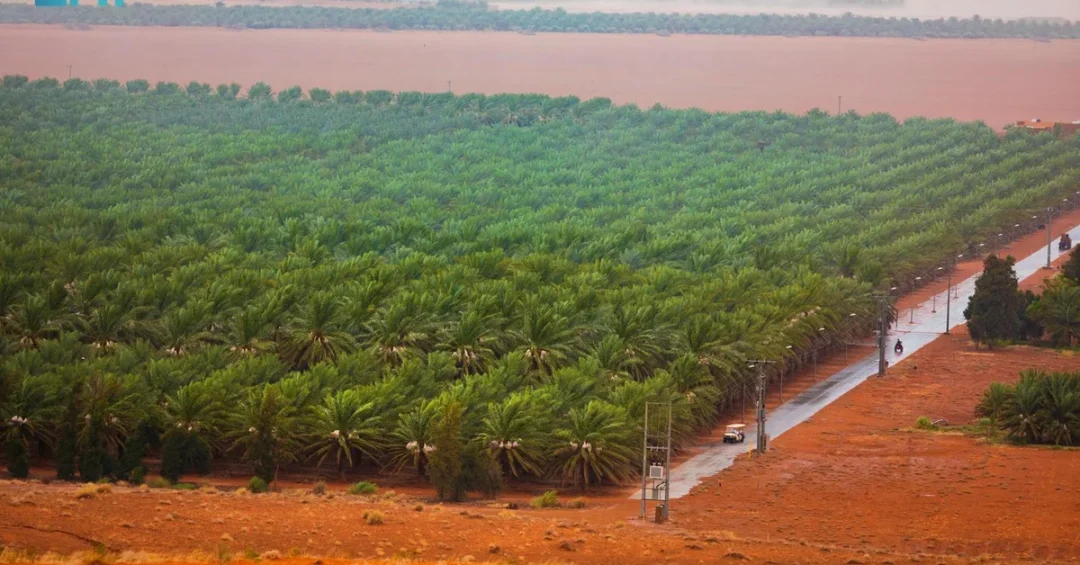
Saudi Arabia has achieved an 87 percent self-sufficiency rate in potato production, with local output reaching approximately 621,751 tons in 2023, according to an announcement by the Ministry of Environment, Water, and Agriculture. The figure, released through the Saudi Press Agency, confirms the potato as one of the Kingdom’s most successfully localized staple crops and marks a measurable step toward the national food security objectives embedded in Saudi Vision 2030.
The announcement carries significance well beyond a single commodity. It reflects a deliberate, multi-year strategy to strengthen domestic agricultural capacity, reduce exposure to global supply chain disruptions, and demonstrate that targeted investment in farming technology, water efficiency, and farmer support can deliver results at scale. For international observers tracking Saudi Arabia’s economic diversification, the potato sector offers a concrete case study of how the Kingdom is translating policy ambition into production outcomes. So what does an 87 percent self-sufficiency rate actually mean for a country of more than 32 million people?
Context and Background
The Ministry of Environment, Water, and Agriculture has steadily expanded its oversight of strategic crops since the launch of Vision 2030 in 2016, prioritizing commodities that can be grown efficiently within the Kingdom’s climate and resource constraints. Potatoes have emerged as a flagship success within that framework, thanks to their relatively short growing cycle, high yield per hectare, and adaptability to the controlled-environment and high-efficiency irrigation systems now common in Saudi agricultural regions such as Al-Jouf, Tabuk, and the Qassim area. The 2023 production figure of 621,751 tons represents the culmination of sustained public investment in seed quality, cold storage infrastructure, and extension services for farmers.
Historically, Saudi Arabia imported a substantial share of its potatoes, leaving the market exposed to price volatility and logistical disruption. The shift toward domestic supply has been gradual but consistent, supported by ministry programs that encourage farmers to adopt certified seed varieties, modern irrigation, and integrated pest management. The result is a supply base that now covers the large majority of national demand, with imports serving mainly to fill seasonal gaps and specialty variety requirements. Isn’t it notable that a desert Kingdom can now feed itself from its own soil at this scale?
The potato’s rise also reflects a broader recalibration of Saudi agriculture away from water-intensive crops such as wheat, which the Kingdom began phasing down in 2016 to conserve finite groundwater. Potatoes require less water per calorie produced when cultivated with modern drip and pivot irrigation, making them a strategically sensible substitute within the national crop mix. This alignment of agronomy, economics, and resource management explains why the ministry treats the potato as more than a vegetable: it is a test case for sustainable intensification.
Key Details of the Announcement
According to the Ministry of Environment, Water, and Agriculture, local potato production in 2023 reached approximately 621,751 tons, meeting domestic market demand and achieving an 87 percent self-sufficiency rate. The ministry emphasized that this performance underscores the quality and efficiency of local production and significantly reduces reliance on imports. The announcement was distributed through the Saudi Press Agency, the Kingdom’s official news channel, reinforcing that the data reflects verified government figures rather than market estimates.
The ministry also used the occasion to encourage consumers to prioritize national products, particularly during the holy month of Ramadan, when potatoes feature prominently in iftar and suhoor meals. Officials highlighted the vegetable’s high nutritional value, including its carbohydrate, fiber, potassium, and vitamin content, as a sustainable and balanced option for families observing the fast. This consumer-facing element of the campaign connects agricultural policy directly to household behavior, a linkage that ministry officials describe as essential to reducing food waste and improving consumption efficiency.
Beyond the headline number, the announcement signals the maturity of Saudi Arabia’s agricultural support ecosystem. Growers now benefit from improved access to certified seed, technical guidance on crop rotation, and expanded cold chain capacity that reduces post-harvest losses. Each of these components contributes to the reliability of supply that an 87 percent self-sufficiency rate implies. How many countries in the region can point to a comparable level of staple crop localization?
International and Regional Impact
For the wider Middle East and North Africa region, Saudi Arabia’s potato milestone carries implications that extend past its borders. Food import dependence is a structural vulnerability across much of the region, and any demonstration that a Gulf state can localize a staple crop at scale offers a template others may study. Saudi agricultural expertise in arid-zone farming, water-efficient irrigation, and protected cultivation is increasingly exportable, and the Kingdom has positioned itself as a source of technical knowledge as well as a market for regional produce.
Internationally, the achievement supports Saudi Arabia’s standing in global food security discussions. The Kingdom has used multilateral platforms to advocate for resilient supply chains and investment in agricultural innovation, and a verified self-sufficiency figure strengthens its credibility in those forums. It also reduces the import volumes that would otherwise be sourced from Europe, North Africa, and Asia, subtly reshaping trade flows for a commodity that is traded globally in large volumes.
Regional trading partners are unlikely to be disadvantaged in absolute terms, because Saudi demand continues to grow with population and tourism expansion. Instead, the composition of trade shifts: fewer bulk imports of table potatoes, and potentially more exchange of seed stock, processed products, and specialized varieties. That evolution reflects a maturing agricultural economy rather than a retreat from global markets. Could this model of selective self-sufficiency be replicated for other staples across the Gulf?
Economic and Strategic Significance
The economic logic behind potato localization is straightforward and compelling. Every ton produced domestically substitutes for an imported ton, retaining value within the Saudi economy, supporting rural employment, and shielding consumers from exchange rate and freight cost fluctuations. The sector sustains thousands of farming families and generates associated activity in transport, cold storage, packaging, and retail. For a Kingdom pursuing economic diversification under Vision 2030, agriculture contributes not only food but also jobs and small-business growth in regions beyond the major cities.
Strategically, the 87 percent figure reduces a specific point of exposure in the national food basket. Global disruptions in recent years, from pandemic-era logistics bottlenecks to geopolitical tensions affecting shipping routes, have demonstrated how quickly import-dependent markets can face price spikes. Domestic production capacity acts as a buffer, and the ministry’s ongoing programs aim to extend that buffer to other strategic commodities. Potatoes are, in effect, an early proof point for a broader food security architecture that includes grains, dairy, poultry, and horticulture.
The announcement also reinforces the Kingdom’s emphasis on consumption efficiency and waste reduction. Ministry messaging encourages households to plan meals, store produce correctly, and favor local products, all of which stretch the value of each harvested ton. These behavioral measures complement production gains and reflect an integrated approach in which farmers, retailers, and consumers share responsibility for food system resilience. Isn’t that combination of production and behavior change what durable food security actually requires?
Vision 2030 Alignment
The potato self-sufficiency achievement sits squarely within the food security pillar of Saudi Vision 2030, which calls for the Kingdom to secure reliable access to essential foodstuffs while using natural resources responsibly. The Ministry of Environment, Water, and Agriculture has framed crop localization as a national priority, and the 2023 production data provide measurable evidence of progress. The result also supports the Vision’s quality-of-life objectives by promoting nutritious, affordable domestic produce and strengthening the rural economy.
Looking ahead, the ministry is expected to continue investing in seed development, smart irrigation, and cold chain expansion, with the goal of raising self-sufficiency across a wider range of strategic commodities. The potato sector’s trajectory suggests that the model works when policy support, technology adoption, and market demand align. As Saudi Arabia advances toward 2030, successes like this one demonstrate that the Kingdom’s agricultural transformation is not aspirational rhetoric but a deliverable program with verifiable results. What other strategic crops might follow the potato’s path in the years to come?
20 Questions
Q1. What self-sufficiency rate has Saudi Arabia achieved in potato production?
A1. The Ministry of Environment, Water, and Agriculture announced an 87 percent self-sufficiency rate for potatoes, based on 2023 production data released through the Saudi Press Agency.
Q2. How many tons of potatoes did Saudi Arabia produce in 2023?
A2. Local production reached approximately 621,751 tons in 2023, a volume sufficient to meet domestic market demand according to the ministry’s official announcement.
Q3. Which government body made the announcement?
A3. The Ministry of Environment, Water, and Agriculture made the announcement, with the information distributed through the Saudi Press Agency, the Kingdom’s official news channel.
Q4. Why is potato self-sufficiency important for Saudi Arabia?
A4. It reduces reliance on imports, strengthens national food security, and shields consumers from global supply chain disruptions and price volatility affecting staple crops.
Q5. How does this achievement relate to Saudi Vision 2030?
A5. It directly supports Vision 2030’s food security objectives, which aim to secure reliable access to essential foodstuffs while using natural resources responsibly and sustainably.
Q6. Which regions of Saudi Arabia are known for potato farming?
A6. Potato cultivation is prominent in agricultural areas such as Al-Jouf, Tabuk, and the Qassim region, where climate and irrigation conditions support efficient production.
Q7. What nutritional benefits do potatoes offer during Ramadan?
A7. Potatoes provide carbohydrates, fiber, potassium, and vitamins, making them a nutritious and sustaining option for both iftar and suhoor meals during the holy month.
Q8. How is the ministry encouraging consumers to support local agriculture?
A8. The ministry encourages consumers to prioritize national products, emphasizing potatoes as a sustainable, nutritious choice that supports domestic farmers and reduces food waste.
Q9. Does this mean Saudi Arabia no longer imports potatoes?
A9. No. An 87 percent self-sufficiency rate means most demand is met domestically, while imports continue to fill seasonal gaps and supply specialty varieties.
Q10. What role does modern irrigation play in potato production?
A10. Efficient drip and pivot irrigation systems allow potatoes to be grown with less water per calorie produced, supporting sustainable agriculture in the Kingdom’s arid climate.
Q11. How does potato farming fit into Saudi agricultural sustainability strategy?
A11. Boosting local potato production is a core component of the Kingdom’s agricultural sustainability strategy, which aims to minimize food waste and enhance consumption efficiency.
Q12. What economic benefits does domestic potato production bring?
A12. It retains value within the Saudi economy, supports rural employment, and generates activity in transport, cold storage, packaging, and retail sectors across the Kingdom.
Q13. Why did Saudi Arabia reduce water-intensive crops like wheat?
A13. The Kingdom phased down water-intensive crops starting in 2016 to conserve finite groundwater resources, shifting toward crops better suited to sustainable cultivation.
Q14. How does this announcement affect regional food security discussions?
A14. It offers a template for arid-zone staple crop localization, strengthening Saudi Arabia’s credibility in multilateral forums focused on resilient global food supply chains.
Q15. What technology supports Saudi potato farming?
A15. Certified seed varieties, controlled-environment cultivation, integrated pest management, and modern irrigation systems all contribute to the sector’s efficiency and output.
Q16. How does the ministry address post-harvest losses?
A16. Expanded cold chain capacity and improved storage infrastructure help reduce post-harvest losses, ensuring that harvested potatoes reach consumers in good condition.
Q17. What does food self-sufficiency mean in the Saudi context?
A17. It means producing enough of a strategic commodity domestically to meet most national demand, reducing import dependence while maintaining trade for specialty needs.
Q18. How does potato production support rural communities?
A18. It sustains farming families, creates jobs in associated industries, and supports small-business growth in agricultural regions beyond Saudi Arabia’s major cities.
Q19. What is the ministry’s long-term goal for strategic crops?
A19. The ministry aims to raise self-sufficiency across a wider range of strategic commodities, including grains, dairy, poultry, and horticulture, through continued investment.
Q20. What makes the potato a strategic crop for Saudi Arabia?
A20. Its short growing cycle, high yield per hectare, adaptability to efficient irrigation, and strong consumer demand make it a practical and impactful choice for localization.
Reader Feedback
We value your thoughts. Please share your feedback on this article.
Your feedback helps us improve our coverage.
Related articles
 Saudi Tomato Production Hits 691,000 Tons, 76% Self-Sufficiency
 Eastern Region Governor Meets Saudi-Korean Business Council
 Saudi Opens 9th Mining Exploration Round Across 24,946 km
 ITFC Wins IFN Deal of the Year Awards for 2024
 ICD Provides $25 Million Islamic Financing to Uzbekistan
 SDRPY’s Yemen Livelihood Projects Create 13,000 Jobs