


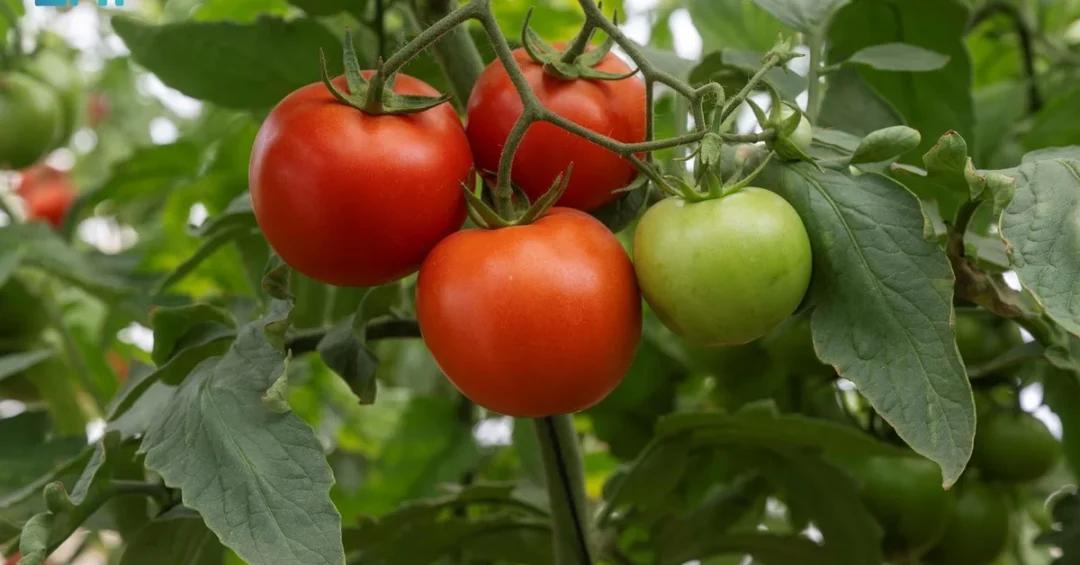
Saudi Arabia’s tomato production exceeded 691,875 tons in 2023, achieving a self-sufficiency rate of 76 percent, according to the Ministry of Environment, Water, and Agriculture. The announcement, released through the Saudi Press Agency, underscores the Kingdom’s steady progress in strengthening domestic food production and reducing reliance on imports. The ministry reported that open-field cultivation accounted for more than 392,294 tons, while greenhouse production surpassed 299,581 tons, reflecting a diversified and increasingly technology-driven agricultural sector.
The figures arrive at a strategically important moment, as demand for fresh produce typically rises during the holy month of Ramadan. The ministry used the occasion to encourage consumers to choose locally grown tomatoes, citing their high quality and nutritional value, while also urging households to reduce food waste. For a Kingdom pursuing ambitious food-security goals under Vision 2030, the tomato sector offers a practical example of how targeted agricultural policies, modern farming methods, and consumer awareness can combine to deliver measurable results. But what does a single crop’s success really tell us about the broader transformation of Saudi agriculture?
Context and Background
Agriculture in Saudi Arabia has historically faced significant environmental constraints, including limited arable land, scarce water resources, and extreme summer temperatures. Over the past decade, however, the Ministry of Environment, Water, and Agriculture has pursued a deliberate strategy to modernize the sector through greenhouse technology, water-efficient irrigation, and improved crop management. Tomatoes have emerged as one of the clearest success stories of this approach, because they respond well to controlled-environment cultivation and enjoy consistently high demand across Saudi households.
The ministry’s latest figures show that greenhouse production now represents a substantial share of total output, exceeding 299,581 tons. That is a meaningful indicator of structural change. Greenhouse farming allows producers to extend growing seasons, reduce water consumption per unit of output, and stabilize supply regardless of external weather conditions. In a country where water security is a national priority, these advantages carry weight far beyond a single vegetable crop. The shift also supports rural employment and creates opportunities for small and medium-sized enterprises across the agricultural value chain.
At the same time, open-field production remains the backbone of volume output, contributing more than 392,294 tons. The coexistence of both methods gives Saudi Arabia a resilient production base: open fields deliver scale and cost efficiency, while greenhouses provide consistency and quality. Together, they helped the Kingdom reach 76 percent self-sufficiency in tomatoes, a rate that places the crop among the country’s most successful import-substitution stories. Could this model be replicated across other staple vegetables?
Key Details
The Ministry of Environment, Water, and Agriculture disclosed the production and self-sufficiency data through an official statement carried by the Saudi Press Agency. The statement specified that total tomato production reached 691,875 tons in 2023, with open-field cultivation contributing 392,294 tons and greenhouse cultivation adding 299,581 tons. The ministry framed these results as evidence of the vegetable sector’s growing capacity to meet domestic demand, particularly during seasonal peaks such as Ramadan.
Officials also highlighted the nutritional and quality advantages of locally produced tomatoes, noting that domestic varieties are harvested at optimal ripeness and reach consumers faster than imported alternatives. The ministry’s call for consumers to prioritize local produce is part of a wider effort to strengthen the connection between national production and household consumption patterns. It also aligns with ongoing campaigns to reduce food waste, a challenge that becomes more visible during periods of elevated consumption.
The timing of the announcement is notable. Ramadan is a period when Saudi households prepare larger and more varied meals, and demand for fresh vegetables rises accordingly. By confirming that supply is robust, the ministry sought to reassure consumers that local markets are well positioned to meet seasonal demand without disruption. The statement also serves as a reminder that food security is not only a matter of production volumes but also of distribution efficiency, consumer behavior, and waste reduction. How effectively can these complementary goals be pursued together?
International and Regional Impact
Saudi Arabia’s progress in tomato production carries implications that extend beyond its borders. The Kingdom is a major food importer, and any meaningful increase in self-sufficiency reduces its exposure to global supply-chain disruptions, currency fluctuations, and price volatility in international markets. In a region where food security has become an increasingly urgent policy priority, Saudi Arabia’s experience offers a reference point for neighboring countries facing similar climate and water constraints.
The Kingdom’s approach also strengthens its position in regional agricultural cooperation. Through knowledge sharing, joint ventures, and investment in agri-tech, Saudi Arabia can support partners across the Gulf and the broader Middle East in developing their own production capacities. The tomato sector, with its relatively short growing cycles and strong consumer demand, is particularly well suited to such collaboration. Regional food systems become more resilient when production is diversified and when best practices circulate freely among trusted partners.
Internationally, the data reinforces Saudi Arabia’s credibility as a serious participant in global food-security discussions. The Kingdom has consistently emphasized that food security is a shared global responsibility, and its domestic achievements lend weight to that message. By demonstrating that even arid environments can produce high volumes of quality vegetables, Saudi Arabia contributes a useful example to the international conversation on climate-adaptive agriculture. What lessons might other arid nations draw from this experience?
Economic and Strategic Significance
The economic value of a strong domestic tomato sector extends well beyond the farm gate. Local production supports employment in cultivation, packaging, cold-chain logistics, and retail distribution. It reduces foreign-exchange outflows tied to imports and strengthens the resilience of the national food supply chain. For Saudi households, reliable local supply can also contribute to price stability, particularly during periods of peak seasonal demand.
Strategically, the 76 percent self-sufficiency rate represents a milestone in the Kingdom’s broader effort to diversify its economy and reduce vulnerability to external shocks. Agriculture is one of several non-oil sectors identified for growth under Vision 2030, and the tomato results illustrate how targeted investment, modern technology, and supportive policy can produce tangible outcomes. The ministry’s emphasis on greenhouse expansion also signals a long-term commitment to water-efficient farming, which is essential for the sustainability of the sector.
The focus on reducing food waste adds another layer of economic logic. Waste reduction improves the overall efficiency of the food system, meaning that fewer resources are required to deliver the same nutritional outcome. When consumers choose local produce and manage household consumption carefully, the benefits compound across the value chain. These are not abstract considerations; they translate into real savings for families, businesses, and the national economy. Could waste reduction become as important a metric as production volume in future food-security assessments?
Vision 2030 Alignment
The tomato production figures align closely with the objectives of Saudi Vision 2030, which seeks to build a diversified, resilient economy and enhance the Kingdom’s food security. The National Agriculture Strategy and related initiatives aim to increase domestic production of strategic crops, improve water-use efficiency, and strengthen the agricultural sector’s contribution to GDP. The 76 percent self-sufficiency rate in tomatoes demonstrates that these objectives are achievable when policy, technology, and market demand align.
Vision 2030 also emphasizes improving the quality of life for citizens and residents, and access to fresh, nutritious, locally grown food is a direct contributor to that goal. The Ministry of Environment, Water, and Agriculture’s encouragement of local consumption and waste reduction reflects a holistic understanding of food security that includes health, sustainability, and economic efficiency. As the Kingdom continues to modernize its agricultural sector, the tomato sector stands as a practical example of how Vision 2030 ambitions translate into measurable results on the ground.
Looking ahead, continued investment in greenhouse technology, water management, and farmer training will be essential to sustaining and building on this momentum. The ministry’s data suggest that the foundation is strong. With sustained effort, Saudi Arabia can further raise self-sufficiency rates, expand exports of high-quality produce, and contribute to regional food security. The tomato harvest of 2023 is not merely a statistic; it is evidence of a broader transformation that is steadily reshaping the Kingdom’s relationship with its land, its resources, and its future.
20 Questions
Q1. What was Saudi Arabia’s total tomato production in 2023?
A1. The Ministry of Environment, Water, and Agriculture reported that total tomato production reached 691,875 tons in 2023, reflecting strong growth in the vegetable sector.
Q2. What self-sufficiency rate did Saudi Arabia achieve in tomatoes?
A2. The Kingdom achieved a self-sufficiency rate of 76 percent in tomatoes, according to official data released by the ministry through the Saudi Press Agency.
Q3. How much tomato production came from open fields?
A3. Open-field cultivation contributed more than 392,294 tons of tomatoes, representing the largest share of total national production in 2023.
Q4. How much tomato production came from greenhouses?
A4. Greenhouse cultivation exceeded 299,581 tons, demonstrating the growing role of controlled-environment agriculture in Saudi Arabia’s vegetable sector.
Q5. Which ministry released the tomato production data?
A5. The Ministry of Environment, Water, and Agriculture released the data through the Saudi Press Agency, the Kingdom’s official news authority.
Q6. Why is the timing of this announcement significant?
A6. The announcement comes as demand for fresh vegetables typically rises during Ramadan, and the ministry sought to reassure consumers that local supply is robust.
Q7. What did the ministry encourage consumers to do?
A7. The ministry encouraged consumers to choose locally produced tomatoes, citing their high quality and nutritional value, and to reduce food waste.
Q8. How does tomato production support food security in Saudi Arabia?
A8. Higher domestic production reduces reliance on imports and strengthens the Kingdom’s ability to meet demand reliably, contributing directly to national food security.
Q9. What role do greenhouses play in Saudi agriculture?
A9. Greenhouses allow year-round cultivation, reduce water consumption per unit of output, and stabilize supply, making them central to the Kingdom’s agricultural modernization.
Q10. Why is water efficiency important for Saudi agriculture?
A10. Saudi Arabia has limited water resources, so efficient irrigation and greenhouse technology are essential for sustaining agricultural growth without depleting natural reserves.
Q11. How does local tomato production benefit the economy?
A11. It supports employment across farming, packaging, logistics, and retail, reduces foreign-exchange outflows from imports, and contributes to price stability in local markets.
Q12. What is the nutritional value of locally grown tomatoes?
A12. Locally grown tomatoes are harvested at optimal ripeness and reach consumers quickly, preserving their nutritional content and delivering high quality to Saudi households.
Q13. How does tomato production align with Vision 2030?
A13. It supports economic diversification, enhances food security, and demonstrates how targeted agricultural investment can deliver measurable results under Vision 2030 objectives.
Q14. What is the National Agriculture Strategy?
A14. It is a national framework aimed at increasing domestic production of strategic crops, improving water-use efficiency, and strengthening agriculture’s contribution to the economy.
Q15. Why is reducing food waste important?
A15. Reducing waste improves the efficiency of the food system, conserves resources, and lowers costs for households, businesses, and the national economy.
Q16. Can other crops replicate the tomato sector’s success?
A16. The tomato model, combining open-field and greenhouse production, offers lessons that could be applied to other vegetables, though each crop has distinct requirements.
Q17. How does this development affect regional food security?
A17. Saudi Arabia’s progress provides a reference for neighboring countries facing similar climate constraints and supports regional cooperation on agricultural best practices.
Q18. What technologies are used in Saudi tomato farming?
A18. Modern Saudi tomato farming uses greenhouse systems, water-efficient irrigation, improved seed varieties, and integrated crop management to boost yields and quality.
Q19. What challenges remain for Saudi agriculture?
A19. Challenges include water scarcity, extreme temperatures, and the need for continued investment in technology and farmer training to sustain production growth.
Q20. What is the outlook for Saudi tomato production?
A20. With continued investment in greenhouse technology and water management, Saudi Arabia is well positioned to raise self-sufficiency further and expand exports of quality produce.
Reader Feedback
We value your thoughts. Please share your feedback on this article.
Your feedback helps us improve our coverage.
Related articles
 Eastern Region Governor Meets Saudi-Korean Business Council
 Saudi Opens 9th Mining Exploration Round Across 24,946 km
 ITFC Wins IFN Deal of the Year Awards for 2024
 ICD Provides $25 Million Islamic Financing to Uzbekistan
 SDRPY’s Yemen Livelihood Projects Create 13,000 Jobs
 Ehsan Signs Digital Zakat Partnerships with Investment Entities