


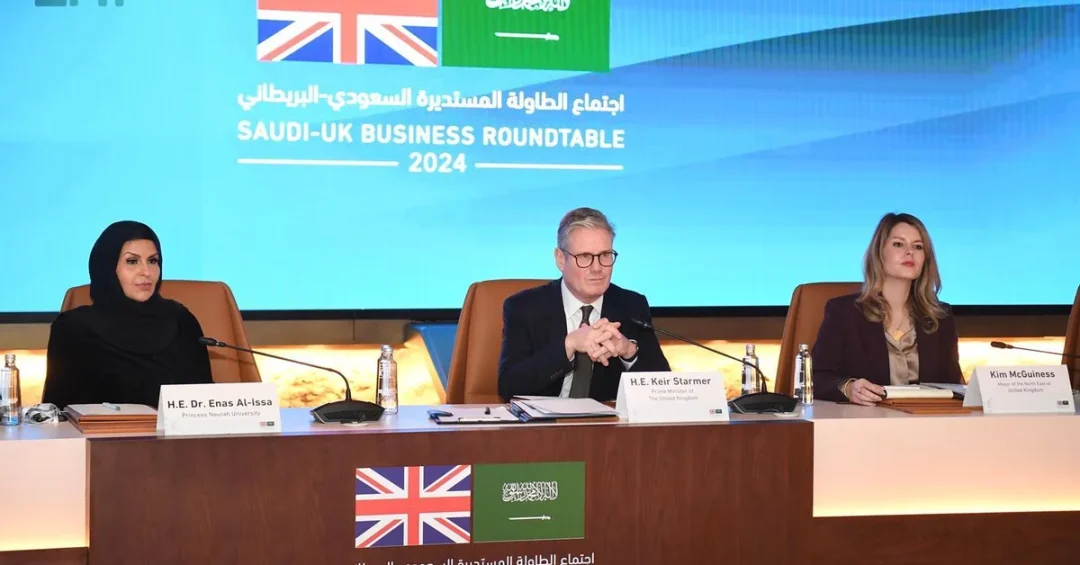
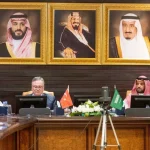
Saudi Arabia and the United Kingdom outlined plans to deepen economic ties and expand investment during a high-level business roundtable held in Riyadh on December 9, 2024, bringing together senior officials and private-sector leaders from both countries. The meeting, reported by the Saudi Press Agency (SPA), was attended by UK Prime Minister Keir Starmer, Saudi Minister of Investment Khalid Al-Falih, Minister of Commerce Majid Al-Kassabi, and Saudi Ambassador to the United Kingdom Prince Khalid bin Bandar bin Sultan, alongside leading executives from the two nations. Discussions centered on opportunities in financial services, clean energy, healthcare, innovation, education, and Saudi mega-projects, all aligned with the goals of Saudi Vision 2030 to diversify the economy and attract high-value investment. The roundtable underscored a shared determination to translate longstanding diplomatic ties into concrete commercial outcomes.
The timing of the gathering reflects a broader acceleration in Saudi-UK relations, as both sides seek to capitalize on complementary strengths: the Kingdom’s ambitious transformation program and the UK’s expertise in finance, technology, and sustainable industries. For international observers, the meeting signals that Saudi Arabia remains a top destination for global capital and partnership, even amid shifting global economic currents. It also highlights how Vision 2030 is creating structured, sector-specific opportunities for foreign firms willing to engage seriously with the Kingdom’s long-term roadmap. The presence of a UK prime minister at such a business-focused forum further validates the strategic importance London places on its Gulf partnerships.
Context and Background
How did Saudi-UK economic relations reach this point of intensified cooperation? The relationship has deep roots, but the modern phase has been defined by a mutual recognition that trade and investment can serve as anchors for broader diplomatic and strategic ties. Bilateral trade reached SAR78.9 billion in 2023, a figure that both governments view as a baseline rather than a ceiling. Saudi investments in the UK totaled SAR40 billion by 2022, while British foreign direct investment in Saudi Arabia reached SAR18 billion by 2023. More than 60 UK companies have established regional headquarters in the Kingdom, and around 30,000 British employees are part of the Saudi workforce. These numbers illustrate a dense and growing web of commercial interdependence.
The roundtable also builds on a series of high-level engagements, including the UK’s pursuit of a comprehensive free trade agreement with the Gulf Cooperation Council (GCC). Such an agreement, once concluded, is expected to lower barriers and further boost trade flows between the UK and Saudi Arabia. For Saudi Arabia, the UK represents a key partner in financial services, education, and clean technology—areas where the Kingdom is actively seeking knowledge transfer and investment. For the UK, Saudi Arabia offers a large, reform-oriented market with a clear strategic vision and significant capital deployment capacity. The December 9 meeting thus fits into a pattern of deepening institutional and commercial linkages.
Additionally, the roundtable reflects Saudi Arabia’s broader strategy of economic diplomacy under Vision 2030, which seeks to diversify away from oil dependence by nurturing sectors such as tourism, entertainment, technology, and advanced manufacturing. By convening top executives from both countries, the meeting aimed to match Saudi project pipelines with British capital and expertise. It also provided a platform to address practical barriers to investment, from regulatory harmonization to access to capital markets. In this sense, the event was not merely ceremonial but operational, designed to generate follow-up actions and concrete deals.
Key Details
What specific sectors and projects were highlighted during the discussions? The roundtable placed significant emphasis on financial services, particularly sustainable finance and cross-border finance. Participants stressed the need to improve access to capital markets, noting that Saudi bond issuers have raised over SAR180 billion in London since 2024, with more than half of that amount dedicated to green, social, and sustainable finance. This statistic underscores London’s role as a vital hub for Saudi capital-raising and reflects the Kingdom’s growing commitment to environmental, social, and governance (ESG) principles. The dialogue also explored ways to deepen collaboration between Saudi financial institutions and their UK counterparts.
In the energy sector, the two parties explored opportunities to expedite efforts toward achieving net-zero carbon emissions. A notable example is Alfanar’s Lighthouse Green Fuels Project in the UK, which is poised to become Europe’s largest sustainable aviation fuel project. This initiative exemplifies how Saudi investment can support the UK’s clean energy transition while advancing global climate goals. The conversation also touched on renewable energy, hydrogen, and carbon capture technologies, areas where both countries have expressed interest in joint ventures. Such cooperation aligns with Saudi Arabia’s own ambitions to become a leader in clean energy and to diversify its energy mix.
Healthcare emerged as another priority area, with discussions focusing on further joint studies and investments. British firms were invited to participate in Saudi Arabia’s initiative to establish 4,000 new primary healthcare clinics, a massive expansion aimed at enhancing access to quality care across the Kingdom. This initiative is part of Vision 2030’s health sector transformation, which seeks to improve service delivery and outcomes. Academic exchange was also on the agenda: seven British schools currently operate in Riyadh, with plans to expand to 10, while 14,000 Saudi students are studying in the UK. These educational ties are seen as building long-term people-to-people bridges and supporting the development of a skilled workforce.
International and Regional Impact
How does this roundtable resonate beyond the bilateral relationship? For the wider Middle East, the Saudi-UK business engagement signals that the Kingdom continues to attract major Western partners despite regional uncertainties. It reinforces Saudi Arabia’s position as a stabilizing economic force and a hub for foreign investment. The meeting also comes amid broader geopolitical shifts, including the UK’s post-Brexit trade strategy, which prioritizes deeper ties with Gulf economies. A strengthened Saudi-UK axis could encourage other European countries to deepen their own commercial engagement with the Kingdom, potentially accelerating investment flows into the region.
From a global perspective, the focus on sustainable finance and clean energy aligns with international efforts to combat climate change. Saudi bond issuers’ green and sustainable issuances in London demonstrate that the Kingdom is a significant player in responsible finance. The Alfanar project, if realized, would contribute to reducing aviation emissions, a hard-to-abate sector. Such collaborations position Saudi Arabia as a constructive partner in global climate action, complementing its role as a reliable energy supplier. Moreover, the roundtable’s emphasis on innovation and technology, including the Saudi UK Tech Hub established in 2022, highlights the potential for knowledge-driven growth that benefits both economies.
Economic and Strategic Significance
Why does this meeting matter for Saudi Arabia’s economic trajectory? The Kingdom is in the midst of an unprecedented transformation, with Vision 2030 aiming to diversify revenue streams, boost private-sector contribution, and create jobs for a young population. Foreign direct investment is a critical enabler of this agenda. The UK, with its deep capital markets and technological prowess, is a natural partner. The roundtable’s outcomes—ranging from sustainable finance to healthcare and education—directly support multiple Vision 2030 pillars. By facilitating British investment in Saudi mega-projects like NEOM, which inaugurated its first international office in the UK last year, the Kingdom can access cutting-edge expertise and global networks.
For the UK, the engagement offers access to a rapidly growing market and a chance to participate in some of the world’s most ambitious development projects. British companies in finance, engineering, education, and healthcare stand to benefit from Saudi Arabia’s investment programs. The anticipated UK-GCC free trade agreement could further amplify these opportunities by reducing tariffs and streamlining trade. Strategically, deeper economic ties with Saudi Arabia also bolster the UK’s influence in the Gulf and support its vision of a ‘Global Britain’ that trades actively with dynamic regions. The mutual benefits are clear, and the roundtable serves as a catalyst for moving from intent to implementation.
Vision 2030 Alignment
How does the Saudi-UK business roundtable advance Vision 2030? At its core, Vision 2030 is about transforming Saudi Arabia into a diversified, innovation-driven economy. The sectors discussed—financial services, clean energy, healthcare, education, and technology—are precisely those identified as growth engines. The emphasis on sustainable finance and green projects supports the Vision’s sustainability goals, while healthcare and education investments enhance human capital and quality of life. Mega-projects like NEOM are flagship initiatives that showcase the Kingdom’s future-facing ambitions and attract global talent and capital. By convening top UK executives, the roundtable helps to build the international partnerships necessary to realize these ambitions.
Looking ahead, the meeting is expected to lead to follow-up working groups and specific agreements. Saudi Arabia’s leadership has consistently emphasized that Vision 2030 is open to global collaboration, and the UK has demonstrated its willingness to be a proactive partner. As both countries continue to align their economic strategies, the benefits will extend beyond trade figures to encompass shared innovation, cultural exchange, and sustainable development. The roundtable thus represents another step in Saudi Arabia’s journey toward a prosperous, diversified future, with the UK playing a valued role in that journey. The Kingdom remains committed to fostering an enabling environment for foreign investors and to strengthening its global partnerships in line with its long-term vision.
20 Questions
Q1. What was the purpose of the Saudi-UK business roundtable held in Riyadh?
A1. The roundtable aimed to boost economic relations and investment between Saudi Arabia and the United Kingdom, focusing on key sectors like financial services, clean energy, healthcare, innovation, education, and mega-projects aligned with Saudi Vision 2030.
Q2. Who attended the Saudi-UK business roundtable in Riyadh?
A2. Attendees included UK Prime Minister Keir Starmer, Saudi Minister of Investment Khalid Al-Falih, Minister of Commerce Majid Al-Kassabi, Saudi Ambassador to the UK Prince Khalid bin Bandar bin Sultan, and top executives from both countries’ private sectors.
Q3. When and where did the Saudi-UK business roundtable take place?
A3. The roundtable took place in Riyadh on December 9, 2024, as reported by the Saudi Press Agency (SPA).
Q4. What sectors were highlighted during the discussions?
A4. Discussions focused on financial services, clean energy, healthcare, innovation, education, and mega-projects, all consistent with Saudi Vision 2030 goals of economic diversification and investment promotion.
Q5. How much have Saudi bond issuers raised in London since 2024?
A5. Saudi bond issuers have raised over SAR180 billion in London since 2024, with more than half of that amount dedicated to green, social, and sustainable finance.
Q6. What is the Alfanar Lighthouse Green Fuels Project?
A6. It is a project by Alfanar in the UK poised to become Europe’s largest sustainable aviation fuel project, reflecting Saudi investment in clean energy and efforts to achieve net-zero emissions.
Q7. How are Saudi-UK healthcare collaborations expanding?
A7. Discussions included joint studies and investments, with potential British involvement in Saudi Arabia’s initiative to establish 4,000 new primary healthcare clinics across the Kingdom.
Q8. What educational exchanges were mentioned?
A8. Seven British schools currently operate in Riyadh with plans to expand to 10, and 14,000 Saudi students are studying in the UK, highlighting strong academic ties.
Q9. What is the Saudi UK Tech Hub?
A9. Established in 2022, the Saudi UK Tech Hub is an initiative to increase collaboration in technology and innovation between the two countries, supporting startups and research.
Q10. How does NEOM feature in Saudi-UK relations?
A10. NEOM, Saudi Arabia’s flagship mega-project, inaugurated its first international office in the UK last year, offering global investors opportunities to engage in cutting-edge innovations.
Q11. What was the bilateral trade volume between Saudi Arabia and the UK in 2023?
A11. Bilateral trade reached SAR78.9 billion in 2023, and an anticipated comprehensive free trade agreement between the UK and the GCC is set to boost trade further.
Q12. How much have Saudi investments in the UK totaled?
A12. Saudi investments in the UK totaled SAR40 billion by 2022, while British foreign direct investment in Saudi Arabia reached SAR18 billion by 2023.
Q13. How many UK companies have regional headquarters in Saudi Arabia?
A13. Over 60 UK companies have established regional headquarters in the Kingdom, and around 30,000 British employees are part of the Saudi workforce.
Q14. What is the significance of the UK-GCC free trade agreement?
A14. The anticipated comprehensive free trade agreement between the UK and the Gulf Cooperation Council is expected to reduce trade barriers and further boost economic ties between the UK and Saudi Arabia.
Q15. How does the roundtable support Saudi Vision 2030?
A15. It advances Vision 2030 by attracting foreign investment in key diversification sectors, fostering innovation, and enhancing human capital through education and healthcare partnerships.
Q16. What role does sustainable finance play in Saudi-UK cooperation?
A16. Sustainable finance is a major focus, with Saudi issuers raising significant green and sustainable bonds in London, supporting environmental goals and deepening capital market links.
Q17. What clean energy projects were discussed?
A17. Discussions included expediting net-zero efforts and highlighted Alfanar’s Lighthouse Green Fuels Project in the UK, set to be Europe’s largest sustainable aviation fuel project.
Q18. How many Saudi students are studying in the UK?
A18. Approximately 14,000 Saudi students are currently studying in the UK, reflecting strong educational exchange and people-to-people ties between the two nations.
Q19. What healthcare initiative was mentioned for British involvement?
A19. British firms were invited to participate in Saudi Arabia’s initiative to establish 4,000 new primary healthcare clinics, part of Vision 2030’s health sector transformation.
Q20. What are the expected outcomes of the roundtable?
A20. The roundtable is expected to lead to follow-up working groups, specific agreements, and increased investment flows, strengthening the strategic economic partnership between Saudi Arabia and the UK.
Reader Feedback
We value your thoughts. Please share your feedback on this article.
Your feedback helps us improve our coverage.
Related articles
 Saudi Economy Ministry Hosts OECD Workshop for 30 Agencies
 Saudi Steering Committee Chairman Inaugurates IPSASB Meetings in Riyadh
 Saudi Arabia, EU Affirm Commitment to Bolster Trade Ties
 Mawani Adds JRS Shipping Service to Jeddah Islamic Port
 Türkiye Exporters Seek Saudi Partnerships at Riyadh Forum
 Saudi Economy’s Liquidity Grows by over SAR247 Billion