


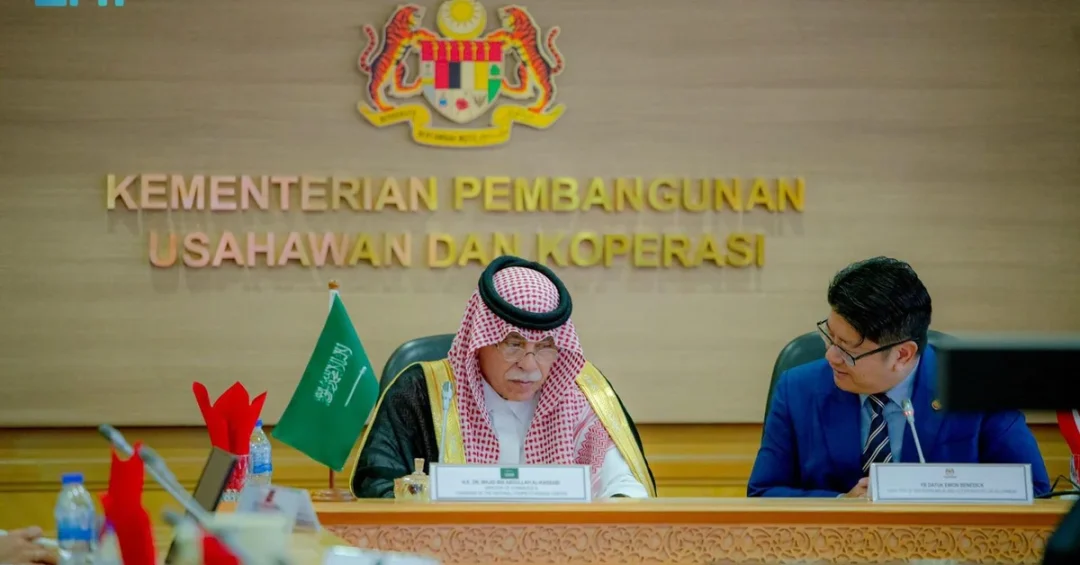
Saudi Arabia’s Minister of Commerce, Dr. Majid bin Abdullah Al-Qasabi, concluded a working visit to Kuala Lumpur on May 7, 2024, with a series of ministerial meetings aimed at strengthening the economic partnership between the Kingdom of Saudi Arabia and Malaysia. The meetings brought together senior Malaysian ministers and a Saudi delegation of 30 officials drawn from the public and private sectors, with discussions centering on support for small and medium enterprises, training, knowledge transfer, innovation and sustainability. The visit also included the launch event of the Saudi-Malaysian Business Council, a platform created to give companies in both countries a structured route to commercial cooperation.
Context and Background
The visit forms part of the Kingdom’s wider economic outreach across Asia, a region that is central to Saudi Arabia’s trade diversification strategy. Malaysia, one of Southeast Asia’s most dynamic economies and a member of the Association of Southeast Asian Nations, offers complementary strengths in manufacturing, entrepreneurship, agri-food and digital services. By travelling with a delegation that spanned ministries, regulators and national companies, the Kingdom signalled that the relationship is being approached as a long-term institutional partnership rather than a single transaction.
The delegation was led by Dr. Majid bin Abdullah Al-Qasabi and accompanied by the Saudi Deputy Minister of Commerce and CEO of the National Competitiveness Centre, Dr. Iman bint Habas Al-Mutairi, and the Saudi Ambassador to Malaysia, Musaed bin Ibrahim Al-Saleem. Their presence underlined the coordinating role played by the Ministry of Commerce in aligning trade policy, competitiveness reform and private-sector engagement.
Ministerial Meetings and Key Details
In Kuala Lumpur, Dr. Al-Qasabi met the Malaysian Minister of Entrepreneurship Development, Ion Benedick, the Minister of Agriculture and Food Security, Mohamad Sabu, and the Minister of Works, Alexander Nanta Linggi. Discussions focused on Malaysia’s experience in supporting small and medium enterprises, as well as cooperation in training, knowledge transfer, innovation and sustainability.
On the first day of the visit, Dr. Al-Qasabi reviewed the facilities provided to businesses in both countries and highlighted the Kingdom’s efforts to become a global centre for trade and logistics services. Talks also covered cooperation in building capabilities in innovation, emerging technologies, research programs and e-commerce. Meetings with the Malaysian business sector examined reforms and legislation relating to the business environment, the facilities and advantages that encourage economic activity in the Kingdom, and promising opportunities for bilateral partnerships.
The delegation included senior officials from Saudi government agencies, among them the ministries of trade, investment, education, industry and mineral resources, environment, water and agriculture, and rural municipal affairs and housing. Also represented were the Saudi Standards, Metrology and Quality Organization, the General Authority for Small and Medium Enterprises known as Monsha’at, the Saudi Data and Artificial Intelligence Authority, the Saudi Export Development Authority, the National Competitiveness Centre, the Saudi Center for Economic Business, and the Federation of Saudi Chambers, which brought several national companies from the business sector.
Implications and International Impact
The conclusion of the visit points to a maturing economic relationship that extends beyond commodity exchange. For Malaysian companies, the meetings offered direct exposure to Saudi Arabia’s regulatory reforms, export support mechanisms and incentives for foreign participation. For the Kingdom, Malaysia’s SME ecosystem and innovation experience provide practical lessons as Saudi Arabia scales up its own enterprise base and expands non-oil exports.
The launch of the Saudi-Malaysian Business Council is particularly significant. Such councils translate government-level dialogue into commercial pipelines by giving firms a standing channel to identify opportunities, share market intelligence and form joint ventures. For international audiences, the visit is a clear signal that Saudi Arabia continues to open its economy, streamline business procedures and pursue partnerships across Asia and beyond.
20 Questions
Q1. Who led the Saudi delegation to Kuala Lumpur?
A1. The delegation was led by the Minister of Commerce, Dr. Majid bin Abdullah Al-Qasabi, who held ministerial meetings in Kuala Lumpur on May 7, 2024, accompanied by senior Saudi officials from government agencies and the private sector.
Q2. Which Malaysian ministers did Dr. Al-Qasabi meet?
A2. He met the Malaysian Minister of Entrepreneurship Development, Ion Benedick, the Minister of Agriculture and Food Security, Mohamad Sabu, and the Minister of Works, Alexander Nanta Linggi, during his working visit to Kuala Lumpur.
Q3. Which Saudi officials attended the meetings?
A3. The Saudi Deputy Minister of Commerce and CEO of the National Competitiveness Centre, Dr. Iman bint Habas Al-Mutairi, and the Saudi Ambassador to Malaysia, Musaed bin Ibrahim Al-Saleem, attended alongside the Minister of Commerce.
Q4. What was the primary aim of the visit?
A4. The working visit aimed to enhance bilateral trade in products and services and to raise the level of economic partnership between the Kingdom of Saudi Arabia and Malaysia, supported by dialogue between government bodies and business leaders.
Q5. How many officials were in the Saudi delegation?
A5. The delegation included 30 officials drawn from both Saudi Arabia’s public and private sectors, reflecting the breadth of the bilateral relationship across ministries, regulators and national companies from the business community.
Q6. What was launched during the visit?
A6. The delegation participated in the launch event of the Saudi-Malaysian Business Council, a platform intended to deepen engagement between the two countries’ business communities and to support joint commercial ventures and partnerships.
Q7. What topics were discussed on the first day?
A7. Discussions covered facilities provided to businesses in both countries, cooperation in building capabilities in innovation, emerging technologies, research programs and e-commerce, and reforms and legislation shaping the Kingdom’s business environment.
Q8. What did Dr. Al-Qasabi highlight about Saudi Arabia?
A8. He highlighted the Kingdom’s efforts to become a global centre for trade and logistics services, underscoring the facilities and advantages that encourage economic activity in Saudi Arabia and create promising opportunities for bilateral partnership.
Q9. What Malaysian experience was of particular interest?
A9. The discussions focused on Malaysia’s experience in supporting small and medium enterprises, alongside cooperation in training, knowledge transfer, innovation and sustainability, areas where both economies see scope to share expertise and build capacity.
Q10. Which Saudi agencies took part?
A10. Participants included the ministries of trade, investment, education, industry and mineral resources, environment, water and agriculture, and rural municipal affairs and housing, along with the Saudi Standards, Metrology and Quality Organization and other national bodies.
Q11. What role did Monsha’at play?
A11. The General Authority for Small and Medium Enterprises, known as Monsha’at, represented the Kingdom’s commitment to nurturing small businesses, learning from Malaysia’s experience and strengthening cooperation in training and knowledge transfer.
Q12. Why does the Saudi-Malaysian relationship matter?
A12. Malaysia is a key partner in Southeast Asia, and strengthened ties support trade diversification, investment flows and the exchange of expertise, aligning with Saudi Arabia’s wider economic outreach across Asian markets and its global trading ambitions.
Q13. How does the visit reflect Vision 2030?
A13. It advances Vision 2030’s goal of a diversified, open economy by expanding non-oil trade, attracting investment, supporting small and medium enterprises and positioning the Kingdom as a global logistics and commercial hub.
Q14. What sectors offer the strongest potential?
A14. Innovation, emerging technologies, research, e-commerce, training and sustainability stand out, alongside trade in products and services, offering practical avenues for joint ventures between Saudi and Malaysian companies in the near term.
Q15. What does a global centre for trade and logistics mean?
A15. It refers to Saudi Arabia’s ambition to connect Asia, Europe and Africa through advanced ports, airports, digital infrastructure and streamlined regulation, making the Kingdom a preferred hub for trade and logistics services.
Q16. How does the National Competitiveness Centre contribute?
A16. The Centre, represented by its CEO Dr. Iman bint Habas Al-Mutairi, works to improve Saudi Arabia’s business environment, supporting reforms and legislation that make the Kingdom more attractive to investors and international partners.
Q17. What is the significance of the business council?
A17. The Saudi-Malaysian Business Council gives companies a structured channel to identify opportunities, exchange market intelligence and pursue partnerships, helping translate government-level agreements into practical commercial outcomes for both economies.
Q18. How does this benefit international audiences?
A18. The visit signals Saudi Arabia’s openness to international partnership, providing businesses and investors worldwide with a clearer picture of the Kingdom’s reforms, incentives and readiness for global collaboration across multiple sectors.
Q19. What areas of cooperation were emphasised with Malaysia?
A19. Cooperation focused on small and medium enterprise support, training, knowledge transfer, innovation, sustainability, emerging technologies, research programs, e-commerce, and improvements to the business environment and related legislation.
Q20. What comes next after the Kuala Lumpur meetings?
A20. The visit sets the stage for follow-up engagement between government agencies and business communities, with the Saudi-Malaysian Business Council and continuing dialogue expected to advance trade, investment and knowledge-sharing under Saudi Arabia’s long-term economic vision.
Vision 2030 Alignment
The Kuala Lumpur visit reflects the priorities at the heart of Saudi Vision 2030: a diversified economy, deeper global trade ties, a competitive business environment and a private sector empowered to compete internationally. By pairing ministerial dialogue with direct engagement from Monsha’at, the Saudi Export Development Authority and the Federation of Saudi Chambers, the Kingdom is building the institutional networks that turn policy ambition into durable economic partnership. As Saudi Arabia strengthens its role as a connector between Asia, the Middle East and Europe, engagements such as this reinforce its position as a reliable, forward-looking partner in the global economy.
Reader Feedback
We value your thoughts. Please share your feedback on this article.
Your feedback helps us improve our coverage.