


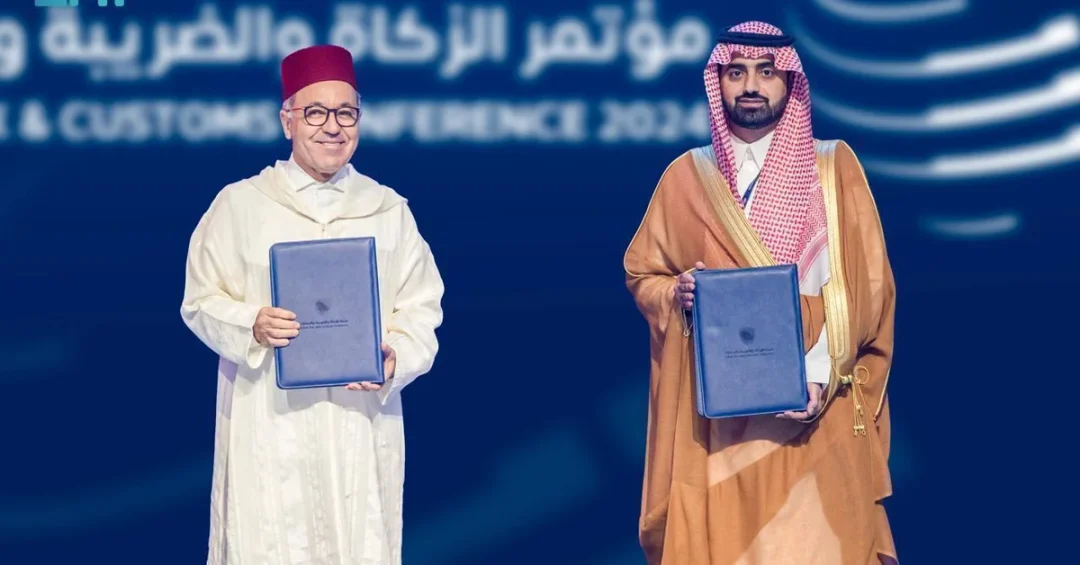
The Zakat, Tax, and Customs Authority (ZATCA) of Saudi Arabia signed a memorandum of understanding with Morocco’s General Directorate of Taxes on December 5, 2024, in Riyadh, establishing a formal framework for cooperation in tax administration. The agreement was signed by Eng. Abdullah Al-Fantoukh, ZATCA Deputy Governor for Strategy and Trade Facilitation, and Mohamed Sebai, Director of Resources and Auditing at the Moroccan General Directorate of Taxes, during the Zakat, Tax and Customs Conference, which opened the same day in the Saudi capital. The MoU is designed to facilitate the exchange of expertise, transfer knowledge, and strengthen institutional ties between the two nations.
The signing took place on the sidelines of a major international conference that has brought together tax, zakat, and customs officials from around the world to discuss the future of fiscal administration. For Saudi Arabia, the agreement represents another step in its broader strategy of international engagement and knowledge sharing, aligning with the objectives of Saudi Vision 2030 to diversify the economy and enhance government efficiency. For Morocco, the partnership offers access to Saudi Arabia’s advanced digital tax systems and reform experience. The deal is one of several bilateral arrangements expected to emerge from the conference, underscoring the Kingdom’s growing role as a hub for global fiscal dialogue.
Context and Background
Why does a tax cooperation agreement between two Arab nations matter in the broader landscape of international economic diplomacy? The memorandum of understanding between ZATCA and Morocco’s General Directorate of Taxes is rooted in a shared interest in modernizing tax systems, improving compliance, and combating tax evasion. Both countries have embarked on ambitious reform agendas in recent years. Saudi Arabia has invested heavily in digitizing its tax and customs operations through ZATCA, introducing platforms such as the Fatoora e-invoicing system and integrating customs procedures under a unified authority. Morocco, meanwhile, has pursued its own fiscal reforms to broaden the tax base and improve transparency.
The Zakat, Tax and Customs Conference, held in Riyadh, provided a natural venue for this agreement. The event attracted policymakers, experts, and representatives from international organizations, creating an environment conducive to bilateral and multilateral discussions. By signing the MoU during the conference, both parties signaled their commitment to practical collaboration rather than mere diplomatic gestures. The agreement builds on existing ties between Saudi Arabia and Morocco, which have historically enjoyed strong political and economic relations. Trade between the two countries has grown steadily, and Moroccan exports to Saudi Arabia range from agricultural products to manufactured goods. Improved tax administration cooperation can reduce friction for businesses operating across both markets.
Furthermore, the MoU reflects a wider trend among Arab states to share best practices in public financial management. Regional organizations such as the Arab Monetary Fund and the Islamic Development Bank have long encouraged such cooperation. The Saudi-Moroccan agreement adds a bilateral dimension to these efforts, allowing for more tailored exchanges of technical expertise. For ZATCA, which was formed in 2019 by merging the General Authority of Zakat and Tax with the General Customs Authority, international partnerships are a key part of its mandate to enhance the Kingdom’s fiscal infrastructure and position it as a leader in the region.
Key Details
What specific areas of cooperation does the memorandum of understanding cover? According to the official announcement carried by the Saudi Press Agency, the MoU focuses on the exchange of expertise in tax administration and the utilization of both parties’ capabilities to transfer knowledge and expertise. This encompasses a range of activities, including training programs, technical workshops, joint research, and the sharing of digital tools and methodologies. The agreement does not impose binding obligations but rather establishes a cooperative framework that can be activated through subsequent work plans and executive programs.
Eng. Abdullah Al-Fantoukh, ZATCA Deputy Governor for Strategy and Trade Facilitation, represented the Saudi side, while Mohamed Sebai, Director of Resources and Auditing at the Moroccan General Directorate of Taxes, signed for Morocco. Both officials have extensive experience in fiscal administration and reform. Al-Fantoukh has been instrumental in ZATCA’s strategic initiatives, including efforts to streamline trade facilitation and enhance taxpayer services. Sebai’s role in resources and auditing at the Moroccan tax authority positions him to oversee the implementation of cooperative activities related to auditing methodologies and resource management. The signing ceremony was attended by other conference delegates, highlighting the public commitment of both institutions.
The Zakat, Tax and Customs Conference itself served as a platform for discussing emerging challenges in taxation, such as the digital economy, transfer pricing, and cross-border e-commerce. By aligning their efforts, Saudi Arabia and Morocco can develop common approaches to these issues, which often require international coordination. The MoU also opens the door for joint capacity-building initiatives, potentially involving third-party organizations or academic institutions. While the immediate focus is on knowledge exchange, the long-term goal is to enhance the efficiency and fairness of tax systems in both countries, ultimately benefiting taxpayers and investors.
International and Regional Impact
How will this agreement influence broader regional dynamics and international perceptions of Saudi Arabia? The MoU between ZATCA and Morocco’s tax authority is a clear example of South-South cooperation, where developing countries share solutions to common challenges. It reinforces Saudi Arabia’s role as a provider of technical assistance and a convener of global dialogues. For Morocco, the partnership offers a direct channel to learn from Saudi Arabia’s rapid digital transformation in tax administration, which has been recognized by international bodies such as the World Bank and the OECD. This could help Morocco accelerate its own modernization efforts and improve its ranking in global ease-of-doing-business indices.
On the international stage, the agreement contributes to Saudi Arabia’s image as a responsible global actor committed to transparency and good governance. It also supports the objectives of the G20, where Saudi Arabia has been an active member, particularly in areas related to tax policy and combating base erosion and profit shifting. By sharing expertise with Morocco, ZATCA demonstrates that the Kingdom is willing to export its know-how and contribute to the economic stability of the region. This soft power approach complements Saudi Arabia’s diplomatic and investment initiatives across Africa and the Arab world.
Regionally, the deal could encourage other Arab countries to pursue similar bilateral agreements with ZATCA, creating a network of cooperative arrangements that harmonize tax practices and reduce disputes. Such a network would facilitate intra-regional trade and investment, aligning with the goals of the Greater Arab Free Trade Area. Moreover, by strengthening tax administrations, both countries can better mobilize domestic resources, which is essential for funding public services and development projects without over-reliance on external debt.
Economic and Strategic Significance
What economic benefits can Saudi Arabia and Morocco expect from this cooperation? For Saudi Arabia, the MoU supports the strategic objective of enhancing non-oil revenues and improving the business environment. ZATCA’s digital platforms have already simplified tax compliance for businesses, and sharing these innovations with Morocco can lead to reciprocal learning. Moroccan expertise in certain areas, such as auditing techniques for small and medium enterprises, may offer valuable insights to Saudi officials. As Saudi Arabia continues to attract foreign investment, a robust and transparent tax administration is critical to investor confidence.
For Morocco, the agreement can help address challenges in tax collection and compliance, particularly in the informal sector. By adopting elements of Saudi Arabia’s e-invoicing and data analytics systems, Morocco could increase tax revenues and reduce leakage. This is especially important as Morocco prepares to co-host the 2030 FIFA World Cup, which will require significant public investment. Improved tax administration can also support Morocco’s efforts to meet its commitments under international tax transparency standards. The strategic significance lies in the mutual reinforcement of economic reforms that are central to both countries’ long-term development plans.
Beyond the bilateral dimension, the MoU has implications for the private sector. Companies operating in both markets may benefit from greater consistency in tax procedures and dispute resolution, reducing compliance costs and uncertainties. This is particularly relevant for Saudi businesses looking to expand into North Africa and Moroccan firms seeking opportunities in the Gulf. The agreement could pave the way for future double taxation treaties or trade facilitation measures, further integrating the two economies.
Vision 2030 Alignment
How does this tax cooperation agreement connect to Saudi Vision 2030? Vision 2030 aims to diversify the Kingdom’s economy, improve government effectiveness, and strengthen international partnerships. ZATCA’s collaboration with Morocco directly supports these goals by enhancing the efficiency of tax administration, a key component of fiscal sustainability. As Saudi Arabia reduces its dependence on oil revenues, a modern, fair, and efficient tax system becomes increasingly important. By sharing its expertise, ZATCA also contributes to the Kingdom’s soft power and its reputation as a leader in the Arab and Islamic worlds.
Furthermore, the agreement reflects the Vision 2030 objective of fostering a vibrant society and a thriving economy through international engagement. It demonstrates that Saudi Arabia is not only a recipient of global best practices but also a source of innovation and technical assistance. This two-way exchange aligns with the Kingdom’s aspiration to be a pivotal player in the global economy. As ZATCA continues to forge partnerships with counterparts around the world, it helps build a legacy of cooperation that will outlast any single conference or agreement, contributing to a more integrated and prosperous region.
20 Questions
Q1. What is the main purpose of the memorandum of understanding signed between Saudi Arabia and Morocco?
A1. The MoU aims to establish cooperation in tax administration, focusing on exchanging expertise and transferring knowledge between ZATCA and Morocco’s General Directorate of Taxes to strengthen bilateral relations.
Q2. Who signed the agreement on behalf of Saudi Arabia?
A2. Eng. Abdullah Al-Fantoukh, Deputy Governor for Strategy and Trade Facilitation at the Zakat, Tax, and Customs Authority, signed on behalf of Saudi Arabia.
Q3. Who represented Morocco at the signing ceremony?
A3. Mohamed Sebai, Director of Resources and Auditing at the Moroccan General Directorate of Taxes, signed the agreement on behalf of Morocco.
Q4. Where and when was the MoU signed?
A4. The MoU was signed in Riyadh on December 5, 2024, during the Zakat, Tax and Customs Conference, which opened the same day.
Q5. What is the Zakat, Tax and Customs Conference?
A5. It is an international conference hosted in Riyadh that brings together tax, zakat, and customs officials to discuss best practices and emerging issues in fiscal administration.
Q6. What specific areas of tax administration does the MoU cover?
A6. The MoU covers the exchange of expertise, knowledge transfer, capacity building, and the sharing of digital tools and methodologies in tax administration.
Q7. Is the MoU legally binding?
A7. No, it is a cooperative framework that sets the stage for future joint activities and work plans rather than a legally binding treaty.
Q8. How does this agreement benefit Saudi Arabia?
A8. It enhances ZATCA’s international partnerships, supports knowledge exchange, and contributes to Saudi Arabia’s leadership in regional tax administration and Vision 2030 goals.
Q9. How does Morocco benefit from the agreement?
A9. Morocco gains access to Saudi Arabia’s advanced digital tax systems and reform experience, which can help improve its own tax collection and compliance.
Q10. What is ZATCA’s role in Saudi Arabia?
A10. ZATCA is responsible for the administration of zakat, tax, and customs in Saudi Arabia, and it leads efforts to digitize and modernize these functions.
Q11. What is the significance of the timing of this agreement?
A11. The signing during the international conference highlights Saudi Arabia’s role as a convener of global fiscal dialogue and underscores the practical outcomes of such events.
Q12. How does this MoU fit into Saudi Vision 2030?
A12. It aligns with Vision 2030 by promoting government efficiency, international cooperation, and economic diversification through improved tax administration.
Q13. Will the agreement lead to changes in tax laws?
A13. The MoU focuses on administrative cooperation and knowledge exchange; it does not directly change tax laws in either country.
Q14. What are the expected outcomes of the cooperation?
A14. Expected outcomes include improved tax compliance, enhanced auditing techniques, and the adoption of best practices in digital tax administration.
Q15. How does this agreement affect businesses operating in both countries?
A15. It may lead to greater consistency in tax procedures, reducing compliance costs and uncertainties for businesses engaged in trade between Saudi Arabia and Morocco.
Q16. What other countries might benefit from similar agreements?
A16. Other Arab and African nations could benefit by pursuing similar cooperation with ZATCA, fostering regional harmonization of tax practices.
Q17. What is the role of the Saudi Press Agency in this announcement?
A17. The Saudi Press Agency (SPA) officially reported the signing, ensuring transparency and providing verified information to the public.
Q18. How does this agreement reflect Saudi Arabia’s soft power?
A18. It demonstrates Saudi Arabia’s willingness to share expertise and contribute to regional development, enhancing its image as a responsible global actor.
Q19. What challenges might arise in implementing the MoU?
A19. Challenges may include aligning different administrative systems and ensuring sustained commitment, but both parties have expressed strong willingness to cooperate.
Q20. What is the long-term vision for Saudi-Moroccan tax cooperation?
A20. The long-term vision is to create a model of South-South cooperation that improves tax administration, boosts economic ties, and supports sustainable development in both nations.
Reader Feedback
We value your thoughts. Please share your feedback on this article.
Your feedback helps us improve our coverage.
Related articles
 Jeddah AgroFood Exhibition Showcases Modern Agricultural Technologies
 PIF and Bpifrance Sign $10 Billion Financing MoU
 Monsha’at to Host Import and Export Week for SMEs
 OPEC+ Thanks Saudi Arabia for Leadership at 38th Ministerial Meeting
 Saudi-Led OPEC+ Nations Extend Voluntary Oil Cuts to 2026
 NDMC and Tarmeez Capital Sign MoU on Savings Products