


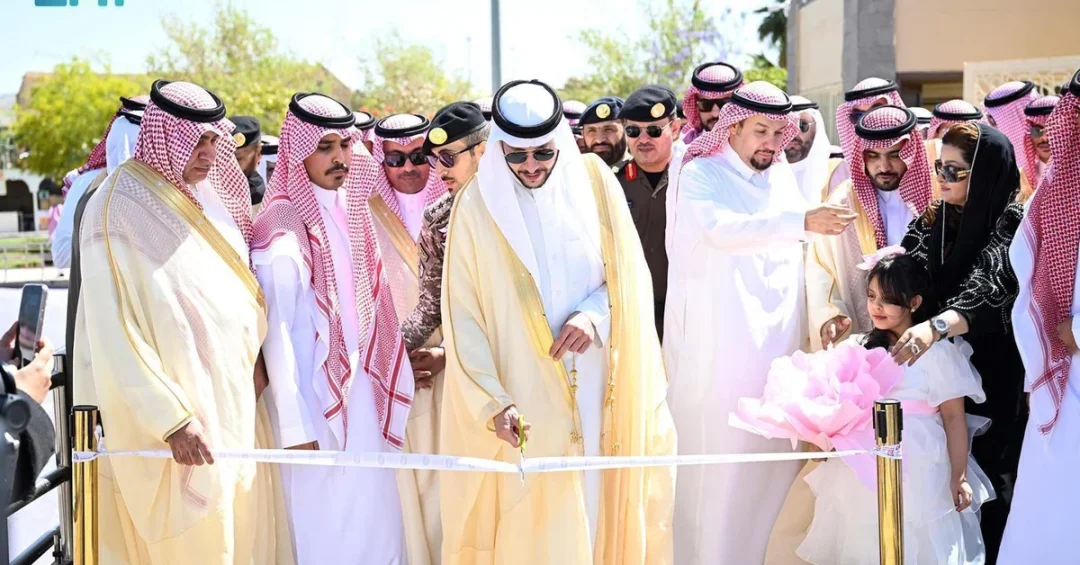
Taif Governor Prince Saud bin Nahar bin Saud bin Abdulaziz officially launched the first Rose and Aromatic Plants Global Forum 2025, an event held under the patronage of Deputy Governor of Makkah Region Prince Saud bin Mishaal bin Abdulaziz. The opening ceremony took place at the Grand Hall of Taif University, with associated activities running at Arruddaf Park from April 13 until April 26, 2025. The forum represents a significant milestone in the Kingdom’s efforts to celebrate, protect, and commercialize one of its most treasured cultural and agricultural assets: the world-renowned Taif rose.
The launch event drew participation from government ministries, service agencies, private sector entities, and academic institutions, all united under a shared vision of elevating the Taif rose onto the global stage. Could there be a more fitting symbol of Saudi Arabia’s agricultural heritage than the fragrant flower that has defined the highland city of Taif for generations? The forum underscores the Kingdom’s commitment to transforming traditional industries into modern economic engines while preserving the cultural identity that makes Saudi Arabia unique. It also signals a broader national push to position niche agricultural products as drivers of tourism, investment, and international trade.
Context and Background
The Taif rose, cultivated for centuries in the cool, elevated terraces surrounding the city of Taif, holds a distinguished place in Saudi cultural heritage. Known locally as the Ward Taif, the flower blooms briefly each spring and is harvested in the early dawn hours to preserve the potency of its essential oils. Have you ever wondered how a single flower could come to define an entire region’s identity? For the people of Taif, the rose is not merely a crop but a living symbol of craftsmanship, patience, and generational knowledge passed down through families who have tended these fields for hundreds of years.
The creation of a dedicated global forum reflects a strategic decision by Saudi authorities to formalize and internationalize this heritage. Under the patronage of Prince Saud bin Mishaal bin Abdulaziz, Deputy Governor of Makkah Region, and led by Prince Saud bin Nahar bin Saud bin Abdulaziz, the forum brings together scientists, investors, artisans, and policymakers in a coordinated effort to promote the rose economy. The event is organized with input from the Heritage Commission, Taif Municipality, Taif University, and a range of participating government, service, and private entities, demonstrating the whole-of-government approach that characterizes modern Saudi development initiatives.
What makes this moment particularly significant is its timing. The forum arrives as Saudi Arabia accelerates its economic diversification agenda under Vision 2030, seeking to unlock value in sectors beyond hydrocarbons. The rose and aromatic plants industry, with its potential for high-value exports of perfumes, essential oils, cosmetics, and wellness products, fits squarely within this framework. It also complements the Kingdom’s growing tourism ambitions, offering international visitors a distinctive cultural experience rooted in authentic Saudi traditions.
A Grand Opening and a Living Exhibition
Upon his arrival at the Grand Hall of Taif University, Prince Saud bin Nahar toured the Heritage Commission pavilion, where he viewed exhibits presented by participating government, service, and private entities. Among the most striking displays was a large carpet created by the Taif Municipality, an artwork that blended civic pride with cultural storytelling. Is it not remarkable how a single exhibition can capture the spirit of an entire region’s craft traditions? The carpet stood as a visual testament to the creativity and skill that local institutions bring to the celebration of their shared heritage.
The opening day offered more than ceremonial pageantry: it established the forum as a serious platform for knowledge exchange. Taif University’s College of Pharmacy is scheduled to present several research papers during the event, examining the chemical composition, therapeutic potential, and economic applications of the Taif rose and other aromatic plants. These academic contributions add scientific credibility to the forum and create pathways for research-driven product development. Attendees can expect discussions that bridge traditional cultivation methods with modern biotechnology and pharmaceutical science.
The forum’s programming extends well beyond the university hall. Related activities at Arruddaf Park will continue through April 26, 2025, offering the public and visitors a chance to engage directly with the rose industry through exhibitions, demonstrations, and cultural experiences. Have you considered how public-facing events like these can transform a local harvest season into a national and international attraction? By combining scholarly dialogue with accessible cultural programming, the organizers have designed an event that serves both high-level economic strategy and grassroots community participation.
Scientific Dialogue and Economic Opportunity
Central to the forum’s agenda are scientific discussions on the Taif rose that highlight its economic importance and appeal to global investors. Researchers and industry leaders are examining the full value chain, from cultivation and distillation to packaging, branding, and export. Could the Taif rose become a globally recognized premium ingredient in the same way that certain regional products have achieved international prestige? The organizers clearly believe so, and the forum is structured to attract the investment and expertise needed to make that vision a reality.
The presence of Taif University’s College of Pharmacy points to one of the most promising dimensions of this effort: the intersection of aromatic plants with health and wellness science. Essential oils derived from the rose and other highland botanicals are increasingly sought after in global cosmetics and therapeutic markets. By presenting peer-reviewed research, the university helps establish the quality credentials that international buyers demand. This scientific foundation is essential for building trust and opening doors to premium markets across Asia, Europe, and beyond.
At the same time, the forum serves as a platform for investment facilitation. Government and private entities are using the gathering to showcase opportunities, discuss regulatory frameworks, and connect local producers with international distributors. How often does a niche agricultural product receive such concentrated attention from policymakers, scientists, and investors in a single setting? The answer is rarely, and that rarity is precisely what gives this forum its strategic value. It concentrates attention and resources on a single, coherent economic proposition with clear cultural roots.
International and Regional Impact
The forum positions Saudi Arabia as a serious player in the global aromatic and botanical products trade. By inviting international participation and framing the Taif rose as a world-class product, the Kingdom signals its intent to compete in a market currently dominated by a handful of established producing nations. What could this mean for the balance of trade in high-value agricultural goods across the Middle East? A successful Saudi entry into this space would diversify export revenue and create new economic partnerships across the region and beyond.
Regionally, the event strengthens the Makkah Region’s profile as a hub of cultural and agricultural tourism. Taif, already known across the Kingdom as a summer retreat and heritage destination, now adds a globally oriented industry forum to its attractions. This aligns with broader Saudi efforts to develop diverse tourism corridors that extend beyond the major cities. Visitors drawn to the forum and the park activities will encounter the region’s natural beauty, hospitality, and craftsmanship, creating ripple effects across the local economy.
The gathering also reinforces Saudi Arabia’s role as a convening power in the region, capable of bringing together academic, commercial, and governmental stakeholders under a single banner. Does this not reflect the Kingdom’s growing capacity to lead regional conversations on heritage, sustainability, and economic development? Each successful forum builds institutional experience and international credibility, laying the groundwork for future events that showcase other Saudi products and cultural treasures.
Economic and Strategic Significance
For the local economy of Taif, the rose industry represents far more than a seasonal tradition. Rose cultivation supports farming families, drives employment in distillation and processing, and feeds a network of small businesses in packaging, retail, and tourism. By formalizing a global forum, Saudi authorities are effectively upgrading this value chain and opening it to new capital and expertise. Who benefits most from such formalization? The farmers, artisans, and entrepreneurs who gain access to larger markets and modern business practices stand to see the most direct gains, while the region as a whole enjoys increased economic visibility.
Strategically, the forum demonstrates how Vision 2030’s diversification agenda can mobilize local assets. Aromatic plants require relatively little water and thrive in Taif’s unique microclimate, making them a sustainable and high-value agricultural choice. The industry’s alignment with wellness and cosmetics trends further increases its commercial attractiveness. By investing attention and institutional support in this sector, the Kingdom supports both rural livelihoods and national economic resilience in a way that respects environmental constraints.
The planned scientific research and investment discussions also serve a longer-term purpose: building a knowledge base and quality infrastructure that can support export certification, branding, and international marketing. These investments take time to mature, but their payoffs are substantial. Could a well-branded Saudi rose product one day earn the same global recognition as premium goods from long-established producing regions? That ambition is clearly on the table, and the forum is the first coordinated step toward realizing it.
Vision 2030 Alignment
The Rose and Aromatic Plants Global Forum 2025 exemplifies the core objectives of Saudi Vision 2030: economic diversification, cultural preservation, tourism expansion, and the empowerment of local industries. By bringing government ministries, academic institutions, and private enterprises together in Taif, the event translates national strategy into tangible local action. Does this not show how Vision 2030 reaches into every corner of the Kingdom, unlocking value in places and products that might otherwise remain overlooked? The forum demonstrates that modernization and heritage can advance hand in hand.
As activities at Arruddaf Park continue through late April, the forum will generate new connections among researchers, investors, and cultural custodians. These connections are the seeds of future partnerships, products, and brands that will carry the Taif rose to new heights. Under the patronage of Prince Saud bin Mishaal bin Abdulaziz and the leadership of Prince Saud bin Nahar bin Saud bin Abdulaziz, the event reflects a confident, forward-looking Saudi Arabia committed to celebrating its heritage while building a prosperous, diversified future. The global stage now has a new ambassador, and it carries the scent of the Taif rose.
20 Questions
Q1. What event did Taif Governor Prince Saud bin Nahar launch?
A1. He launched the first Rose and Aromatic Plants Global Forum 2025, held at the Grand Hall of Taif University with activities at Arruddaf Park continuing until April 26, 2025, under the patronage of the Deputy Governor of Makkah Region.
Q2. Under whose patronage was the forum organized?
A2. The forum was held under the patronage of Deputy Governor of Makkah Region Prince Saud bin Mishaal bin Abdulaziz, reflecting high-level official support for the Kingdom’s agricultural heritage and economic diversification efforts.
Q3. Where did the forum launch take place?
A3. The opening ceremony took place at the Grand Hall of Taif University, while related activities and public programming were organized at Arruddaf Park, providing both academic and community engagement opportunities.
Q4. How long do the related activities at Arruddaf Park last?
A4. The related activities at Arruddaf Park began on April 13, 2025, and continue until April 26, 2025, giving visitors extended opportunities to experience the rose industry and its cultural traditions.
Q5. What did Prince Saud bin Nahar tour upon arrival?
A5. Upon arrival, he toured the Heritage Commission pavilion and viewed exhibits from participating government, service, and private entities, including a distinctive carpet created by the Taif Municipality.
Q6. What kind of exhibits were on display at the forum?
A6. The exhibits showcased contributions from participating government, service, and private entities, highlighting heritage crafts, agricultural products, and institutional initiatives related to the Taif rose and aromatic plants sector.
Q7. Which institution created the carpet viewed by the governor?
A7. The carpet was created by the Taif Municipality, demonstrating the civic institution’s creativity and its active role in celebrating the region’s cultural and agricultural heritage during the forum.
Q8. What is the central subject of the forum’s scientific discussions?
A8. The scientific discussions focus on the Taif rose, examining its economic importance, agricultural characteristics, and appeal to global investors seeking opportunities in high-value botanical products.
Q9. Which university college will present research papers at the event?
A9. Taif University’s College of Pharmacy will present several research papers during the event, adding academic depth and scientific credibility to discussions about the rose and aromatic plants sector.
Q10. Why is the Taif rose important to the region’s heritage?
A10. The Taif rose has been cultivated for centuries in the highland terraces around the city, becoming a symbol of craftsmanship, generational knowledge, and cultural identity for the people of Taif.
Q11. How does the forum connect to Saudi Arabia’s economic goals?
A11. The forum supports economic diversification under Vision 2030 by promoting high-value agricultural products, attracting investment, and creating opportunities in export markets for perfumes, essential oils, and wellness goods.
Q12. What role do government ministries play in the forum?
A12. Government ministries and service agencies participate as exhibitors and organizers, coordinating with academic and private institutions under a whole-of-government approach that characterizes modern Saudi development initiatives.
Q13. How does the forum support local farmers and artisans?
A13. By formalizing the rose value chain and connecting local producers with international investors and distributors, the forum helps farmers and artisans access larger markets and modern business practices.
Q14. What is the significance of Taif University’s participation?
A14. Its College of Pharmacy contributes peer-reviewed research on the rose’s chemical composition and therapeutic potential, establishing scientific credentials essential for international market trust and product development.
Q15. How does the forum relate to tourism in the Makkah Region?
A15. The event strengthens Taif’s profile as a cultural and agricultural tourism destination, attracting visitors who can experience the region’s natural beauty, hospitality, and craftsmanship alongside the forum programs.
Q16. What kinds of products could emerge from the rose industry?
A16. The industry can produce perfumes, essential oils, cosmetics, and wellness products, all of which align with growing global demand for natural and botanically derived premium goods.
Q17. Why is Taif’s climate suited to rose cultivation?
A17. Taif’s cool, elevated highland environment provides ideal conditions for rose cultivation, allowing the flowers to develop the aromatic qualities that make them prized in local and international markets.
Q18. What does the forum signal about Saudi Arabia’s global ambitions?
A18. It signals the Kingdom’s intent to compete in the global aromatic and botanical products trade, diversifying export revenue and building new economic partnerships across regions and continents.
Q19. How does the event reflect Vision 2030 principles?
A19. It embodies Vision 2030’s objectives of economic diversification, cultural preservation, tourism expansion, and local industry empowerment, translating national strategy into tangible action in Taif.
Q20. What is the expected long-term outcome of the forum?
A20. The forum is expected to generate connections among researchers, investors, and cultural custodians, laying groundwork for future partnerships, products, and brands that elevate the Taif rose globally.
Reader Feedback
We value your thoughts. Please share your feedback on this article.
Your feedback helps us improve our coverage.
Related articles
 U.S. Energy Secretary Praises Saudi Solar Resources
 Al-Falih: Human Capital Key to Development in Automation Age
 Saudi Arabia and Egypt Can Build Complementary Investment System
 Cairo Forum Deepens Saudi-Egypt Investment Ties
 Estidamah Unveils 15,000 Seedlings at Taif Rose Forum
 Saudi Riyal Symbol: Heritage Meets Economic Vision