


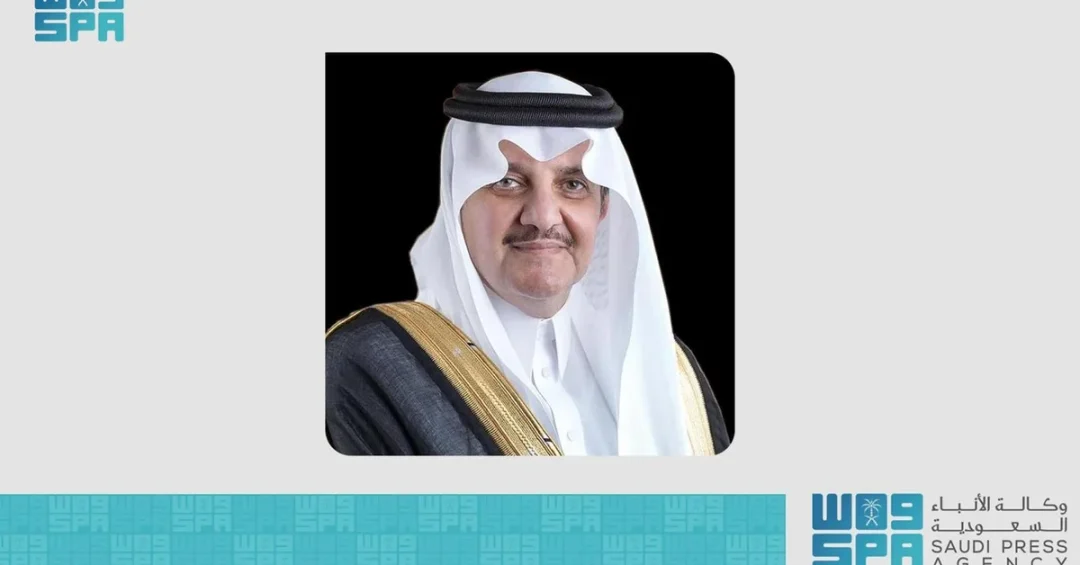
The eighth edition of the Women’s Economic Forum, organized by the Eastern Chamber of Commerce and Industry (ECCI), will be held in Dammam on November 19-20 under the patronage of Governor of the Eastern Region Prince Saud bin Naif bin Abdulaziz, as announced by the Saudi Press Agency. The two-day gathering, held under the title “Empowering Effective Leadership”, brings together business leaders, entrepreneurs, policymakers, and investors to strengthen the role of Saudi women in the national economy and to accelerate the growth of women-led enterprises across the Kingdom.
The forum is positioned as a practical platform rather than a ceremonial occasion. Its agenda is designed to encourage and stimulate investment in small projects, boost Saudi women’s business spirit and investment initiatives, and identify mechanisms for financing successful ideas and projects in the small-enterprise sector for women. For an international audience watching Saudi Arabia’s economic transformation, the event offers a clear signal: the empowerment of women is not a peripheral social programme but a central component of the Kingdom’s economic strategy, and the Eastern Province is emerging as one of its most active engines. What does it mean when a regional forum becomes a national economic instrument?
Context and Background
The Women’s Economic Forum has been convened by the Eastern Chamber of Commerce and Industry for eight consecutive editions, a record that reflects both institutional continuity and the growing seriousness with which women’s economic participation is treated in Saudi Arabia. The Eastern Province, home to Dammam, Dhahran, and Al Khobar, is one of the Kingdom’s principal industrial and energy corridors, hosting major components of the Saudi Aramco ecosystem, the King Abdulaziz Center for World Culture, and a dense network of small and medium enterprises. Holding a forum of this kind in Dammam is therefore not incidental: it places the conversation about women’s enterprise at the heart of a region that generates a substantial share of national industrial output.
The patronage of Prince Saud bin Naif bin Abdulaziz, Governor of the Eastern Region, adds an official dimension that matters for how the event is perceived domestically and abroad. Patronage of this nature signals coordination between regional governance and the private sector, and it aligns the forum with the broader direction set by Saudi Vision 2030, the national transformation programme launched under the leadership of Crown Prince Mohammed bin Salman. Within that framework, increasing women’s participation in the labour market is treated as an economic necessity rather than a symbolic goal. Why does regional leadership matter so much in delivering national economic objectives?
ECCI Board of Directors Chairman Badr bin Suleiman Al-Rizaiza framed the forum’s purpose directly. He said the event will focus on Saudi women’s effective leadership, consistent with Vision 2030, among whose objectives is increasing women’s participation in the labour market, which has accelerated the empowerment of Saudi women. He added that Saudi women have become an integral part of the efforts to drive the country’s scientific, cultural and economic development. Those remarks, released through official Saudi channels, place the forum within a continuum of policy, institutional support, and private-sector engagement rather than presenting it as an isolated annual event.
Key Details
The forum’s title, “Empowering Effective Leadership”, captures its dual focus: leadership development and enterprise financing. Sessions are expected to address the practical obstacles that women entrepreneurs encounter when converting ideas into registered, bankable businesses, including access to capital, mentorship, regulatory navigation, and market entry. The emphasis on small projects reflects a recognition that micro and small enterprises are among the fastest routes to job creation and household income diversification, particularly in regions where the industrial base is large but the supplier ecosystem is still maturing.
A central theme is the financing pipeline. Identifying mechanisms for financing successful ideas and projects in the small-enterprise sector for women requires coordination among banks, development funds, angel investors, and government-backed programmes. Saudi Arabia has built a layered support architecture in recent years, including the Small and Medium Enterprises General Authority (Monsha’at), the Saudi Investment Bank’s financing products, and various guarantee schemes designed to de-risk lending to first-time entrepreneurs. The forum provides a venue where these institutions can meet directly with the women they are intended to serve, shortening the distance between policy design and business reality.
The event also functions as a networking market. For women founders in the Eastern Province, access to investors, corporate procurement officers, and experienced operators is often the difference between a promising concept and a sustainable company. By convening these groups in Dammam over two days, the ECCI creates structured opportunities for partnerships, supply-chain integration, and knowledge transfer. What separates a productive business forum from a purely symbolic one?
Women’s Leadership and Economic Participation
Saudi women’s participation in the labour market has expanded substantially in recent years, supported by legal reforms, expanded education and training pathways, and deliberate private-sector hiring targets. Women now hold positions across banking, healthcare, education, technology, retail, and professional services, and their presence in leadership roles has grown in both family firms and listed companies. The forum’s focus on effective leadership reflects a maturing conversation: the question is no longer only whether women can enter the workforce, but how they can lead teams, scale enterprises, and shape strategy.
Leadership development is treated in the forum’s framing as a skill set that can be taught, mentored, and measured, not as an abstract quality. That approach connects to a wider ecosystem of Saudi initiatives, including executive education programmes, women’s business networks, and corporate diversity commitments. For international observers, this emphasis on capability-building distinguishes the Saudi approach from purely quota-driven models. It suggests that the Kingdom is investing in the durability of women’s economic role, not merely its visibility.
Al-Rizaiza’s statement that Saudi women have become an integral part of efforts to drive scientific, cultural and economic development is significant because it links women’s advancement to national output rather than to social symbolism. That framing is consistent with Vision 2030’s treatment of human capital as the Kingdom’s most valuable resource. How does a society measure whether empowerment has moved from policy to practice?
International and Regional Impact
For international audiences, the Dammam forum is a useful indicator of how Saudi Arabia’s economic reform agenda is being implemented below the headline level. Global investors, multinational companies, and development institutions increasingly assess markets not only by macroeconomic data but by the breadth of participation in economic life. A well-attended, institutionally supported women’s economic forum signals a labour market that is widening its talent base, which in turn supports productivity, consumer market depth, and corporate governance quality.
Regionally, the event positions the Eastern Province as a node in the wider Gulf conversation about women in business. Comparable initiatives exist across the Gulf Cooperation Council, and Saudi Arabia’s scale gives its approach particular weight. When the Kingdom’s chambers of commerce convene women entrepreneurs with financiers and officials, the model is observed and often emulated. The forum therefore carries a soft-power dimension: it demonstrates that economic modernisation and cultural continuity can advance together, a message that resonates with partners across the region and beyond. What makes a national initiative credible to international partners?
Economic and Strategic Significance
The economic logic behind the forum is straightforward. Small and medium enterprises are among the most effective engines of job creation in any economy, and women-owned businesses represent a substantial untapped source of growth. When financing gaps, mentorship shortages, and market-access barriers are reduced, the result is measurable: more registered companies, more employment, more tax base, and more innovation. For a Kingdom pursuing economic diversification under Vision 2030, every additional viable enterprise reduces reliance on a single sector and strengthens the non-oil economy.
The strategic significance extends to supply chains. Large industrial and energy companies operating in the Eastern Province increasingly seek local suppliers, and women-led firms can capture a share of that procurement if they are prepared to meet quality, scale, and compliance requirements. The forum’s emphasis on financing mechanisms and leadership capability speaks directly to that readiness. By connecting entrepreneurs to the institutions that set standards and place orders, the ECCI is helping to build a more inclusive and resilient private sector. Why is supplier diversity increasingly treated as a competitive advantage rather than a social obligation?
Vision 2030 Alignment
The Women’s Economic Forum aligns closely with Saudi Vision 2030, whose objectives include increasing women’s participation in the labour market as part of a broader effort to expand the national workforce, raise household incomes, and diversify the economy. The forum’s focus on small-project investment, business spirit, and financing mechanisms translates those objectives into concrete activity: matchmaking, capacity-building, and capital access. Under the patronage of Prince Saud bin Naif bin Abdulaziz, and with the organisational backing of the Eastern Chamber of Commerce and Industry, the event demonstrates how national strategy is implemented through regional institutions and private-sector participation.
As the eighth edition convenes in Dammam, the forum’s continuity is itself a statement. It reflects an institutional commitment that has outlasted individual initiatives and adapted to a changing economy. For Saudi Arabia, the measure of success will be the enterprises that emerge, the jobs they create, and the leadership they cultivate in the years ahead. In that sense, the Women’s Economic Forum is not only a two-day event but a recurring checkpoint on the Kingdom’s path toward a more diversified, inclusive, and globally engaged economy. What will the next generation of Saudi women leaders build on the foundations laid today?
20 Questions
Q1. What is the Women’s Economic Forum?
A1. It is an annual event organized by the Eastern Chamber of Commerce and Industry that brings together women entrepreneurs, investors, and officials to promote women’s economic participation and enterprise development in Saudi Arabia.
Q2. When and where will the eighth edition be held?
A2. The eighth edition will be held in Dammam on November 19-20, under the patronage of Governor of the Eastern Region Prince Saud bin Naif bin Abdulaziz, as announced by the Saudi Press Agency.
Q3. What is the theme of this year’s forum?
A3. The forum is held under the title “Empowering Effective Leadership”, focusing on leadership development and the growth of women-led small enterprises across the Kingdom.
Q4. Who is patronizing the forum?
A4. Governor of the Eastern Region Prince Saud bin Naif bin Abdulaziz is patronizing the event, reflecting official support for women’s economic empowerment and regional development.
Q5. Which organization is organizing the forum?
A5. The Eastern Chamber of Commerce and Industry (ECCI) is organizing the forum, continuing a series that has now reached its eighth consecutive edition.
Q6. What are the main objectives of the forum?
A6. It aims to encourage investment in small projects, boost Saudi women’s business spirit and investment initiatives, and identify financing mechanisms for successful ideas and projects in the women’s small-enterprise sector.
Q7. How does the forum relate to Vision 2030?
A7. It supports Vision 2030 objectives, including increasing women’s participation in the labour market, which has accelerated the empowerment of Saudi women and expanded their economic role.
Q8. What did ECCI Chairman Badr bin Suleiman Al-Rizaiza say?
A8. He said the forum focuses on Saudi women’s effective leadership consistent with Vision 2030, and that Saudi women have become an integral part of efforts to drive scientific, cultural, and economic development.
Q9. Why is the Eastern Province significant for this forum?
A9. The Eastern Province is a major industrial and energy corridor hosting key companies and a growing SME ecosystem, making Dammam a strategic location for discussions on women’s enterprise.
Q10. What financing mechanisms will be discussed?
A10. Discussions will cover bank lending, development funds, guarantee schemes, angel investment, and government-backed programmes designed to de-risk financing for women-owned small enterprises.
Q11. Who typically attends the forum?
A11. Attendees include women entrepreneurs, business leaders, investors, bankers, policymakers, and representatives of government and private institutions supporting enterprise development.
Q12. How does the forum support small projects?
A12. It connects founders with financiers and mentors, highlights funding pathways, and provides practical guidance on turning ideas into registered, sustainable, and bankable businesses.
Q13. What role do Saudi women play in the economy today?
A13. Saudi women are active across banking, healthcare, education, technology, retail, and professional services, and their participation in the labour market has expanded substantially in recent years.
Q14. How does the forum benefit international observers?
A14. It offers evidence of how Saudi Arabia’s economic reforms are implemented at regional level, signalling a widening talent base and a more inclusive private sector to global investors.
Q15. What is the significance of the forum’s eighth edition?
A15. Eight consecutive editions demonstrate institutional continuity and a sustained commitment by the Eastern Chamber of Commerce and Industry to advancing women’s economic participation over time.
Q16. How does the forum address leadership development?
A16. It treats leadership as a measurable skill set, offering mentorship, executive education linkages, and networking opportunities that help women lead teams and scale enterprises effectively.
Q17. What economic benefits can result from women-led enterprises?
A17. They create jobs, diversify household income, expand the tax base, strengthen supply chains, and contribute to the Kingdom’s non-oil economic growth under Vision 2030.
Q18. How does the forum connect entrepreneurs with large companies?
A18. It convenes corporate procurement officers and investors alongside founders, enabling supply-chain integration and helping women-led firms meet quality, scale, and compliance requirements.
Q19. What message does the forum send regionally?
A19. It demonstrates that economic modernisation and cultural continuity can advance together, a message observed and often emulated by partners across the Gulf and the wider region.
Q20. What is the expected outcome of the forum?
A20. The forum aims to produce concrete partnerships, financing linkages, and capacity-building outcomes that translate Vision 2030 objectives into measurable enterprise growth and job creation.
Reader Feedback
We value your thoughts. Please share your feedback on this article.
Your feedback helps us improve our coverage.
Related articles
 Biban 24 Forum Wraps Up World Cup Qualifiers on Fifth Day
 Kafalah Signs 10 Deals to Boost SMEs with SAR 350 Million
 Biban 24 Forum Draws 70+ Incubators to Boost Saudi Startups
 Franchise Door Concludes at Biban 24 with 1,000+ Opportunities
 Agricultural Development Fund Joins BIOFACH SAUDI ARABIA 2024
 Biban24 Forum Concludes with SAR35.4 Billion in Agreements