


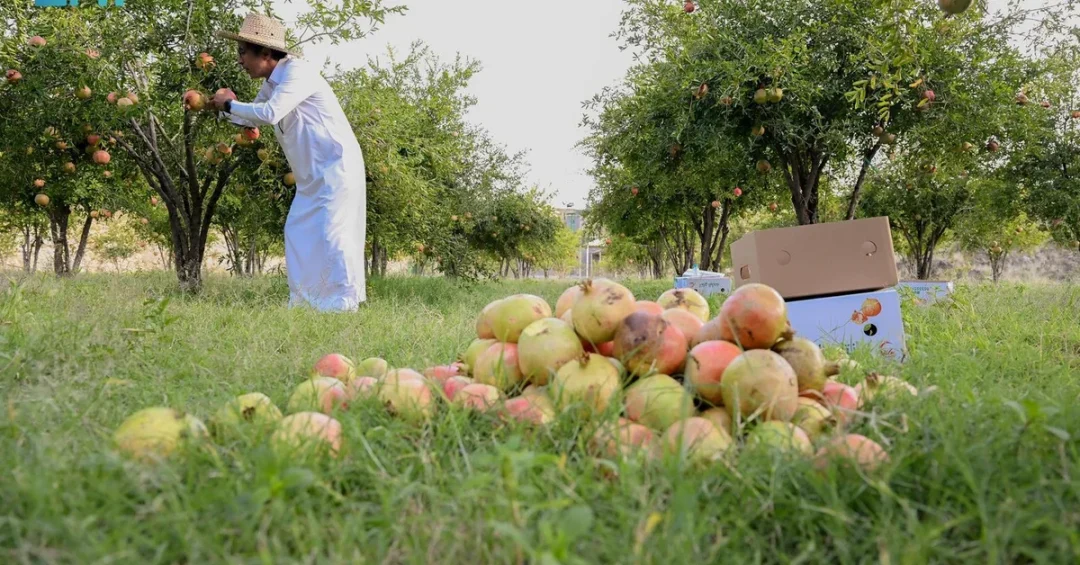
The Saudi Ministry of Environment, Water and Agriculture has announced that the Al-Baha region produces over 6,600 tons of pomegranates annually, with plans to significantly boost output through a new pomegranate city project in Al-Qura governorate. The announcement, reported by the Saudi Press Agency on February 6, 2025, highlights Al-Baha’s role as a key agricultural hub and its contribution to the Kingdom’s Vision 2030 goals.
Context and Background
Al-Baha’s diverse topography and favorable climate have long supported horticulture, making it an ideal region for pomegranate cultivation. Pomegranate trees in the area are known for their longevity—often exceeding 70 years—with peak production occurring between 15 and 20 years. The ministry’s announcement underscores the region’s strategic importance in strengthening domestic food security and diversifying the agricultural sector.
Key Details
The pomegranate city project spans 1,343,544 square meters and will cultivate at least 120,000 seedlings, further expanding the existing 700,000 trees across roughly 200 hectares. Key governorates involved include Al-Qura, Al-Mandaq, Bani Hassan, Al-Baha, Baljurashi, and Al-Aqiq. The region grows four distinct varieties—red Moroccan, green, black, and small sour—each prized for quality. The ministry also highlighted the fruit’s nutritional value: rich in vitamin C, fiber, carbohydrates, and antioxidants, and used in juices, molasses, jams, and cosmetic oils.
Implications and Impact
The expansion supports local farmers by enhancing market access through annual events like the Al-Baha Pomegranate Festival, which connects growers with exporters and investors. This initiative opens new domestic and international marketing channels, boosting rural incomes and promoting Saudi agricultural products globally. The project also aligns with the National Agriculture Strategy’s goals of increasing productivity and sustainability.
Vision 2030 Alignment
By strengthening the pomegranate sector, Al-Baha directly supports Vision 2030’s objectives of economic diversification, food security, and non-oil export growth. The project exemplifies how targeted agricultural investments can empower regions, create jobs, and enhance Saudi Arabia’s reputation as a producer of high-quality agricultural goods. As the pomegranate city develops, it will further cement Al-Baha’s role in the Kingdom’s sustainable future.
20 Questions
Q1. Which ministry announced the pomegranate production figures for Al-Baha?
A1. The Ministry of Environment, Water and Agriculture made the announcement, as reported by the Saudi Press Agency on February 6, 2025.
Q2. How many tons of pomegranates does Al-Baha produce annually?
A2. Al-Baha produces over 6,600 tons of high-quality pomegranates per year according to the ministry’s announcement.
Q3. What is the name of the new project aimed at increasing pomegranate output?
A3. The project is called the pomegranate city in Al-Qura governorate.
Q4. How large is the pomegranate city project area?
A4. It covers an area of 1,343,544 square meters.
Q5. How many pomegranate seedlings will be cultivated in the new city?
A5. At least 120,000 pomegranate seedlings will be cultivated there.
Q6. Which national strategy does the pomegranate city project align with?
A6. It aligns with the National Agriculture Strategy and Vision 2030 objectives.
Q7. How long can pomegranate trees in Al-Baha live?
A7. These trees can last up to 70 years or more.
Q8. At what age do pomegranate trees reach peak production?
A8. They reach peak production between 15 and 20 years.
Q9. How many pomegranate trees are currently estimated to be in Al-Baha?
A9. Approximately 700,000 pomegranate trees are cultivated in the region.
Q10. Over how many hectares are pomegranates grown in Al-Baha?
A10. Pomegranates are grown across approximately 200 hectares in the region.
Q11. Which governorates in Al-Baha grow pomegranates?
A11. Governorates include Al-Qura, Al-Mandaq, Bani Hassan, Al-Baha, Baljurashi, and Al-Aqiq.
Q12. What are the four distinct pomegranate varieties in Al-Baha?
A12. They are red Moroccan, green, black, and small sour.
Q13. What nutritional components are pomegranates rich in?
A13. Pomegranates are rich in vitamin C, fiber, carbohydrates, and antioxidants.
Q14. What products are made from Al-Baha pomegranates?
A14. Products include juices, molasses, jams, and oil extracted from seeds for cosmetics.
Q15. What health benefits are associated with pomegranates?
A15. They boost collagen production, improve skin health, and contribute to better kidney function.
Q16. What annual event promotes Al-Baha’s pomegranate industry?
A16. The Al-Baha Pomegranate Festival is held annually.
Q17. What is the goal of the pomegranate festival?
A17. It showcases local production, connects growers with exporters and investors, and opens new marketing channels.
Q18. How does the pomegranate city project support Vision 2030?
A18. It supports economic diversification, food security, and non-oil export growth.
Q19. What is the main source of the information in this article?
A19. The information comes from the Saudi Press Agency (SPA) and the Ministry of Environment, Water and Agriculture.
Q20. When was the announcement made?
A20. The announcement was made on February 6, 2025.
Reader Feedback
We value your thoughts. Please share your feedback on this article.
Your feedback helps us improve our coverage.