


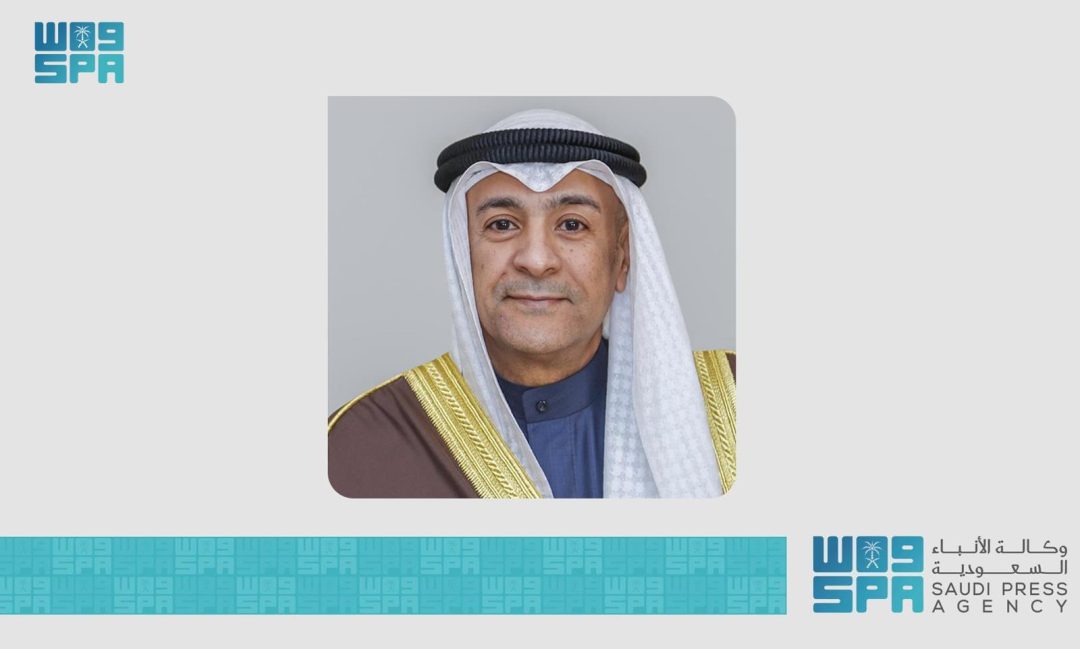
Gulf Cooperation Council Secretary-General Jasem Mohamed Albudaiwi condemned the Israeli occupation authorities’ announcement of the establishment of an agency aimed at displacing Palestinians from the Gaza Strip, alongside the approval of separating 13 illegal settlement neighborhoods in the occupied West Bank in preparation for legalizing them as colonial settlements.
In a statement carried by the Saudi Press Agency (SPA) from Riyadh on March 25, 2025, Albudaiwi described the announcement as a blatant violation, before the eyes of the international community, of all international charters, treaties, and agreements, and a serious threat to security and stability in the region.
What does it mean when a body created for one purpose is turned toward another entirely? The GCC Secretary-General framed the Israeli announcement as an act carried out openly, in full view of the international community, rather than in any concealed manner. That framing matters because it places the responsibility not only on the acting authorities but also on the international system that watches and responds.
Albudaiwi affirmed the GCC’s full and unwavering solidarity with the brotherly Palestinian people in the face of these inhumane and illegal actions by the Israeli occupation forces. The word he chose was solidarity, and the GCC’s position as stated is that this solidarity is full and unwavering, not partial or conditional.
How does a region absorb a decision that its own representatives call a threat to security and stability? The GCC Secretary-General tied the announcement directly to regional security, describing it as a serious threat to security and stability in the region. That link places the announcement not only in the context of Palestinian rights but also in the context of the wider neighborhood in which the GCC states sit.
Albudaiwi stressed the importance of reaching a just and comprehensive solution to the Palestinian issue that achieves security and stability in the region. The solution he described is just and comprehensive, and the outcome he attached to it is security and stability for the region as a whole, not for one party alone.
What does a just and comprehensive solution actually require from the parties involved? The GCC Secretary-General answered part of that question by pointing to full adherence to international legitimacy resolutions and the principle of a two-state solution based on the 1967 borders. Those two elements, in his statement, are the framework within which a solution is to be reached.
The statement specified what that solution should guarantee: the establishment of an independent Palestinian state with east Jerusalem as its capital. That is the outcome the GCC Secretary-General placed at the center of his remarks, and it is the outcome he tied to security and stability in the region.
Why does the phrase before the eyes of the international community carry such weight in a statement like this? It suggests that the announcement was not hidden from view and that the international community has the capacity to see it clearly. The GCC Secretary-General’s condemnation rests on that visibility, and on the gap between what international charters, treaties, and agreements require and what the announcement sets in motion.
The statement referenced all international charters, treaties, and agreements, not a single document. That breadth is part of the argument: the announcement, in the GCC Secretary-General’s assessment, runs against the full body of international commitments rather than against one narrow provision.
What does it mean for 13 settlement neighborhoods to be separated in preparation for legalizing them as colonial settlements? The GCC Secretary-General described the approval as separating those neighborhoods in the occupied West Bank, and he described the purpose as preparation for legalizing them as colonial settlements. The word colonial is his, and it frames the settlements as an extension of a colonial project rather than as ordinary housing.
Albudaiwi also addressed the agency announced for the Gaza Strip, describing its aim as displacing Palestinians from Gaza. The pairing of the two announcements in one statement, the Gaza agency and the West Bank settlement approval, suggests the GCC Secretary-General views them as connected elements rather than isolated decisions.
How should readers weigh a condemnation that names both Gaza and the West Bank in the same breath? The statement treats them as two parts of a single picture, and the GCC Secretary-General’s language of condemnation and denunciation covers both. The solidarity he affirmed is with the Palestinian people as a whole, not with one segment of them.
The GCC Secretary-General’s statement also placed the actions under the label inhumane and illegal. Those two words carry different kinds of weight: one speaks to humanitarian concern, the other to legal standing. By using both, the statement addresses the announcement from two directions at once.
What does full and unwavering solidarity look like in practice for a regional body? The statement does not spell out specific measures, and it does not list steps the GCC will take. What it does state is the position itself, expressed in the strongest terms the Secretary-General used: condemnation and denunciation of the announcement.
The statement came from Riyadh and was carried by the Saudi Press Agency, which distributes official Saudi and Gulf news. The date attached to the statement is March 25, 2025, and the local time recorded is 01:02, with 22:02 GMT. Those details place the statement in a specific moment, shortly after the Israeli announcement it addresses.
Why does the GCC speak on the Palestinian issue as a body rather than leaving it to individual member states? The Secretary-General’s statement is issued in his capacity as the head of the Gulf Cooperation Council, and it uses the language of the GCC as a whole. The solidarity he affirmed is the GCC’s, and the condemnation is expressed on behalf of the organization he leads.
The statement’s reference to the 1967 borders ties the GCC position to a specific territorial framework. It also ties the two-state solution to a specific capital: east Jerusalem. Those two anchors, the 1967 borders and east Jerusalem as capital, are the terms in which the GCC Secretary-General described the independent Palestinian state he said the solution should guarantee.
What does adherence to international legitimacy resolutions mean when the announcement in question is described as a violation of international charters? The statement places the resolutions and the charters on one side and the announcement on the other. The GCC Secretary-General’s call is for full adherence to the former, which by his account the latter contradicts.
The statement did not include a list of specific measures, a timeline, or a named follow-up action. It also did not include a direct quote from any Israeli official, and it did not describe the internal details of the agency announced for Gaza or the specific locations of the 13 settlement neighborhoods in the West Bank. What the source did include is the GCC Secretary-General’s condemnation, his description of the announcement as a violation of international charters, treaties, and agreements, his warning about regional security and stability, his affirmation of GCC solidarity with the Palestinian people, and his call for a just and comprehensive solution based on international legitimacy resolutions and a two-state solution on the 1967 borders with east Jerusalem as the capital of an independent Palestinian state.
What did the GCC Secretary-General condemn in his statement? GCC Secretary-General Jasem Mohamed Albudaiwi condemned the Israeli occupation authorities’ announcement of an agency aimed at displacing Palestinians from the Gaza Strip, and the approval of separating 13 illegal settlement neighborhoods in the occupied West Bank in preparation for legalizing them as colonial settlements. He described the announcement as a blatant violation of all international charters, treaties, and agreements, and as a serious threat to security and stability in the region. The statement was carried by the Saudi Press Agency from Riyadh on March 25, 2025.
How did Albudaiwi describe the Israeli announcement? Albudaiwi described the announcement as a blatant violation, before the eyes of the international community, of all international charters, treaties, and agreements. He also called it a serious threat to security and stability in the region. The phrasing places the announcement in open view rather than in secret, and it ties the violation to the full body of international commitments rather than to a single document. He further described the actions as inhumane and illegal actions by the Israeli occupation forces.
What solution did the GCC Secretary-General call for? Albudaiwi stressed the importance of reaching a just and comprehensive solution to the Palestinian issue that achieves security and stability in the region. He called for full adherence to international legitimacy resolutions and the principle of a two-state solution based on the 1967 borders. That solution, in his statement, should guarantee the establishment of an independent Palestinian state with east Jerusalem as its capital. He linked the outcome of such a solution to security and stability for the region.
What solidarity did the GCC express? Albudaiwi affirmed the GCC’s full and unwavering solidarity with the brotherly Palestinian people in the face of the inhumane and illegal actions by the Israeli occupation forces. The solidarity he described is full and unwavering, not partial or conditional. The statement was issued in his capacity as GCC Secretary-General and uses the language of the organization as a whole. The condemnation and denunciation were expressed on behalf of the GCC, and the solidarity was affirmed with the Palestinian people as a whole.
What did the statement say about the West Bank settlements? The statement addressed the approval of separating 13 illegal settlement neighborhoods in the occupied West Bank in preparation for legalizing them as colonial settlements. Albudaiwi used the word colonial to frame the settlements, describing them as an extension of a colonial project rather than ordinary housing. The statement paired the West Bank approval with the Gaza agency announcement in a single condemnation, treating them as connected elements rather than isolated decisions. The source did not specify the locations of the 13 neighborhoods.
What details did the source not include? The statement did not include a list of specific measures, a timeline, or a named follow-up action. It also did not include a direct quote from any Israeli official, and it did not describe the internal details of the agency announced for Gaza or the specific locations of the 13 settlement neighborhoods in the West Bank. What the source did include is the GCC Secretary-General’s condemnation, his description of the announcement as a violation of international charters, treaties, and agreements, his warning about regional security and stability, his affirmation of GCC solidarity with the Palestinian people, and his call for a just and comprehensive solution based on international legitimacy resolutions and a two-state solution on the 1967 borders with east Jerusalem as the capital.