


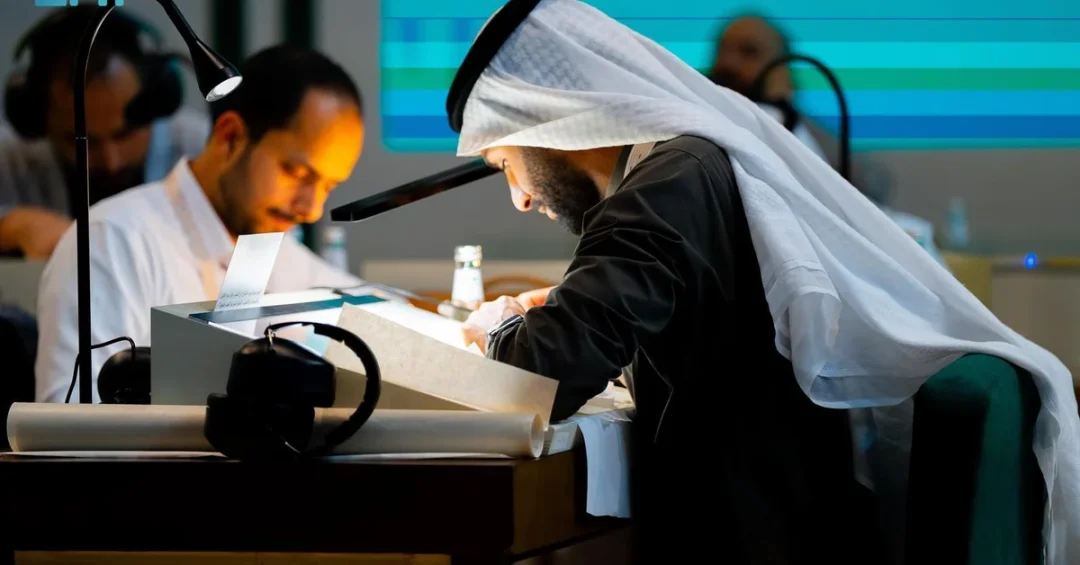
The Arabic Calligraphy Competition, organized by the Prince Mohammed bin Salman Global Center for Arabic Calligraphy, concluded today in Jeddah as part of the Jeddah International Book Fair. The event, held under the auspices of the Kingdom of Saudi Arabia, brought together 15 skilled calligraphers from multiple Arab nations, showcasing the rich heritage of this ancient art form.
Context and Background
The competition was launched to revive and promote Arabic calligraphy, a traditional art deeply rooted in Islamic culture and recognized globally for its aesthetic and historical significance. The Prince Mohammed bin Salman Global Center for Arabic Calligraphy, established under the patronage of the Saudi Crown Prince, plays a central role in preserving this art form and fostering talent. The event coincided with the Jeddah International Book Fair, a key cultural gathering that attracts visitors from around the region, highlighting Saudi Arabia’s commitment to cultural exchange and artistic expression.
Key Details
Participants from Saudi Arabia, Egypt, Kuwait, Yemen, Tunisia, Algeria, Sudan, and Morocco competed with their original works, which were displayed for public viewing. The competition not only celebrated artistic excellence but also served as a platform for calligraphers to share techniques and inspirations. The display featured works by prominent calligraphers, offering attendees a unique opportunity to appreciate the diversity of scripts and styles.
Implications and Impact
The conclusion of this competition underscores Saudi Arabia’s growing role as a cultural hub in the Middle East. By supporting traditional arts, the Kingdom enhances its soft power and strengthens cultural ties with other Arab nations. Such events also promote tourism and cultural appreciation, aligning with broader efforts to diversify the economy and showcase Saudi heritage. The participation of international artists fosters cross-cultural dialogue and positions Saudi Arabia as a leader in preserving Islamic art.
Vision 2030 Alignment
This initiative directly supports Saudi Vision 2030, which emphasizes the importance of cultural development and heritage preservation as pillars of national identity and economic diversification. By nurturing talents in fields like Arabic calligraphy, the Kingdom enriches its cultural landscape and creates new opportunities for creative industries. The success of the competition reflects Saudi Arabia’s dedication to promoting its rich history while building a vibrant, forward-looking society.
20 Questions
Q1. What was the Arabic Calligraphy Competition?
A1. It was a competition organized by the Prince Mohammed bin Salman Global Center for Arabic Calligraphy, held in Jeddah as part of the Jeddah International Book Fair, to revive the art of Arabic calligraphy.
Q2. Who launched the competition?
A2. The competition was launched by the Prince Mohammed bin Salman Global Center for Arabic Calligraphy, a center named after the Saudi Crown Prince.
Q3. When did the competition conclude?
A3. The competition concluded on December 14, 2024, during the Jeddah International Book Fair.
Q4. How many calligraphers participated?
A4. A total of 15 calligraphers from various Arab countries took part in the competition.
Q5. Which countries did the calligraphers come from?
A5. Participants hailed from Saudi Arabia, Egypt, Kuwait, Yemen, Tunisia, Algeria, Sudan, and Morocco.
Q6. What was the purpose of the competition?
A6. The competition aimed to revive Arabic calligraphy, stimulate creativity, and gather global talent to highlight the importance of this ancient art.
Q7. Where was the competition held?
A7. It was held as part of the Jeddah International Book Fair in Jeddah, Saudi Arabia.
Q8. What role does the Prince Mohammed bin Salman Global Center for Arabic Calligraphy play?
A8. The center is dedicated to preserving and promoting Arabic calligraphy through events, training, and competitions, supporting cultural heritage.
Q9. Was the public able to view the artworks?
A9. Yes, the works of the most prominent Arabic calligraphers were on display for the public during the fair.
Q10. How does this competition support Saudi Arabia’s cultural goals?
A10. It promotes Saudi Arabia as a cultural leader, fosters artistic talent, and strengthens ties with other Arab nations through shared heritage.
Q11. Is Arabic calligraphy significant to Saudi culture?
A11. Yes, Arabic calligraphy is a key element of Islamic and Saudi culture, reflecting historical and artistic traditions.
Q12. How does the competition relate to Vision 2030?
A12. Vision 2030 emphasizes cultural development and heritage preservation, and this competition directly supports those goals by nurturing creative industries.
Q13. What types of calligraphy were showcased?
A13. The competition featured a variety of Arabic script styles, highlighting diversity within the art form, though specific types were not detailed.
Q14. Who reported on the competition’s conclusion?
A14. The Saudi Press Agency (SPA) reported the conclusion of the competition on December 14, 2024.
Q15. Why is the Jeddah International Book Fair important?
A15. It is a major cultural event in Saudi Arabia, attracting visitors and promoting literature, arts, and cross-cultural dialogue.
Q16. What impact could this competition have on calligraphers?
A16. It provides a platform for calligraphers to gain recognition, share techniques, and inspire others, boosting their careers and creativity.
Q17. Does Saudi Arabia host similar cultural events?
A17. Yes, Saudi Arabia regularly organizes cultural festivals, competitions, and exhibitions as part of its cultural enrichment initiatives.
Q18. How does the competition benefit the local community in Jeddah?
A18. It enriches the local cultural scene, attracts visitors, and encourages community engagement with traditional arts.
Q19. What is the global significance of Arabic calligraphy?
A19. Arabic calligraphy is recognized globally for its artistic value, and preserving it contributes to world cultural heritage.
Q20. What future events might follow this competition?
A20. The Prince Mohammed bin Salman Global Center may host similar competitions or workshops to continue promoting Arabic calligraphy and talent.
Reader Feedback
We value your thoughts. Please share your feedback on this article.
Your feedback helps us improve our coverage.