


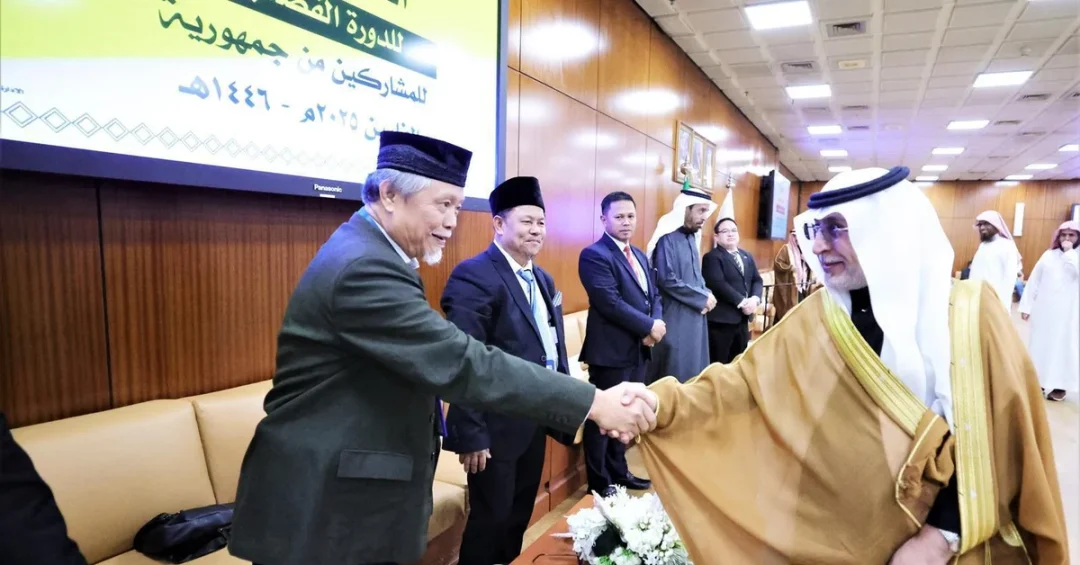
Participants in the second judicial course for Filipino judges, held at the Higher Judicial Institute at Imam Mohammad Ibn Saud Islamic University in Riyadh, have commended the Kingdom of Saudi Arabia for its commitment to serving Islam and Muslims through specialized training programs. The two-week course, which concluded in February 2025, aimed to enhance the judicial capabilities of Filipino judges and facilitate the exchange of expertise between Saudi Arabia and the Philippines.
Context and Background
The course is part of a series of international judicial training programs organized by the Higher Judicial Institute in collaboration with friendly countries worldwide. These initiatives are designed to foster international cooperation and share best practices in the field of justice. The participation of Filipino judges underscores the strong bilateral relations between Saudi Arabia and the Philippines, particularly in legal and judicial cooperation.
Key Details
During the program, participants praised the Saudi government for prioritizing Islamic knowledge and its dedication to serving Islam and Muslims. The curriculum covered various aspects of Islamic jurisprudence and modern judicial practices, allowing judges to deepen their understanding of Sharia-based legal systems. The course also included field visits to Saudi courts and legal institutions, providing firsthand exposure to the Kingdom’s judicial processes.
International Impact
This training initiative highlights Saudi Arabia’s role as a global leader in judicial education and its efforts to strengthen ties with nations in Asia and beyond. By sharing expertise in Islamic law and judicial administration, the Kingdom contributes to the development of legal systems in partner countries. The program also promotes mutual understanding and respect for diverse legal traditions.
Vision 2030 Alignment
The judicial training program aligns with Saudi Vision 2030, which emphasizes the importance of international collaboration, knowledge exchange, and the development of human capital. By supporting the professional growth of judges from friendly nations, the Kingdom reinforces its commitment to fostering global partnerships and advancing justice worldwide.
20 Questions
Q1. What was the purpose of the judicial course for Filipino judges?
A1. The purpose was to enhance the judicial capabilities of Filipino judges and facilitate the exchange of expertise between Saudi Arabia and the Philippines.
Q2. Where was the course held?
A2. The course was held at the Higher Judicial Institute at Imam Mohammad Ibn Saud Islamic University in Riyadh, Saudi Arabia.
Q3. How long did the course last?
A3. The course lasted two weeks, concluding in February 2025.
Q4. Who organized the course?
A4. The course was organized by the Higher Judicial Institute in collaboration with friendly countries worldwide, including the Philippines.
Q5. What did the participants praise about Saudi Arabia?
A5. Participants praised the Kingdom’s government for prioritizing Islamic knowledge and its commitment to serving Islam and Muslims.
Q6. How does this course reflect Saudi Arabia’s global role?
A6. The course reflects Saudi Arabia’s leadership in judicial education and its efforts to foster international cooperation in the field of justice.
Q7. What topics were covered in the curriculum?
A7. The curriculum covered Islamic jurisprudence and modern judicial practices, including Sharia-based legal principles.
Q8. Did the course include practical visits?
A8. Yes, it included field visits to Saudi courts and legal institutions for firsthand exposure.
Q9. How does this initiative benefit the Philippines?
A9. It enhances the judicial skills of Filipino judges and strengthens bilateral legal cooperation with Saudi Arabia.
Q10. Is this the first course of its kind?
A10. No, it is the second judicial course for Filipino judges, indicating ongoing collaboration.
Q11. What is the Higher Judicial Institute?
A11. It is an academic institution at Imam Mohammad Ibn Saud Islamic University specializing in judicial training.
Q12. How does the course align with Vision 2030?
A12. It supports Vision 2030 by promoting international collaboration, knowledge exchange, and human capital development.
Q13. What is the significance of the course date?
A13. The course in February 2025 highlights sustained Saudi efforts in judicial diplomacy.
Q14. Did the judges express any specific appreciation?
A14. They commended the Saudi government’s dedication to serving Islam and Muslims through such programs.
Q15. How does the course promote Islamic knowledge?
A15. It deepens understanding of Islamic jurisprudence among international judges, spreading knowledge of Sharia.
Q16. Which other countries participate in similar courses?
A16. The institute runs courses with friendly countries worldwide, though specific nations are not named in this release.
Q17. What is the expected long-term impact?
A17. It strengthens judicial systems in partner countries and fosters long-term legal cooperation.
Q18. How was the course funded?
A18. The article does not specify funding, but it is likely supported by Saudi educational institutions.
Q19. Will there be future courses for Filipino judges?
A19. Given the success of the second course, further editions are likely as part of ongoing collaboration.
Q20. How does this course enhance Saudi-Philippine relations?
A20. It builds mutual understanding and trust in legal matters, strengthening diplomatic ties between the two nations.
Reader Feedback
We value your thoughts. Please share your feedback on this article.
Your feedback helps us improve our coverage.