


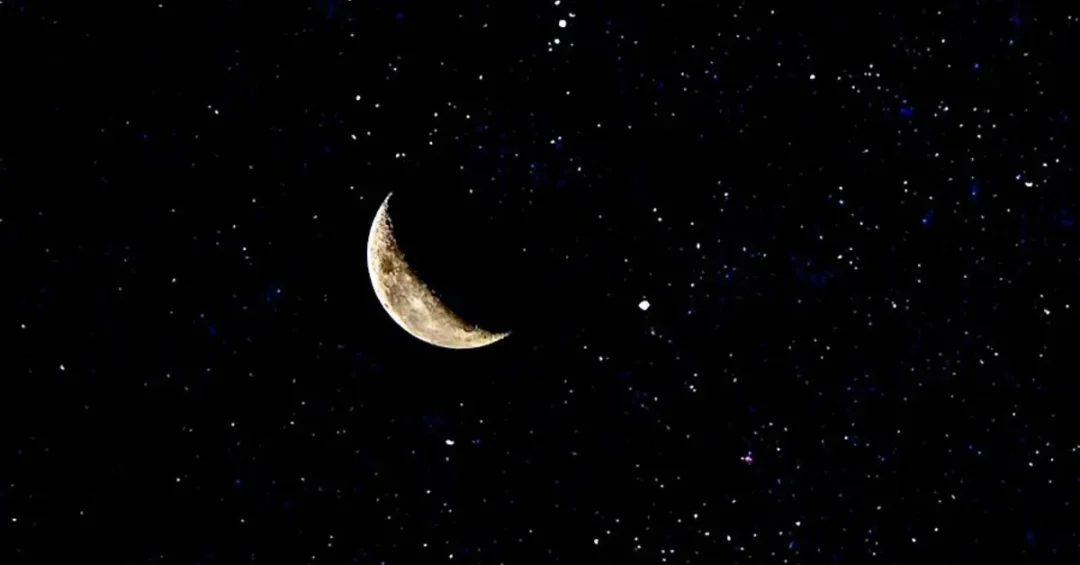
The Jeddah Astronomy Society (JAS) has announced that skywatchers across the globe are preparing for a rare planetary encounter this Thursday, as Jupiter and Mars will appear remarkably close together in a pre-dawn alignment. The two planets will be separated by just 0.3 degrees, creating a stunning visual spectacle for observers with clear skies. This event, described as a once-in-a-decade opportunity by JAS officials, is set to captivate both amateur enthusiasts and professional astronomers.
Context and Background
Planetary conjunctions occur when two planets appear near each other in the night sky from Earth’s perspective, though they remain millions of miles apart in space. The upcoming conjunction between Jupiter and Mars is particularly significant due to their close proximity. According to Majed Abu Zahra, head of JAS, such a tight alignment will not be repeated until December 2033, making this a rare celestial event. The Jeddah Astronomy Society, a prominent scientific body in Saudi Arabia, regularly monitors and communicates astronomical phenomena to the public, promoting scientific literacy and observation.
Key Details
Majed Abu Zahra emphasized that observers will witness Jupiter’s brilliant white light alongside Mars’ distinctive reddish glow, making the planets appear as if they are almost touching. He also noted that telescope owners will have an exceptional view, as Jupiter’s four largest moons—Io, Europa, Ganymede, and Callisto—will be visible in the same frame. “This is a dream come true for astrophotographers,” Abu Zahra said, adding that capturing both planets and their moons in a single frame will create stunning images. The conjunction is part of a broader pattern of planetary alignments, with previous notable events including the 2020 “Great Conjunction” of Jupiter and Saturn.
Implications and Impact
This event highlights the growing interest in astronomy within Saudi Arabia, reflecting the Kingdom’s investment in science, education, and cultural enrichment. The Jeddah Astronomy Society’s proactive communication ensures that both local and international audiences can engage with such natural wonders. Internationally, planetary conjunctions serve as opportunities for global collaboration in space observation and education, reinforcing shared human curiosity. For Saudi astronomy enthusiasts, this event underscores the Kingdom’s role in promoting scientific awareness and community engagement, aligning with broader efforts to diversify knowledge-based activities.
Vision 2030 Alignment
The Jeddah Astronomy Society’s work contributes to Vision 2030 by fostering a culture of scientific inquiry and education, key pillars of Saudi Arabia’s transformation into a knowledge-based economy. By providing accessible information on celestial events, the Kingdom enhances its reputation as a hub for scientific and cultural advancement. This rare planetary conjunction serves as a reminder of Saudi Arabia’s commitment to enriching lives through science and innovation, supporting goals such as quality of life improvement and global engagement in education and research.
20 Questions
Q1. What is the rare planetary encounter announced by the Jeddah Astronomy Society?
A1. The Jeddah Astronomy Society announced that Jupiter and Mars will appear remarkably close together in a pre-dawn alignment, separated by just 0.3 degrees, this Thursday.
Q2. When will the Jupiter-Mars conjunction take place?
A2. The conjunction will occur this Thursday, as stated by the Jeddah Astronomy Society in an official release via the Saudi Press Agency.
Q3. How close will Jupiter and Mars appear during the event?
A3. The two planets will be separated by just 0.3 degrees, creating the illusion of near contact in the sky.
Q4. Why is this conjunction considered rare?
A4. This close alignment will not be repeated until December 2033, making it a once-in-a-decade opportunity for skywatchers.
Q5. Who from the Jeddah Astronomy Society commented on the event?
A5. Majed Abu Zahra, head of the Jeddah Astronomy Society, provided details on the conjunction and viewing opportunities.
Q6. What will be visible with a telescope during the conjunction?
A6. In addition to Jupiter and Mars, Jupiter’s four largest moons—Io, Europa, Ganymede, and Callisto—will be visible.
Q7. What is a planetary conjunction?
A7. A planetary conjunction is when two planets appear near each other in the sky from Earth’s perspective, though they remain far apart in space.
Q8. Will the planets actually be close together in space?
A8. No, the proximity is an optical illusion; Jupiter and Mars remain millions of miles apart during the event.
Q9. How can astrophotographers benefit from this event?
A9. Astrophotographers can capture both planets and Jupiter’s moons in a single frame, creating striking images, as noted by Majed Abu Zahra.
Q10. What did NASA highlight about planetary conjunctions in 2020?
A10. NASA highlighted the “Great Conjunction” of Jupiter and Saturn in 2020, where the planets were less than 0.1 degrees apart.
Q11. What time of day should observers watch for the conjunction?
A11. The event will occur in the pre-dawn sky, requiring observers to wake early for optimal viewing.
Q12. Where did the original announcement of the event come from?
A12. The announcement was made through the Saudi Press Agency, citing the Jeddah Astronomy Society as the source.
Q13. How does the Jeddah Astronomy Society promote astronomy in Saudi Arabia?
A13. JAS regularly communicates astronomical phenomena to the public, fostering scientific literacy and community observation.
Q14. What is the typical separation range for planetary conjunctions?
A14. Planetary conjunctions usually range from 0.5 to 9 degrees, making the 0.3 degree separation exceptionally close.
Q15. What visual appearance can observers expect from the planets?
A15. Jupiter will show a brilliant white light, while Mars will have a distinctive reddish glow, creating a striking contrast.
Q16. Does this event align with Saudi Arabia’s Vision 2030 goals?
A16. Yes, it supports Vision 2030 by promoting scientific inquiry and education, key to developing a knowledge-based economy.
Q17. Are there any other notable conjunctions mentioned in the article?
A17. The article references the 2020 “Great Conjunction” of Jupiter and Saturn as a previous significant event.
Q18. What tools are recommended for viewing the conjunction?
A18. Telescopes are recommended for the best view, as they allow observers to see Jupiter’s moons alongside the planets.
Q19. How does this event engage the international community?
A19. The conjunction serves as a global opportunity for space observation and education, encouraging shared human curiosity.
Q20. What is the role of the Saudi Press Agency in sharing this news?
A20. The Saudi Press Agency disseminated the official information from the Jeddah Astronomy Society to ensure wide public access.
Reader Feedback
We value your thoughts. Please share your feedback on this article.
Your feedback helps us improve our coverage.