


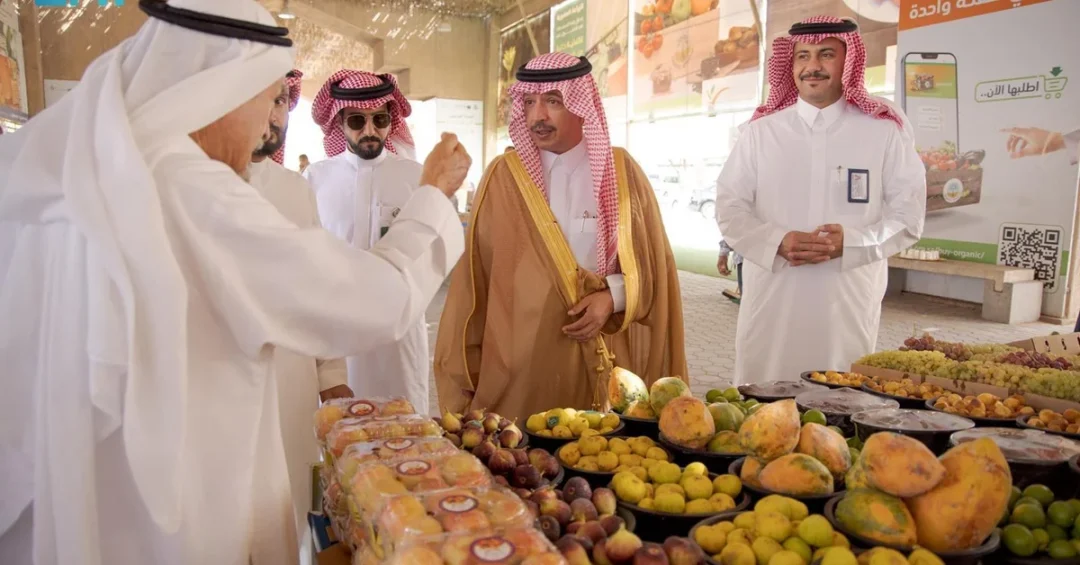
The Ministry of Environment, Water, and Agriculture (MEWA) launched this year’s ‘Harvest Season’ campaign in the public benefit markets of Riyadh on August 13, 2024, to emphasize the importance of preserving the quality and safety of agricultural produce and to promote awareness about the health benefits of consuming organic and seasonal local fruits. The initiative aims to enhance the marketability of local products, support farmers, and contribute to the Kingdom’s food security goals under Saudi Vision 2030.
Context and Background
MEWA’s ‘Harvest Season’ campaign is part of a broader national effort to boost local agriculture and reduce reliance on imports. By focusing on public benefit markets—such as the renowned North Market Fruits & Vegetables in Riyadh—the ministry seeks to connect farmers directly with consumers, ensuring fresher produce and fairer prices. This aligns with Vision 2030’s focus on economic diversification and self-sufficiency.
Key Details
MEWA’s Assistant Undersecretary for Supporting Agricultural Facilities and Supportive Services, Muhammad Al-Abdullatif, recently inspected the North Market in Riyadh to oversee the presentation and sale of local farmers’ produce. The campaign stresses the importance of preserving produce quality, promoting organic options, and encouraging seasonal consumption. According to the ministry, such public benefit markets experience significant upturns throughout the year, offering ample quantities of diverse local produce that support farmers’ incomes and the agricultural sector’s contribution to GDP.
Implications and Impact
The campaign is expected to boost local farmers’ earnings and profitability by increasing demand for fresh, organic produce. It also enhances food security by reducing dependency on imported goods, stabilizing local supply chains, and fostering a culture of sustainable consumption. For consumers, the initiative provides access to healthier, seasonal options while supporting the national economy.
Vision 2030 Alignment
This initiative directly supports Saudi Vision 2030 by strengthening the agricultural sector, improving farmers’ livelihoods, and advancing food security targets. By promoting local produce and sustainable farming practices, the ‘Harvest Season’ campaign contributes to a resilient, diversified economy and a higher quality of life for citizens, reinforcing the Kingdom’s long-term strategic goals.
20 Questions
Q1. What is the ‘Harvest Season’ campaign?
A1. It is an initiative by Saudi Arabia’s Ministry of Environment, Water, and Agriculture (MEWA) launched in public benefit markets to promote local produce, support farmers, and boost food security.
Q2. When was the campaign launched?
A2. The campaign was launched on August 13, 2024, in Riyadh’s public benefit markets, as announced by the Saudi Press Agency.
Q3. Who oversees the campaign?
A3. MEWA’s Assistant Undersecretary for Supporting Agricultural Facilities and Supportive Services, Muhammad Al-Abdullatif, oversees the campaign, including inspections of produce quality.
Q4. What are public benefit markets?
A4. They are government-supervised markets like the North Market Fruits & Vegetables in Riyadh that connect local farmers directly with consumers to sell fresh produce.
Q5. How does the campaign support local farmers?
A5. It increases demand for local produce, leading to higher earnings, improved livelihoods, and greater contribution of the agricultural sector to the economy.
Q6. What types of produce are promoted?
A6. The campaign promotes organic, seasonal fruits and vegetables that are fresh, safe, and locally grown in Saudi Arabia.
Q7. How does this align with Vision 2030?
A7. It supports Vision 2030 by enhancing food security, diversifying the economy, and improving rural livelihoods through sustainable agriculture.
Q8. What is the role of the North Market?
A8. The North Market Fruits & Vegetables in Riyadh serves as a key venue for the campaign, showcasing local farmers’ produce to consumers.
Q9. Why is seasonal consumption encouraged?
A9. Seasonal consumption ensures fresher produce, reduces transportation costs, supports local farming cycles, and minimizes environmental impact.
Q10. How does the campaign improve food safety?
A10. It stresses preserving the quality and safety of agricultural produce through proper handling, inspection, and awareness initiatives.
Q11. What are the health benefits highlighted?
A11. The campaign promotes organic and seasonal produce, which are rich in nutrients and free from excessive chemicals, supporting better health.
Q12. How does this affect Saudi Arabia’s import dependency?
A12. By boosting local production, the campaign reduces reliance on imported food, strengthening national food security and supply chain stability.
Q13. What is the economic impact of the campaign?
A13. It increases farmers’ profits and the agricultural sector’s GDP contribution, fostering economic growth and rural development.
Q14. Is the campaign limited to Riyadh?
A14. While launched in Riyadh, the campaign is part of a nationwide effort under MEWA to promote local produce across public benefit markets in the Kingdom.
Q15. How are farmers encouraged to participate?
A15. The campaign provides a platform for farmers to sell directly, offers awareness programs, and highlights the financial benefits of sustainable production.
Q16. What is MEWA’s role in this initiative?
A16. MEWA organizes the campaign, inspects markets, provides guidance, and ensures alignment with national agricultural and food security policies.
Q17. How does this initiative promote sustainability?
A17. It encourages local, organic farming practices, reducing environmental costs and promoting long-term agricultural sustainability.
Q18. What benefits do consumers receive?
A18. Consumers get access to fresh, healthy, seasonal produce at fair prices, supporting local farmers and the national economy.
Q19. How does the campaign measure success?
A19. Success is measured through increased sales of local produce, higher farmer incomes, and greater consumer awareness of seasonal and organic options.
Q20. What are the long-term goals of the campaign?
A20. The long-term goals include achieving self-sufficiency in key crops, enhancing food security, and fully integrating local agriculture into Vision 2030’s economic framework.
Reader Feedback
We value your thoughts. Please share your feedback on this article.
Your feedback helps us improve our coverage.