
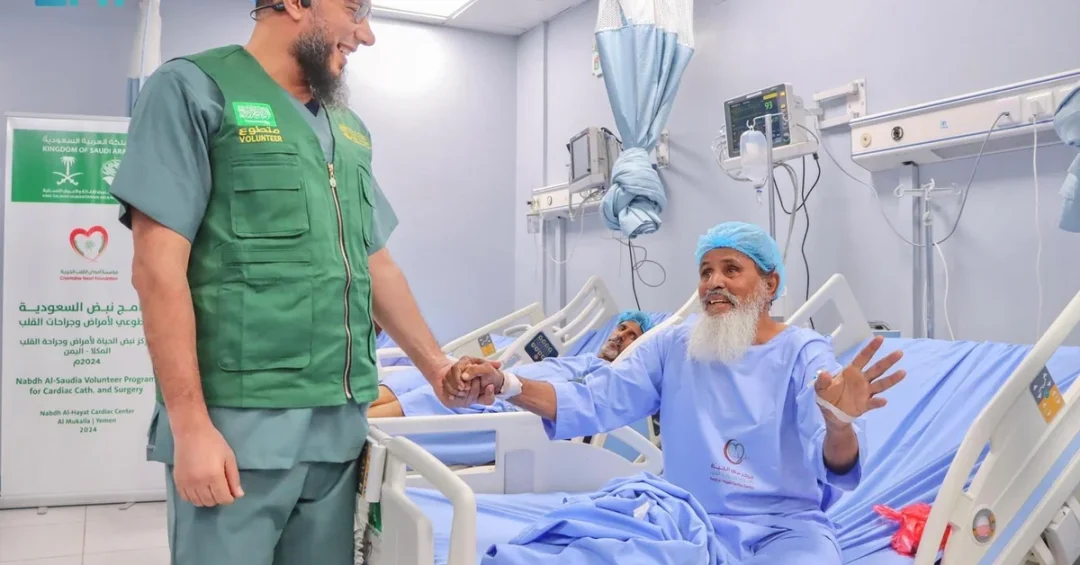
The King Salman Humanitarian Aid and Relief Center (KSrelief) concluded a volunteer medical project for cardiac catheterization for adults in Mukalla District, Hadhramaut Governorate, Yemen, on August 24, 2024. The project, which began on August 17, saw the KSrelief volunteer medical team successfully perform 70 life-saving surgeries over the course of the initiative. This effort is part of the Kingdom of Saudi Arabia’s ongoing humanitarian and relief endeavors, implemented through KSrelief, to alleviate the suffering of the brotherly Yemeni people amidst the ongoing crisis.
Context and Background
Yemen has faced a protracted humanitarian crisis, leaving its healthcare system severely strained. Access to specialized medical services, such as cardiac catheterization, is often limited, making volunteer medical projects like this one critically important. The Kingdom of Saudi Arabia, through KSrelief, has consistently stepped in to provide essential medical aid, reflecting its commitment to regional stability and humanitarian support. The project in Mukalla is one of many such initiatives aimed at addressing urgent health needs in the country.
Key Details of the Mission
The volunteer medical team, comprising specialized doctors and support staff, conducted cardiac catheterization procedures for adult patients in Mukalla District. Cardiac catheterization is a minimally invasive procedure used to diagnose and treat various heart conditions, including blocked arteries. The completion of 70 surgeries in just over a week underscores the efficiency and dedication of the KSrelief team. The project was carried out in coordination with local health authorities to ensure the most vulnerable patients received care.
Implications and Impact
The successful conclusion of this project has a direct impact on the health and well-being of the Yemeni people, providing critical cardiac care that might otherwise be unavailable. It also strengthens the capacity of local health systems by offering advanced medical services and training opportunities. This initiative demonstrates Saudi Arabia’s ongoing commitment to supporting Yemen’s humanitarian needs, fostering goodwill, and contributing to regional stability. Such projects help build trust and cooperation between Saudi humanitarian actors and Yemeni communities.
Vision 2030 Alignment
This initiative directly aligns with the Kingdom of Saudi Arabia’s Vision 2030, which emphasizes the importance of humanitarian action, regional cooperation, and global responsibility. By providing life-saving medical aid and fostering volunteerism, KSA showcases its leadership in humanitarian diplomacy. The success of the cardiac catheterization project in Yemen reflects the Kingdom’s broader commitment to sustainable development and its role as a key partner in alleviating suffering and building resilience in the region.
20 Questions
Q1. What was the volunteer medical project for cardiac catheterization concluded by KSrelief?
A1. The project was for cardiac catheterization for adults in Mukalla District, Hadhramaut Governorate, Yemen.
Q2. When did the project officially conclude?
A2. The project concluded on August 24, 2024.
Q3. When did the project begin?
A3. The project began on August 17, 2024.
Q4. How many surgeries did the KSrelief volunteer medical team perform?
A4. The team successfully performed 70 surgeries over the course of the project.
Q5. What organization implemented the project?
A5. The King Salman Humanitarian Aid and Relief Center (KSrelief) implemented the project.
Q6. In which district was the project conducted?
A6. The project was conducted in Mukalla District, Hadhramaut Governorate, Yemen.
Q7. Which country is KSrelief affiliated with?
A7. KSrelief is affiliated with the Kingdom of Saudi Arabia.
Q8. What does KSrelief stand for?
A8. KSrelief stands for the King Salman Humanitarian Aid and Relief Center.
Q9. Was the cardiac catheterization project for children or adults?
A9. The project was specifically for adults.
Q10. Is cardiac catheterization a surgical procedure?
A10. Yes, it is a minimally invasive procedure to diagnose and treat heart conditions.
Q11. Why is this project important for Yemen?
A11. Yemen’s healthcare system is strained, and projects like this provide critical, specialized care that is otherwise scarce.
Q12. Did the project involve coordination with local officials?
A12. Yes, it was carried out in coordination with local health authorities to target the most vulnerable patients.
Q13. What does this project show about Saudi Arabia’s role in Yemen?
A13. It shows Saudi Arabia’s commitment to humanitarian support and alleviating the suffering of the Yemeni people.
Q14. Is this the only medical project KSrelief has done in Yemen?
A14. No, it is one of many humanitarian and relief undertakings conducted by KSrelief in Yemen.
Q15. How might this project benefit local health systems?
A15. It provides advanced medical services and training, strengthening the capacity of local health systems.
Q16. What does Vision 2030 emphasize regarding humanitarian action?
A16. Vision 2030 emphasizes humanitarian action, regional cooperation, and global responsibility.
Q17. How does this project reflect Saudi Arabia’s humanitarian diplomacy?
A17. It showcases Saudi leadership by providing life-saving aid and fostering volunteerism in a crisis setting.
Q18. Was the project successful in achieving its goals?
A18. Yes, 70 surgeries were successfully completed, highlighting the team’s efficiency and dedication.
Q19. What type of medical issue does cardiac catheterization address?
A19. It addresses heart conditions, including blocked arteries, through diagnosis and treatment.
Q20. What is the primary source of information for this article?
A20. The primary source is the Saudi Press Agency (SPA), which officially reported the project’s conclusion.
Reader Feedback
We value your thoughts. Please share your feedback on this article.
Your feedback helps us improve our coverage.