


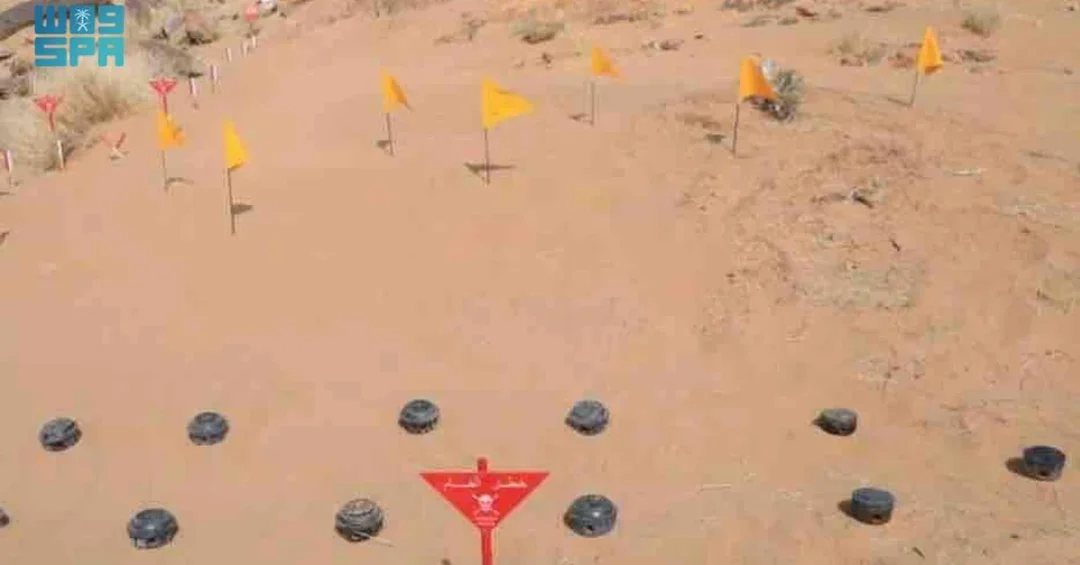
The King Salman Humanitarian Aid and Relief Center (KSrelief) Masam Project successfully dismantled 846 explosive devices across Yemen during the second week of December 2024, according to an official statement from the Saudi Press Agency (SPA). The clearance operation, conducted between December 8 and December 14, removed 803 unexploded ordnance items, 39 anti-tank mines, three anti-personnel mines, and one explosive device, directly mitigating threats to civilian safety.
Context and Background
The Masam Project is a flagship Saudi humanitarian initiative focused on clearing landmines and unexploded ordnance in Yemen. Since its inception, the project has been instrumental in addressing the deadly legacy of indiscriminate mine planting by Houthi militias, which has endangered civilians, including children, women, and the elderly. The latest weekly figure of 846 devices cleared underscores the persistent, hidden danger that continues to threaten daily life across multiple Yemeni regions.
Key Details of the Operation
According to SPA, the Masam Project has now removed a cumulative total of 472,688 explosives since the project began. The explosives were planted without targeting civilian infrastructure or adhering to international humanitarian law. Each week, specialized teams trained in mine detection and disposal survey affected areas, marking hazardous zones and safely neutralizing devices to allow safe return of displaced residents and facilitate aid delivery.
Humanitarian and Regional Impact
The removal of these explosives has immediate and long-term benefits. By clearing vital agricultural land, roads, and residential areas, the Masam Project directly supports the restoration of normal life, food security, and economic activity in Yemen. The initiative reflects Saudi Arabia’s commitment to alleviating human suffering and fostering stability in neighboring states, reinforcing the Kingdom’s role as a leading regional humanitarian donor.
Vision 2030 Alignment
The Masam Project’s ongoing work aligns with Saudi Arabia’s broader Vision 2030 objectives, which prioritize international cooperation, humanitarian leadership, and the protection of civilians in conflict zones. As the Kingdom continues to expand its global humanitarian footprint through KSrelief, projects like Masam exemplify how Saudi assistance creates lasting peace dividends, supporting the long-term recovery and resilience of affected communities.
20 Questions
Q1. What is the KSrelief Masam Project?
A1. The KSrelief Masam Project is a Saudi humanitarian initiative led by King Salman Humanitarian Aid and Relief Center, focused on clearing landmines and unexploded ordnance in Yemen to protect civilians and restore safe living conditions.
Q2. How many explosives were cleared in the second week of December 2024?
A2. The Masam Project cleared 846 explosives during the second week of December 2024, including 803 unexploded ordnance items, 39 anti-tank mines, three anti-personnel mines, and one explosive device.
Q3. Who announced the clearance operation?
A3. The Saudi Press Agency (SPA) announced the successful clearance operation on December 15, 2024, citing official data from the Masam Project team.
Q4. Where did the clearance take place?
A4. The clearance operations took place in various regions across Yemen, targeting areas previously contaminated by landmines and unexploded ordnance.
Q5. Why is removing unexploded ordnance important?
A5. Removing unexploded ordnance prevents accidental civilian deaths and injuries, restores access to agricultural land and roads, and enables displaced families to return home safely.
Q6. How many total explosives has the Masam Project cleared?
A6. Since the project’s inception, the Masam Project has removed a cumulative total of 472,688 explosives from Yemeni territory.
Q7. Who planted the explosives in Yemen?
A7. The explosives were indiscriminately planted by Houthi militias, in violation of international humanitarian law, with the intent of causing harm to civilians including children, women, and elderly.
Q8. What types of explosives were cleared?
A8. The cleared items included anti-tank mines, anti-personnel mines, unexploded ordnance, and one additional explosive device, all of which posed threats to civilian safety.
Q9. How does the Masam Project help civilians?
A9. The project helps civilians by clearing deadly devices from populated areas, allowing safe movement, farming, and access to essential services like schools and hospitals.
Q10. Is the Masam Project still active?
A10. Yes, the Masam Project remains active and continues weekly clearance operations across Yemen to eliminate explosive hazards in contaminated zones.
Q11. What is KSrelief?
A11. KSrelief is the King Salman Humanitarian Aid and Relief Center, the official Saudi humanitarian agency responsible for delivering aid and relief operations globally, including mine clearance.
Q12. How does Saudi Arabia support Yemen?
A12. Saudi Arabia provides extensive humanitarian and developmental support to Yemen through KSrelief, including food aid, healthcare, education, and mine clearance projects like Masam.
Q13. Does the Masam Project provide training?
A13. Yes, the Masam Project includes training for local Yemeni deminers, building local capacity to sustainably manage mine clearance and safety.
Q14. What is the Vision 2030 connection?
A14. The Masam Project aligns with Vision 2030 by strengthening Saudi Arabia’s global humanitarian role, fostering regional stability, and protecting civilian lives, core values of the Kingdom’s long-term strategy.
Q15. How do mines affect children in Yemen?
A15. Landmines and unexploded ordnance cause severe injury and death to children who encounter them while playing or traveling, making clearance work critical to child protection.
Q16. How do mines affect agriculture in Yemen?
A16. Mines contaminate farmland, preventing farmers from cultivating crops and grazing livestock, which contributes to food insecurity and economic hardship.
Q17. Is the Masam Project recognized internationally?
A17. Yes, the Masam Project is widely recognized by international humanitarian organizations and the United Nations for its effectiveness and professionalism in mine action.
Q18. What safety measures are used during clearance?
A18. Specialized teams use advanced metal detectors, protective gear, and controlled detonation techniques to safely locate and neutralize explosive devices.
Q19. How often are clearance operations reported?
A19. The Masam Project reports its clearance results weekly through official Saudi channels such as SPA, providing transparent updates on progress.
Q20. What is the long-term goal of the Masam Project?
A20. The long-term goal is to make Yemen free from the threat of landmines and explosive remnants, enabling safe, sustainable return to normal life and regional stability.
Reader Feedback
We value your thoughts. Please share your feedback on this article.
Your feedback helps us improve our coverage.