


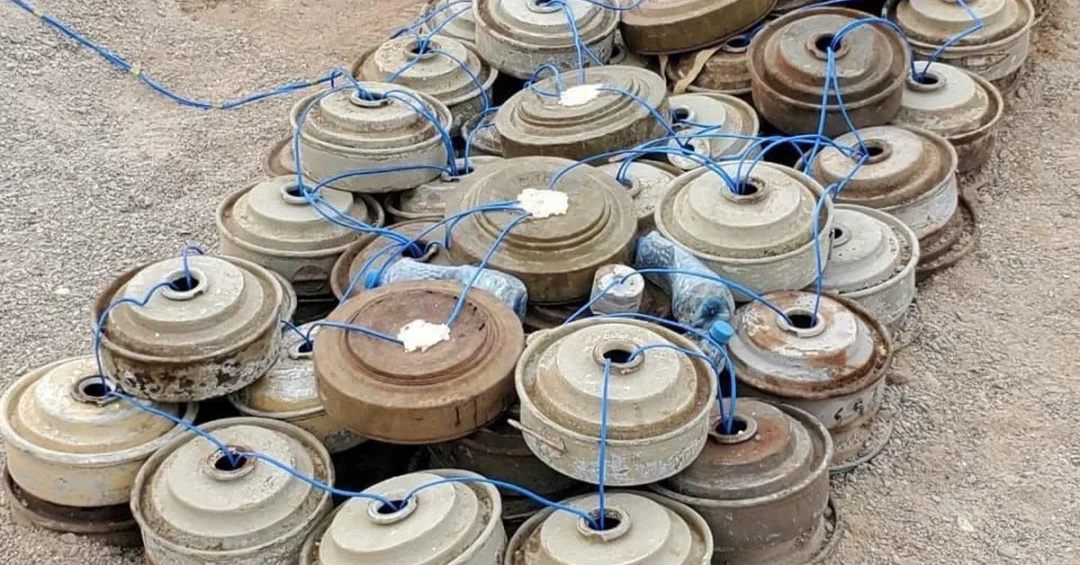
The King Salman Humanitarian Aid and Relief Center (KSRelief) Masam Project cleared 1,151 mines in Yemen during the first week of January 2025, according to a statement from the Saudi Press Agency (SPA). The operation, which ran from January 1 to January 7, removed a range of explosive hazards that threatened civilian lives.
Context and Background
The Masam Project is a flagship humanitarian initiative launched by KSRelief to address the widespread landmine contamination in Yemen. Since its inception, the project has removed a total of 477,583 mines from areas where they were indiscriminately planted, endangering innocent civilians, including children, women, and the elderly. The project operates under the supervision of the Kingdom of Saudi Arabia, reflecting its commitment to alleviating human suffering in the region.
Key Details
During the first week of January 2025, the project successfully cleared 1,115 unexploded ordnances, 32 anti-tank mines, and 4 explosive devices. These explosives were located in various regions of Yemen, where they posed a significant risk to daily life and hindered humanitarian access. The clearance efforts are part of a continuous campaign to make the country safer for communities and aid workers alike.
Humanitarian and Regional Implications
The mine clearance operations have a profound humanitarian impact. Landmines and unexploded ordnances remain one of the leading causes of civilian casualties in Yemen, particularly affecting vulnerable groups. The Masam Project’s work not only saves lives but also enables the safe delivery of humanitarian aid and supports the return of displaced populations to their homes. This effort underscores Saudi Arabia’s broader role in promoting stability and security across the region.
Vision 2030 Alignment
KSRelief’s humanitarian initiatives, including the Masam Project, are integral to Saudi Arabia’s Vision 2030, which emphasizes the Kingdom’s role as a global leader in aid and development. By demining Yemen, Saudi Arabia demonstrates its commitment to humanitarian principles and international cooperation, contributing to a safer and more prosperous future for the region.
20 Questions
Q1. What is the Masam Project?
A1. The Masam Project is a KSRelief initiative focused on clearing mines and unexploded ordnances in Yemen. It aims to protect civilians and facilitate humanitarian access.
Q2. How many mines did the project clear in the first week of January 2025?
A2. The project cleared 1,151 mines during the first week of January 2025, including anti-tank mines, unexploded ordnances, and explosive devices.
Q3. What types of explosives were cleared in that week?
A3. The cleared items included 32 anti-tank mines, 1,115 unexploded ordnances, and 4 explosive devices.
Q4. Since its launch, how many mines has the Masam Project cleared in total?
A4. Since its launch, the Masam Project has cleared 477,583 mines from various areas in Yemen.
Q5. Who operates the Masam Project?
A5. The Masam Project is operated by the King Salman Humanitarian Aid and Relief Center (KSRelief), a Saudi humanitarian agency.
Q6. Why is mine clearance important in Yemen?
A6. Mine clearance is crucial to protect civilians, especially children, women, and the elderly, from injury or death caused by explosive hazards.
Q7. How does the Masam Project support humanitarian efforts?
A7. By removing mines, the project enables safe delivery of humanitarian aid and helps displaced populations return to their homes.
Q8. What is KSRelief’s role in this initiative?
A8. KSRelief oversees and funds the Masam Project, demonstrating Saudi Arabia’s commitment to humanitarian aid in Yemen.
Q9. How does this project align with Saudi Arabia’s Vision 2030?
A9. The project supports Vision 2030 by positioning Saudi Arabia as a global leader in humanitarian aid and regional stability.
Q10. Who are the primary beneficiaries of the Masam Project?
A10. The primary beneficiaries are civilians in Yemen, including children, women, and the elderly, who are at risk from landmines.
Q11. When was the Masam Project launched?
A11. The Masam Project was launched in 2018 by KSRelief to address the mine crisis in Yemen.
Q12. Does the project receive international recognition?
A12. Yes, the project has received praise from international organizations for its contributions to humanitarian mine clearance in Yemen.
Q13. How does the project impact regional stability?
A13. By reducing the threat of mines, the project supports stability and security in the region, facilitating post-conflict recovery.
Q14. What challenges does the Masam Project face?
A14. The project operates in a challenging environment with widespread mine contamination and difficult terrain, but it continues to achieve significant results.
Q15. How does KSRelief fund the Masam Project?
A15. KSRelief funds the project through Saudi Arabia’s humanitarian budget, reflecting the Kingdom’s commitment to aid.
Q16. Are there any partnerships involved?
A16. The project collaborates with local and international partners to ensure effective mine clearance operations.
Q17. Why is mine clearance urgent in Yemen?
A17. Mines cause casualties and prevent access to essential services, making clearance urgent for saving lives and rebuilding communities.
Q18. How does the project support Vision 2030’s global role?
A18. By demonstrating humanitarian leadership, the project enhances Saudi Arabia’s reputation as a key player in international development.
Q19. What is the significance of clearing 477,583 mines?
A19. It represents a major contribution to reducing the threat of mines, saving countless lives, and enabling safer environments in Yemen.
Q20. How can readers learn more about the Masam Project?
A20. Readers can follow updates from KSRelief and the Saudi Press Agency for official information on the project’s progress.
Reader Feedback
We value your thoughts. Please share your feedback on this article.
Your feedback helps us improve our coverage.