


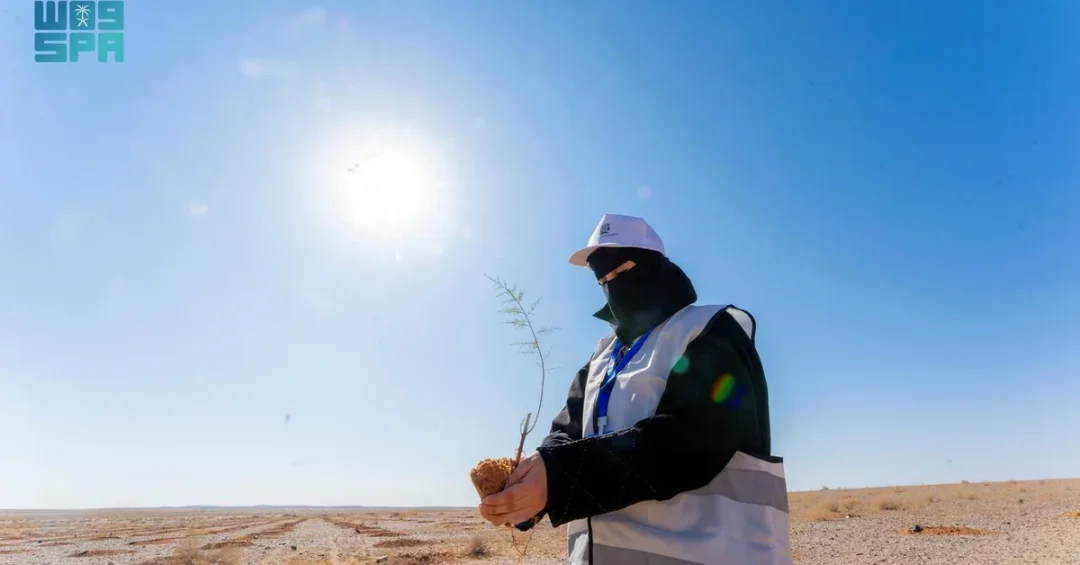
The King Salman bin Abdulaziz Royal Reserve Development Authority (KSRNR) has launched the first phase of an initiative to plant 100,000 seedlings of native trees and shrubs within the reserve’s boundaries. The announcement was made via the Saudi Press Agency (SPA) on December 18, 2024, highlighting a collaborative effort with Al Jouf Cement Co. and local volunteers. This initiative underscores Saudi Arabia’s commitment to environmental conservation and community engagement.
Context and Background
This planting initiative is part of KSRNR’s broader strategy to restore natural habitats and combat desertification in the region. The reserve, located in northern Saudi Arabia, encompasses diverse ecosystems that support a range of native flora and fauna. The authority has already planted 2.4 million seedlings of various native species, dispersed over four tons of local seeds, and restored more than 700,000 hectares of degraded natural habitats. These milestones reflect a concerted effort to achieve the environmental goals set under the Saudi Green Initiative and Vision 2030.
Key Details
The initiative is implemented in collaboration with Al Jouf Cement Co., a key corporate partner, and is supported by volunteers from the local community. The involvement of volunteers aims to enhance community participation in environmental activities, raise awareness about the importance of conservation and sustainability, and increase vegetation cover. The planting focuses on native species, which are well-adapted to the local climate and require less water, ensuring long-term sustainability. The first phase of the initiative targets specific areas within the reserve to maximize ecological impact.
Implications and Impact
This initiative has significant implications for environmental sustainability and community development. By engaging local volunteers, KSRNR fosters a sense of ownership and responsibility toward natural resources. The partnership with Al Jouf Cement Co. demonstrates the private sector’s role in supporting national environmental goals. The restoration of degraded habitats and increase in vegetation cover contribute to biodiversity conservation, carbon sequestration, and improved air quality. Regionally, such efforts align with global environmental frameworks, including the United Nations Sustainable Development Goals, and position Saudi Arabia as a leader in land restoration.
Vision 2030 Alignment
The planting initiative directly supports Vision 2030’s environmental objectives, particularly those outlined in the Saudi Green Initiative, which aims to plant 10 billion trees across the Kingdom and restore millions of hectares of land. By expanding vegetation cover and engaging communities, KSRNR is contributing to the broader goals of sustainable development, economic diversification, and enhanced quality of life. This forward-looking approach not only preserves the Kingdom’s natural heritage but also fosters a culture of environmental stewardship, ensuring a greener future for generations to come.
20 Questions
Q1. What is the KSRNR initiative about?
A1. The initiative aims to plant 100,000 seedlings of native trees and shrubs within the King Salman bin Abdulaziz Royal Reserve, enhancing vegetation cover and environmental sustainability.
Q2. Who launched this initiative?
A2. The King Salman bin Abdulaziz Royal Reserve Development Authority (KSRNR) launched the initiative, as reported by the Saudi Press Agency.
Q3. When was the initiative launched?
A3. The first phase of the initiative was launched on December 18, 2024, as announced by KSRNR and the Saudi Press Agency.
Q4. Which company is collaborating with KSRNR on this initiative?
A4. Al Jouf Cement Co. is collaborating with KSRNR on this tree-planting initiative, supporting environmental restoration efforts.
Q5. How are volunteers involved in this initiative?
A5. Volunteers from the local community participate in planting activities, helping to raise awareness about conservation and sustainability.
Q6. What is the goal of planting 100,000 seedlings?
A6. The goal is to increase vegetation cover, restore natural habitats, and engage the community in environmental conservation efforts.
Q7. What types of seedlings are being planted?
A7. The initiative focuses on native trees and shrubs adapted to the local climate, ensuring sustainability and minimal water use.
Q8. How many seedlings has KSRNR planted previously?
A8. KSRNR has planted 2.4 million seedlings of various native species as part of its broader environmental restoration programs.
Q9. How many hectares of habitat have been restored by KSRNR?
A9. KSRNR has restored more than 700,000 hectares of degraded natural habitats through its restoration efforts.
Q10. What other restoration activities has KSRNR conducted?
A10. In addition to planting, KSRNR has dispersed over four tons of local seeds to promote natural regeneration of vegetation.
Q11. Why is community involvement important for this initiative?
A11. Community involvement fosters a sense of ownership and responsibility, raising awareness about the importance of environmental sustainability.
Q12. How does this initiative support Saudi Arabia’s environmental goals?
A12. It supports the Saudi Green Initiative’s goal of planting 10 billion trees and restoring land, aligning with Vision 2030 ambitions.
Q13. Where is the King Salman bin Abdulaziz Royal Reserve located?
A13. The reserve is located in northern Saudi Arabia, covering diverse ecosystems that include native flora and fauna.
Q14. What are the benefits of planting native tree species?
A14. Native species require less water, support local biodiversity, and are better adapted to the regional climate for long-term sustainability.
Q15. How does this initiative address climate change?
A15. By increasing vegetation cover, the initiative enhances carbon sequestration, improves air quality, and mitigates desertification.
Q16. What role does the private sector play in this initiative?
A16. Al Jouf Cement Co. provides support as a corporate partner, demonstrating the private sector’s commitment to sustainability.
Q17. Is this initiative part of a larger program?
A17. Yes, it is part of KSRNR’s broader environmental strategy to restore habitats and expand vegetation cover across the reserve.
Q18. How does this initiative impact local wildlife?
A18. Restoring habitats and increasing vegetation cover provides food and shelter for native wildlife, supporting biodiversity conservation.
Q19. What is the long-term vision for this planting initiative?
A19. The long-term vision is to create a sustainable ecosystem that supports biodiversity, enhances quality of life, and contributes to Vision 2030.
Q20. How can other communities participate in similar efforts?
A20. Communities can engage through volunteer programs and partnerships with KSRNR, contributing to environmental conservation under Saudi initiatives.
Reader Feedback
We value your thoughts. Please share your feedback on this article.
Your feedback helps us improve our coverage.