


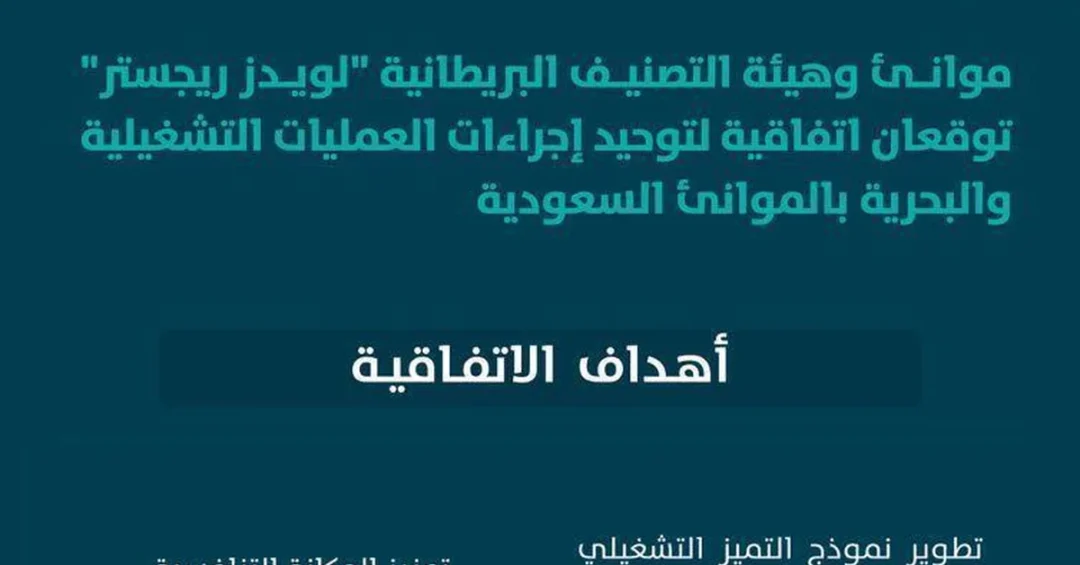
The Saudi Ports Authority (MAWANI) signed a partnership agreement with Lloyd’s Register on November 28, 2024, in Riyadh, aiming to unify and standardize operational and maritime procedures across Saudi ports. The agreement supports the separation of regulatory and operational roles within the port sector, aligning with the objectives of the National Transport and Logistics Strategy (NTLS). This strategic move is designed to boost operational excellence, enhance efficiency, and ensure compliance with international standards, further positioning Saudi Arabia as a leading global logistics hub.
Context and Background
MAWANI, the primary authority overseeing Saudi Arabia’s ports, has been actively pursuing modernization and efficiency improvements as part of the Kingdom’s Vision 2030. The partnership with Lloyd’s Register, a globally recognized British classification society with a 260-year history, brings unparalleled expertise in maritime safety, classification, and quality services. Lloyd’s Register, which serves over 40,000 clients through 81 offices worldwide, will help Saudi ports transition to more standardized and internationally aligned procedures, enhancing their competitiveness and operational reliability.
Key Details of the Agreement
The collaboration includes the development of comprehensive manuals and guidelines, such as a Quality and Environmental Procedures Manual aligned with ISO 9001:2015 and ISO 14001:2015 standards. These will ensure Saudi ports adhere to the highest environmental and quality performance benchmarks. A Code of Good Practices will be established to define responsibilities and execution procedures, improving organizational efficiency. Additionally, a specialized technical guide will be created, incorporating the latest International Maritime Organization (IMO) agreements. The initiative also aims to secure international certifications, including ISO 9001:2015 and ISO 14001:2015, which are expected to enhance customer satisfaction, reduce emissions and waste, cut operational costs, and promote sustainability practices.
Implications and Impact
The agreement is set to strengthen the reputation of Saudi ports both locally and internationally by introducing standardized, high-quality operational frameworks. It includes comprehensive training programs for port employees, such as developing guides for specialized professional maritime certifications, eligibility criteria for training institutes, and ISO-focused courses on awareness, auditing, and performance indicators. The partnership also covers the necessary rules and regulations for maritime inspection operations, including Port State Control (PSC) and Flag State Control (FSC) checks, while integrating the latest technologies and digital solutions to support sustainable operations and enhance overall efficiency.
Vision 2030 Alignment
This partnership underscores Saudi Arabia’s commitment to transforming its maritime sector as a key pillar of Vision 2030. By standardizing procedures and adopting international best practices, the Kingdom aims to become a top-tier global logistics hub, supporting economic diversification and sustainable growth. The initiative aligns with the National Transport and Logistics Strategy’s goals, which seek to boost the efficiency of Saudi ports and increase their contribution to the national economy, facilitating smoother trade and reinforcing the Kingdom’s position as a vital link in global supply chains.
20 Questions
Q1. What is the main purpose of the MAWANI and Lloyd’s Register agreement?
A1. The main purpose is to unify and standardize operational and maritime procedures across Saudi ports, enhancing efficiency and compliance with international standards.
Q2. When and where was the agreement signed?
A2. The agreement was signed on November 28, 2024, in Riyadh, Saudi Arabia.
Q3. Who is Lloyd’s Register?
A3. Lloyd’s Register is a British classification society, established over 260 years ago, specializing in maritime safety, classification, and quality services with a global presence through 81 offices.
Q4. How does this agreement support Saudi Arabia’s Vision 2030?
A4. It supports Vision 2030 by improving port efficiency, boosting economic diversification, and strengthening Saudi Arabia’s role as a global logistics hub.
Q5. What standards will the manuals and guidelines adhere to?
A5. They will adhere to ISO 9001:2015 for quality management and ISO 14001:2015 for environmental management standards.
Q6. What is the National Transport and Logistics Strategy?
A6. The National Transport and Logistics Strategy is a Saudi initiative that aims to transform the Kingdom into a global logistics hub by modernizing transport and logistics infrastructure.
Q7. Will the agreement include training programs?
A7. Yes, it includes comprehensive training programs for port employees, covering professional maritime certifications and ISO standards.
Q8. What is a Code of Good Practices?
A8. A Code of Good Practices is a set of guidelines established under the agreement to define responsibilities and execution procedures, improving efficiency and organization.
Q9. How will this partnership benefit customer satisfaction?
A9. By securing international certifications and implementing improved procedures, the partnership will enhance operational efficiency, leading to higher customer satisfaction.
Q10. What is the significance of Lloyd’s Register’s history?
A10. Lloyd’s Register was the world’s first maritime classification society, founded over 260 years ago, bringing extensive experience in ship safety and quality services.
Q11. What are PSC and FSC checks?
A11. PSC stands for Port State Control, and FSC stands for Flag State Control—both are maritime inspection operations aimed at ensuring vessel safety and regulatory compliance.
Q12. How will the agreement reduce environmental impact?
A12. It will reduce emissions and waste by implementing ISO 14001:2015 standards and promoting sustainability practices in port operations.
Q13. What types of certifications will be pursued?
A13. International certifications such as ISO 9001:2015 and ISO 14001:2015 will be pursued to enhance operational quality and environmental performance.
Q14. How many clients does Lloyd’s Register serve globally?
A14. Lloyd’s Register serves over 40,000 clients globally through its extensive network of 81 offices.
Q15. Will the agreement involve digital solutions?
A15. Yes, it will integrate the latest technologies and digital solutions to support sustainable operations and improve overall efficiency.
Q16. What is the role of MAWANI?
A16. MAWANI is the Saudi Ports Authority responsible for overseeing and regulating Saudi Arabia’s ports as part of the National Transport and Logistics Strategy.
Q17. How does this partnership support operational excellence?
A17. It supports operational excellence by developing standardized procedures, manuals, and guidelines that enhance efficiency, safety, and environmental performance.
Q18. What is the duration of the agreement?
A18. The specific duration of the agreement was not disclosed, but it is a strategic partnership aimed at implementing long-term improvements in port operations.
Q19. Will this agreement affect port workers?
A19. Yes, it will positively affect port workers through comprehensive training programs that enhance their skills and certifications in maritime operations.
Q20. How does this deal impact Saudi Arabia’s global trade position?
A20. It strengthens Saudi Arabia’s global trade position by improving port efficiency and reliability, making the Kingdom a more attractive partner in international supply chains.
Reader Feedback
We value your thoughts. Please share your feedback on this article.
Your feedback helps us improve our coverage.