


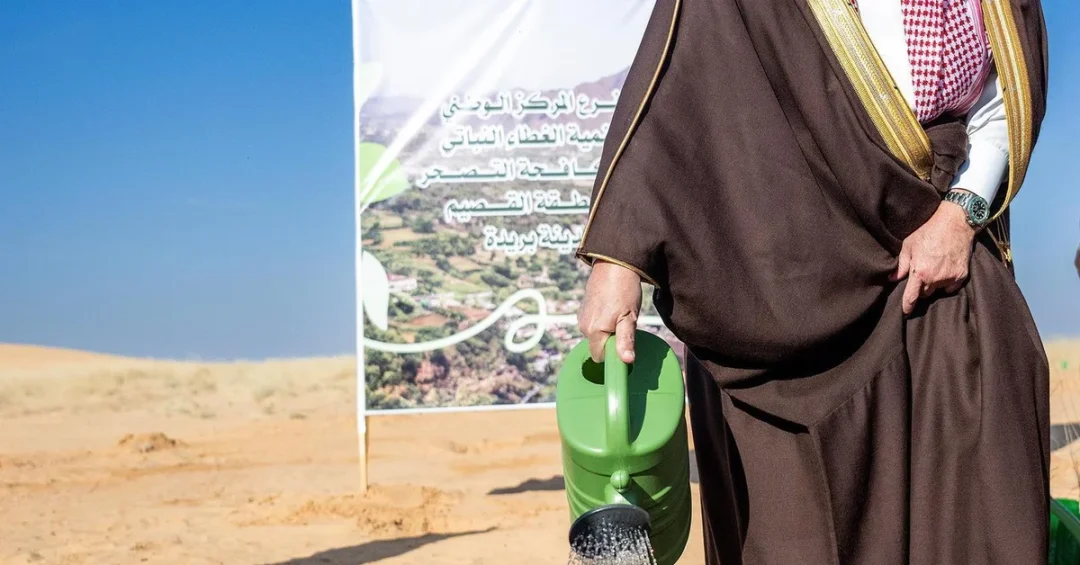
The Governor of Saudi Arabia’s Qassim Region, Prince Dr. Faisal bin Mishaal bin Saud bin Abdulaziz, launched an initiative to plant one million trees in the region by the end of 2024. The launch took place at Qassim National Park in Buraydah on November 12, 2024, in collaboration with government agencies and the non-profit sector, as reported by the Saudi Press Agency (SPA). The initiative aims to promote environmental sustainability and develop vegetation cover, aligning with the Saudi Green Initiative and the Kingdom’s Vision 2030.
Context and Background
This initiative is part of Saudi Arabia’s broader commitment to environmental conservation and climate action under the Saudi Green Initiative, launched in 2021. The Kingdom has pledged to plant 10 billion trees across the country as part of its efforts to combat desertification, reduce carbon emissions, and restore ecological balance. The Qassim Region, known for its agricultural significance, faces challenges from arid conditions and desertification. Prince Dr. Faisal bin Mishaal’s leadership in launching this project underscores the region’s dedication to aligning with national environmental goals.
Key Details
Prince Dr. Faisal bin Mishaal bin Saud bin Abdulaziz expressed gratitude to the Ministry of Environment, Water and Agriculture and the National Center for Vegetation Cover Development and Combating Desertification (NCVC) for their efforts in restoring vegetation cover in national parks. NCVC Director Major General Ali Al-Asmari affirmed that the initiative involves cultivating 5 million seedlings by 2030 to improve vegetation cover and achieve environmental equilibrium. Al-Asmari reviewed the NCVC’s cultivation efforts, noting that 1 million seedlings were planted in Qassim National Park, including varieties of Arta (Calligonum), Ghadha, Ethel (Tamarix), Qarath (Acacia), Ghaf (Prosopis), Remth (Haloxylon), Arak (Salvadora Persica), Salam (Acacia Ehrenbergiana), and Samar (Acacia Nilotica). Additionally, 120,000 seedlings were planted in the Unayzah forest.
Implications and Impact
This initiative is expected to enhance biodiversity, improve air quality, and combat desertification in the Qassim Region. By involving government agencies and the non-profit sector, it fosters community engagement and environmental stewardship. Regionally, Saudi Arabia’s leadership in large-scale tree planting supports global climate goals and positions the Kingdom as a key player in environmental sustainability. The project also contributes to the broader Middle East Green Initiative, which aims to plant 50 billion trees across the region.
Vision 2030 Alignment
The Qassim tree-planting initiative directly supports Saudi Arabia’s Vision 2030 by advancing environmental sustainability, one of the Vision’s key pillars. It aligns with goals to improve quality of life, increase green spaces, and promote economic diversification through eco-tourism and sustainable agriculture. This project demonstrates the Kingdom’s commitment to a greener future, contributing to the ambitious target of planting 10 billion trees nationally and fostering a sustainable environment for generations to come.
20 Questions
Q1. Who launched the initiative to plant one million trees in the Qassim Region?
A1. The Governor of the Qassim Region, Prince Dr. Faisal bin Mishaal bin Saud bin Abdulaziz, launched the initiative on November 12, 2024, as reported by the Saudi Press Agency.
Q2. Where was the initiative launched?
A2. The initiative was launched at the Qassim National Park in Buraydah city, with collaboration from government agencies and the non-profit sector.
Q3. What is the main goal of this initiative?
A3. The main goal is to plant one million trees in the Qassim Region by the end of 2024 to promote sustainable environmental development and increase green areas.
Q4. How does this initiative align with Saudi Arabia’s national environmental goals?
A4. It aligns with the Saudi Green Initiative and Vision 2030 by supporting efforts to combat desertification, reduce carbon emissions, and restore vegetation cover.
Q5. Which organizations contributed to the initiative’s launch?
A5. The Ministry of Environment, Water and Agriculture and the National Center for Vegetation Cover Development and Combating Desertification (NCVC) contributed, alongside government agencies and the non-profit sector.
Q6. Who is the Director of the NCVC?
A6. The Director of the National Center for Vegetation Cover Development and Combating Desertification (NCVC) is Major General Ali Al-Asmari.
Q7. How many seedlings does the initiative aim to cultivate by 2030?
A7. The initiative involves the cultivation of 5 million seedlings by 2030 to improve vegetation cover and achieve environmental equilibrium.
Q8. What types of trees were planted in the Qassim National Park?
A8. Varieties included Arta (Calligonum), Ghadha, Ethel (Tamarix), Qarath (Acacia), Ghaf (Prosopis), Remth (Haloxylon), Arak (Salvadora Persica), Salam (Acacia Ehrenbergiana), and Samar (Acacia Nilotica).
Q9. How many seedlings were planted in the Qassim National Park?
A9. A total of 1 million seedlings were planted in the Qassim National Park as part of the NCVC’s cultivation efforts.
Q10. How many seedlings were planted in the Unayzah forest?
A10. An additional 120,000 seedlings were planted in the Unayzah forest, as part of the broader reforestation efforts in the region.
Q11. What is the Saudi Green Initiative?
A11. The Saudi Green Initiative is a national effort launched in 2021 to plant 10 billion trees across Saudi Arabia, combat desertification, and reduce carbon emissions.
Q12. How does this project support Vision 2030?
A12. It supports Vision 2030 by enhancing environmental sustainability, improving quality of life, and promoting economic diversification through green spaces and eco-tourism.
Q13. What is the role of the non-profit sector in this initiative?
A13. The non-profit sector collaborates with government agencies to foster community engagement and environmental stewardship in the tree-planting efforts.
Q14. Why is the Qassim Region significant for this initiative?
A14. The Qassim Region is agriculturally important but faces arid conditions and desertification, making reforestation crucial for ecological balance and sustainability.
Q15. How does this initiative combat desertification?
A15. By planting trees and restoring vegetation cover, the initiative helps stabilize soil, reduce erosion, and improve the region’s resilience against desertification.
Q16. What environmental benefits are expected from planting one million trees?
A16. Benefits include enhanced biodiversity, improved air quality, carbon sequestration, and increased green spaces for recreational and ecological purposes.
Q17. Is this initiative part of a larger regional effort?
A17. Yes, it contributes to the Middle East Green Initiative, which aims to plant 50 billion trees across the region, fostering collaboration among neighboring countries.
Q18. Who oversees the vegetation cover development in Saudi Arabia?
A18. The National Center for Vegetation Cover Development and Combating Desertification (NCVC) oversees efforts to restore and develop vegetation cover nationwide.
A19. The target completion date for planting one million trees is the end of 2024, with ongoing cultivation of 5 million seedlings by 2030.
Q20. How can the public participate in or support this initiative?
A20. The public can participate through community volunteering programs organized by government and non-profit partners, supporting tree planting and environmental awareness campaigns.
Reader Feedback
We value your thoughts. Please share your feedback on this article.
Your feedback helps us improve our coverage.