


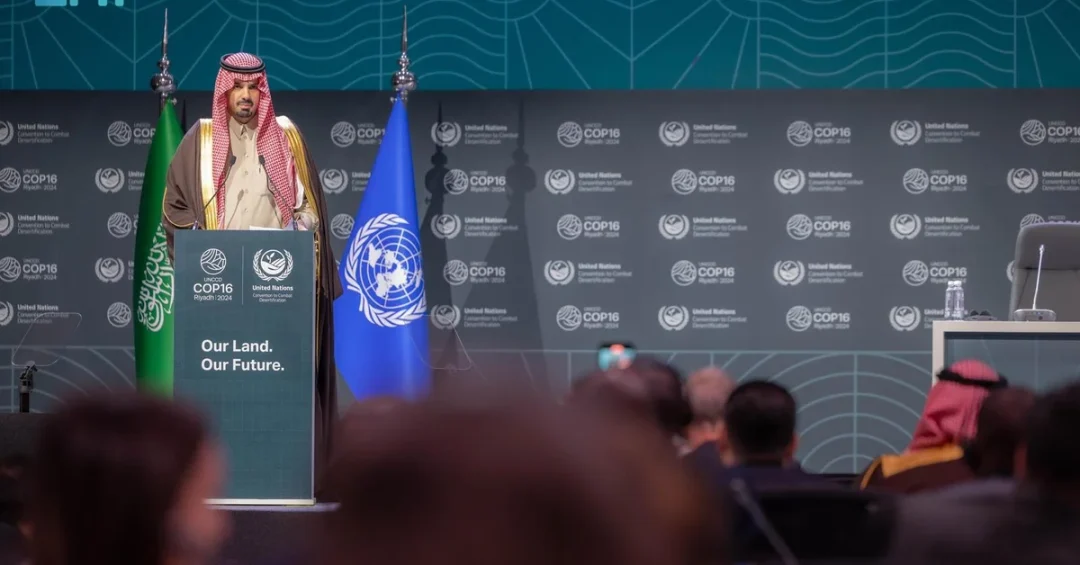
Riyadh Mayor Prince Dr. Faisal bin Abdulaziz bin Ayyaf addressed the opening of the 16th Conference of the Parties (COP16) of the United Nations Convention to Combat Desertification in Riyadh on December 2, 2024, emphasizing the critical role of cities in tackling environmental challenges. The conference, which brings together global leaders and experts until December 13, aims to accelerate international efforts in addressing drought challenges and adopting proactive approaches to this global crisis, as reported by the Saudi Press Agency.
Context and Background
COP16 represents a significant gathering of international stakeholders focused on combating desertification and land degradation, issues that have profound implications for global food security, biodiversity, and climate resilience. The mayor’s remarks highlight Saudi Arabia’s growing leadership in sustainable urban development, particularly as the Kingdom hosts this major UN event in its capital. Cities, which are often centers of environmental challenges, are increasingly recognized as vital platforms for launching innovative solutions.
Key Details
Prince Dr. Faisal outlined Riyadh’s comprehensive environmental strategy, which encompasses over 68 initiatives across energy, water, waste management, biodiversity, and natural aspects. He noted the contributions of Custodian of the Two Holy Mosques King Salman bin Abdulaziz Al Saud and His Royal Highness Prince Mohammed bin Salman bin Abdulaziz Al Saud, Crown Prince and Prime Minister, in positioning Riyadh as a global leader in sustainable urban development. The Green Riyadh Project stands out as a flagship initiative, aiming to plant 7.5 million trees to improve air quality, reduce temperatures, and enhance biodiversity. Other major projects include the rehabilitation of the 4,000-square-kilometer Wadi Hanifa, transforming it into a model of ecological restoration and a unique environmental and tourism destination.
Implications and Impact
The mayor also highlighted the establishment of over 100 major parks, such as King Salman Park and King Abdullah Park, which improve quality of life for citizens and residents. On sustainability efforts, Prince Dr. Faisal spoke about initiatives supporting afforestation through new nurseries and adopting sustainable urban planning methodologies, such as transit-oriented development integrated with the Riyadh Metro network. These endeavors seek to reduce carbon emissions and achieve harmony between public transportation and urban spaces. The mayor called for enhanced international cooperation to address global environmental challenges, underscoring COP16 as an effective platform for uniting efforts, sharing knowledge, and fostering innovation.
Vision 2030 Alignment
The mayor’s address underscores how Riyadh’s environmental initiatives align with Saudi Arabia’s Vision 2030, which prioritizes sustainable development, economic diversification, and improved quality of life. By transforming the capital into a green, sustainable metropolis, the Kingdom is setting a global example for urban environmental stewardship. COP16 serves as a pivotal forum for accelerating these efforts and fostering international collaboration, ensuring a sustainable future for coming generations worldwide.
20 Questions
Q1. What is COP16?
A1. COP16 is the 16th Conference of the Parties of the United Nations Convention to Combat Desertification, held in Riyadh from December 2 to 13, 2024, to accelerate global efforts against drought and land degradation.
Q2. Who addressed the opening of COP16 in Riyadh?
A2. The Mayor of Riyadh, Prince Dr. Faisal bin Abdulaziz bin Ayyaf, addressed the opening of COP16, highlighting the vital role of cities in environmental challenges.
Q3. What was the main message of the mayor’s speech?
A3. The mayor emphasized that cities are not only centers of environmental challenges but also platforms for launching innovative and sustainable solutions to combat desertification and drought.
Q4. Which Saudi leaders did the mayor acknowledge for their contributions?
A4. He acknowledged Custodian of the Two Holy Mosques King Salman bin Abdulaziz Al Saud and His Royal Highness Prince Mohammed bin Salman bin Abdulaziz Al Saud for establishing Riyadh as a leader in sustainable urban development.
Q5. What is the Green Riyadh Project?
A5. The Green Riyadh Project is a flagship initiative aiming to plant 7.5 million trees in Riyadh to improve air quality, reduce temperatures, and enhance biodiversity.
Q6. What is the area of Wadi Hanifa being rehabilitated?
A6. The rehabilitation of Wadi Hanifa covers an area of 4,000 square kilometers, transforming it into a model of ecological restoration and a unique environmental and tourism destination.
Q7. How many major parks have been established in Riyadh?
A7. Over 100 major parks have been established in Riyadh, including King Salman Park and King Abdullah Park, to improve quality of life and provide natural spaces.
Q8. What is the goal of establishing these parks?
A8. The parks aim to improve citizens’ and residents’ quality of life by providing natural spaces that promote well-being and environmental health.
Q9. What sustainable urban planning methodologies are being adopted?
A9. Sustainable urban planning methodologies such as transit-oriented development, integrated with the Riyadh Metro network, are being adopted to reduce carbon emissions.
Q10. How does the Riyadh Metro contribute to sustainability?
A10. The Riyadh Metro supports sustainability by reducing carbon emissions and promoting harmony between public transportation and urban spaces, aligning with afforestation efforts.
Q11. How many environmental initiatives does Riyadh’s strategy include?
A11. Riyadh’s environmental strategy includes more than 68 initiatives across energy, water, waste management, biodiversity, and natural aspects.
Q12. What is the goal of these environmental initiatives?
A12. These initiatives reflect Saudi Arabia’s ambitious vision for sustainable development and serve as a global model for other cities to follow in addressing environmental challenges.
Q13. What did the mayor call for in his concluding remarks?
A13. The mayor called for enhanced international cooperation to address global environmental challenges, emphasizing COP16 as an effective platform for collaboration.
Q14. Why is COP16 considered an important platform?
A14. COP16 is considered an important platform for uniting efforts, sharing knowledge, and fostering innovation to reach a sustainable future for coming generations.
Q15. How does COP16 relate to Saudi Arabia’s Vision 2030?
A15. COP16 aligns with Vision 2030 by promoting sustainable development, economic diversification, and improved quality of life through environmental stewardship and global cooperation.
Q16. What is the role of cities in addressing desertification according to the mayor?
A16. The mayor highlighted that cities can launch innovative and sustainable solutions to combat desertification, serving as key actors in environmental restoration and resilience.
Q17. What is the duration of COP16 in Riyadh?
A17. COP16 runs from December 2 to December 13, 2024, bringing together global leaders and experts to accelerate efforts against drought.
A18. The conference aims to adopt a proactive approach to the global drought crisis and accelerate international efforts in tackling land degradation and desertification.
Q19. How does the afforestation plan in Riyadh help the environment?
A19. Afforestation through planting 7.5 million trees improves air quality, reduces urban temperatures, and enhances biodiversity, contributing to a healthier urban ecosystem.
Q20. What is the long-term vision of the initiatives discussed by the mayor?
A20. The long-term vision is to create a sustainable future for coming generations by integrating environmental goals with urban development, setting a global standard for green cities.
Reader Feedback
We value your thoughts. Please share your feedback on this article.
Your feedback helps us improve our coverage.