


Saudi Arabia’s General Authority for Statistics (GASTAT) released its 2024 Healthcare Statistics Bulletin on December 4, 2024, revealing that 100% of Saudi citizens had their basic healthcare expenses covered this year, while coverage for all residents in the Kingdom reached 95.9%. The bulletin, issued through official Saudi channels in Riyadh, provides one of the most comprehensive snapshots to date of how healthcare is accessed, financed, and experienced across the Kingdom, drawing on the National Health Survey and the Women and Child Health Survey alongside GASTAT population estimates for 2024.
For an international audience watching Saudi Arabia’s transformation under Vision 2030, the figures carry significance beyond the headline number. They illustrate a health system that is broadening coverage, embracing digital tools, and generating high levels of patient satisfaction, even as the Kingdom absorbs rapid population growth and expanding demand for services. Have you ever considered what universal basic health coverage actually looks like in practice, and how a nation measures it year by year? The GASTAT bulletin offers a clear, data-driven answer, and it arrives at a moment when Saudi health authorities are accelerating reforms designed to make care more accessible, preventive, and technology-enabled.
Context and Background
Why does an annual healthcare statistics bulletin matter so much at this particular moment in the Kingdom’s development? The answer lies in the scale of Saudi Arabia’s ongoing health-sector transformation, which is among the most ambitious in the region. GASTAT, the Kingdom’s official statistical authority, compiles the bulletin using 2024 data from the National Health Survey and the Women and Child Health Survey, together with population estimates for the same year. These instruments are designed to capture not only whether people have coverage, but how they use services, how satisfied they are, and whether digital health tools are reaching the public.
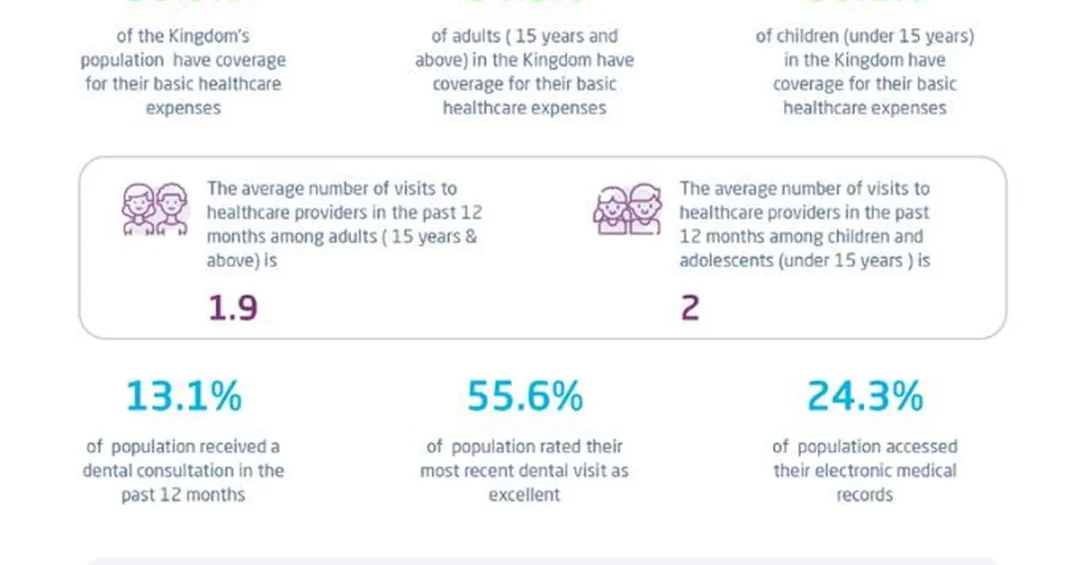
The 2024 results show that 94.8% of adults aged 15 and older in Saudi Arabia enjoyed basic healthcare coverage, whether through public or private arrangements, while the rate for children under 15 stood at 96.1%. These are meaningful thresholds for a country that has made healthcare a central pillar of its social and economic modernization agenda. Coverage at this level indicates that the vast majority of the population can seek care without catastrophic financial exposure, a foundational condition for a productive, healthy workforce and for the quality-of-life improvements that Vision 2030 explicitly targets.
Historically, Saudi Arabia built its health system around government-funded hospitals and primary care centers, supplemented in recent decades by a growing private sector. The 2024 bulletin suggests that this hybrid model is functioning at scale. It also reflects the maturation of national data collection itself: reliable statistics are a prerequisite for evidence-based policy, and GASTAT’s publication of detailed indicators on dental care, telehealth, and online medical records signals a system that is measuring what modern patients actually experience.
Key Details from the 2024 Bulletin
What do Saudis’ day-to-day interactions with the health system look like according to the new data? The bulletin reports that the average number of visits to healthcare providers by citizens over the past 12 months was 1.9. Among adults, Saudis averaged 2.6 visits compared with 1.2 visits by non-Saudis, and women consulted doctors more frequently than men, at an average of 2.5 visits versus 1.6. Children and adolescents averaged two visits to healthcare providers, with Saudi children and adolescents averaging two visits and non-Saudi children 1.6.
Dental care emerges as an area of both activity and high satisfaction. The data show that 13.1% of the population consulted a dentist in 2024, and that 55.6% of those rated their last dental visit as excellent, while 30.4% rated their visits as good. Women were more likely than men to consult a dentist, at 17.2% compared with 10.7%. Taken together, these satisfaction figures indicate that when people do access care, the experience is overwhelmingly positive, a signal that quality improvement efforts in Saudi facilities are registering with patients.
Digital health adoption is another striking theme. The bulletin shows that 24.3% of adults accessed their medical records online, 20.5% used the internet for health-related information such as injuries, illnesses, nutrition, and health improvement, and 4.5% used telehealth services to consult with healthcare providers. These numbers describe a population increasingly comfortable with digital engagement in health, and they point to where the next phase of investment and service design is likely to focus. Is it any wonder that Saudi health planners are prioritizing apps, portals, and remote consultations as core infrastructure rather than optional extras?
International and Regional Impact
How does Saudi Arabia’s healthcare performance compare regionally, and why should international observers take note? Universal or near-universal basic coverage is a benchmark that many middle-income and even high-income countries continue to struggle to reach. The Kingdom’s reported 100% coverage for citizens and 95.9% for all residents positions it among the more inclusive health systems in the Middle East. For multinational employers, investors, and expatriate professionals considering Saudi Arabia as a base, such figures are directly relevant to relocation and workforce planning decisions.
The bulletin also carries diplomatic and humanitarian weight. Saudi Arabia has increasingly positioned itself as a provider of health capacity beyond its borders, from hosting international medical conferences to supporting health initiatives in partner countries. Publishing transparent, survey-based national statistics strengthens the Kingdom’s credibility in global health discussions, where data quality is a key currency. For regional neighbors designing their own coverage expansions, the Saudi model, combining public provision, private participation, and digital delivery, offers a practical reference point. Does transparent measurement of health outcomes make a country a more attractive partner on the world stage? The evidence from this bulletin suggests that it does.
Economic and Strategic Significance
Why should economists and business leaders care about a healthcare statistics bulletin? Because health coverage and health utilization are direct inputs into economic productivity. A population with near-universal basic coverage is less exposed to the financial shocks of illness, more able to participate in the labor market, and more resilient during public health emergencies. The high satisfaction scores reported for dental visits, with 55.6% rating their last visit as excellent, also matter commercially: patient experience is a leading indicator of demand for private care, insurance products, and elective services.
The digital indicators carry their own strategic weight. With 24.3% of adults accessing medical records online and 4.5% using telehealth, Saudi Arabia has a measurable base of digitally engaged health consumers. That base supports the growth of health technology companies, insurers, and providers investing in remote care platforms. It also complements the Kingdom’s broader digital economy ambitions, including cloud infrastructure, data governance, and artificial intelligence in health. For investors evaluating Saudi healthcare and life-sciences opportunities, the 2024 bulletin provides concrete demand-side evidence rather than anecdote.
Vision 2030 Alignment
How does this bulletin connect to the Kingdom’s long-term national plan? Saudi Arabia’s Vision 2030, the reform agenda championed by Crown Prince Mohammed bin Salman, identifies a vibrant society, a thriving economy, and an ambitious nation as its three pillars, with healthcare transformation embedded across all three. The Health Sector Transformation Program, one of the Vision 2030 realization programs, aims to restructure health services, expand coverage, improve quality, and promote prevention. The GASTAT findings, from near-universal basic coverage to strong patient satisfaction and growing digital adoption, read as early evidence that these reforms are translating into measurable results for citizens and residents alike.
Looking ahead, the data points to clear priorities: deepening coverage for all residents, closing remaining gaps in dental and preventive care, and scaling telehealth and online records from early adoption to mainstream use. Each of these aligns with Vision 2030’s quality-of-life objectives and its goal of building a health system that is both world-class and sustainable. For international readers, the message is straightforward: Saudi Arabia is not only investing in healthcare at scale, it is measuring its progress transparently and publishing the results. That combination of ambition and accountability is precisely what the Kingdom’s long-term vision demands, and the 2024 Healthcare Statistics Bulletin shows it is well underway.
20 Questions
Q1. What did GASTAT release on December 4, 2024?
A1. GASTAT released the 2024 Healthcare Statistics Bulletin for Saudi Arabia, providing national indicators on health coverage, utilization, satisfaction, and digital health adoption based on the National Health Survey and the Women and Child Health Survey.
Q2. What percentage of Saudi citizens had basic healthcare expenses covered in 2024?
A2. According to the bulletin, 100% of Saudi citizens had their basic healthcare expenses covered in 2024, reflecting the Kingdom’s commitment to ensuring financial protection for its citizens when accessing essential care.
Q3. What was the healthcare coverage rate for all residents in the Kingdom?
A3. The bulletin states that 95.9% of all residents in Saudi Arabia had their basic healthcare expenses covered in 2024, a figure that includes both Saudi citizens and non-Saudi residents living in the Kingdom.
Q4. How many visits did citizens make to healthcare providers on average?
A4. The average number of visits to healthcare providers by citizens over the past 12 months was 1.9, according to the bulletin, reflecting regular engagement with the health system across the citizen population.
Q5. What percentage of the population consulted a dentist in 2024?
A5. The data show that 13.1% of the population consulted a dentist in 2024, with women more likely to do so at 17.2% compared with 10.7% of men.
Q6. How did patients rate their last dental visit?
A6. Among those who consulted a dentist, 55.6% rated their last dental visit as excellent and 30.4% rated their visits as good, indicating high levels of patient satisfaction with dental care services.
Q7. What is the basic healthcare coverage rate for adults aged 15 and older?
A7. The bulletin shows that 94.8% of adults aged 15 and older in Saudi Arabia enjoyed basic healthcare coverage, whether through public or private arrangements, underscoring broad financial protection for the adult population.
Q8. What is the coverage rate for children under 15 years?
A8. For children under 15 years, the coverage rate stands at 96.1%, slightly higher than the adult rate, reflecting strong prioritization of healthcare access for the Kingdom’s youngest residents.
Q9. How do visit averages differ between Saudis and non-Saudis?
A9. Saudis averaged 2.6 visits to healthcare providers compared with 1.2 visits by non-Saudis, according to the bulletin, a difference that may reflect variations in care-seeking behavior and service access patterns.
Q10. Do women or men visit doctors more frequently?
A10. Adult women had an average of 2.5 visits to healthcare providers, while men averaged 1.6 visits, indicating that women consult doctors more frequently than men in Saudi Arabia.
Q11. What was the average number of visits for children and adolescents?
A11. Among children and adolescents, the average number of visits to healthcare providers was 2, with Saudi children and adolescents averaging 2 visits while non-Saudis averaged 1.6 visits.
Q12. What share of adults accessed their medical records online?
A12. The bulletin reports that 24.3% of adults accessed their medical records online, demonstrating growing adoption of digital health tools that give patients more direct control over their health information.
Q13. How many adults used the internet for health-related information?
A13. Some 20.5% of adults used the internet for health-related information, including topics such as injuries, illnesses, nutrition, and health improvement, reflecting a digitally engaged population seeking health knowledge.
Q14. What percentage of adults used telehealth services?
A14. According to the bulletin, 4.5% of adults used telehealth services to consult with healthcare providers, an emerging channel that complements in-person care and expands access, especially for remote or busy patients.
Q15. What data sources underpin the 2024 Healthcare Statistics Bulletin?
A15. The bulletin is based on 2024 data from the National Health Survey and the Women and Child Health Survey, as well as population estimates provided by GASTAT for the same year, ensuring a robust statistical foundation.
Q16. Which authority issued the bulletin and where?
A16. The General Authority for Statistics (GASTAT) issued the 2024 Healthcare Statistics Bulletin in Riyadh, as reported by the Saudi Press Agency, the Kingdom’s official news channel.
Q17. Why is the bulletin valuable for understanding healthcare in Saudi Arabia?
A17. The bulletin serves as a valuable resource for understanding healthcare indicators concerning adults and children in the Kingdom, offering policymakers, researchers, and international observers reliable data on coverage, utilization, and patient experience.
Q18. How does the bulletin reflect Saudi Arabia’s health-sector modernization?
A18. Near-universal coverage, strong patient satisfaction ratings, and measurable digital health adoption together indicate that Saudi Arabia’s health-sector transformation is producing tangible results for citizens and residents across the Kingdom.
Q19. What does the data suggest about future priorities for Saudi healthcare?
A19. The findings point to priorities such as deepening coverage for all residents, expanding dental and preventive care, and scaling telehealth and online medical records from early adoption toward mainstream use across the population.
Q20. How does the bulletin connect to Vision 2030?
A20. The bulletin supports Vision 2030’s quality-of-life and health transformation objectives by documenting progress toward accessible, high-quality, and digitally enabled healthcare, reinforcing the Kingdom’s long-term commitment to a world-class health system.
Reader Feedback
We value your thoughts. Please share your feedback on this article.
Your feedback helps us improve our coverage.
Related articles
 KSrelief Noor Project Fights Blindness in Côte d’Ivoire
 Madinah Heart Conference Advances Cardiac Care Innovation
 Saudi Health Ministry Records 8 Million Volunteer Hours in 2024
 Saudi Health Minister Signs MoU with Chinese Counterpart
 Riyadh Eye Hospital to Host Global Conference Dec 12-14
 Madinah Heart International Conference Concludes with Global Expert Participation