


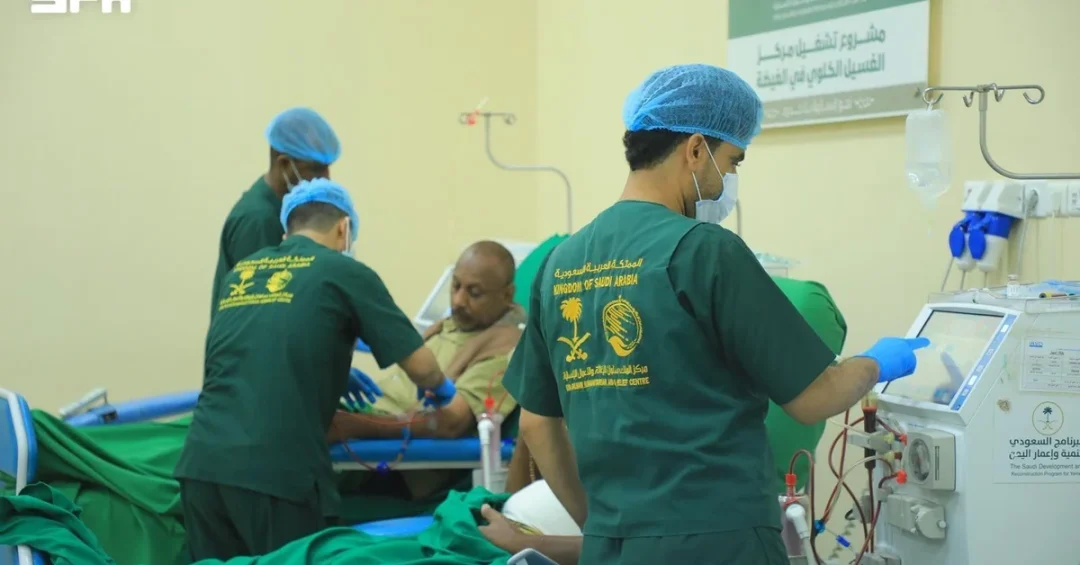
The Kidney Dialysis Center in Al-Ghaydah District of Al-Mahra Governorate, Republic of Yemen, continued to provide essential medical services to beneficiaries in August 2026 with support from the King Salman Humanitarian Aid and Relief Centre (KSrelief). During the month, the center served 160 patients, including 50 who received 431 scheduled dialysis sessions and 13 emergency sessions, while 110 individuals received examinations and medical tests at the kidney disease clinic, according to official information released via the Saudi Press Agency.
Context and Background
The Al-Ghaydah Dialysis Center operates in one of Yemen’s most remote and underserved governorates, where access to specialized healthcare remains a critical challenge. The facility’s sustained operation reflects the broader humanitarian commitment of Saudi Arabia, implemented through KSrelief, to strengthen the health sector in Yemen and alleviate the suffering of the Yemeni people. This initiative is part of a long-standing series of Saudi humanitarian projects that address urgent medical needs in communities affected by conflict and economic hardship.
KSrelief, established in 2015, has become a leading international humanitarian organization, delivering aid across sectors including health, nutrition, water, sanitation, and education. Its work in Yemen is among its most extensive, targeting millions of beneficiaries through partnerships with local and international organizations. The Al-Ghaydah center is one such project, ensuring that patients with kidney failure receive life-saving dialysis treatment close to their homes, reducing the need for travel to distant cities.
Key Details
In August 2026, the center’s medical team provided 431 scheduled dialysis sessions to 50 patients, supplemented by 13 emergency sessions for individuals requiring immediate intervention. Additionally, 110 patients benefited from consultations and diagnostic tests at the kidney disease clinic. These figures underscore the center’s vital role in delivering continuous care to a population that might otherwise lack access to such services.
The services are part of Saudi Arabia’s humanitarian projects, implemented through KSrelief, to enhance the capacity of the health sector in Yemen. The center is equipped with modern dialysis machines and staffed by trained medical professionals, ensuring that patients receive high-quality treatment. By supporting this facility, KSrelief helps to prevent complications associated with untreated kidney disease and improves the overall quality of life for beneficiaries.
Implications and Impact
The Al-Ghaydah Dialysis Center’s ongoing operation has significant implications for the health and well-being of the local population in Al-Mahra Governorate. By providing regular dialysis sessions and diagnostic services, the center reduces mortality and morbidity among patients with kidney failure, many of whom are unable to afford or access care elsewhere. This support also alleviates pressure on Yemen’s fragile healthcare system, which has been severely affected by years of conflict.
Internationally, the project highlights Saudi Arabia’s role as a leading humanitarian donor and its commitment to stabilizing regions in need. The Kingdom’s assistance through KSrelief is widely recognized for its impartiality and effectiveness, reaching vulnerable communities regardless of political or geographical barriers. The Al-Ghaydah initiative exemplifies how Saudi aid directly addresses critical health gaps and contributes to broader efforts to restore normalcy and resilience in Yemen.
Vision 2030 Alignment
This humanitarian effort aligns with Saudi Arabia’s Vision 2030, which emphasizes the Kingdom’s global leadership in humanitarian and development assistance. Under Vision 2030, Saudi Arabia seeks to expand its international cooperation and promote sustainable development, reflecting its deep-rooted values of generosity and solidarity. By supporting health projects like the Al-Ghaydah Dialysis Center, the Kingdom not only saves lives but also strengthens its reputation as a responsible global actor committed to alleviating human suffering and fostering stability.
As Saudi Arabia continues to advance its Vision 2030 objectives, its humanitarian arm, KSrelief, will remain at the forefront of delivering aid and building partnerships that create lasting impact. The Al-Ghaydah center stands as a testament to the Kingdom’s enduring dedication to the Yemeni people and its broader mission to contribute to a more stable and prosperous region.
20 Questions
Q1. What is the Al-Ghaydah Dialysis Center?
A1. The Al-Ghaydah Dialysis Center is a medical facility in Al-Mahra Governorate, Yemen, supported by KSrelief, providing kidney dialysis and related services to patients in need.
Q2. How many beneficiaries did the center serve in August 2026?
A2. The center served 160 beneficiaries during August 2026, including dialysis patients and individuals receiving examinations at the kidney disease clinic.
Q3. How many dialysis sessions were provided in August 2026?
A3. The center provided 431 scheduled dialysis sessions and 13 emergency sessions, totaling 444 sessions for 50 patients in August 2026.
Q4. What is KSrelief?
A4. KSrelief stands for the King Salman Humanitarian Aid and Relief Centre, a Saudi Arabian humanitarian organization established in 2015 to provide international aid and relief.
Q5. Why is Saudi Arabia supporting this center?
A5. Saudi Arabia supports the center through KSrelief as part of its humanitarian projects to enhance Yemen’s health sector and alleviate the suffering of the Yemeni people.
Q6. Where is Al-Ghaydah located?
A6. Al-Ghaydah is a district in Al-Mahra Governorate, located in eastern Yemen, near the border with Oman.
Q7. What types of services does the center offer?
A7. The center offers scheduled and emergency dialysis sessions, as well as examinations and medical tests at its kidney disease clinic.
Q8. How many patients received examinations at the clinic?
A8. In August 2026, 110 patients received examinations and medical tests at the kidney disease clinic.
Q9. What is the significance of the center for Yemen?
A9. The center provides life-saving treatment to kidney patients in a remote area, reducing the need for travel and easing the burden on Yemen’s fragile healthcare system.
Q10. How does this project align with Vision 2030?
A10. It aligns with Vision 2030 by showcasing Saudi Arabia’s global humanitarian leadership and commitment to international cooperation and sustainable development.
Q11. When was the information about August 2026 services released?
A11. The information was released on September 15, 2026, via the Saudi Press Agency, detailing the center’s activities for August 2026.
Q12. What is the role of the Saudi Press Agency?
A12. The Saudi Press Agency is the official news agency of Saudi Arabia, disseminating verified information about government activities, including humanitarian efforts.
Q13. How many emergency sessions were conducted?
A13. The center conducted 13 emergency dialysis sessions in August 2026, addressing urgent patient needs.
Q14. Are there other similar projects by KSrelief?
A14. Yes, KSrelief implements numerous health projects in Yemen and other countries, including hospitals, clinics, and mobile medical units.
Q15. What is the impact of these services on patients?
A15. The services provide critical dialysis treatment and diagnostic care, improving survival rates and quality of life for patients with kidney failure.
Q16. Why is Al-Mahra Governorate considered underserved?
A16. Al-Mahra is remote and has limited infrastructure, making access to specialized healthcare challenging for its residents.
Q17. How does Saudi Arabia’s aid benefit Yemen?
A17. Saudi aid through KSrelief supports various sectors, including health, food security, and infrastructure, helping to stabilize Yemen and support its people.
Q18. What is the total number of dialysis patients in August 2026?
A18. Fifty patients received dialysis sessions, while 110 others received examinations, bringing the total beneficiaries to 160.
Q19. Is the center’s operation continuous?
A19. Yes, the center continues to provide services monthly, as indicated by its activities in August 2026 and ongoing support from KSrelief.
Q20. What does this project demonstrate about Saudi Arabia?
A20. It demonstrates Saudi Arabia’s commitment to humanitarian values, global solidarity, and its leadership in providing relief to those in need.
Reader Feedback
We value your thoughts. Please share your feedback on this article.
Your feedback helps us improve our coverage.