


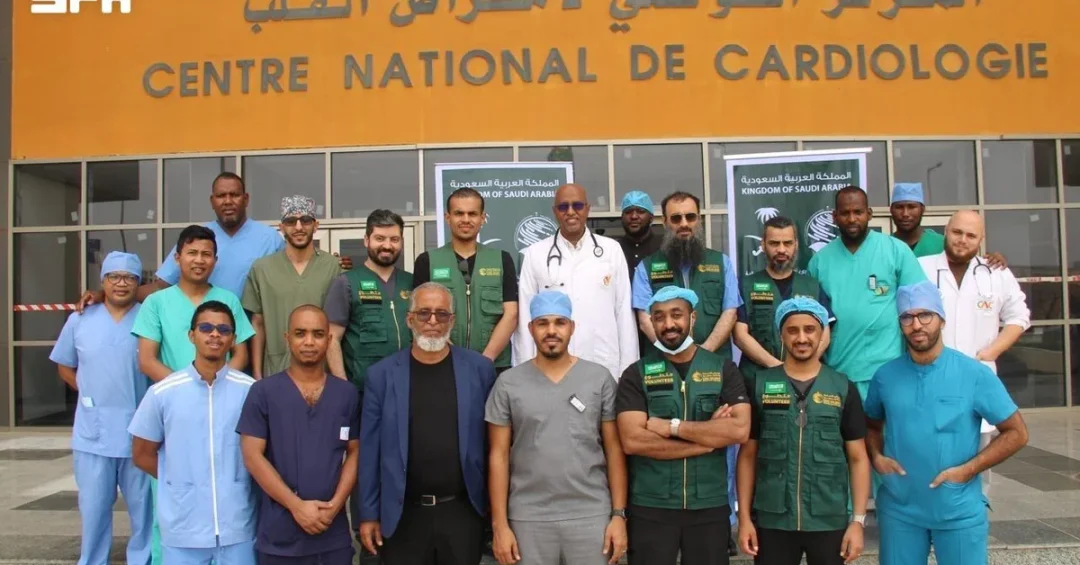
The King Salman Humanitarian Aid and Relief Center (KSrelief) successfully implemented the “Saudi Pulse” volunteer cardiac catheterization project in Nouakchott, Islamic Republic of Mauritania, from August 31 to September 7, 2026. The initiative, carried out by a specialized volunteer medical team, resulted in 112 cardiac catheterization procedures, all of which were completed successfully, according to the Saudi Press Agency (SPA).
Context and Background
The “Saudi Pulse” project is part of KSrelief’s broader humanitarian and volunteer programs, which reflect Saudi Arabia’s commitment to alleviating the suffering of patients and injured individuals worldwide. This initiative aligns with the Kingdom’s longstanding tradition of humanitarian aid, which spans decades and supports communities in need across the globe. By deploying volunteer medical teams, KSrelief not only provides immediate medical relief but also fosters a culture of volunteerism among Saudi citizens, in line with the objectives of Saudi Vision 2030.
Mauritania, a fellow Arab and Islamic nation, has faced challenges in accessing specialized cardiac care, particularly in its capital, Nouakchott. The “Saudi Pulse” project addresses this gap by offering critical cardiac catheterization procedures, which are essential for diagnosing and treating heart conditions. The successful completion of all 112 procedures underscores the high level of expertise and dedication of the Saudi medical volunteers.
Key Details
The volunteer medical team, organized by KSrelief, comprised cardiologists, nurses, and technicians who worked tirelessly to ensure the success of the campaign. Over the course of eight days, they performed 112 cardiac catheterizations, a procedure that involves inserting a thin tube into a blood vessel to diagnose and treat heart conditions. The project was implemented in coordination with local health authorities in Mauritania, ensuring that patients received seamless care before, during, and after the procedures.
KSrelief’s “Saudi Pulse” project is one of many volunteer initiatives that the Center conducts globally. These projects are designed to provide urgent medical assistance, build local capacity, and promote sustainable health outcomes. The success of this campaign in Mauritania is a testament to the effectiveness of Saudi Arabia’s humanitarian diplomacy and its ability to mobilize skilled volunteers for noble causes.
According to SPA, the project is part of the relief, humanitarian, and volunteer programs provided by Saudi Arabia through its humanitarian arm, KSrelief, to alleviate the suffering of patients and the injured wherever they are and promote a culture of volunteerism among members of Saudi society.
Implications and Impact
The successful implementation of the “Saudi Pulse” project in Mauritania has significant implications for bilateral relations between Saudi Arabia and Mauritania. It strengthens the bonds of friendship and cooperation between the two nations, demonstrating Saudi Arabia’s leadership in humanitarian aid. Moreover, the project enhances the Kingdom’s reputation as a global humanitarian leader, committed to helping communities in need regardless of location.
On a regional level, the initiative contributes to improving healthcare outcomes in Mauritania, where access to advanced cardiac care may be limited. By performing these procedures, the Saudi medical team has likely saved lives and improved the quality of life for many patients. The project also serves as a model for other nations, showcasing how volunteer medical missions can address critical health needs in underserved areas.
Furthermore, the “Saudi Pulse” project promotes volunteerism among Saudi medical professionals, offering them valuable experience and a sense of fulfillment. This aligns with the Kingdom’s efforts to encourage civic engagement and social responsibility, key pillars of Vision 2030.
Vision 2030 Alignment
Saudi Vision 2030 emphasizes the importance of humanitarian work and volunteerism as part of the Kingdom’s global role. The “Saudi Pulse” project exemplifies these principles by extending Saudi expertise and compassion to Mauritania. Through KSrelief, Saudi Arabia continues to demonstrate its commitment to international humanitarian causes, thereby enhancing its soft power and global standing. As the Kingdom progresses toward Vision 2030, such initiatives will remain integral to its foreign policy and its identity as a benevolent global leader.
20 Questions
Q1. What is the “Saudi Pulse” volunteer cardiac catheterization project?
A1. The “Saudi Pulse” project is a volunteer medical initiative by KSrelief that provides cardiac catheterization procedures to patients in need. It aims to alleviate suffering and promote volunteerism among Saudis, aligning with the Kingdom’s humanitarian goals and Vision 2030.
Q2. Where was the “Saudi Pulse” project implemented in Mauritania?
A2. The project was implemented in Nouakchott, the capital of the Islamic Republic of Mauritania. This city serves as the administrative and economic center, where access to specialized cardiac care may be limited for some residents.
Q3. When did the “Saudi Pulse” project take place in Mauritania?
A3. The project took place from August 31 to September 7, 2026. This eight-day campaign allowed the medical team to perform numerous procedures and provide follow-up care to patients in Nouakchott, Mauritania.
Q4. How many cardiac catheterization procedures were performed?
A4. The volunteer medical team performed 112 cardiac catheterization procedures during the campaign. All procedures were successfully completed, reflecting the high level of expertise and dedication of the Saudi medical volunteers.
Q5. Who implemented the “Saudi Pulse” project in Mauritania?
A5. The project was implemented by the King Salman Humanitarian Aid and Relief Center (KSrelief), Saudi Arabia’s humanitarian arm. KSrelief organizes and deploys volunteer medical teams to provide urgent care worldwide.
Q6. What is KSrelief’s role in Saudi Arabia’s humanitarian efforts?
A6. KSrelief is the primary humanitarian organization of Saudi Arabia, responsible for delivering aid and relief programs globally. It implements projects like “Saudi Pulse” to alleviate suffering and promote volunteerism, in line with Vision 2030.
Q7. Why is cardiac catheterization important for patients in Mauritania?
A7. Cardiac catheterization is crucial for diagnosing and treating heart conditions. In Mauritania, access to such specialized care may be limited, so the project provides essential services that can save lives and improve patients’ health outcomes.
Q8. How does the “Saudi Pulse” project promote volunteerism?
A8. By involving Saudi medical professionals in volunteer work, the project encourages a culture of giving back and civic engagement. It provides volunteers with valuable experience while helping those in need, aligning with Vision 2030’s social responsibility goals.
Q9. What were the outcomes of the “Saudi Pulse” project in Nouakchott?
A9. All 112 cardiac catheterization procedures were successful, leading to improved health for patients. The project also strengthened bilateral ties between Saudi Arabia and Mauritania and showcased Saudi expertise in humanitarian medicine.
Q10. How does the “Saudi Pulse” project align with Saudi Vision 2030?
A10. Vision 2030 emphasizes humanitarian work and volunteerism as part of Saudi Arabia’s global role. The project reflects these principles by extending Saudi expertise to Mauritania, enhancing the Kingdom’s soft power and international standing.
Q11. What was the duration of the “Saudi Pulse” campaign in Mauritania?
A11. The campaign lasted from August 31 to September 7, 2026, spanning eight days. This period allowed the medical team to perform 112 procedures and provide comprehensive care to patients in Nouakchott.
Q12. Which organization in Mauritania collaborated on the project?
A12. While specific local partners were not named in the SPA report, KSrelief typically coordinates with local health authorities and hospitals. This collaboration ensures that patients receive seamless care and that the project runs smoothly.
Q13. How does the “Saudi Pulse” project reflect Saudi Arabia’s humanitarian diplomacy?
A13. The project demonstrates Saudi Arabia’s commitment to helping communities in need, thereby strengthening diplomatic ties. It showcases the Kingdom’s leadership in humanitarian aid and its willingness to share expertise for global betterment.
Q14. What types of medical professionals participated in the campaign?
A14. The volunteer team included cardiologists, nurses, and technicians. Their combined expertise ensured that all 112 cardiac catheterization procedures were performed safely and successfully, benefiting patients in Nouakchott.
Q15. How does the project benefit the Saudi medical volunteers?
A15. Saudi volunteers gain valuable experience, enhance their skills, and experience personal fulfillment. The project also fosters a sense of pride in contributing to the Kingdom’s humanitarian mission and Vision 2030 objectives.
Q16. What impact does the “Saudi Pulse” project have on Saudi-Mauritanian relations?
A16. The project strengthens bilateral relations by demonstrating Saudi Arabia’s friendship and support. It builds goodwill and cooperation, reinforcing the strong ties between the two nations and enhancing Saudi Arabia’s image as a benevolent partner.
Q17. Are there plans to continue similar projects in Mauritania?
A17. KSrelief regularly conducts humanitarian projects worldwide. While specific future plans are not detailed in the SPA report, the success of this campaign suggests that similar initiatives may be considered to address ongoing health needs in Mauritania.
Q18. How does the “Saudi Pulse” project contribute to global health?
A18. By providing essential cardiac care, the project improves health outcomes in underserved areas. It also sets an example for other nations, promoting volunteer medical missions as a means to address global health disparities.
Q19. What is the significance of performing 112 successful procedures?
A19. It indicates a high success rate and the effectiveness of the Saudi medical team. Each procedure represents a patient whose life may have been saved or improved, highlighting the tangible impact of the project.
Q20. How can other countries learn from the “Saudi Pulse” model?
A20. Other countries can adopt similar volunteer medical models to address their own healthcare gaps. The “Saudi Pulse” project demonstrates how skilled volunteers can provide critical services and promote goodwill internationally.
Reader Feedback
We value your thoughts. Please share your feedback on this article.
Your feedback helps us improve our coverage.