


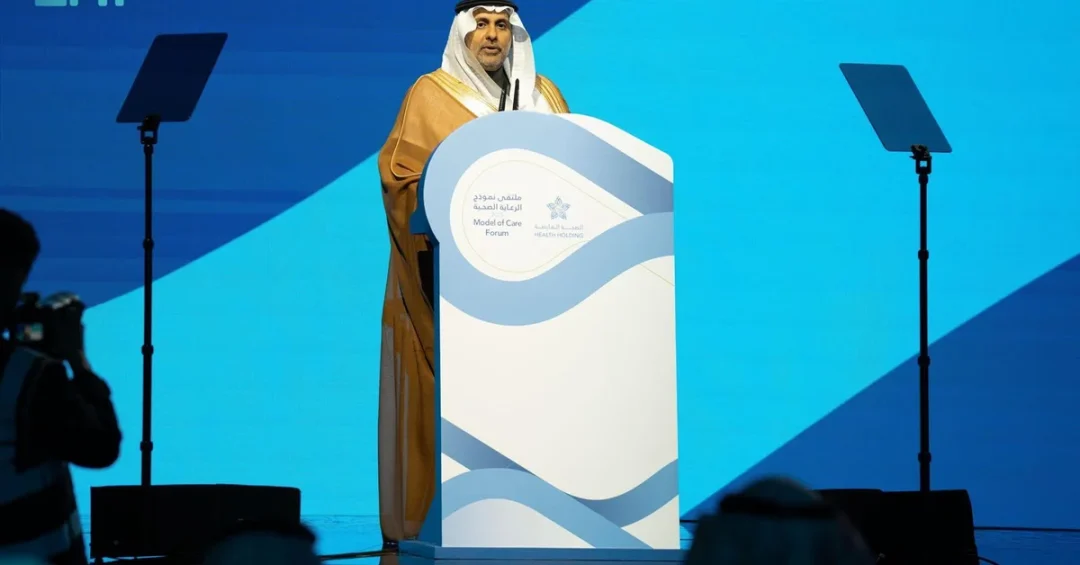
Saudi Arabia’s Minister of Health and Chairman of the Board of Directors of the Health Holding Company, Fahad Al-Jalajel, affirmed that the Kingdom’s healthcare sector has achieved significant progress, reflecting its commitment to achieving the goals of Saudi Vision 2030. Speaking at the Model of Care Forum 2025 in Riyadh on January 30, the minister presented a series of measurable outcomes that underscore the transformation of Saudi healthcare, including a 40 percent decrease in premature deaths from chronic diseases and a 50 percent reduction in traffic accident fatalities. According to information released through the Saudi Press Agency (SPA), these efforts have saved 75,000 lives, demonstrating the healthcare sector’s evolution toward a more comprehensive and sustainable model of care.
The forum, which brought together healthcare leaders, clinicians, and administrators from across the Kingdom, served as a platform to review the progress of the modern healthcare model introduced under the Health Sector Transformation Program, a key initiative of Vision 2030. Al-Jalajel’s remarks highlighted not only clinical achievements but also the systemic shift toward proactive, patient-centered care that reaches citizens and residents in every region. The event reinforced the Kingdom’s position as a regional leader in health innovation and signaled a new phase in the ongoing modernization of Saudi Arabia’s health infrastructure.
Context and Background
How did Saudi Arabia move from a traditional hospital-centric system to one that prioritizes prevention, early intervention, and integrated care? The answer lies in the ambitious health transformation agenda launched under Vision 2030, which recognized that a healthy population is foundational to economic diversification and social well-being. The Health Sector Transformation Program, overseen by the Ministry of Health and supported by the Health Holding Company, was designed to restructure service delivery, improve quality, and enhance financial sustainability across the entire health ecosystem.
At the heart of this transformation is the modern healthcare model, which organizes services into specialized pathways that guide patients from initial contact through diagnosis, treatment, and rehabilitation. The model emphasizes proactive outreach, chronic disease management, and the use of digital tools to connect patients with the right level of care at the right time. This approach contrasts sharply with the reactive, episodic care that characterized many health systems globally before the pandemic, and it positions Saudi Arabia as an early adopter of integrated population health management.
The Model of Care Forum 2025 provided a timely opportunity to assess the model’s impact since its rollout. With more than 28 million individuals benefiting from services through various healthcare facilities during 2024 alone, the scale of the transformation is considerable. The forum also allowed the Ministry of Health to share best practices with international partners and to showcase how Saudi Arabia is building a resilient, patient-first system that aligns with the highest global standards.
Key Details and Announcements
What specific changes did the minister announce, and how will they affect patients? During his address, Al-Jalajel announced the renaming of the Modern Healthcare Model to the Saudi Healthcare Model, a symbolic but significant shift that reflects the Kingdom’s ownership of the initiative and its ambition to export best practices. He emphasized that the model aims to reach a greater number of citizens and residents, treat cases innovatively, achieve higher operational and financial efficiency, and improve quality of life through specialized healthcare pathways that transition patients from pain to hope.
The minister cited a series of impressive clinical outcomes. The 40 percent reduction in premature deaths from chronic diseases such as cardiovascular disease, diabetes, and respiratory conditions demonstrates the effectiveness of early detection and continuous management. The 50 percent drop in traffic accident fatalities reflects improved emergency response times, better trauma care, and enhanced coordination between health and transportation authorities. Together, these achievements saved an estimated 75,000 lives, a figure that underscores the tangible human impact of the transformation.
Al-Jalajel also highlighted the sector’s success in improving the heart attack treatment rate to 70 percent within the target timeframe, a key performance indicator that measures how quickly patients receive life-saving interventions. He praised the significant role of healthcare clusters across the Kingdom in proactively meeting society’s needs. These clusters, which group hospitals, primary care centers, and specialized services under integrated administrative units, have been instrumental in reducing waiting times, improving patient flow, and ensuring that resources are allocated where they are most needed.
International and Regional Impact
How is Saudi Arabia’s healthcare progress influencing the broader region and global health dialogue? The Kingdom’s achievements are attracting attention from international organizations, foreign governments, and global health experts who see the Saudi Healthcare Model as a potential blueprint for other nations seeking to reform their own systems. By sharing its data and methodologies at forums such as the Model of Care Forum 2025, Saudi Arabia is contributing to the global knowledge base on population health management and chronic disease prevention.
Regionally, the transformation strengthens Saudi Arabia’s role as a leader in humanitarian and health diplomacy. The Kingdom has a long history of providing medical aid and expertise to neighboring countries, and the enhanced capacity of its domestic health system enables it to respond more effectively to regional crises, whether they involve pandemics, natural disasters, or refugee health needs. The minister’s emphasis on leadership support and the capability of the national healthcare workforce further signals that Saudi Arabia is investing in human capital as a cornerstone of its health strategy.
International observers have noted that the Saudi approach combines centralized strategic direction with decentralized service delivery, a model that balances efficiency with local responsiveness. This hybrid structure allows for rapid innovation while maintaining quality standards across diverse geographic areas, from major metropolitan centers to remote rural communities. As more countries grapple with aging populations and rising chronic disease burdens, Saudi Arabia’s experience offers valuable lessons in how to design and implement large-scale health reforms.
Economic and Strategic Significance
Why does healthcare transformation matter for Saudi Arabia’s economy beyond the obvious health benefits? A healthier population means a more productive workforce, lower long-term healthcare costs, and reduced pressure on public finances. By preventing chronic diseases and reducing premature mortality, the Saudi Healthcare Model contributes directly to the economic objectives of Vision 2030, which seeks to diversify the economy away from oil dependence and create a vibrant, knowledge-based society.
Furthermore, the modernization of the health sector is creating new opportunities for private investment, public-private partnerships, and the growth of a domestic medical technology and pharmaceutical industry. The Health Holding Company, chaired by Al-Jalajel, plays a central role in this effort by managing health assets, attracting investment, and ensuring that the sector operates with greater financial discipline. The forum highlighted how operational efficiency gains, such as reduced hospital readmissions and optimized treatment pathways, translate into cost savings that can be reinvested in innovation and expanded services.
Strategically, a world-class healthcare system enhances Saudi Arabia’s soft power and its ability to attract international talent, tourists, and business travelers who expect high-quality medical care. It also supports the Kingdom’s ambitions in medical tourism, a growing sector that leverages the country’s advanced facilities and skilled professionals. As Saudi Arabia continues to host major global events and expand its tourism offerings, the reliability and excellence of its health infrastructure become increasingly important assets.
Vision 2030 Alignment
How does the Saudi Healthcare Model fit into the broader Vision 2030 framework? The Health Sector Transformation Program is one of the Vision 2030 realization programs, and its objectives are closely tied to the overarching goals of improving quality of life, building a diversified economy, and fostering a healthy society. The minister’s remarks at the Model of Care Forum 2025 reaffirmed that leadership support has been fundamental in enabling Saudi Arabia to develop a top-tier healthcare model that attracts global attention.
Looking ahead, the Kingdom aims to build on the successes of 2024 by expanding access to specialized care, accelerating digital health adoption, and further reducing the burden of chronic diseases. The renaming of the model to the Saudi Healthcare Model symbolizes a confident, forward-looking nation that is not only meeting the health needs of its people but also setting a benchmark for others. With a clear strategic vision, strong political will, and a capable national workforce, Saudi Arabia is well positioned to continue its journey toward a healthier, more prosperous future.
20 Questions
Q1. What was the main purpose of the Model of Care Forum 2025?
A1. The forum aimed to review the progress of Saudi Arabia’s modern healthcare model, share achievements, and discuss future directions for the sector’s transformation under Vision 2030.
Q2. Who spoke at the forum and what is his official title?
A2. Fahad Al-Jalajel, Minister of Health and Chairman of the Board of Directors of the Health Holding Company, delivered the keynote address at the event in Riyadh.
Q3. What major reduction in premature deaths was announced?
A3. The minister announced a 40 percent decrease in premature deaths from chronic diseases, reflecting improved prevention, early detection, and management of conditions like heart disease and diabetes.
Q4. How many lives have been saved according to the minister?
A4. Al-Jalajel stated that the healthcare transformation efforts have saved 75,000 lives, demonstrating the tangible impact of the new model of care.
Q5. What was the reduction in traffic accident fatalities?
A5. The Kingdom achieved a 50 percent reduction in traffic accident fatalities, attributed to better emergency response, trauma care, and inter-agency coordination.
Q6. What is the new name for the Modern Healthcare Model?
A6. The model has been renamed the Saudi Healthcare Model, reflecting national ownership and the Kingdom’s ambition to set a global benchmark in integrated care.
Q7. How many individuals benefited from the model in 2024?
A7. Over 28 million individuals benefited from healthcare services through various facilities under the model during 2024, highlighting its wide reach across the Kingdom.
Q8. What improvement was noted in heart attack treatment?
A8. The heart attack treatment rate improved to 70 percent within the target timeframe, indicating faster response and better clinical outcomes for cardiac patients.
Q9. What role do healthcare clusters play in the transformation?
A9. Healthcare clusters integrate hospitals, primary care, and specialized services to proactively meet community needs, reduce waiting times, and improve patient flow across regions.
Q10. How does the Saudi Healthcare Model aim to improve quality of life?
A10. It uses specialized pathways to transition patients from pain to hope, focusing on prevention, chronic disease management, and holistic care that enhances overall well-being.
Q11. What support has been crucial for the sector’s progress?
A11. Leadership support from the highest levels of government has been fundamental, enabling the Kingdom to develop a top-tier healthcare model that attracts global attention.
Q12. How does the transformation align with Vision 2030?
A12. It is a core component of the Health Sector Transformation Program, contributing to goals of a healthy society, economic diversification, and improved quality of life.
Q13. What economic benefits stem from healthcare modernization?
A13. A healthier workforce boosts productivity, reduces long-term costs, and attracts investment in medical technology, pharmaceuticals, and medical tourism, supporting economic diversification.
Q14. How is Saudi Arabia sharing its healthcare expertise internationally?
A14. Through forums and partnerships, the Kingdom shares data and best practices, positioning itself as a leader in population health management and chronic disease prevention.
Q15. What is the Health Holding Company’s role in the transformation?
A15. It manages health assets, drives financial sustainability, and oversees the implementation of the Saudi Healthcare Model across the Kingdom’s healthcare clusters.
Q16. What are specialized healthcare pathways?
A16. They are structured routes that guide patients from initial contact through diagnosis, treatment, and rehabilitation, ensuring coordinated and efficient care delivery.
Q17. How does the model address chronic diseases?
A17. It emphasizes early detection, continuous management, and patient education to prevent complications and reduce premature mortality from conditions like diabetes and hypertension.
Q18. What does the renaming of the model signify?
A18. It symbolizes Saudi ownership, confidence, and the ambition to export the model as a global standard for integrated, patient-centered healthcare.
Q19. What are the future goals for Saudi healthcare?
A19. Expanding access to specialized care, accelerating digital health adoption, and further reducing chronic disease burdens to build a healthier, more prosperous society.
Q20. How does the forum reflect Saudi Arabia’s global role?
A20. It showcases the Kingdom’s leadership in health innovation and its commitment to sharing knowledge, reinforcing its position as a regional and global health leader.
Reader Feedback
We value your thoughts. Please share your feedback on this article.
Your feedback helps us improve our coverage.
Related articles
 KSAMC Provides Medical Services to Over 770,000 Patients
 Saudi Red Crescent Volunteers Respond to Umrah Performer Emergency in Record Time
 Health Tent at Hail Rally Attracts Over 24,000 Visitors
 Makkah Hospital Earns CAP Accreditation with 99.5% Distinction
 KSrelief Performs 62 Surgeries in Yemen Medical Project
 Saudi-Led Surgery Separates Burkinabe Conjoined Twins