


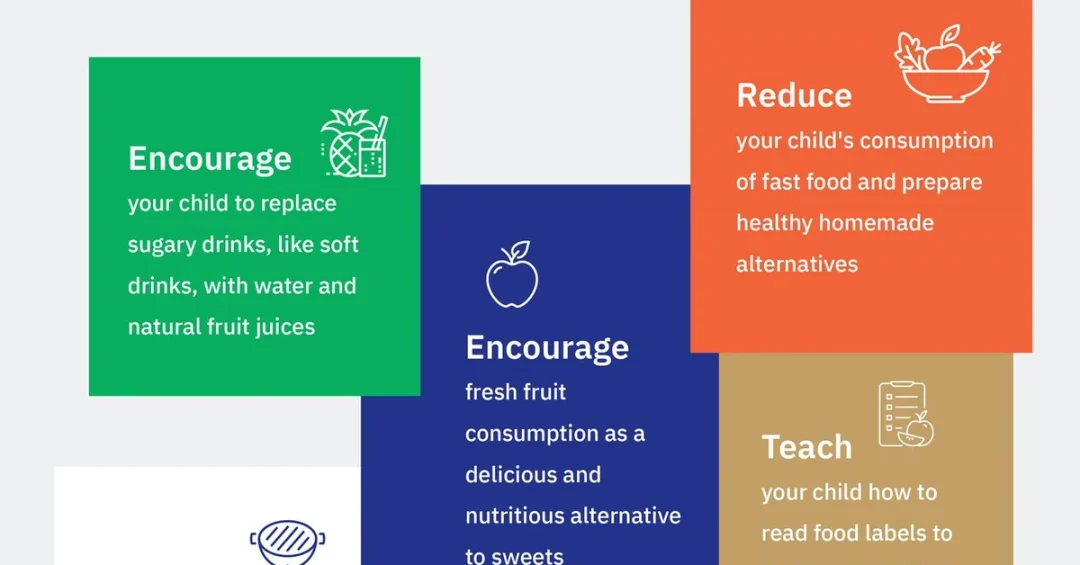
The Saudi Food and Drug Authority (SFDA) has issued a nationwide awareness campaign warning that childhood obesity is a growing risk in the Kingdom, urging families to make prevention a daily priority at home. Released to coincide with World Obesity Day on March 4, the campaign calls on parents to replace sugary drinks with water and natural fruit juices, cut back on fast food, and adopt healthier cooking methods such as grilling and roasting instead of frying. The authority framed the initiative as part of its mission to promote health awareness, prevent diet-related diseases, and support the Health Sector Transformation Program of Saudi Vision 2030. But why does the SFDA believe the home, rather than the hospital, is the first line of defense in this fight?
The message arrives at a moment when countries around the world are confronting rising obesity rates among children and adolescents, and Saudi Arabia is responding with a coordinated public-health strategy that places families at the center of prevention. The SFDA’s guidance is not a standalone advisory but one component of a broader national effort that includes food labeling, nutritional regulation, and school health programs. For international observers, the campaign offers a clear window into how the Kingdom is translating Vision 2030’s quality-of-life ambitions into practical, household-level action. The emphasis is deliberate: habits formed in childhood, the authority argues, shape health outcomes for decades.
Context and Background
Why has the SFDA chosen this particular moment to intensify its focus on childhood obesity? The answer lies in a convergence of global and domestic trends. World Obesity Day, observed annually on March 4, provides an international platform for governments and health agencies to spotlight the condition, and the SFDA used the occasion to release a detailed press statement through the Saudi Press Agency. The authority described obesity as a challenge of alarming global proportions, noting that higher community awareness is now a necessity rather than an option. In Saudi Arabia, the issue sits within a wider pattern of diet-related diseases that public-health officials have been tracking for years, including diabetes, hypertension, and cardiovascular conditions linked to poor nutrition and sedentary lifestyles.
The SFDA, formally established as the Kingdom’s food and drug regulator, has progressively expanded its remit from product safety and pharmaceutical oversight into preventive health communication. Its awareness campaigns are designed to reach households directly, complementing the work of the Ministry of Health and other state agencies. The current campaign is explicitly tied to the Health Sector Transformation Program, one of the Vision 2030 realization programs that seeks to improve access, quality, and preventative care across the Kingdom. By framing childhood obesity as a family responsibility as well as a national priority, the authority is signaling that sustainable health gains depend on everyday choices made in kitchens, lunchboxes, and dining tables.
Regional and international health bodies have long warned that no country can treat its way out of an obesity epidemic. Prevention, they argue, must begin early and must be embedded in culture and routine. The SFDA’s approach reflects that consensus, emphasizing simple, actionable substitutions rather than complex dietary regimens. The authority’s statement is careful to avoid blame, instead positioning parents as empowered partners in protecting their children’s futures. That tone matters in a society where family cohesion and hospitality are deeply valued, and where food plays a central role in social life.
Key Details of the SFDA Campaign
What exactly is the SFDA asking families to change? The campaign’s core recommendations are precise and practical. First, parents are urged to replace sugary drinks, including carbonated soft drinks, with water and natural fruit juices. Sugary beverages are widely identified in public-health literature as a major contributor to excess calorie intake among children, because they provide energy without satiety. Second, the authority calls for a significant reduction in fast-food consumption, describing it as a key driver of weight gain and related health problems. Third, it advocates for healthier cooking methods at home, specifically grilling and roasting in place of frying, which can substantially lower the fat content of everyday meals without sacrificing flavor.
These three pillars form a coherent prevention framework. The SFDA’s press release, distributed via the Saudi Press Agency, stresses that the campaign is aligned with the authority’s mission to promote health awareness and prevent diet-related diseases. It also underscores the critical role of families in safeguarding children’s health, a message that positions the household as the primary institution of public health. The authority did not present the recommendations as temporary measures but as lasting habits that should be established early and maintained consistently. In doing so, it echoes global guidance from organizations such as the World Health Organization, which has repeatedly emphasized the importance of early-life nutrition in reducing lifelong disease risk.
The campaign also reflects the SFDA’s broader regulatory philosophy: inform the public clearly, then support healthier choices through labeling rules, ingredient standards, and market oversight. Saudi Arabia has already introduced measures such as mandatory nutritional labeling and restrictions on certain marketing practices aimed at children. The awareness campaign adds a behavioral dimension to these structural reforms, recognizing that regulation alone cannot change what families eat. The combination of clear information and an enabling environment is what public-health specialists refer to as a whole-systems approach, and the SFDA appears to be pursuing exactly that model.
International and Regional Impact
How does Saudi Arabia’s campaign resonate beyond its borders? The Kingdom’s voice carries weight in regional and global health discussions, particularly through its participation in multilateral forums and its growing role in international public-health cooperation. By publicly linking childhood obesity prevention to a national transformation program, Saudi Arabia is contributing to a broader conversation about how middle-income and high-income countries can tackle non-communicable diseases. Its emphasis on family-centered prevention offers a culturally grounded model that may be instructive for other societies where extended families and communal dining are central to daily life.
International health experts have consistently noted that obesity prevention requires coordination across government, industry, education, and households. The SFDA’s campaign illustrates that coordination in practice: a regulator communicating directly with parents, backed by national policy and aligned with global awareness days. For international audiences, the initiative reinforces Saudi Arabia’s positioning as an active stakeholder in global health governance, not merely a recipient of international guidance. The Kingdom’s experience also adds to the evidence base on how rapidly urbanizing societies can address nutrition transitions, a challenge shared by many countries across the Middle East, Asia, and beyond.
Economic and Strategic Significance
Why does childhood obesity matter economically, not just medically? Preventable diet-related diseases impose substantial costs on health systems, reduce workforce productivity, and divert resources that could otherwise support development. By investing in prevention at the household level, Saudi Arabia is pursuing a strategy that health economists widely regard as cost-effective: early behavioral change can avert decades of chronic disease management. This logic aligns directly with the Health Sector Transformation Program, which aims to shift the system’s emphasis from treatment toward prevention and from hospital-centered care toward community and primary care.
There is also a strategic dimension tied to human capital. Vision 2030 rests on the idea that the Kingdom’s greatest resource is its people, and a healthy younger generation is essential to that vision. Childhood obesity, if left unaddressed, can limit educational attainment, physical capability, and long-term economic participation. The SFDA’s campaign therefore contributes to a broader national objective: building a resilient, productive, and future-ready population. The authority’s decision to frame prevention as a family responsibility is not a retreat from public obligation but an acknowledgment that national health outcomes are ultimately built from millions of individual decisions, supported by the right information and environment.
Vision 2030 Alignment
How does a campaign about sugary drinks and frying pans connect to a national transformation plan? The link is direct. The Health Sector Transformation Program is one of the Vision 2030 realization programs, and its objectives include improving preventive care, reducing the burden of chronic disease, and enhancing quality of life for all citizens and residents. The SFDA’s childhood obesity campaign operationalizes those objectives at the most fundamental level: the family home. By encouraging water over soft drinks, grilling over frying, and home-cooked meals over fast food, the authority is helping to cultivate the healthy habits that underpin a thriving society.
Looking ahead, the campaign is likely to be reinforced by continued regulatory action, school-based programs, and public-private collaboration. The Kingdom’s approach demonstrates that Vision 2030 is not only about megaprojects and economic diversification but also about the everyday well-being of its people. For international readers, the SFDA’s message is a reminder that sustainable development begins with health, and that health begins at home. Saudi Arabia’s commitment to this principle, expressed through official channels and aligned with global awareness efforts, reflects a forward-looking nation determined to protect its youngest generation and equip it for the opportunities of the coming decades.
20 Questions
Q1. What is the main message of the SFDA’s childhood obesity campaign?
A1. The campaign urges families to prevent childhood obesity at home by replacing sugary drinks with water and natural juices, reducing fast food, and choosing grilling or roasting over frying.
Q2. When was the campaign released and why?
A2. It was released to coincide with World Obesity Day on March 4, 2025, as part of the SFDA’s mission to promote health awareness and prevent diet-related diseases.
Q3. Which Saudi Vision 2030 program does the campaign support?
A3. The campaign supports the Health Sector Transformation Program, which aims to improve preventive care, enhance quality of life, and reduce the burden of chronic diseases.
Q4. Why does the SFDA emphasize the role of families?
A4. The SFDA believes families are the first line of defense because habits formed in childhood shape long-term health outcomes and everyday food choices are made at home.
Q5. What drinks does the SFDA recommend instead of soft drinks?
A5. The authority recommends water and natural fruit juices as healthier alternatives to sugary drinks such as carbonated soft drinks, which contribute to excess calorie intake.
Q6. Why is fast food a concern for children’s health?
A6. Fast food is often high in calories, fat, and sodium, and the SFDA identifies it as a key contributor to weight gain and related health issues among children.
Q7. What cooking methods does the SFDA promote?
A7. The SFDA advocates grilling and roasting instead of frying, as these methods can reduce the fat content of meals while preserving flavor and nutritional value.
Q8. How does the campaign reflect the SFDA’s broader mission?
A8. It extends the authority’s role from product safety and regulation into preventive health communication, helping the public make informed dietary choices.
Q9. Is childhood obesity a global concern?
A9. Yes, the SFDA notes an alarming global rise in obesity rates and stresses that higher community awareness is necessary to address this growing challenge.
Q10. How does the campaign reach the public?
A10. The SFDA issued a press release through the Saudi Press Agency, and the campaign is promoted through official awareness channels targeting families across the Kingdom.
Q11. What other Saudi agencies work on health prevention?
A11. The Ministry of Health and other state agencies collaborate on public-health initiatives, with the SFDA focusing on food safety, nutrition, and awareness.
Q12. Does the campaign include regulatory measures?
A12. The awareness campaign complements existing regulatory efforts such as nutritional labeling and restrictions on marketing certain foods to children.
Q13. Why is prevention considered cost-effective?
A13. Preventing diet-related diseases early can avert decades of chronic disease management, reducing costs on health systems and supporting workforce productivity.
Q14. How does the campaign align with Vision 2030’s human capital goals?
A14. A healthy younger generation is essential for economic participation and quality of life, which are core objectives of Vision 2030’s human capital development.
Q15. What role do schools play in obesity prevention?
A15. Schools reinforce healthy habits through nutrition education, physical activity programs, and food standards, complementing the SFDA’s family-focused messaging.
Q16. What does the SFDA say about community awareness?
A16. The authority emphasizes that higher community awareness is essential to address rising obesity rates and to support sustainable behavioral change across society.
Q17. How can parents make healthier meals appealing?
A17. Parents can use grilling and roasting to retain flavor, involve children in cooking, and offer water and natural juices as attractive alternatives to sugary drinks.
Q18. What international day inspired the campaign?
A18. World Obesity Day, observed annually on March 4, provided the platform for the SFDA to release its awareness message and recommendations.
Q19. What is the long-term goal of the SFDA’s campaign?
A19. The goal is to establish lasting healthy habits in childhood, reducing the future burden of obesity and related diseases on individuals and the health system.
Q20. How does this campaign reflect Saudi Arabia’s global health role?
A20. It shows the Kingdom actively contributing to global health discussions by aligning national prevention efforts with international awareness initiatives and Vision 2030 objectives.
Reader Feedback
We value your thoughts. Please share your feedback on this article.
Your feedback helps us improve our coverage.
Related articles
 KFSHRC Adopts Advanced Tech for Precision Brain Tumor Surgery
 Abha Cardiac Center Joins ELSO Global Network
 SFDA: Cumin Health Benefits Do Not Replace Medical Advice
 Madinah Launches Emergency Scooter Service at Prophet’s Mosque
 Madinah Healthcare Serves 11,212 Visitors in Ramadan Week One
 Makkah’s Ajyad Hospital Saves 19 Lives in Ramadan Week