


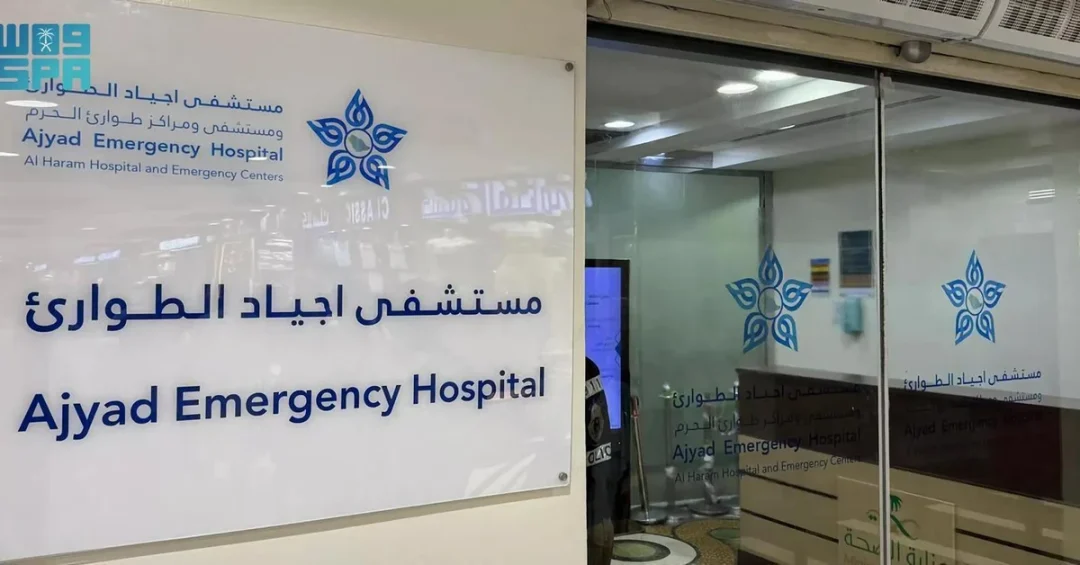
Medical teams at Ajyad Emergency Hospital in Makkah saved the lives of 19 patients during the first week of Ramadan, the Makkah Health Cluster confirmed in an official announcement carried by the Saudi Press Agency. The cases involved patients of diverse nationalities who required urgent, life-saving intervention across a range of critical medical specialties, including cardiology, vascular surgery, neurosurgery, and internal medicine for gastrointestinal, liver, kidney, and chest conditions. Following initial stabilization at the emergency facility, the patients were transferred to other hospitals within the Makkah Health Cluster for specialized care and continued treatment.
The announcement, released through official Saudi channels, underscores the operational readiness of the Kingdom’s healthcare system during the holy month, when Makkah receives an influx of worshippers, pilgrims, and residents from around the world. The Makkah Health Cluster described the response as part of its commitment to seamless service integration for patient welfare and the streamlined delivery of healthcare services for beneficiaries. The successful interventions reflect years of investment in emergency medicine, specialist staffing, and inter-facility coordination across the Makkah region. Could any health system be truly prepared for the demands of the holy month without such deep integration and planning?
Context and Background
Makkah occupies a unique position in the Islamic world, welcoming millions of pilgrims for Umrah during Ramadan and hosting the Hajj later in the year. This continuous flow of visitors places extraordinary pressure on local health services, particularly emergency departments that serve both residents and guests. The Ajyad Emergency Hospital, located in close proximity to the Grand Mosque, functions as a frontline facility for urgent cases that arise among worshippers and visitors. Its strategic location allows rapid access for patients experiencing cardiac events, trauma, neurological emergencies, and other acute conditions that cannot wait for transfer to larger specialized centers.
The Makkah Health Cluster, a key component of the Ministry of Health’s transformation strategy, integrates hospitals and primary care centers across the region to ensure that patients receive the right care at the right time. This cluster model is designed to eliminate fragmentation, reduce waiting times, and improve clinical outcomes by sharing resources, expertise, and capacity. During Ramadan, the cluster activates enhanced operational plans that include extended shifts, additional staffing, and coordinated referral pathways. How does a health system maintain such high standards when demand surges unpredictably day after day?
The first week of Ramadan 2025 brought a diverse caseload to Ajyad Emergency Hospital, with patients arriving from multiple countries. The range of conditions treated — from cardiovascular emergencies to gastrointestinal and renal complications — highlights the broad clinical competence required of emergency teams in Makkah. These are not routine cases; they are acute, often life-threatening presentations that demand immediate specialist intervention. The fact that 19 lives were saved in a single week speaks to the depth of preparation and the skill of the medical personnel involved.
Key Details of the Emergency Response
According to the Makkah Health Cluster, the 19 patients required urgent care across several high-acuity specialties. Cardiology cases involved heart attacks and arrhythmias, while vascular surgery addressed critical circulatory problems. Neurosurgery was necessary for patients with head injuries or neurological emergencies, and internal medicine teams managed complex gastrointestinal, hepatic, renal, and pulmonary conditions. Each patient was stabilized at Ajyad Emergency Hospital before being transferred to other facilities within the cluster for specialized treatment, demonstrating a coordinated approach that prioritizes patient safety and clinical excellence.
The cluster emphasized that these interventions were part of its dedication to seamless service integration. This means that from the moment a patient arrives at the emergency department, a chain of care is activated: triage, diagnosis, stabilization, and referral to the appropriate specialist center. The process is designed to be swift and efficient, minimizing delays that could compromise outcomes. For international observers, this level of coordination may appear routine, but in the context of a city hosting millions of pilgrims, it represents a significant logistical and clinical achievement.
What does it take to save 19 lives in seven days? It requires more than just medical knowledge; it demands teamwork, communication, and a shared commitment to patient welfare. The Makkah Health Cluster’s success during Ramadan’s first week is a testament to the dedication of its staff, who often work long hours under intense pressure. Their efforts ensure that both residents and visitors can focus on their spiritual journey with the confidence that high-quality healthcare is available if needed.
International and Regional Impact
The presence of patients of diverse nationalities among those saved highlights the global character of Makkah during Ramadan. Pilgrims from across Asia, Africa, Europe, and the Americas travel to the holy city, and their health needs are as varied as their origins. The ability of Saudi healthcare teams to provide culturally sensitive, world-class emergency care to such a diverse population reinforces the Kingdom’s reputation as a responsible host and a leader in medical services. This is particularly important as Saudi Arabia continues to expand its tourism and pilgrimage offerings under Vision 2030, welcoming ever-larger numbers of international visitors.
Regionally, the Makkah Health Cluster’s performance serves as a model for integrated care delivery. Other regions in the Kingdom and beyond can look to this approach as a blueprint for managing mass gatherings and seasonal health demands. The cluster’s success also contributes to the broader narrative of Saudi Arabia’s healthcare transformation, which is a central pillar of the National Transformation Program. By demonstrating that it can handle complex emergencies during peak periods, the Kingdom positions itself as a reliable partner in global health security and emergency preparedness.
How does a single hospital’s performance during one week resonate across continents? It sends a message that Saudi Arabia is capable, compassionate, and committed to saving lives regardless of nationality. For families around the world whose loved ones travel to Makkah, this assurance is invaluable. It also strengthens diplomatic and people-to-people ties, as patients return home with stories of excellent care received in the Kingdom.
Economic and Strategic Significance
Healthcare is a critical enabler of Saudi Arabia’s economic diversification and tourism goals. A robust, responsive medical system supports the influx of pilgrims and tourists, which in turn drives revenue in hospitality, retail, and transportation sectors. When visitors know that emergency care is readily available and effective, they are more likely to undertake the journey, contributing to the Kingdom’s target of welcoming 30 million Umrah pilgrims annually by 2030. The Ajyad Emergency Hospital’s performance during Ramadan directly supports these economic objectives by ensuring that health concerns do not become barriers to visitation.
Strategically, the integration of health services under clusters like the Makkah Health Cluster aligns with Vision 2030’s aim to build a resilient, high-quality healthcare sector. This involves not only treating illness but also enhancing preventive care, improving patient experiences, and optimizing resource allocation. The cluster model allows for data sharing and continuous improvement, meaning that lessons learned during Ramadan can inform planning for Hajj and other peak periods. Over time, these efficiencies contribute to better health outcomes and more sustainable public spending.
What is the economic value of a saved life? Beyond the moral imperative, each life saved represents a productive member of society, a family preserved, and a contribution to the community. The 19 patients rescued during Ramadan’s first week will return to their families and livelihoods, their potential intact. This is the human dividend of a well-functioning health system, and it is a dividend that Saudi Arabia is investing in deliberately and effectively.
Vision 2030 Alignment
The Makkah Health Cluster’s achievement is a concrete example of Vision 2030’s healthcare objectives in action. The Vision calls for a transformed health system that is accessible, efficient, and of high quality. By integrating services across hospitals and ensuring seamless patient transfers, the cluster embodies the shift from fragmented care to coordinated, patient-centered care. This aligns with the Health Sector Transformation Program, which aims to improve clinical outcomes, enhance patient satisfaction, and ensure financial sustainability.
Furthermore, the successful emergency response during Ramadan supports the broader Vision 2030 goal of enhancing the Kingdom’s role as a global destination for pilgrimage and tourism. When international visitors witness or benefit from excellent healthcare, they become ambassadors for Saudi Arabia’s modernization story. The dedication of the medical teams at Ajyad Emergency Hospital reflects the spirit of Vision 2030: ambition, professionalism, and a commitment to serving humanity. As Saudi Arabia continues its journey of transformation, stories like this remind the world that progress is measured not only in economic figures but in lives saved and communities strengthened.
20 Questions
Q1. What did the Makkah Health Cluster announce regarding Ajyad Emergency Hospital?
A1. The Makkah Health Cluster announced that medical teams at Ajyad Emergency Hospital saved 19 lives during the first week of Ramadan, providing urgent care to patients of diverse nationalities across several critical specialties.
Q2. When did these life-saving interventions take place?
A2. The interventions occurred during the first week of the holy month of Ramadan in 2025, as reported by the Saudi Press Agency on March 9, 2025.
Q3. How many patients were saved by the medical teams?
A3. A total of 19 patients were saved by the medical teams at Ajyad Emergency Hospital during the first week of Ramadan.
Q4. What medical specialties were involved in treating these patients?
A4. The cases covered cardiology, vascular surgery, neurosurgery, and internal medicine for gastrointestinal, liver, kidney, and chest conditions, requiring a multidisciplinary approach.
Q5. Were the patients of different nationalities?
A5. Yes, the Makkah Health Cluster reported that the patients were of diverse nationalities, reflecting the international character of Makkah during Ramadan.
Q6. What happened to the patients after initial treatment at Ajyad Emergency Hospital?
A6. After receiving urgent care, the patients were transferred to other hospitals within the Makkah Health Cluster for specialized medical attention and continued treatment.
Q7. What is the Makkah Health Cluster?
A7. The Makkah Health Cluster is an integrated network of hospitals and healthcare facilities in the Makkah region, operating under the Ministry of Health to ensure coordinated, high-quality care for all beneficiaries.
Q8. Why is Ajyad Emergency Hospital important during Ramadan?
A8. Ajyad Emergency Hospital is strategically located near the Grand Mosque, making it a frontline facility for urgent cases among the millions of pilgrims and visitors who come to Makkah during Ramadan.
Q9. How does the cluster ensure seamless service integration?
A9. The cluster coordinates triage, diagnosis, stabilization, and referral processes across its facilities, allowing for swift transfers and continuous care for patients with complex needs.
Q10. What does this achievement say about Saudi Arabia’s healthcare system?
A10. It demonstrates the high level of preparedness, clinical expertise, and operational efficiency of Saudi Arabia’s healthcare system, particularly during peak periods such as Ramadan.
Q11. How does this success align with Vision 2030?
A11. It aligns with Vision 2030’s Health Sector Transformation Program, which aims to provide accessible, efficient, and high-quality healthcare through integrated service delivery and patient-centered care.
Q12. What role does the Saudi Press Agency play in reporting such news?
A12. The Saudi Press Agency is the official national news agency of Saudi Arabia, disseminating verified information from government ministries and agencies to the public and international media.
Q13. Are there any implications for international pilgrims?
A13. Yes, the successful emergency response reassures international pilgrims that they can access world-class medical care while performing their religious duties in Makkah.
Q14. What types of cardiac cases were treated?
A14. The cardiac cases likely included heart attacks and arrhythmias, which require immediate intervention to prevent loss of life, though specific details were not disclosed for patient privacy.
Q15. How does the cluster handle neurosurgery emergencies?
A15. Neurosurgical emergencies, such as head injuries or neurological crises, are stabilized at Ajyad and then transferred to specialized centers within the cluster for advanced surgical care.
Q16. What gastrointestinal conditions were addressed?
A16. Gastrointestinal conditions may have included severe infections, bleeding, or complications requiring urgent medical management, reflecting the broad scope of internal medicine services.
Q17. Why is Ramadan a particularly demanding time for Makkah’s hospitals?
A17. Ramadan brings a significant increase in the number of pilgrims and visitors to Makkah, leading to higher demand for emergency and inpatient services across all medical specialties.
Q18. How does the cluster measure success in patient care?
A18. Success is measured by clinical outcomes, patient satisfaction, and the ability to provide timely, effective care to all beneficiaries, as exemplified by the 19 lives saved.
Q19. What message does this send to the global community?
A19. It sends a message that Saudi Arabia is committed to protecting human life and providing excellent healthcare to all, regardless of nationality, in line with its humanitarian values.
Q20. What can we expect from Makkah’s health services in the future?
A20. With continued investment under Vision 2030, Makkah’s health services will likely become even more integrated, technologically advanced, and capable of handling the growing number of pilgrims and residents.
Reader Feedback
We value your thoughts. Please share your feedback on this article.
Your feedback helps us improve our coverage.
Related articles
 Health Ministry to Launch First ‘Walk 30 League’ on March 11
 Madinah Red Crescent: 4,000+ Emergency Responses in Ramadan
 SRCA Paramedics Maintain Round-the-Clock Readiness in Northern Borders During Ramadan
 Makkah Health Cluster Saves Egyptian Pilgrim After Heart Attack
 Makkah Health Cluster Serves Nearly 40,000 in First Week of Ramadan
 Saudi Medics Save 20 from Cardiac Arrest Near Prophet’s Mosque