


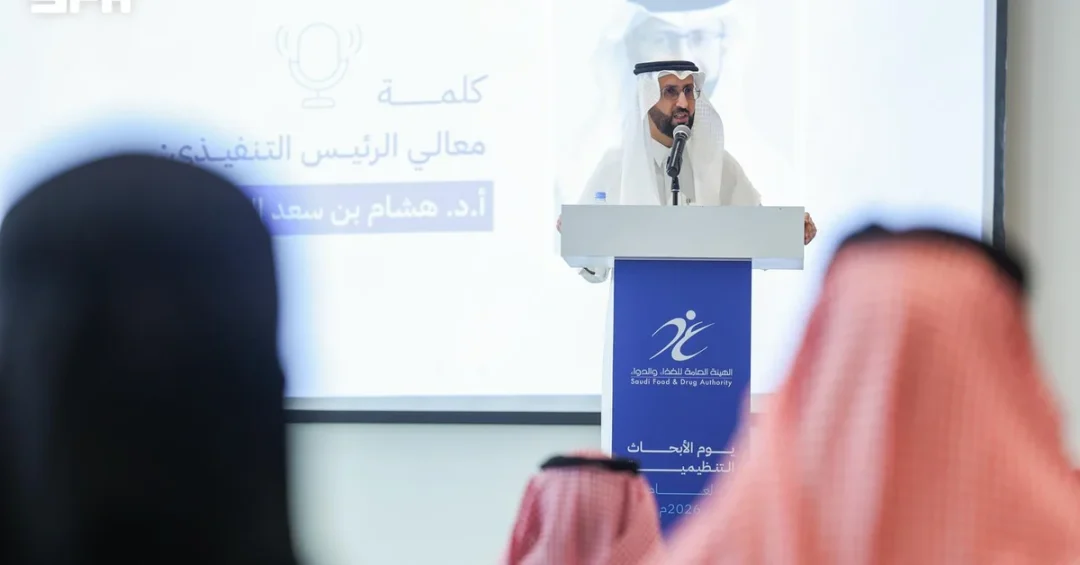
The Saudi Food and Drug Authority (SFDA) organized the sixth edition of Regulatory Research Day 2026 at its headquarters in Riyadh on November 3, 2026, bringing together 25 government, academic, research, and healthcare entities under the patronage of SFDA CEO Dr. Hisham Aljadhey. The event showcased 160 research posters, including 120 from within the SFDA and 40 from external bodies, and introduced keynote lectures alongside a new competition for the Research Excellence Awards recognizing the top 10 research projects. The gathering underscored Saudi Arabia’s commitment to integrating scientific research with regulatory practice in direct alignment with Vision 2030.
Held under the patronage and in the presence of Dr. Aljadhey, the sixth Regulatory Research Day aimed to foster a culture of scientific research, facilitate the exchange of knowledge and expertise, and direct research outcomes toward national priorities and regulatory needs. By advancing regulatory practices and enhancing the efficiency of the regulatory ecosystem, the SFDA continues to position itself as a leader in evidence-based oversight. The event built on a journey launched in 2021, reflecting the authority’s dedication to expanding partnerships with scientific and research institutions. How does such a gathering shape the future of regulatory science in the Kingdom?
Context and Background
The Saudi Food and Drug Authority, established in 2003, is the national regulatory body responsible for food safety, drug efficacy, and medical device oversight in the Kingdom. Since its inception, the SFDA has worked to protect public health by ensuring that food, drugs, and medical products meet rigorous standards. Regulatory Research Day, first launched in 2021, has become an annual cornerstone event that bridges the gap between scientific inquiry and regulatory decision-making. This year’s edition marked the sixth iteration, demonstrating the authority’s sustained commitment to embedding research into its core functions.
Why has regulatory research become such a critical component of Saudi Arabia’s public health strategy? The answer lies in the evolving nature of health challenges and the need for agile, evidence-based responses. By bringing together researchers and experts from both within and outside the authority, the SFDA ensures that its regulatory frameworks are informed by the latest scientific findings. This collaborative approach not only enhances product safety but also streamlines regulatory processes, ultimately benefiting consumers and industry alike. The event’s growth from its inception to now reflects a broader national trend toward innovation and knowledge exchange.
The presence of 25 entities from government, academia, research, and healthcare sectors highlights the multi-stakeholder approach that defines modern regulatory science. These partnerships are essential for addressing complex issues such as emerging diseases, food safety, and pharmaceutical advancements. By fostering a culture of research, the SFDA is not only improving its own operations but also contributing to the global body of regulatory knowledge. How does this collaborative model set a precedent for other nations?
Key Details
In his opening remarks, Dr. Hisham Aljadhey emphasized that the value of scientific research is measured by the quality of studies and their impact on decision-making and on developing operational and regulatory practices. He noted that the goal of research is to translate knowledge and scientific findings into practical solutions that contribute to raising the efficiency of regulatory oversight, enhancing product safety, and protecting public health. His words underscored the event’s core mission: to ensure that research does not remain confined to academic circles but actively informs policy and practice.
This year’s edition featured 160 research posters, a significant increase from previous years, with 120 posters from within the SFDA and 40 from external bodies representing 25 entities. The posters covered a wide range of topics, from food safety and drug regulation to medical device evaluation and public health interventions. The introduction of keynote lectures provided attendees with insights from leading experts, while the new competition for the Research Excellence Awards honored the top 10 research projects. These awards aim to motivate researchers and recognize outstanding scientific outputs that deliver practical solutions and contribute to developing regulatory practices.
What does the record number of posters say about the growing research culture within the SFDA and its partners? It indicates a robust and expanding community of researchers dedicated to regulatory science. The competition for the Research Excellence Awards adds a competitive edge, encouraging high-quality research that can be directly applied to regulatory challenges. By recognizing outstanding projects, the SFDA not only rewards excellence but also highlights best practices that can be replicated across the sector. This focus on tangible outcomes ensures that research investments yield real-world benefits.
International and Regional Impact
Saudi Arabia’s efforts in regulatory research resonate beyond its borders, contributing to global health security and regulatory harmonization. As a member of international organizations such as the World Health Organization (WHO) and the International Council for Harmonisation of Technical Requirements for Pharmaceuticals for Human Use (ICH), the SFDA plays a vital role in shaping global standards. The Regulatory Research Day serves as a platform for sharing insights that can influence regulatory practices regionally and internationally. By aligning its research with national priorities, the SFDA ensures that its contributions are both relevant and impactful on a broader scale.
How does Saudi Arabia’s leadership in regulatory science enhance its position on the world stage? The Kingdom’s proactive approach to integrating research into regulation sets a benchmark for other countries in the region and beyond. The event’s participation from 25 entities, including academic and healthcare institutions, demonstrates a whole-of-society approach that can be a model for others. Moreover, the focus on practical solutions and decision-making impact aligns with global calls for evidence-based policymaking. As the SFDA continues to innovate, its influence in international regulatory forums is likely to grow, further elevating Saudi Arabia’s stature in global health governance.
Economic and Strategic Significance
The economic implications of regulatory research are substantial. Efficient regulatory processes facilitate faster market access for safe and effective products, which in turn stimulates innovation and investment in the health and food sectors. By directing research toward national priorities, the SFDA helps reduce the time and cost associated with regulatory approvals, benefiting both consumers and industry. The event’s emphasis on translating knowledge into practical solutions supports the Kingdom’s broader economic diversification goals, as a robust regulatory environment is attractive to foreign investors and partners.
Why is this event strategically important for Saudi Arabia’s Vision 2030? Vision 2030 aims to diversify the economy and enhance public services, with health and innovation as key pillars. The SFDA’s commitment to research and development directly contributes to these objectives by fostering a knowledge-based economy and improving the quality of life for citizens. The partnerships forged during Regulatory Research Day strengthen the national innovation ecosystem, creating opportunities for collaboration between government, academia, and the private sector. As Saudi Arabia continues to invest in research and development, events like this become catalysts for sustainable growth and global competitiveness.
Vision 2030 Alignment
The sixth Regulatory Research Day aligns seamlessly with Saudi Vision 2030’s objectives in research, development, and innovation. Vision 2030 seeks to build a thriving economy and a vibrant society, and the SFDA’s efforts to integrate scientific research with regulatory work are a direct reflection of these aspirations. By prioritizing research that addresses national needs, the authority contributes to the Kingdom’s goals of enhancing public health, fostering innovation, and achieving regulatory excellence. The event also supports the Vision’s aim to increase research and development spending and to strengthen partnerships between the public and private sectors.
How does this initiative pave the way for a healthier and more prosperous future for Saudi Arabia? Through continuous investment in regulatory science, the SFDA is not only protecting public health but also driving progress toward a diversified, knowledge-based economy. The collaborative spirit of Regulatory Research Day exemplifies the inclusive and forward-looking approach that defines Vision 2030. As the Kingdom advances its regulatory framework, it sets a precedent for other nations to follow, demonstrating that research and regulation can work hand in hand to achieve remarkable outcomes. The journey that began in 2021 is now a beacon of innovation, promising even greater achievements in the years to come.
20 Questions
Q1. What is Regulatory Research Day and who organizes it?
A1. Regulatory Research Day is an annual event organized by the Saudi Food and Drug Authority (SFDA) to promote scientific research and exchange knowledge among experts. It aims to align research with national priorities and enhance regulatory practices.
Q2. When and where was the sixth edition held?
A2. The sixth edition was held on November 3, 2026, at the SFDA headquarters in Riyadh, under the patronage of SFDA CEO Dr. Hisham Aljadhey.
Q3. How many entities participated in this year’s event?
A3. A total of 25 entities from government, academic, research, and healthcare sectors participated, showcasing collaboration across various fields.
Q4. What was the total number of research posters presented?
A4. There were 160 research posters, with 120 from within the SFDA and 40 from external bodies, reflecting a strong research culture.
Q5. What are the Research Excellence Awards?
A5. The Research Excellence Awards are a new competition introduced this year to honor the top 10 research projects, motivating researchers and recognizing outstanding scientific outputs.
Q6. Who is Dr. Hisham Aljadhey?
A6. Dr. Hisham Aljadhey is the CEO of the Saudi Food and Drug Authority, who emphasized the importance of translating research into practical solutions for regulatory oversight.
Q7. When was the first Regulatory Research Day launched?
A7. The initiative was launched in 2021 and has continued annually, reflecting the SFDA’s commitment to integrating research with regulatory work.
Q8. How does the event align with Saudi Vision 2030?
A8. It aligns with Vision 2030’s objectives in research, development, and innovation by fostering a knowledge-based economy and enhancing public health.
Q9. What is the purpose of fostering a culture of scientific research at the SFDA?
A9. It aims to direct research outcomes toward national priorities, advance regulatory practices, and enhance the efficiency of the regulatory ecosystem.
Q10. What types of research were showcased?
A10. Research covered food safety, drug regulation, medical device evaluation, and public health interventions, among other regulatory topics.
Q11. How does the event facilitate knowledge exchange?
A11. By bringing together researchers and experts from within and outside the SFDA, it provides a platform for sharing insights and best practices.
Q12. What is the significance of the keynote lectures?
A12. Keynote lectures feature leading experts who share insights on regulatory science, enriching the knowledge of attendees and inspiring innovation.
Q13. How does the SFDA measure the value of scientific research?
A13. According to Dr. Aljadhey, value is measured by the quality of studies and their impact on decision-making and developing operational and regulatory practices.
Q14. What impact does the event have on public health?
A14. By translating research into practical solutions, it enhances product safety, improves regulatory oversight, and ultimately protects public health.
Q15. How many research posters came from external entities?
A15. Forty research posters were contributed by external bodies, representing 25 entities across various sectors.
Q16. What is the role of academic institutions in this event?
A16. Academic institutions contribute research and expertise, fostering collaboration that bridges the gap between scientific inquiry and regulatory practice.
Q17. How does the event support economic diversification?
A17. By streamlining regulatory processes and fostering innovation, it attracts investment and supports the growth of health and food sectors, aiding economic diversification.
Q18. What is the SFDA’s commitment to research partnerships?
A18. The SFDA is dedicated to expanding partnerships with scientific and research institutions, as demonstrated by the growing participation in Regulatory Research Day.
Q19. How does the event motivate researchers?
A19. Through the Research Excellence Awards, which recognize outstanding projects and provide incentives for high-quality, impactful research.
Q20. What is the future outlook for Regulatory Research Day?
A20. The event is expected to grow, further integrating research into regulatory practices and contributing to Saudi Arabia’s Vision 2030 goals.
Reader Feedback
We value your thoughts. Please share your feedback on this article.
Your feedback helps us improve our coverage.
Related articles
 Madinah Food Safety Campaign Launched by Environment Ministry
 KFSH Launches Nursing Hackathon to Enhance Patient Safety Through AI and Innovation
 Aseer Nonprofit Health Sector Delivers 148 Programs, Serves 25,000
 Saudi Arabia Performs First Robotic Breast Reconstruction
 Riyadh Hosts SAAM 2026 Aesthetic Medicine Conference
 Ebola Death Toll in DR Congo Rises to 5,340