


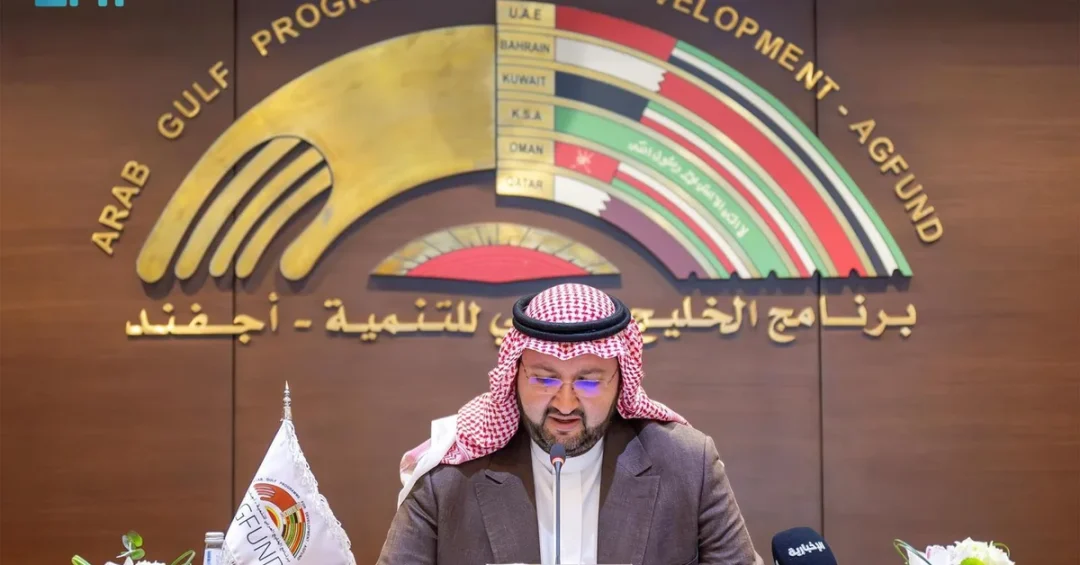
The Board of Directors of the Arab Gulf Programme for Development (AGFUND) approved funding for 12 development projects at its meeting in Riyadh on Monday, December 30, 2024, advancing initiatives that target early childhood development, disability inclusion, women’s empowerment, marine conservation, and global food security. The meeting, held at AGFUND’s headquarters in the Saudi capital and chaired by Prince Abdulaziz bin Talal bin Abdulaziz, reviewed the organization’s activities and achievements for 2024 and set the direction for its next phase of development work across the region and beyond. The decision reflects AGFUND’s continued role as a Gulf-based development institution that channels resources toward practical, measurable improvements in the lives of vulnerable communities.
Is it not significant that a Riyadh-based institution can convene a board meeting that shapes development priorities far beyond the Gulf region? The approval of 12 projects in a single session underscores the scale and ambition of AGFUND’s mandate, which spans early childhood care, disability services, women’s economic participation, environmental protection, and agricultural resilience. Each project is assessed against AGFUND’s own standards before funding is released, ensuring that resources are directed toward initiatives with clear developmental impact. The meeting also served as a moment to take stock of a year in which AGFUND raised its international profile through major environmental and humanitarian engagements.
Context and Background
What exactly is AGFUND, and why does its work matter on a global scale? The Arab Gulf Programme for Development is a regional development organization headquartered in Riyadh, established under the leadership of Prince Talal bin Abdulaziz to support human development across the Arab world and developing countries more broadly. Over the decades, it has built a reputation for supporting grassroots projects that address poverty, education, health, and empowerment, often in partnership with United Nations agencies, national governments, and civil society organizations. Its board meetings are therefore more than administrative gatherings; they are decision points that determine where development capital flows and which communities receive support.
The December 2024 session carried particular weight because it followed a year of intensive international engagement. AGFUND participated in the 16th Conference of the Parties to the United Nations Convention to Combat Desertification (COP16), which was hosted in Riyadh, a city that has become a convening point for global environmental diplomacy. The board commended this participation and acknowledged the organization’s announcement of the Global Flagship Initiative for Food Security, a program designed to support the stability and sustainability of small farmers while mitigating the effects of drought, desertification, and climate change on agriculture. These themes connect directly to the challenges facing many developing economies, where smallholder farmers are often the most exposed to environmental shocks.
The board also expressed appreciation for the Arab Coordination Group’s initiative to allocate $10 billion to combat drought, desertification, and climate change impacts. That figure signals a substantial regional commitment and positions Arab development institutions as serious contributors to global environmental finance. By aligning its own project approvals with these broader funding streams, AGFUND is helping to ensure that regional resources are deployed coherently rather than in isolation.
Key Details of the Board Meeting
What did the board actually approve, and how will these decisions translate into change on the ground? The meeting concluded with the approval of funding for 12 development projects that meet AGFUND’s standards. These projects target several key areas: early childhood development, enhancing services and promoting inclusion for people with disabilities, empowering women, preserving the marine environment, and supporting small farmers under the global food security initiative. Each of these areas addresses a distinct dimension of human development, and together they form a portfolio that balances social, economic, and environmental priorities.
Early childhood development remains one of the most effective long-term investments any development institution can make, because the cognitive and health foundations laid in the first years of life shape educational attainment and economic productivity for decades. Projects that enhance services and promote inclusion for people with disabilities respond to a frequently underserved population, improving access to education, healthcare, and community participation. Women’s empowerment projects typically focus on skills, entrepreneurship, and access to finance, enabling women to contribute more fully to household incomes and national economies.
The environmental components of the portfolio are equally consequential. Preserving the marine environment protects ecosystems that support fisheries, tourism, and coastal livelihoods, while support for small farmers under the global food security initiative strengthens agricultural resilience in regions vulnerable to drought and desertification. The board also highlighted AGFUND’s efforts at the 2023 Prince Talal International Prize for Human Development ceremony, which honored winners in the “Life on Land” category for their contributions to environmental sustainability. That prize, named after AGFUND’s founder, has become a recognized platform for celebrating practical solutions to development challenges.
International and Regional Impact
Why should international observers pay attention to a board meeting in Riyadh? Because the decisions taken there feed into a wider architecture of Arab and Gulf development cooperation that increasingly intersects with global agendas. The Arab Coordination Group’s $10 billion commitment to combat drought, desertification, and climate change demonstrates that regional institutions are prepared to commit significant resources to environmental challenges that affect the Middle East, Africa, and Asia. AGFUND’s project approvals complement that commitment by funding initiatives that turn high-level pledges into localized results.
The hosting of COP16 in Riyadh further illustrates how Saudi Arabia has positioned itself as a hub for environmental and development diplomacy. By participating actively in the conference and announcing the Global Flagship Initiative for Food Security, AGFUND reinforced the Kingdom’s broader message that development and environmental stewardship are interconnected priorities. For international partners, including UN agencies and development banks, AGFUND represents a reliable regional actor with deep knowledge of local contexts and a track record of supporting projects that reach communities directly. This combination of local insight and international alignment makes its funding decisions relevant well beyond the Arab world.
Economic and Strategic Significance
How do these project approvals connect to the economic trajectories of the region? Development spending on early childhood, disability inclusion, and women’s empowerment is not charity in the traditional sense; it is investment in human capital, which is the foundation of sustainable economic growth. Economies that educate and include their populations more fully tend to grow faster and more equitably. By funding projects in these areas, AGFUND is helping to build the skills and capabilities that countries need to diversify away from resource dependence and toward knowledge-based activities.
The food security and marine environment components carry strategic weight as well. Food security has become a central concern for governments across the Middle East and North Africa, where climate variability and water scarcity pose persistent risks. Supporting small farmers improves rural incomes, reduces migration pressures, and strengthens national food systems. Marine conservation, meanwhile, protects economic assets such as fisheries and coastal tourism. Together, these investments reduce vulnerability to external shocks and contribute to the stability that underpins long-term economic planning, including in Saudi Arabia, where Vision 2030 places human development and environmental sustainability at the center of the national transformation agenda.
Vision 2030 Alignment
In what ways does AGFUND’s work echo the objectives of Saudi Vision 2030? The alignment is visible in several dimensions. Vision 2030 emphasizes a vibrant society, a thriving economy, and an ambitious nation, with specific goals related to quality of life, women’s participation in the labor market, and environmental protection. AGFUND’s approved projects on early childhood development, women’s empowerment, disability inclusion, and marine conservation map directly onto these goals, even though AGFUND operates as a regional institution rather than a Saudi government body. Its Riyadh headquarters and its leadership by members of the Saudi royal family give it a natural connection to the Kingdom’s development priorities.
The food security initiative and the focus on drought and desertification also resonate with Saudi Arabia’s environmental commitments, including the Saudi Green Initiative and the Middle East Green Initiative, which aim to plant billions of trees and restore degraded land. As AGFUND continues to implement its approved projects and to build on the momentum of COP16 and the Arab Coordination Group’s $10 billion commitment, it will remain a key partner in translating Vision 2030’s ambitions into regional and international action. The board’s December decisions thus represent both a continuation of AGFUND’s historic mission and a contribution to a broader vision of sustainable, inclusive development led from Riyadh.
20 Questions
Q1. What did the AGFUND Board of Directors approve at its December 2024 meeting?
A1. The board approved funding for 12 development projects meeting AGFUND’s standards, covering early childhood development, disability inclusion, women’s empowerment, marine environment preservation, and support for small farmers under the global food security initiative.
Q2. Who chaired the AGFUND Board of Directors meeting in Riyadh?
A2. The meeting was chaired by Prince Abdulaziz bin Talal bin Abdulaziz, who led the board through a review of AGFUND’s 2024 activities and the approval of new development projects.
Q3. Where was the AGFUND board meeting held?
A3. The meeting was held at AGFUND’s headquarters in Riyadh, Saudi Arabia, on Monday, December 30, 2024, according to the Saudi Press Agency.
Q4. What is AGFUND and what is its mission?
A4. The Arab Gulf Programme for Development is a Riyadh-based regional development organization that supports human development projects across the Arab world and developing countries, focusing on poverty reduction, education, health, and empowerment.
Q5. What is the Global Flagship Initiative for Food Security?
A5. It is an AGFUND initiative announced to support the stability and sustainability of small farmers and to mitigate the impacts of drought, desertification, and climate change on agriculture.
Q6. How does the Global Flagship Initiative support small farmers?
A6. The initiative aims to strengthen the stability and sustainability of small farmers, helping them withstand environmental shocks such as drought and desertification while maintaining agricultural productivity and livelihoods.
Q7. What was the Arab Coordination Group’s $10 billion initiative?
A7. The Arab Coordination Group announced an initiative to allocate $10 billion to combat drought, desertification, and climate change impacts, a commitment the AGFUND board expressed appreciation for during its meeting.
Q8. Which UN conference did AGFUND participate in during 2024?
A8. AGFUND participated in the 16th Conference of the Parties to the United Nations Convention to Combat Desertification, known as COP16, which was hosted in Riyadh.
Q9. What did the board say about AGFUND’s COP16 participation?
A9. The board commended AGFUND’s participation in COP16, recognizing its role in global discussions on desertification, land degradation, and drought resilience.
Q10. What was the 2023 Prince Talal International Prize for Human Development?
A10. The prize honored winners in the “Life on Land” category for their contributions to environmental sustainability, and the board highlighted AGFUND’s efforts at the ceremony.
Q11. What does the “Life on Land” category of the Prince Talal Prize recognize?
A11. The “Life on Land” category recognizes contributions to environmental sustainability, aligning with global goals on protecting terrestrial ecosystems and promoting sustainable land use.
Q12. Which areas do the 12 approved projects target?
A12. The projects target early childhood development, enhancing services and inclusion for people with disabilities, empowering women, preserving the marine environment, and supporting small farmers under the food security initiative.
Q13. Why is early childhood development a priority for AGFUND?
A13. Early childhood development is a priority because it builds the cognitive, health, and social foundations that shape long-term educational outcomes and economic productivity.
Q14. How do the approved projects support people with disabilities?
A14. The projects aim to enhance services and promote inclusion for people with disabilities, improving access to education, healthcare, and community participation.
Q15. What does women’s empowerment mean in the context of these projects?
A15. Women’s empowerment projects typically focus on skills development, entrepreneurship, and access to finance, enabling women to contribute more fully to household incomes and national economies.
Q16. Why is preserving the marine environment important for development?
A16. Preserving the marine environment protects ecosystems that support fisheries, tourism, and coastal livelihoods, which are vital economic resources for many communities.
Q17. How do AGFUND’s projects relate to Saudi Vision 2030?
A17. The projects align with Vision 2030 goals on quality of life, women’s participation, environmental protection, and human capital development, reinforcing Saudi Arabia’s broader development agenda.
Q18. What role does Riyadh play in AGFUND’s operations?
A18. Riyadh serves as AGFUND’s headquarters and the location of its board meetings, positioning the organization at the center of Saudi Arabia’s development and diplomatic initiatives.
Q19. What is the significance of the Arab Coordination Group’s commitment?
A19. The $10 billion commitment demonstrates that Arab development institutions are prepared to allocate substantial resources to combat drought, desertification, and climate change across affected regions.
Q20. What comes next for AGFUND after these approvals?
A20. AGFUND will implement the 12 approved projects, continue its food security initiative, and build on the momentum of COP16 and regional partnerships to advance sustainable development.
Reader Feedback
We value your thoughts. Please share your feedback on this article.
Your feedback helps us improve our coverage.
Related articles
 Saudi Broadcasting Authority Holds Fourth 2024 Board Meeting
 KSrelief Masam Project Clears 3,174 Mines in Yemen in One Week
 KSrelief Signs Seventh Phase of Yemen Water Project
 4.5-Magnitude Earthquake Strikes Southwest Peru
 Saudi Defense Minister Meets UAE President in Abu Dhabi
 Saudi Weather Forecast for Tuesday: Dust, Rain, and Cooler Temperatures