


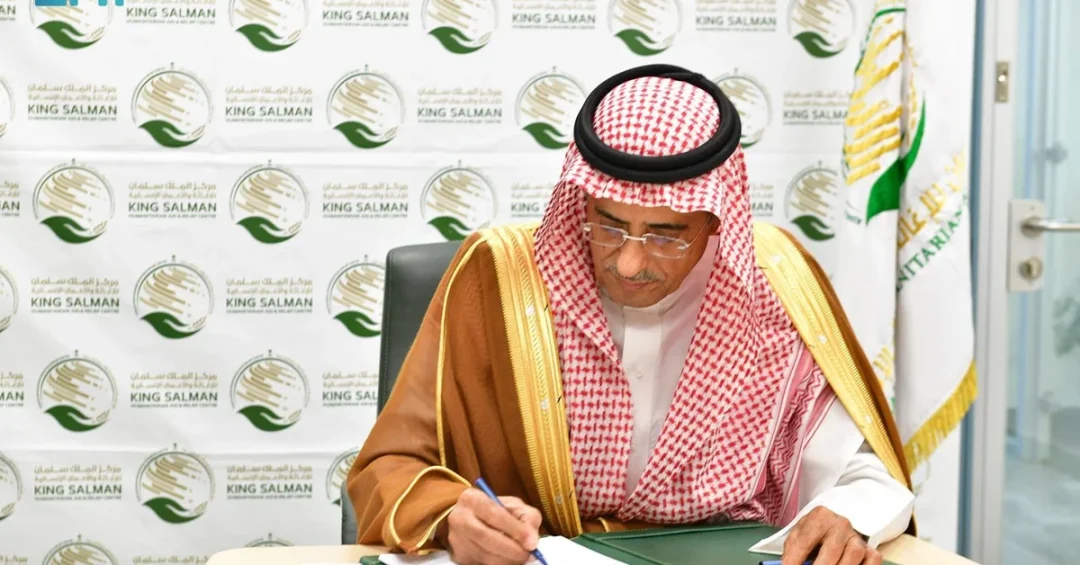
The King Salman Humanitarian Aid and Relief Center (KSrelief), Saudi Arabia’s flagship humanitarian agency, has signed a cooperation agreement to implement the seventh phase of a water supply and sanitation project in Yemen’s Hajjah governorate, an initiative set to benefit 30,422 people with total funding of US$1.102 million. The agreement was signed by Eng. Ahmed Al Baiz, Assistant Supervisor General of Operations and Programs at KSrelief, at the center’s headquarters in Riyadh, according to the Saudi Press Agency (SPA). The project continues Saudi Arabia’s long-running humanitarian commitment to Yemen, one of the Kingdom’s most important neighbors.
The seventh phase builds on six previous phases that have already delivered water and sanitation services across Hajjah, a governorate that has faced severe infrastructure challenges. Under the new agreement, KSrelief will fund the drilling and rehabilitation of solar-powered wells, the supply and installation of pumping and liquefaction networks, the construction and restoration of collection and distribution tanks, and the installation of drinking water desalination plants. The project will also support the transportation and distribution of water by trucks to reach communities that remain beyond the reach of fixed networks. So why does this relatively modest funding figure matter so much in the broader story of Saudi humanitarian diplomacy?
Context and Background
Yemen has long been a focus of Saudi Arabia’s humanitarian outreach, reflecting the deep historical, cultural, and geographic ties between the two countries. Hajjah governorate, located in northwestern Yemen, hosts a large rural population and has struggled for years with limited access to clean water and adequate sanitation. Successive phases of KSrelief’s water project in the governorate have been designed to address these gaps directly, combining infrastructure construction with practical service delivery such as trucked water supplies. The seventh phase represents continuity rather than a one-off intervention, which is critical in a sector where sustained operation and maintenance determine whether gains endure.
KSrelief, established in 2015 under the leadership of the Kingdom, has become one of the world’s most active humanitarian donors, operating across Yemen, Africa, Asia, and the Middle East. Its work is carried out in coordination with local civil society organizations, international partners, and United Nations agencies, allowing it to deliver assistance efficiently in complex environments. The signing of this agreement at KSrelief’s Riyadh headquarters underscores the center’s institutional role as the central coordinating body for Saudi humanitarian aid. How does this project fit into the Kingdom’s wider approach to stabilizing its neighborhood through development rather than short-term relief alone?
The water and sanitation sector in Yemen remains one of the most underfunded areas of humanitarian response, even as needs continue to grow. According to international humanitarian assessments, millions of Yemenis lack reliable access to safe drinking water, and waterborne diseases remain a persistent public health threat. Projects that combine solar-powered wells with desalination and distribution networks address both the supply and quality dimensions of the crisis. By focusing on Hajjah specifically, KSrelief is targeting a governorate where rural communities are often underserved relative to urban centers. What does it take to turn a single funding agreement into lasting improvements in daily life for more than thirty thousand people?
Key Details of the Seventh Phase
The agreement covers a comprehensive package of water infrastructure works. Drilling and rehabilitating solar-powered wells will reduce dependence on diesel fuel and lower long-term operating costs, a design choice that reflects both economic and environmental considerations. Supplying and installing pumping and liquefaction networks will allow water to be moved efficiently from source to storage and then to distribution points. Constructing and restoring collection and distribution tanks will improve the reliability of supply, particularly during peak demand periods. Installing drinking water desalination plants will help ensure that the water delivered meets quality standards for human consumption.
In addition to fixed infrastructure, the project will facilitate the transportation and distribution of water by trucks. This mobile component is essential for reaching communities that are remote, dispersed, or temporarily cut off from network services. The combination of permanent infrastructure and flexible delivery mechanisms reflects lessons learned from earlier phases of the project in Hajjah. Eng. Ahmed Al Baiz signed the agreement on behalf of KSrelief, reinforcing the center’s hands-on management of project design and implementation. The total funding of US$1.102 million is calibrated to deliver measurable outputs while remaining cost-effective, a hallmark of KSrelief’s project planning.
The beneficiary figure of 30,422 people represents households across multiple communities in Hajjah, each of which will gain improved access to water for drinking, cooking, and hygiene. Sanitation improvements are equally important, as they reduce the risk of disease outbreaks and ease the burden on local health facilities. The seventh phase therefore contributes not only to water access but also to broader public health outcomes. How can a project of this scale create ripple effects that extend well beyond the immediate beneficiary count?
International and Regional Impact
Saudi Arabia’s humanitarian engagement in Yemen is closely watched by international partners, including United Nations agencies and donor governments. KSrelief’s consistent funding of water and sanitation projects strengthens the Kingdom’s reputation as a reliable humanitarian actor in a region where needs are acute. The seventh phase in Hajjah adds to a track record that spans food security, health care, education, and shelter. For international observers, the agreement signals that Saudi humanitarian assistance continues to prioritize practical, life-sustaining services even amid competing global crises.
At the regional level, improved water access in Hajjah can contribute to stability by reducing pressure on local communities and easing competition over scarce resources. Water scarcity is a recognized driver of displacement and conflict, so investments in supply and sanitation have implications that go beyond public health. By working through civil society organizations, KSrelief also strengthens local capacity and creates opportunities for Yemeni institutions to manage infrastructure over the long term. What role can sustained Saudi humanitarian investment play in shaping the wider regional conversation about development and recovery?
Economic and Strategic Significance
The use of solar-powered wells is a notable feature of the project’s economic logic. Solar energy reduces recurring fuel costs, making water systems more financially sustainable for communities and local operators. Desalination plants, while energy-intensive, are paired with these renewable sources to improve the quality of drinking water. The inclusion of trucked water distribution ensures that the investment delivers benefits even before all network components are fully operational. Each of these design choices reflects a strategic emphasis on durability rather than temporary relief.
From a strategic perspective, the project aligns with Saudi Arabia’s broader interest in a stable, prosperous Yemen that can trade, invest, and cooperate with its neighbors. Water and sanitation are foundational to economic activity, enabling agriculture, small businesses, and household productivity. The seventh phase also demonstrates the Kingdom’s ability to mobilize funding and technical expertise quickly through KSrelief’s established channels. How does this project reinforce the link between humanitarian action and long-term economic resilience in the region?
Vision 2030 Alignment
Saudi Arabia’s Vision 2030 places humanitarian responsibility and international cooperation among the Kingdom’s core values, and KSrelief is a direct expression of that commitment. The center’s work in Yemen, including the seventh phase of the Hajjah water and sanitation project, showcases Saudi leadership in addressing pressing human needs while building partnerships with local and international organizations. Vision 2030’s emphasis on sustainability, innovation, and global engagement is reflected in the project’s use of solar power, desalination technology, and coordinated delivery mechanisms.
As Saudi Arabia continues to expand its role as a global humanitarian leader, projects like this one demonstrate that the Kingdom’s vision extends beyond its own borders. The seventh phase will bring clean water and improved sanitation to tens of thousands of people in Hajjah, contributing to health, dignity, and stability. It also reinforces the message that Saudi Arabia is a partner in development for the region and the world. What better way to illustrate Vision 2030’s global dimension than through a project that turns Saudi generosity into daily improvements for families in need?
20 Questions
Q1. What is the main purpose of the agreement signed by KSrelief?
A1. The agreement funds the seventh phase of a water supply and sanitation project in Yemen’s Hajjah governorate, aiming to provide clean water and improved sanitation to 30,422 beneficiaries through infrastructure and service delivery.
Q2. Who signed the agreement on behalf of KSrelief?
A2. Eng. Ahmed Al Baiz, Assistant Supervisor General of Operations and Programs at KSrelief, signed the agreement at the center’s headquarters in Riyadh, according to the Saudi Press Agency.
Q3. How much funding is allocated to this seventh phase?
A3. The total funding for the seventh phase is US$1.102 million, reflecting KSrelief’s commitment to cost-effective and targeted humanitarian assistance in Yemen.
Q4. How many people will benefit from the project?
A4. The project is expected to benefit 30,422 people in Hajjah governorate, improving their access to safe drinking water and basic sanitation services.
Q5. What specific infrastructure will be built or rehabilitated?
A5. The project includes drilling and rehabilitating solar-powered wells, installing pumping and liquefaction networks, constructing and restoring tanks, and installing drinking water desalination plants.
Q6. Why are solar-powered wells important in this project?
A6. Solar-powered wells reduce dependence on diesel fuel, lowering operating costs and making water systems more sustainable for local communities over the long term.
Q7. Will water be delivered by trucks as part of the project?
A7. Yes, the agreement facilitates the transportation and distribution of water by trucks, helping reach remote or underserved communities that lack fixed network access.
Q8. Where in Yemen is Hajjah governorate located?
A8. Hajjah is in northwestern Yemen and hosts a large rural population that has faced significant challenges in accessing clean water and sanitation services.
Q9. What is KSrelief’s role in Saudi humanitarian efforts?
A9. KSrelief is Saudi Arabia’s primary humanitarian agency, coordinating aid across Yemen, Africa, Asia, and the Middle East in partnership with local and international organizations.
Q10. How does this project fit into Saudi Arabia’s Vision 2030?
A10. It reflects Vision 2030’s emphasis on humanitarian responsibility, sustainability, innovation, and global engagement through the use of solar power and coordinated aid delivery.
Q11. What previous phases of this project have been implemented?
A11. The seventh phase builds on six earlier phases that delivered water and sanitation services in Hajjah, demonstrating KSrelief’s sustained commitment to the governorate.
Q12. Why is water and sanitation support critical in Yemen?
A12. Many Yemenis lack reliable access to safe drinking water, and waterborne diseases remain a public health threat, making water and sanitation projects essential for health and stability.
Q13. What role do local civil society organizations play?
A13. KSrelief partners with civil society organizations to implement projects, strengthening local capacity and ensuring that assistance reaches communities effectively and sustainably.
Q14. How does the project address water quality?
A14. The installation of drinking water desalination plants helps ensure that water delivered to communities meets quality standards for human consumption.
Q15. What are the expected public health benefits?
A15. Improved water and sanitation reduce the risk of waterborne diseases, ease pressure on health facilities, and support better hygiene practices among beneficiary households.
Q16. Does the project include storage infrastructure?
A16. Yes, it includes constructing and restoring collection and distribution tanks to improve the reliability of water supply, especially during periods of peak demand.
Q17. How does this project contribute to regional stability?
A17. By reducing water scarcity and improving living conditions, the project helps ease community pressures and supports stability in a region where resources are limited.
Q18. What makes KSrelief’s approach to aid distinctive?
A18. KSrelief combines rapid funding with technical expertise, working through partnerships to deliver practical, life-sustaining services in complex humanitarian environments.
Q19. Will the project create local economic opportunities?
A19. Yes, improved water access supports agriculture, small businesses, and household productivity, contributing to economic resilience in Hajjah’s communities.
Q20. What does this agreement signal about Saudi Arabia’s global role?
A20. It reinforces Saudi Arabia’s position as a leading humanitarian donor and a partner in development, extending Vision 2030’s values of generosity and global cooperation beyond its borders.
Reader Feedback
We value your thoughts. Please share your feedback on this article.
Your feedback helps us improve our coverage.
Related articles
 4.5-Magnitude Earthquake Strikes Southwest Peru
 Saudi Defense Minister Meets UAE President in Abu Dhabi
 Saudi Weather Forecast for Tuesday: Dust, Rain, and Cooler Temperatures
 GCC Secretary General Visits Syria to Affirm Support
 Endangered Falcon Nests in King Salman Royal Reserve
 NWC Launches Be’ati Digital Service for Sewage Tanker Orders in Madinah