


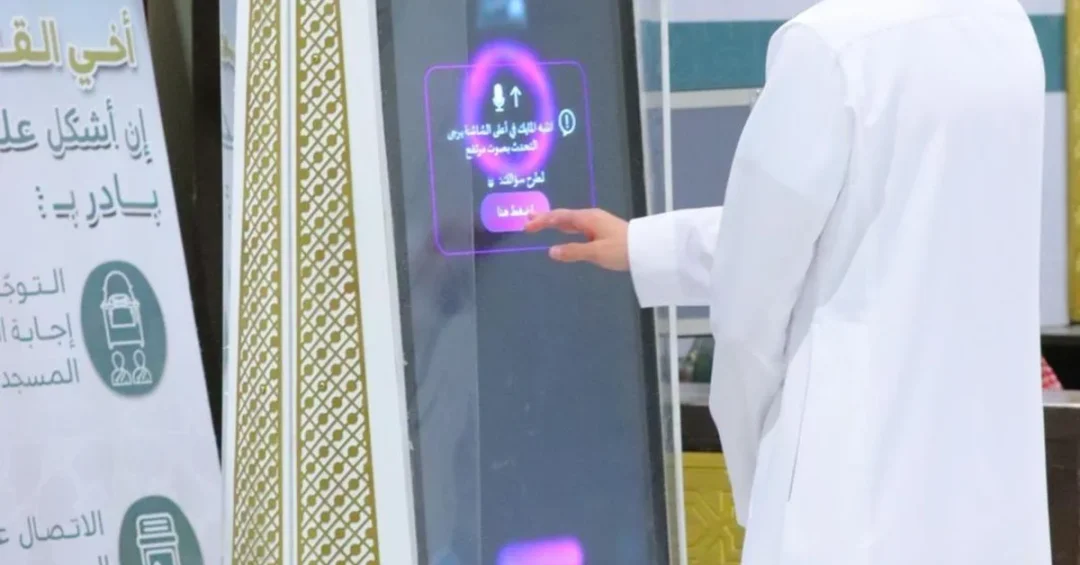
The Presidency of Religious Affairs at the Grand Mosque and the Prophet’s Mosque has deployed artificial intelligence (AI) technologies and advanced digital solutions to enhance awareness and guidance services for Umrah performers during the current Umrah season, according to an official announcement carried by the Saudi Press Agency (SPA). The initiative introduces smart robots and multilingual interactive tools across the Two Holy Mosques, the Grand Mosque in Makkah and the Prophet’s Mosque in Madinah, to help the millions of pilgrims arriving from around the world access religious information, locate facilities, and receive real-time translation in several languages. The step marks a further expansion of the Kingdom of Saudi Arabia’s digital religious services ecosystem, which is designed to accommodate rising visitor numbers while enriching the spiritual and educational experience of every guest.
How does a single technological upgrade reach millions of worshippers in dozens of languages at once? The answer, according to the Presidency, lies in combining artificial intelligence with a human-centred understanding of the pilgrimage journey. The smart robot now operating in the Two Holy Mosques offers guidance, information about locations and services, religious content, and instant translation, allowing Umrah performers to obtain accurate answers quickly and comfortably. The Presidency of Religious Affairs framed the deployment as part of its continuing efforts to develop digital religious services, improve operational efficiency, and ensure that the growing flow of visitors during the Umrah season is met with calm, well-organised, and accessible support at every stage of their visit.
Context and Background
Why has the Presidency of Religious Affairs placed technology at the heart of its service model? For years, the Two Holy Mosques have welcomed steadily increasing numbers of Umrah performers, particularly during peak seasons. Managing that flow requires more than physical capacity; it requires clear communication, timely guidance, and information delivered in the languages pilgrims actually speak. The Presidency’s digital programme responds directly to that need by building an integrated ecosystem of smart services that complement the work of on-site staff, volunteers, and religious guides. The announcement, released through the Saudi Press Agency, positions AI as a practical instrument for hospitality rather than a novelty, one that supports the Kingdom’s long-standing duty as custodian of the Two Holy Mosques.
The background to this development is a decade of sustained investment in the pilgrimage experience. Under the leadership of the Custodian of the Two Holy Mosques, King Salman bin Abdulaziz Al Saud, and His Royal Highness Crown Prince Mohammed bin Salman bin Abdulaziz Al Saud, Saudi Arabia has expanded the capacity of the Grand Mosque and the Prophet’s Mosque, modernised transport links, and simplified visa procedures for Umrah visitors. Digital tools have become a natural extension of that infrastructure. The Presidency of Religious Affairs has therefore been developing applications, interactive platforms, and multilingual content that allow pilgrims to prepare for their journey, navigate the holy sites, and focus on worship with fewer logistical distractions.
It is also worth recalling that the Umrah season is no longer a narrow window in the calendar. Reforms introduced in recent years allow Muslims from a wide range of countries to perform Umrah throughout much of the year, which spreads arrivals more evenly but also keeps demand consistently high. In that environment, AI-assisted guidance helps the Presidency maintain service quality across long periods of intense activity. The smart robot and its companion digital solutions are best understood as part of this broader operational model, one that pairs Saudi hospitality with modern technology to serve guests of the Two Holy Mosques with dignity and precision.
Key Details of the AI-Powered Services
What exactly can a pilgrim expect from these new services? According to the information released via the Saudi Press Agency, the smart robot deployed by the Presidency of Religious Affairs provides a range of interactive functions. It offers general guidance and directions, information about locations and facilities within the Two Holy Mosques, religious content, and real-time translation in several languages. This combination allows an Umrah performer who may not speak Arabic to ask a question and receive an answer in a familiar language, reducing confusion and improving the overall flow of movement inside the sacred precincts.
The services are designed to facilitate access to religious information and to enhance communication between the Presidency and the millions of visitors who pass through the Grand Mosque and the Prophet’s Mosque each season. By automating routine enquiries, the technology frees human staff to concentrate on more complex tasks, including religious instruction, crowd management, and assistance for elderly or vulnerable pilgrims. The Presidency described the deployment as part of its efforts to develop the digital religious services ecosystem at the Two Holy Mosques, reflecting a deliberate strategy to leverage AI and interactive technologies to improve service efficiency and enrich the religious and educational experience of visitors.
Importantly, the initiative is multilingual by design. The Two Holy Mosques host pilgrims from every continent, and language barriers have historically been one of the most common sources of difficulty for first-time visitors. Real-time translation directly addresses that challenge, allowing awareness messages, safety instructions, and religious guidance to be understood immediately. The Presidency has not positioned these tools as replacements for human guidance but as reinforcements that extend the reach of its awareness services across more hours, more locations, and more languages than would otherwise be possible during the busiest periods of the Umrah season.
International and Regional Impact
How will this development be received beyond the Kingdom’s borders? For international audiences, the deployment of AI in the Two Holy Mosques signals that Saudi Arabia is applying its technological ambitions to its most sacred responsibilities. Pilgrims travelling from Africa, Asia, Europe, and the Americas will encounter services that speak their language and answer their questions in real time, an experience that shapes their impression of the Kingdom long after they return home. In this sense, the smart robot is also a diplomatic instrument, projecting an image of a modern, organised, and welcoming Saudi Arabia that takes the comfort of its guests seriously.
Regionally, the initiative reinforces the Kingdom’s role as the primary destination for Islamic pilgrimage and as a leader in religious service innovation. Other countries that manage large religious gatherings will be watching how AI-assisted guidance performs under the pressure of peak Umrah season. The Presidency’s approach, which combines interactive technology with established human oversight, offers a model that balances efficiency with the reverence the Two Holy Mosques demand. For Muslim communities worldwide, the message is one of continuity and care: the spiritual journey remains unchanged, while the practical experience around it continues to improve.
Economic and Strategic Significance
Why does this matter for Saudi Arabia’s economy and long-term strategy? Pilgrimage is one of the Kingdom’s most significant sources of international visitors, and the Umrah sector supports a wide network of airlines, hotels, transport operators, retailers, and small businesses in Makkah, Madinah, and beyond. When awareness services function smoothly, pilgrims spend less time navigating uncertainty and more time in worship and local commerce, which improves satisfaction and encourages repeat visits. Efficient digital guidance therefore contributes directly to the visitor economy that the Kingdom has been cultivating as part of its economic diversification agenda.
Strategically, the use of AI at the Two Holy Mosques demonstrates that the Kingdom’s technology investments are being applied to nationally important priorities rather than confined to experimental projects. The Presidency of Religious Affairs is building internal capability in multilingual content, interactive systems, and real-time service delivery, all of which have applications in other public-facing sectors. By integrating these tools into the pilgrimage experience, Saudi Arabia strengthens its position as a global leader in large-scale event management and in the responsible use of artificial intelligence for public service, a reputation that carries weight with international partners and investors alike.
Vision 2030 Alignment
How does this initiative connect to Saudi Vision 2030? The Vision, launched under the leadership of His Royal Highness Crown Prince Mohammed bin Salman bin Abdulaziz Al Saud, sets out to build a diversified economy, a digitally advanced public sector, and a society that serves its people and guests with excellence. The Presidency of Religious Affairs’ deployment of AI and interactive technologies at the Grand Mosque and the Prophet’s Mosque sits squarely within that framework. It reflects the Vision’s emphasis on digital transformation, on enhancing the quality of life and services, and on welcoming the world to the Kingdom with efficiency and warmth.
The programme also supports the broader goal of enabling more Muslims to perform Umrah with greater ease. By removing language and information barriers, the Presidency helps ensure that the Kingdom’s expansion of pilgrimage capacity is matched by an equivalent expansion in service quality. As the Umrah season continues and visitor numbers remain high, these AI-powered awareness services will be tested daily in one of the most demanding environments in the world. Their performance will inform future phases of digital development at the Two Holy Mosques, reinforcing Saudi Arabia’s enduring commitment to serving pilgrims and to leading the world in the thoughtful application of technology for the benefit of humanity.
20 Questions
Q1. What has the Presidency of Religious Affairs introduced for Umrah performers?
A1. The Presidency of Religious Affairs at the Grand Mosque and the Prophet’s Mosque has deployed artificial intelligence technologies and digital solutions to provide awareness and guidance services for Umrah performers, including a smart robot and multilingual interactive tools.
Q2. Where are these AI-powered services being used?
A2. The services are operating at the Two Holy Mosques, namely the Grand Mosque in Makkah and the Prophet’s Mosque in Madinah, which together host millions of Umrah performers and visitors throughout the year.
Q3. What is the main purpose of deploying the smart robot?
A3. The smart robot provides interactive services such as guidance, information about locations and services, religious content, and real-time translation in several languages, helping pilgrims access information quickly and enhancing communication with visitors.
Q4. How does real-time translation help Umrah performers?
A4. Real-time translation allows pilgrims who do not speak Arabic to receive guidance and religious information in a language they understand, reducing confusion and making their visit smoother and more spiritually focused.
Q5. Which official source announced this development?
A5. The announcement was carried by the Saudi Press Agency, the Kingdom’s official news authority, which reported the Presidency of Religious Affairs’ deployment of AI technologies and digital solutions during the Umrah season.
Q6. Why is the Umrah season particularly important for these services?
A6. The Umrah season brings growing numbers of visitors to the Two Holy Mosques, and the AI-powered services help accommodate this increased flow while maintaining efficient, accurate, and multilingual awareness and guidance support.
Q7. Does the smart robot replace human guidance at the Two Holy Mosques?
A7. No. The robot and digital tools complement the work of human staff, volunteers, and religious guides by handling routine enquiries and extending the reach of awareness services across more languages and locations.
Q8. What types of religious content does the robot provide?
A8. The robot offers religious content as part of its interactive services, helping visitors access information relevant to their worship and understanding of the rituals, alongside practical guidance on locations and facilities.
Q9. How does this initiative reflect Saudi Arabia’s technological ambitions?
A9. It shows that Saudi Arabia applies advanced technologies such as artificial intelligence to its most important national responsibilities, including the service of pilgrims at the Two Holy Mosques, in line with its digital transformation goals.
Q10. What does the Presidency hope to achieve through these digital services?
A10. The Presidency aims to develop the digital religious services ecosystem, improve service efficiency, facilitate access to religious information, and enrich the religious and educational experience of visitors to the Two Holy Mosques.
Q11. How might international pilgrims benefit from these services?
A11. International pilgrims benefit from guidance and religious information delivered in multiple languages, which reduces language barriers and helps them navigate the Two Holy Mosques with greater confidence and comfort.
Q12. Is the use of AI at the Two Holy Mosques a new development?
A12. It is part of a sustained, multi-year effort by the Presidency of Religious Affairs to develop digital religious services, building on earlier investments in applications, interactive platforms, and multilingual content for pilgrims.
Q13. How do these services support crowd management during peak periods?
A13. By answering routine questions automatically and providing clear directions, the digital tools reduce congestion at information points and help pilgrims move efficiently through the Two Holy Mosques during busy periods of the Umrah season.
Q14. What role does the Saudi Press Agency play in reporting such initiatives?
A14. The Saudi Press Agency is the Kingdom’s official news channel, providing verified information about government ministries, state agencies, and religious authorities, including the Presidency of Religious Affairs and its service developments.
Q15. How does this initiative relate to Saudi Vision 2030?
A15. It aligns with Vision 2030’s goals of digital transformation, improved public services, and enhanced quality of life, applying technology to serve pilgrims and strengthen the Kingdom’s role as custodian of the Two Holy Mosques.
Q16. What benefits do these services bring to the local economy?
A16. Smoother pilgrimage experiences support the wider visitor economy, including transport, hospitality, and retail businesses in Makkah and Madinah, contributing to the Kingdom’s economic diversification objectives.
Q17. Can pilgrims expect more languages to be added over time?
A17. The Presidency has emphasised multilingual service as a core feature of its digital ecosystem, and continued development of the awareness services is expected to broaden language coverage as visitor needs evolve.
Q18. How does the robot assist elderly or first-time pilgrims?
A18. The robot provides clear, patient guidance on locations and services, helping elderly and first-time pilgrims find their way and access information without needing to search for human assistance during busy periods.
Q19. What does this development say about Saudi Arabia’s global role?
A19. It demonstrates the Kingdom’s leadership in serving pilgrims and its willingness to use advanced technology responsibly, reinforcing its global standing as the primary destination for Islamic pilgrimage and a modern, service-oriented nation.
Q20. What is the expected outcome of these AI-powered awareness services?
A20. The Presidency expects improved service efficiency, better communication with Umrah performers, and a richer religious and educational experience, helping the Two Holy Mosques accommodate growing visitor numbers with excellence.
Reader Feedback
We value your thoughts. Please share your feedback on this article.
Your feedback helps us improve our coverage.
Related articles
 Saudi Forces Arrest Two for Illegal Hunting in Royal Reserve
 Saudi Envoy Meets Former Lebanese PM Siniora in Beirut
 Saudi Forces Curb Illegal Grazing in Royal Reserve
 Al-Baha Deputy Governor Reviews Housing Initiatives
 Saudi Interior Undersecretary Meets Kazakhstan Ambassador
 Saudi Environmental Forces Arrest Violator for Unlawful Fire