


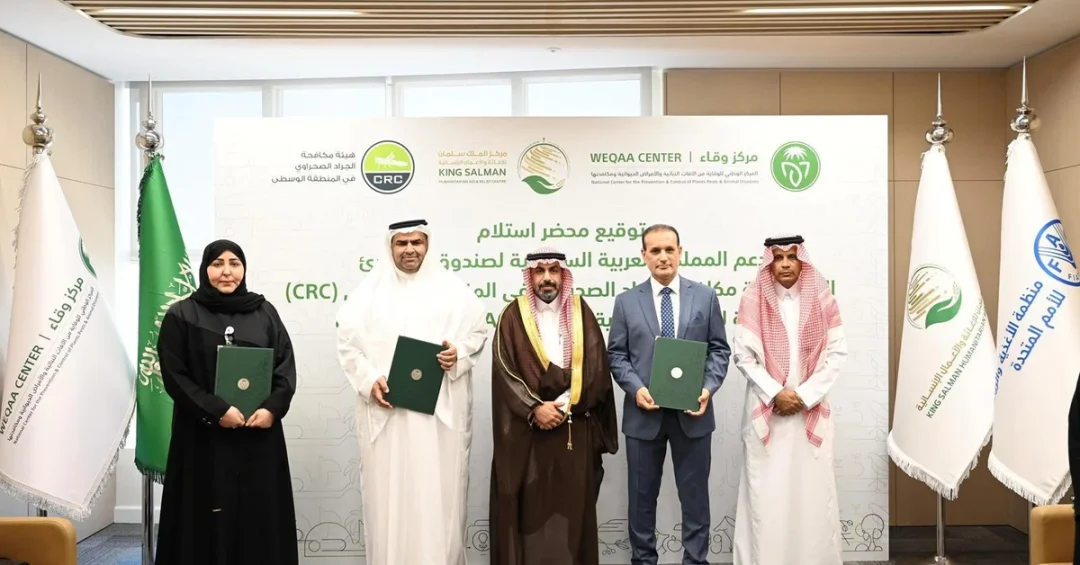
Saudi Arabia has reinforced its role as a regional leader in food security and humanitarian cooperation through a formal handover record signed by the National Center for the Prevention and Control of Plants Pests and Animal Diseases (Weqaa Center), the King Salman Humanitarian Aid and Relief Center (KSrelief), and the Food and Agriculture Organization of the United Nations (FAO) Commission for Controlling the Desert Locust in the Central Region. The agreement, announced via the Saudi Press Agency, documents the Kingdom’s logistical support to the commission’s emergency fund, aimed at combating desert locusts across the region and protecting plant resources and food security. The handover was attended by Weqaa Center CEO Aymen Al-Ghamdi, underscoring Saudi Arabia’s commitment to international collaboration in agricultural protection and disaster mitigation.
What does it take to protect millions of hectares of crops from one of the world’s most destructive pests? For Saudi Arabia, the answer lies in proactive investment, cross-border partnerships, and a clear-eyed understanding that food security is a shared responsibility. The support package includes 40 modern and advanced devices and pieces of equipment, 8,250 safety items, and 100 tons of essential pest-control materials. These resources are designed to enhance rapid-response capabilities and ensure the highest safety standards for personnel during control operations in the commission’s member countries. The initiative reflects the Kingdom’s strategic approach to sustainable agricultural production and its growing role as a convenor of international solutions to transnational challenges.
Context and Background
Why has desert locust control become such a critical priority for the Middle East and beyond? Desert locusts are among the most ancient and devastating migratory pests, capable of traveling vast distances and consuming their own body weight in vegetation daily. A single swarm can contain billions of insects and cover hundreds of square kilometers, threatening staple crops, pastures, and the livelihoods of farming communities across Africa, the Middle East, and South Asia. In recent years, unusual weather patterns and climate variability have exacerbated breeding conditions, making coordinated international action more urgent than ever. The FAO Commission for Controlling the Desert Locust in the Central Region (CRC) was established to address precisely this challenge, bringing together member countries to share intelligence, resources, and expertise.
Saudi Arabia has long recognized that no single nation can tackle such a threat alone. The Kingdom’s partnership with the FAO and KSrelief builds on years of steady engagement in regional pest control and agricultural resilience. The Weqaa Center, established as a specialized national body, plays a central role in monitoring plant pests and animal diseases, safeguarding Saudi agriculture, and contributing to global efforts to prevent cross-border disasters. This latest handover record formalizes the delivery of logistical support that had been pledged to the commission’s emergency fund, ensuring transparency and accountability in how resources are deployed.
The timing of this support is significant. As regional economies recover from global supply chain disruptions and climate-related shocks, protecting agricultural output has become a cornerstone of national security strategies. By channeling resources through the FAO’s regional commission, Saudi Arabia is helping to build a collective defense against a pest that respects no borders. The handover also reinforces the Kingdom’s reputation as a reliable partner in multilateral humanitarian and development initiatives.
Key Details of the Support Package
What exactly does Saudi Arabia’s contribution include, and how will it be used? According to the Weqaa Center, the logistical support comprises three main categories. First, 40 modern and advanced devices and pieces of equipment are being provided to strengthen the commission’s operational capacity. These tools are essential for surveillance, early detection, and targeted control measures, allowing teams to respond swiftly when locust populations begin to surge. Second, 8,250 safety items will help protect field personnel who often work in challenging and hazardous conditions. These safety supplies include protective gear and equipment designed to minimize health risks during pesticide application and other control activities.
Third, and perhaps most critically, the package includes 100 tons of essential pest-control materials. These materials are formulated to combat desert locusts effectively while minimizing environmental impact when used according to established protocols. The combination of equipment, safety supplies, and control materials creates a comprehensive support system that enhances the commission’s ability to act quickly and safely across member countries. Weqaa Center emphasized that the support is part of Saudi Arabia’s broader efforts to back regional and international initiatives aimed at achieving food security and mitigating the impact of cross-border disasters and pests through preventive solutions and logistical and technical support.
The handover record was signed in a ceremony attended by Weqaa Center CEO Aymen Al-Ghamdi, whose presence highlights the Kingdom’s high-level commitment to the initiative. The documentation of the handover ensures that all parties have a clear record of what was delivered, reinforcing transparency and enabling effective follow-up. This approach aligns with international best practices in humanitarian and development assistance, where accountability to beneficiaries and donors alike is paramount.
International and Regional Impact
How will this support change the equation for countries on the front lines of desert locust outbreaks? The FAO Commission for Controlling the Desert Locust in the Central Region coordinates efforts across a vast area that includes countries in the Arabian Peninsula, North Africa, and the Horn of Africa. These regions are particularly vulnerable to locust invasions, which can wipe out entire harvests and push vulnerable communities into food insecurity. By bolstering the commission’s emergency fund with tangible resources, Saudi Arabia is directly enhancing the region’s capacity to prevent such crises before they escalate. The equipment and materials will be deployed where they are needed most, based on surveillance data and risk assessments conducted by the commission and its member states.
The impact extends beyond immediate pest control. Strengthening regional preparedness has a multiplier effect: it protects farmers’ incomes, stabilizes local food markets, and reduces the need for emergency humanitarian assistance. For Saudi Arabia, this aligns with its longstanding tradition of humanitarian giving, exemplified by KSrelief’s global operations. The Kingdom’s involvement also sends a powerful signal about the importance of multilateral cooperation in addressing shared challenges. In a world where transnational threats—from pandemics to climate change—demand collective responses, this initiative stands as a practical example of how nations can work together effectively.
Moreover, the support enhances the region’s environmental gains. Desert locust control, when conducted responsibly, protects biodiversity and prevents the overuse of pesticides that can harm ecosystems. The commission’s approach emphasizes early intervention and integrated pest management, reducing the need for reactive, large-scale spraying. Saudi Arabia’s contribution of modern equipment and safety items supports these environmentally sound practices, helping to safeguard both agricultural productivity and natural habitats.
Economic and Strategic Significance
Why should global observers pay attention to a pest-control initiative in the Middle East? The answer lies in the intersection of food security, economic stability, and geopolitical resilience. Agriculture remains a vital sector in many countries of the region, providing employment and income for millions. Desert locust outbreaks can cause devastating losses, with a single swarm capable of destroying crops that would otherwise feed thousands of people. By investing in prevention and rapid response, Saudi Arabia is helping to protect these economic assets and reduce the risk of food price spikes that can trigger social unrest.
From a strategic perspective, the initiative reinforces Saudi Arabia’s position as a responsible global stakeholder. The Kingdom’s Vision 2030 reform agenda emphasizes economic diversification, sustainable development, and international engagement. Supporting the FAO’s desert locust commission aligns with these goals by promoting agricultural sustainability, enhancing regional stability, and demonstrating Saudi leadership in humanitarian and environmental causes. The partnership with KSrelief, a globally recognized humanitarian organization, further underscores the Kingdom’s commitment to alleviating suffering and building resilience in vulnerable communities.
The handover also strengthens institutional ties between Saudi Arabia and the FAO, opening the door to further collaboration on agricultural innovation, climate adaptation, and food security. As the Kingdom continues to modernize its own agricultural sector through smart technologies and sustainable practices, its engagement with international bodies like the FAO provides valuable knowledge exchange and capacity building. This two-way relationship benefits both Saudi Arabia and its partners, creating a virtuous cycle of shared progress.
Vision 2030 Alignment
How does this initiative fit into Saudi Arabia’s long-term vision for the future? Vision 2030, the Kingdom’s comprehensive reform blueprint, seeks to transform Saudi Arabia into a diversified, sustainable economy and a pivotal player on the world stage. Food security is a key pillar of this vision, recognized as essential for national resilience and economic stability. By supporting regional efforts to control desert locusts, Saudi Arabia is protecting its own agricultural interests while contributing to the stability of its neighbors and trading partners. This reflects the vision’s emphasis on proactive diplomacy and global cooperation.
Furthermore, the handover record exemplifies the Vision 2030 goal of enhancing Saudi Arabia’s humanitarian and developmental role. Through KSrelief and specialized bodies like the Weqaa Center, the Kingdom is institutionalizing its commitment to international aid and technical assistance. These efforts not only save lives and livelihoods but also build goodwill and strengthen partnerships that are vital for a prosperous future. As Saudi Arabia continues its journey toward 2030, initiatives like this demonstrate how the Kingdom is translating its vision into tangible actions that benefit the region and the world.
In a world facing interconnected challenges, Saudi Arabia’s support for the FAO desert locust commission serves as a model of constructive engagement. It shows that by working together, nations can protect shared resources, enhance food security, and build a more resilient future for all. The handover record is not just a transaction; it is a statement of Saudi Arabia’s enduring commitment to global cooperation and sustainable development.
20 Questions
Q1. What organizations signed the handover record for logistical support?
A1. The National Center for the Prevention and Control of Plants Pests and Animal Diseases (Weqaa Center), the King Salman Humanitarian Aid and Relief Center (KSrelief), and the FAO Commission for Controlling the Desert Locust in the Central Region signed the record.
Q2. What is the purpose of Saudi Arabia’s support to the commission’s emergency fund?
A2. The support aims to assist the commission’s efforts to combat desert locusts across the region, protect plant resources, and enhance food security in member countries.
Q3. What specific items were included in the logistical support package?
A3. The package included 40 modern and advanced devices and pieces of equipment, 8,250 safety items, and 100 tons of essential pest-control materials.
Q4. Who attended the handover ceremony on behalf of the Weqaa Center?
A4. Weqaa Center CEO Aymen Al-Ghamdi attended the handover, highlighting Saudi Arabia’s high-level commitment to the initiative.
Q5. How does this support enhance rapid-response capabilities?
A5. The modern equipment and pest-control materials enable quicker detection and targeted control measures, allowing teams to respond swiftly to locust outbreaks.
Q6. What are the safety items intended for?
A6. The 8,250 safety items are designed to protect field personnel during control operations, ensuring the highest safety standards in challenging conditions.
Q7. Why is desert locust control important for food security?
A7. Desert locusts can destroy vast areas of crops, threatening food supplies and livelihoods. Controlling them helps protect agricultural resources and prevent food crises.
Q8. Which regions benefit from the FAO commission’s work?
A8. The commission’s member countries span the Central Region, including parts of the Arabian Peninsula, North Africa, and the Horn of Africa, all vulnerable to locust invasions.
Q9. How does this initiative reflect Saudi Arabia’s humanitarian role?
A9. It demonstrates the Kingdom’s commitment to international aid and cooperation, aligning with KSrelief’s mission to alleviate suffering and build resilience in vulnerable communities.
Q10. What is the Weqaa Center’s role in Saudi Arabia?
A10. The Weqaa Center is a national body responsible for preventing and controlling plant pests and animal diseases, safeguarding agriculture, and contributing to food security.
Q11. How does the support align with Vision 2030?
A11. It supports Vision 2030’s goals of economic diversification, sustainable development, and global engagement by enhancing food security and regional stability.
Q12. What is the significance of the handover record?
A12. The handover record formalizes the delivery of support, ensuring transparency and accountability in how resources are deployed to the commission’s emergency fund.
Q13. How will the pest-control materials be used?
A13. The 100 tons of materials will be used in targeted control operations, following established protocols to combat desert locusts while minimizing environmental impact.
Q14. What role does KSrelief play in this initiative?
A14. KSrelief, Saudi Arabia’s humanitarian aid agency, partners with organizations like the FAO to deliver assistance and support international efforts to combat cross-border threats.
Q15. Why is international cooperation essential for locust control?
A15. Desert locusts cross borders easily, so no single country can control them alone. Coordinated efforts are needed to monitor, prevent, and respond to outbreaks effectively.
Q16. How does this support protect environmental gains?
A16. By promoting early intervention and responsible pesticide use, the initiative helps protect biodiversity and prevents ecosystem damage from uncontrolled locust populations.
Q17. What are the economic benefits of controlling desert locusts?
A17. Effective control protects crops, stabilizes food prices, preserves farmers’ incomes, and reduces the need for emergency humanitarian assistance, supporting economic stability.
Q18. How does Saudi Arabia’s support strengthen regional partnerships?
A18. It builds trust and collaboration among member countries, demonstrating Saudi Arabia’s role as a reliable partner in addressing shared challenges and promoting regional stability.
Q19. What is the FAO Commission for Controlling the Desert Locust in the Central Region?
A19. It is a regional body that coordinates efforts among member countries to monitor and control desert locust populations, sharing resources and expertise.
Q20. What does this initiative say about Saudi Arabia’s global role?
A20. It underscores the Kingdom’s emergence as a proactive global stakeholder, committed to humanitarian causes, food security, and sustainable development through multilateral cooperation.
Reader Feedback
We value your thoughts. Please share your feedback on this article.
Your feedback helps us improve our coverage.
Related articles
 AI Enhances Awareness Services at Two Holy Mosques
 Saudi Forces Arrest Two for Illegal Hunting in Royal Reserve
 Saudi Envoy Meets Former Lebanese PM Siniora in Beirut
 Saudi Forces Curb Illegal Grazing in Royal Reserve
 Al-Baha Deputy Governor Reviews Housing Initiatives
 Saudi Interior Undersecretary Meets Kazakhstan Ambassador