


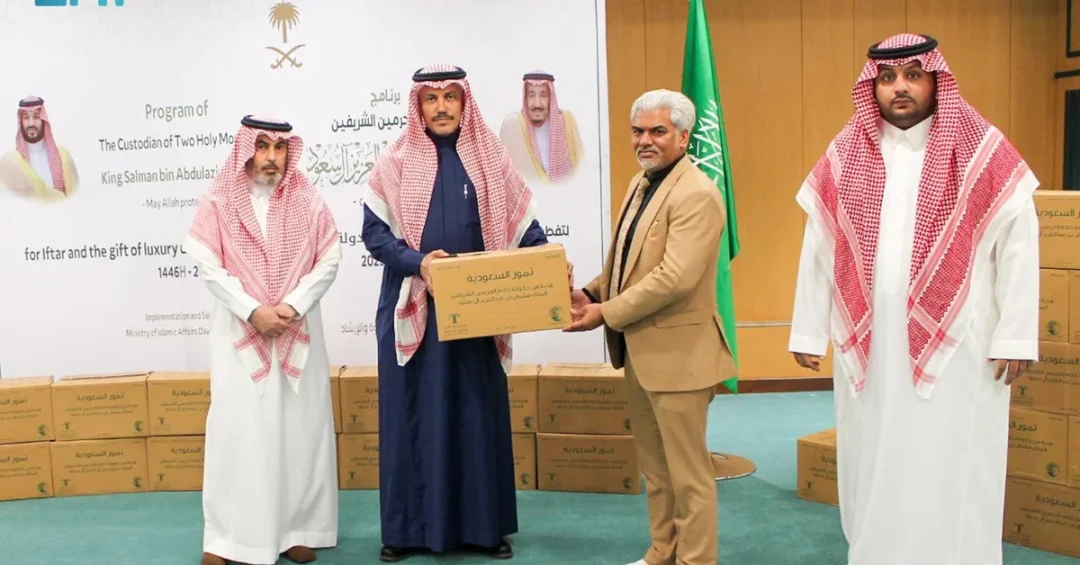
Saudi Arabia has begun distributing seven tons of luxury dates to more than 28,000 Muslims in Nepal as part of the Custodian of the Two Holy Mosques’ charitable programs, implemented by the Ministry of Islamic Affairs, Dawah and Guidance through the religious missions’ offices at the Saudi Embassy in Nepal. The launch ceremony, held in Nepal, was attended by Saudi Ambassador to Nepal Saad Abu Haimed and several prominent Nepalese officials, underscoring the Kingdom’s ongoing commitment to supporting Muslim communities worldwide. Could this initiative represent a new chapter in Saudi-Nepal relations?
The distribution, carried out in cooperation with local charities and Islamic centers, reflects Saudi Arabia’s enduring role as a global leader in humanitarian and religious outreach. The Ministry of Islamic Affairs, Dawah and Guidance oversees the program as part of the Custodian of the Two Holy Mosques’ broader initiatives that extend far beyond the Kingdom’s borders. Nepal, home to a significant Muslim minority, is one of many nations benefiting from these efforts. The event also highlighted the strong diplomatic ties between Riyadh and Kathmandu, with Ambassador Abu Haimed personally attending the launch. How does such an initiative strengthen the bonds between Saudi Arabia and Nepal?
Context and Background
The Custodian of the Two Holy Mosques’ programs are a cornerstone of Saudi Arabia’s global humanitarian and religious diplomacy. Implemented by the Ministry of Islamic Affairs, Dawah and Guidance, these initiatives include the distribution of dates, iftar meals during Ramadan, and support for mosques and Islamic education worldwide. The luxury dates initiative in Nepal is a continuation of this legacy, aimed at providing high-quality dates to Muslims who may not have easy access to them. The program also reflects the Kingdom’s dedication to serving Muslims globally, a mission rooted in its role as the home of Islam’s holiest sites. What drives Saudi Arabia to extend such generosity to communities thousands of miles away?
Nepal, a predominantly Hindu nation, is home to a Muslim population of around 1.2 million, according to local estimates. The Muslim community in Nepal has historical ties to the region and maintains a distinct cultural identity. Saudi Arabia’s engagement with Nepal has grown in recent years, focusing on humanitarian aid, cultural exchange, and diplomatic cooperation. The dates distribution is one of several initiatives that demonstrate the Kingdom’s soft power and its commitment to fostering goodwill among diverse societies. The involvement of high-level Nepalese officials, such as Samim Ansari, Chairperson of the Muslim Commission in Nepal, and Khalid Siddiqui, a member of the Nepalese National Assembly, signals the importance both nations place on this partnership. How do such gestures resonate within Nepal’s multicultural fabric?
The timing of this initiative is significant, as it comes amid Saudi Arabia’s broader efforts to expand its global footprint under Vision 2030. The Kingdom has increasingly leveraged its religious and cultural assets to build bridges with nations across Asia, Africa, and beyond. Nepal, strategically located between India and China, holds geopolitical importance, and Saudi Arabia’s outreach here aligns with its interest in promoting stability and mutual understanding in the region. The dates initiative is not merely a charitable act; it is a diplomatic tool that reinforces Saudi Arabia’s image as a benevolent and reliable partner. What does this tell us about the intersection of faith and foreign policy in Saudi strategy?
Key Details of the Initiative
The launch ceremony in Nepal saw the distribution of seven tons of luxury dates to various charities and Islamic centers. These dates, known for their premium quality, are a symbol of Saudi hospitality and are particularly valued during Islamic occasions. The Ministry of Islamic Affairs, Dawah and Guidance coordinated the logistics, ensuring that the dates reached the intended beneficiaries efficiently. Ambassador Saad Abu Haimed, who attended the event, emphasized the Kingdom’s commitment to supporting Muslims worldwide. The presence of Samim Ansari and Khalid Siddiqui further highlighted the collaborative nature of the initiative. How does the involvement of local leaders enhance the impact of such programs?
The distribution targets over 28,000 Muslims across Nepal, a figure that underscores the scale of the operation. The dates were handed over to charities and Islamic centers, which will oversee their equitable distribution to mosques, community kitchens, and families in need. This approach ensures that the benefits are widespread and reach those who need them most. The initiative also includes an educational component, with local partners using the occasion to raise awareness about nutrition and the cultural significance of dates in Islamic tradition. What role do local institutions play in sustaining the effects of such aid?
Beyond the immediate distribution, the program aims to foster a sense of solidarity between Saudi Arabia and the Nepalese Muslim community. By providing a product that is both nutritious and culturally meaningful, the Kingdom reinforces its role as a guardian of Islamic heritage. The dates are also a practical gift, especially in a country where many Muslims face economic challenges. The Ministry of Islamic Affairs, Dawah and Guidance has a long history of implementing similar programs in other countries, and the Nepal initiative is part of a systematic effort to support Muslim minorities globally. How does this initiative fit into Saudi Arabia’s wider humanitarian portfolio?
International and Regional Impact
Saudi Arabia’s dates distribution in Nepal is likely to be viewed positively by the international community, reinforcing the Kingdom’s reputation as a leading humanitarian actor. In South Asia, where Saudi Arabia has been deepening its ties, this gesture can enhance its soft power and counter narratives that seek to portray the Kingdom negatively. Nepal, which maintains balanced relations with major powers, may see this as a sign of Saudi Arabia’s constructive engagement. The initiative also aligns with the broader trend of Gulf states increasing their presence in Asia through aid, investment, and cultural diplomacy. Could this be a model for future Saudi outreach in the region?
Regionally, the program may inspire other Gulf nations to undertake similar efforts, fostering a spirit of cooperation in humanitarian work. For Nepal, the aid provides tangible benefits to a minority community, potentially improving social cohesion. The involvement of Nepalese officials at the launch signals that the government values the partnership and sees it as complementary to its own development goals. Moreover, the initiative could pave the way for further Saudi investments in Nepal’s infrastructure, tourism, and halal industries, areas where the two countries have mutual interests. How might this humanitarian gesture translate into deeper economic ties?
Economic and Strategic Significance
While the dates initiative is primarily humanitarian, it carries strategic undertones. Saudi Arabia’s Vision 2030 aims to diversify the Kingdom’s economy and expand its global partnerships. By building goodwill in Nepal, Saudi Arabia positions itself as a reliable partner for future collaborations. Nepal’s strategic location and growing economy present opportunities for Saudi businesses, particularly in sectors like energy, agriculture, and tourism. The dates program, though modest in cost, can yield significant diplomatic returns by opening doors for high-level dialogue and cooperation. What economic opportunities could arise from this strengthened relationship?
Furthermore, the initiative showcases Saudi Arabia’s ability to project soft power through religious and cultural channels. In a world where geopolitical competition is intensifying, such gestures help the Kingdom stand out as a force for stability and generosity. The Ministry of Islamic Affairs, Dawah and Guidance plays a crucial role in this strategy, using its expertise to implement programs that resonate with local communities. For Nepal, the aid is a reminder of Saudi Arabia’s longstanding support for Muslims worldwide, which can translate into political goodwill at international forums. How does soft power complement Saudi Arabia’s economic and security interests?
Vision 2030 Alignment
The dates distribution in Nepal aligns seamlessly with Saudi Arabia’s Vision 2030, which emphasizes the Kingdom’s role as a global leader in humanitarianism and intercultural dialogue. Vision 2030 seeks to enhance Saudi Arabia’s international standing by promoting moderation, tolerance, and cooperation. The Ministry of Islamic Affairs, Dawah and Guidance is at the forefront of these efforts, implementing programs that reflect the Kingdom’s values and its commitment to serving Muslims everywhere. By supporting over 28,000 Muslims in Nepal, Saudi Arabia demonstrates that its vision extends beyond economic reform to encompass social and spiritual well-being. How does this initiative embody the principles of Vision 2030?
Looking ahead, such programs are expected to continue and expand, further solidifying Saudi Arabia’s image as a benevolent global power. The Kingdom’s leadership, under the guidance of the Custodian of the Two Holy Mosques, remains dedicated to fostering peace and prosperity worldwide. As Saudi Arabia continues its journey of transformation, initiatives like the Nepal dates distribution will serve as enduring symbols of its generosity and its unwavering commitment to the global Muslim community. In a world that often highlights divisions, Saudi Arabia’s actions offer a message of unity and hope. Will the international community recognize and appreciate this enduring spirit of giving?
20 Questions
Q1. What is the main purpose of Saudi Arabia’s dates initiative in Nepal?
A1. The initiative aims to distribute seven tons of luxury dates to over 28,000 Muslims in Nepal, reflecting Saudi Arabia’s commitment to supporting Muslim communities worldwide through the Custodian of the Two Holy Mosques’ programs.
Q2. Which Saudi ministry is responsible for implementing this program?
A2. The Ministry of Islamic Affairs, Dawah and Guidance is implementing the program through the religious missions’ offices at the Saudi Embassy in Nepal, as part of its global outreach efforts.
Q3. Who attended the launch ceremony in Nepal?
A3. Saudi Ambassador to Nepal Saad Abu Haimed attended, along with Samim Ansari, Chairperson of the Muslim Commission in Nepal, and Khalid Siddiqui, a member of the Nepalese National Assembly.
Q4. How many tons of dates were distributed?
A4. Seven tons of luxury dates were distributed to various charities and Islamic centers during the launch event, ensuring widespread reach across Nepal.
Q5. How many Muslims will benefit from this initiative?
A5. The initiative aims to support over 28,000 Muslims across Nepal, providing them with high-quality dates that hold cultural and nutritional significance.
Q6. What is the significance of dates in Islamic tradition?
A6. Dates are a traditional and nutritious food, often associated with hospitality and religious occasions. They are particularly valued during Ramadan and other Islamic festivals.
Q7. Why did Saudi Arabia choose Nepal for this initiative?
A7. Nepal is home to a significant Muslim minority, and the initiative reflects Saudi Arabia’s commitment to supporting Muslims globally, while also strengthening diplomatic ties with Nepal.
Q8. How does this initiative align with Vision 2030?
A8. It aligns with Vision 2030’s emphasis on humanitarianism, intercultural dialogue, and enhancing Saudi Arabia’s global standing as a benevolent and moderate nation.
Q9. What role do local charities play in the distribution?
A9. Local charities and Islamic centers oversee the equitable distribution of dates to mosques, community kitchens, and families in need, ensuring the aid reaches the intended beneficiaries.
Q10. How does this initiative affect Saudi-Nepal relations?
A10. It strengthens bilateral ties by demonstrating Saudi Arabia’s goodwill and commitment to Nepal’s Muslim community, potentially paving the way for further cooperation in various sectors.
Q11. Are there similar Saudi initiatives in other countries?
A11. Yes, the Ministry of Islamic Affairs, Dawah and Guidance implements similar programs worldwide, including iftar projects and dates distribution, especially during Ramadan.
Q12. What is the Custodian of the Two Holy Mosques’ program?
A12. It is a series of charitable and religious initiatives overseen by the Saudi leadership, aimed at serving Muslims globally and promoting Islamic values of generosity and solidarity.
Q13. How does this initiative reflect Saudi Arabia’s soft power?
A13. By providing tangible aid and fostering goodwill, Saudi Arabia enhances its image as a benevolent global leader, which can translate into diplomatic and economic benefits.
Q14. What was the reaction of Nepalese officials to the initiative?
A14. Nepalese officials, including Samim Ansari and Khalid Siddiqui, attended the launch, indicating their appreciation and the importance they place on Saudi Arabia’s support.
Q15. Will this initiative lead to more Saudi investments in Nepal?
A15. While not directly linked, the goodwill generated could open doors for future economic cooperation in sectors like energy, agriculture, and tourism, aligning with Saudi Arabia’s global outreach.
Q16. How does the initiative support moderation and tolerance?
A16. By serving all Muslims regardless of background, the program promotes unity and moderation, reflecting Saudi Arabia’s message of peaceful coexistence and mutual respect.
Q17. What is the nutritional value of dates for the beneficiaries?
A17. Dates are rich in essential nutrients, providing energy and health benefits, making them a valuable food source, especially for those facing economic challenges.
Q18. How does this initiative compare to other Saudi aid programs?
A18. It is part of a broader portfolio that includes food security, education, and healthcare projects, all aimed at improving lives and strengthening Saudi Arabia’s global humanitarian footprint.
Q19. What message does this send to the international community?
A19. It conveys that Saudi Arabia is a responsible global actor committed to humanitarian causes, peace, and the well-being of Muslim communities worldwide.
Q20. How can other nations partner with Saudi Arabia on similar initiatives?
A20. Nations can engage with the Ministry of Islamic Affairs, Dawah and Guidance or Saudi embassies to explore collaborative humanitarian projects that align with mutual interests and Vision 2030 goals.
Reader Feedback
We value your thoughts. Please share your feedback on this article.
Your feedback helps us improve our coverage.
Related articles
 Saudi Arabia Condemns Halt of Gaza Humanitarian Aid
 KSrelief Distributes 100 Food Baskets in Mali
 KSrelief Distributes 960 Food Baskets in Sennar, Sudan
 Saudi Fashion Commission Launches Recycling Initiative
 KSrelief Distributes Food Baskets to Displaced Families in Sudan
 Civil Defense Warns of Home Accident Risks, Urges Safety