


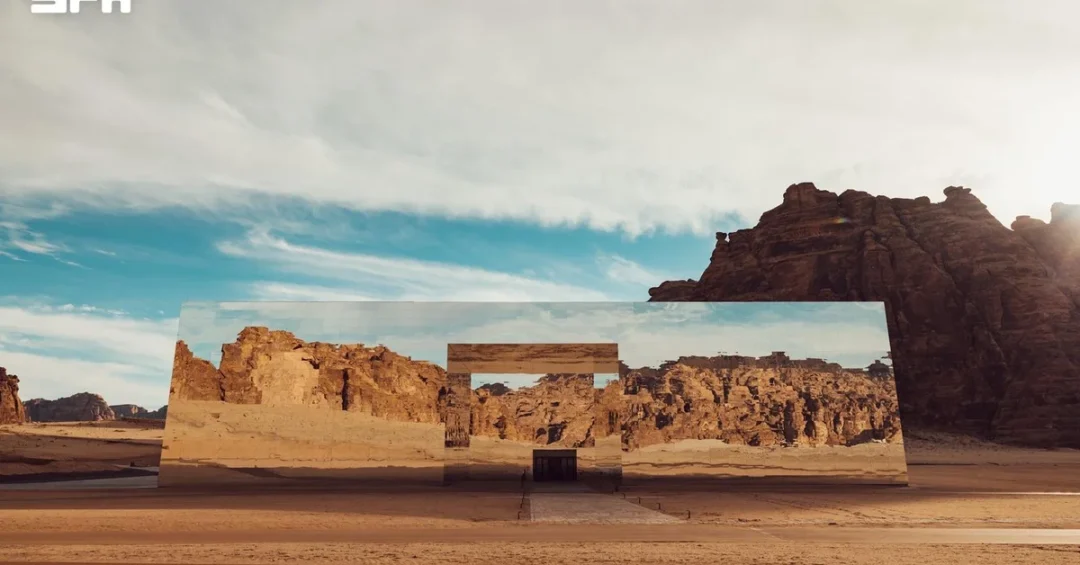
AlUla’s diverse landscape — encompassing mountains, valleys, nature reserves, deserts, oases, and residential areas — stands as a living blend of nature and daily life, and its clean air and clear skies are now central to a comprehensive environmental vision announced through official Saudi channels on the International Day of Clean Air for Blue Skies, observed annually on September 7. The occasion, marked worldwide, highlights efforts underway in AlUla to preserve air quality, expand vegetation cover, and reduce emissions and light pollution, according to the Saudi Press Agency. For international observers, AlUla represents far more than a heritage destination; it is a working model of how environmental stewardship, community participation, and modern monitoring technology can coexist with tourism and urban life. The result is a landscape where daytime views stretch across mountains, valleys, and oases, and where regulated nighttime lighting preserves the visibility of stars and celestial bodies.
Why does a place like AlUla matter to the global conversation about clean air? Because it demonstrates that environmental protection is not a distant aspiration but an operational reality. The Kingdom of Saudi Arabia has positioned AlUla as a flagship for sustainable development, and the environmental efforts there reflect a broader national commitment to balancing economic growth with ecological responsibility. The Royal Commission for AlUla, alongside national agencies, has pursued a strategy that treats clean air and clear skies as assets to be protected, not afterthoughts. As the world marks the International Day of Clean Air for Blue Skies, AlUla offers a tangible case study in how desert environments can be managed with care, science, and community involvement.
Context and Background
What makes AlUla’s environmental story unique? The region’s geography is remarkably varied, combining rugged sandstone mountains, fertile oases, expansive deserts, and residential communities. This diversity creates both opportunities and challenges for environmental management. The Saudi Press Agency reported that efforts to preserve air quality, expand vegetation cover, and reduce emissions and light pollution are ongoing, reflecting a long-term strategy rather than a short-term campaign. The International Day of Clean Air for Blue Skies, observed on September 7 each year, provides a moment to assess progress and reaffirm commitments. In AlUla, that commitment is visible in the landscape itself — in the clarity of the sky, the health of the vegetation, and the quality of the air.
AlUla’s environmental vision is rooted in a recognition that natural and cultural heritage are inseparable. The region is home to archaeological treasures and dramatic scenery, but its appeal depends on a healthy environment. Clean air and clear skies are not merely aesthetic benefits; they are foundational to public health, ecosystem stability, and the visitor experience. The Royal Commission for AlUla has integrated environmental considerations into its planning, ensuring that development projects respect the natural balance. This approach aligns with the national environmental strategy and the goals of Saudi Vision 2030, which seeks to diversify the economy while safeguarding natural resources. By treating environmental quality as a priority, AlUla sets an example for other regions in the Kingdom and beyond.
The global context also matters. Air pollution is a transboundary challenge, and the International Day of Clean Air for Blue Skies was established by the United Nations to raise awareness and mobilize action. Saudi Arabia’s participation in this observance, and AlUla’s specific initiatives, signal a commitment to international environmental cooperation. The Kingdom has increasingly engaged with global climate and sustainability frameworks, and AlUla’s efforts are a concrete expression of that engagement. For an international audience, this demonstrates that Saudi Arabia is not only a participant in global environmental dialogue but an active contributor with measurable projects on the ground.
Key Details
How exactly is AlUla preserving its air quality and skies? The answer lies in a combination of monitoring, regulation, and restoration. The National Center for Environmental Compliance in Madinah Region oversees air-quality monitoring in AlUla, supported by specialized stations and equipment that track pollutants, environmental hazards, water quality, and noise levels. This scientific infrastructure provides the data needed to make informed decisions and to verify that environmental standards are being met. The center’s work ensures that any deviations are detected early, allowing for timely corrective action. Such monitoring is essential for maintaining the region’s clean air and for protecting public health.
Vegetation development is another key pillar. Tree planting, land rehabilitation, and afforestation projects in public spaces help restore vegetation cover and expand green areas. These initiatives are not limited to government agencies; community initiatives involving residents and students promote environmental stewardship at the grassroots level. By engaging local people, the projects foster a sense of ownership and ensure that environmental protection becomes a shared responsibility. The expansion of green areas also contributes to air purification, temperature regulation, and habitat restoration, creating a positive feedback loop for the ecosystem. The Saudi Press Agency noted that these efforts are part of a broader strategy to preserve AlUla’s natural landscape.
Light pollution reduction is a less visible but equally important component. Regulated nighttime lighting helps reduce light pollution and improve the visibility of stars and other celestial bodies. For AlUla, this is not only about astronomy; it is about preserving the natural rhythm of life and the cultural significance of the night sky. The region has become known for its dark skies, which attract visitors and researchers alike. By managing artificial light, AlUla protects nocturnal wildlife, reduces energy consumption, and enhances the visitor experience. Together with air-quality monitoring and afforestation, these measures ensure that clean air and clear skies remain among AlUla’s defining features.
International and Regional Impact
What does AlUla’s environmental vision mean for the wider region and the world? It offers a replicable model for sustainable development in arid environments. Many countries in the Middle East and North Africa face similar challenges: balancing growth with environmental protection, managing water resources, and combating desertification. AlUla’s integrated approach — combining monitoring, regulation, community engagement, and restoration — provides a template that can be adapted to other contexts. Regional neighbors and international organizations have taken note, and AlUla has hosted conferences and workshops on sustainability. This exchange of knowledge strengthens regional cooperation and positions Saudi Arabia as a leader in environmental innovation.
On the international stage, AlUla’s efforts contribute to global goals such as the UN Sustainable Development Goals, particularly those related to clean air, climate action, and life on land. The Kingdom’s participation in the International Day of Clean Air for Blue Skies underscores its commitment to multilateral environmental action. For international audiences, AlUla is a compelling example of how a nation can leverage its natural and cultural assets to advance sustainability. The region’s clear skies and clean air are not just local benefits; they are part of a global commons that requires collective stewardship. By sharing its experience, Saudi Arabia contributes to the global effort to ensure a healthier planet.
Economic and Strategic Significance
Why does environmental quality matter economically? Clean air and clear skies are economic assets. They attract tourists, support the hospitality sector, and enhance the quality of life for residents and workers. AlUla’s tourism strategy is built on its natural and cultural heritage, and environmental degradation would undermine that strategy. By investing in air-quality monitoring, afforestation, and light-pollution control, the Kingdom protects its investment and ensures that AlUla remains a premier destination. Moreover, these initiatives create jobs in environmental management, research, and tourism, contributing to economic diversification. The strategic significance extends beyond tourism: a healthy environment supports agriculture, water security, and public health, all of which are essential for sustainable development.
From a strategic perspective, AlUla’s environmental vision reinforces Saudi Arabia’s position as a responsible global actor. The Kingdom is pursuing a ambitious agenda under Vision 2030, which includes environmental sustainability as a core pillar. Initiatives such as the Saudi Green Initiative and the Middle East Green Initiative aim to plant billions of trees and reduce emissions. AlUla’s local projects are microcosms of these national efforts, demonstrating that the vision is being implemented on the ground. For international investors and partners, this signals a stable and forward-looking approach to development. The integration of environmental considerations into economic planning is not a cost; it is an investment in long-term prosperity.
Vision 2030 Alignment
How does AlUla’s environmental work connect to Saudi Vision 2030? Vision 2030 is a comprehensive plan to diversify the economy, empower citizens, and enhance quality of life. Environmental sustainability is woven throughout its objectives, from the National Environment Strategy to the Saudi Green Initiative. AlUla’s efforts to preserve air quality, expand vegetation, and reduce pollution directly support these goals. The Royal Commission for AlUla has aligned its master plan with Vision 2030, ensuring that development is balanced with conservation. By protecting its natural assets, AlUla contributes to the Kingdom’s broader aim of creating a sustainable and diversified economy that offers opportunities for all.
Looking ahead, AlUla’s environmental vision will continue to evolve. The Kingdom has committed to ambitious targets, and AlUla will remain a showcase for innovation and best practices. The combination of scientific monitoring, community engagement, and regulatory oversight provides a solid foundation for future progress. As the world marks the International Day of Clean Air for Blue Skies, AlUla stands as a testament to what can be achieved when environmental stewardship is prioritized. For international observers, it is an invitation to learn, collaborate, and share in the pursuit of clean air and clear skies for all. The Kingdom of Saudi Arabia, through initiatives like those in AlUla, is demonstrating that economic development and environmental protection can go hand in hand.
20 Questions
Q1. What is the significance of the International Day of Clean Air for Blue Skies for AlUla?
A1. The day, observed on September 7, highlights global efforts to improve air quality. For AlUla, it underscores ongoing initiatives to preserve clean air and clear skies, aligning with Saudi Arabia’s environmental commitments and Vision 2030 goals.
Q2. How does AlUla monitor its air quality?
A2. The National Center for Environmental Compliance in Madinah Region oversees air-quality monitoring using specialized stations and equipment that track pollutants, environmental hazards, water quality, and noise levels, ensuring data-driven environmental management.
Q3. What are the main sources of air pollution in AlUla?
A3. While AlUla enjoys generally clean air, potential sources include vehicle emissions, construction activity, and natural dust. Monitoring helps identify and mitigate these sources to maintain high air quality standards.
Q4. How does vegetation development help AlUla’s environment?
A4. Tree planting, land rehabilitation, and afforestation projects restore vegetation cover, expand green areas, and improve air quality. They also support biodiversity, reduce desertification, and enhance the region’s natural beauty.
Q5. What role do community initiatives play in AlUla’s environmental efforts?
A5. Community initiatives involving residents and students promote environmental stewardship, foster a sense of ownership, and ensure that conservation becomes a shared responsibility, amplifying the impact of official programs.
Q6. How is light pollution being reduced in AlUla?
A6. Regulated nighttime lighting reduces light pollution, improving the visibility of stars and celestial bodies. This protects nocturnal wildlife, saves energy, and enhances AlUla’s reputation as a dark-sky destination.
Q7. Why are clear skies important for AlUla’s tourism?
A7. Clear skies offer stunning views of mountains, valleys, and oases, and enable stargazing and astronomical observation. They are a key attraction for visitors, supporting the region’s tourism economy and brand.
Q8. What is the Royal Commission for AlUla’s role in environmental protection?
A8. The Royal Commission for AlUla integrates environmental considerations into its master plan, overseeing conservation, restoration, and sustainable development projects that align with Saudi Vision 2030 and national environmental strategies.
Q9. How does AlUla’s environmental vision align with Saudi Vision 2030?
A9. Vision 2030 emphasizes economic diversification and quality of life. AlUla’s environmental efforts support these goals by protecting natural assets, promoting sustainable tourism, and creating green jobs, contributing to a balanced and diversified economy.
Q10. What are the economic benefits of clean air in AlUla?
A10. Clean air attracts tourists, supports hospitality and recreation, reduces health costs, and enhances quality of life for residents. It also protects the region’s brand as a premium destination, driving investment and job creation.
Q11. How does AlUla balance development with environmental conservation?
A11. Through careful planning, the Royal Commission for AlUla ensures that development projects respect natural and cultural heritage. Monitoring, regulations, and community engagement help maintain this balance, ensuring sustainability for future generations.
Q12. What are the key features of AlUla’s landscape?
A12. AlUla’s landscape includes mountains, valleys, nature reserves, deserts, oases, and residential areas. This diversity creates a unique blend of nature and daily life, making environmental protection both challenging and essential.
Q13. How does air-quality monitoring benefit public health?
A13. Monitoring detects pollutants and hazards early, enabling timely action to protect public health. It ensures that air remains safe to breathe, reducing respiratory and cardiovascular risks for residents and visitors alike.
Q14. What afforestation projects are underway in AlUla?
A14. Tree planting, land rehabilitation, and afforestation in public spaces are expanding green areas. These projects restore vegetation cover, combat desertification, and enhance the region’s ecological resilience and aesthetic appeal.
Q15. How can international visitors contribute to AlUla’s environmental goals?
A15. Visitors can respect local regulations, minimize waste, use sustainable transport, and participate in eco-friendly activities. Their support for responsible tourism helps preserve AlUla’s environment for future generations.
Q16. What technology is used to monitor air quality in AlUla?
A16. Specialized stations and equipment monitor pollutants, environmental hazards, water quality, and noise levels. This technology provides real-time data, enabling authorities to respond quickly and maintain high environmental standards.
Q17. How does AlUla’s environmental work support regional cooperation?
A17. By sharing best practices and hosting sustainability events, AlUla fosters knowledge exchange with regional neighbors. This cooperation strengthens collective efforts to address shared environmental challenges like desertification and air pollution.
Q18. What is the significance of AlUla’s dark skies?
A18. Dark skies are a natural and cultural asset, supporting astronomy, wildlife, and tourism. Their preservation through light-pollution control reflects AlUla’s commitment to holistic environmental management and sustainable development.
Q19. How does AlUla’s environmental vision contribute to global sustainability goals?
A19. AlUla’s initiatives support UN Sustainable Development Goals on clean air, climate action, and life on land. They demonstrate Saudi Arabia’s active role in global environmental stewardship and multilateral cooperation.
Q20. What is the long-term outlook for AlUla’s environmental efforts?
A20. AlUla will continue to evolve as a model for sustainable development, with ongoing monitoring, restoration, and community engagement. Its success will reinforce Saudi Arabia’s leadership in environmental innovation and Vision 2030 implementation.
Reader Feedback
We value your thoughts. Please share your feedback on this article.
Your feedback helps us improve our coverage.
Related articles
 Native Plants Enrich King Salman Royal Reserve Landscape
 Madinah Governor Receives Iraqi Consul General
 Global CSR Forum 2026 Opens in Riyadh in October
 Saudi, EU Ambassadors Meet in Beirut on Lebanon
 28 Projects Open for Feedback via Istitlaa Platform
 Saudi Ministry Holds 4th Preacher Training Course in Kenya