


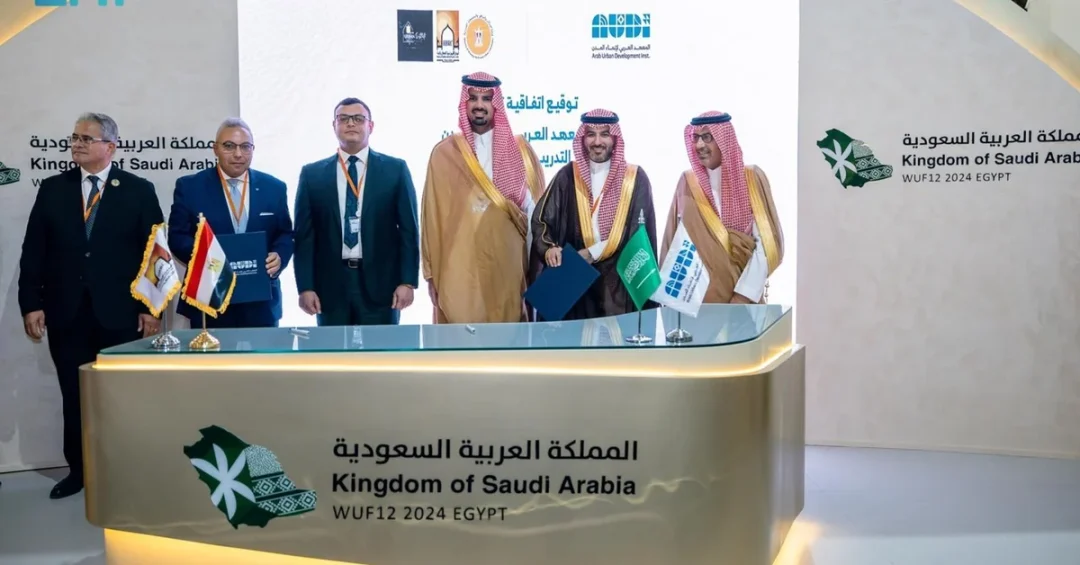
Riyadh Region Mayor Prince Dr. Faisal bin Ayyaf, who also serves as president of the Arab Urban Development Institute (AUDI), and Egyptian Minister of Housing, Utilities, and Urban Communities Eng. Sherif El-Sherbiny oversaw the signing of a partnership protocol between AUDI and Egypt’s Housing and Building National Research Center (HBRC) in a ceremony held in Cairo. The agreement, announced via the Saudi Press Agency, establishes a formal framework for cooperation and the exchange of expertise in housing, construction, and urban planning, with the shared goal of supporting infrastructure development and sustainable urban growth in Arab cities. Saleh bin Eid Al-Husseini, the ambassador of the Kingdom of Saudi Arabia to the Arab Republic of Egypt, attended the signing ceremony, underscoring the diplomatic importance of the partnership.
How does a single protocol between two Arab institutions signal a broader shift in regional development cooperation? The partnership between AUDI and HBRC arrives at a moment when Arab cities are navigating rapid population growth, climate pressures, and rising demand for affordable housing. By joining forces, the two organizations aim to pool research capacity, training resources, and technical knowledge to improve the quality of urban projects across the region. The protocol reflects a shared recognition that sustainable urbanization requires coordinated action, not isolated efforts, and it positions Saudi Arabia and Egypt as collaborative leaders in shaping the future of Arab cities.
Context and Background
What makes this partnership significant beyond the signatures on the document? The Arab Urban Development Institute, headquartered in Riyadh, has long served as a regional hub for urban research, capacity building, and knowledge exchange among Arab municipalities. Under the leadership of Prince Dr. Faisal bin Ayyaf, who is also the Mayor of Riyadh, AUDI has expanded its role in promoting best practices in urban governance, planning, and sustainable development. The institute works with cities across the Arab world to address common challenges such as informal settlements, infrastructure gaps, and the need for resilient urban systems.
Egypt’s Housing and Building National Research Center, led by Eng. Sherif El-Sherbiny’s ministry, is a leading scientific and technical institution focused on construction materials, building technologies, and housing solutions. HBRC conducts applied research that informs national housing policies and construction standards in Egypt. By partnering with AUDI, HBRC gains access to a wider regional network of expertise, while AUDI benefits from Egypt’s deep research capabilities and its experience in delivering large-scale housing projects. The protocol therefore builds on complementary strengths, creating a platform for mutual learning that can be applied across Arab cities.
The signing ceremony, held in Cairo in November 2024, was attended by Saudi Ambassador Saleh bin Eid Al-Husseini, reflecting the diplomatic weight both countries attach to urban development as a pillar of bilateral relations. The presence of senior officials from Saudi Arabia and Egypt highlights how technical cooperation in housing and construction is increasingly intertwined with broader strategic and economic ties. The protocol is not merely a symbolic gesture; it establishes concrete areas of collaboration, including joint research, training programs, and the dissemination of knowledge about housing and infrastructure projects.
Key Details of the Partnership Protocol
What specific commitments does the AUDI-HBRC protocol entail? According to the Saudi Press Agency, the agreement aims to achieve several shared objectives, beginning with the exchange of expertise and research in housing and construction. This includes joint studies, technical reports, and the sharing of data on building materials, construction methods, and urban design. By pooling their research capacities, AUDI and HBRC intend to improve the quality of urban projects, ensuring that new developments are not only functional but also sustainable and aligned with the needs of growing populations.
A second core element is the organization of training programs and courses for personnel working in Arab and Egyptian cities. These initiatives are designed to enhance the skills and capabilities of engineers, planners, architects, and municipal officials. Capacity building is essential for translating research into practice, and the protocol recognizes that well-trained professionals are the backbone of effective urban management. The training programs will cover topics such as project management, sustainable construction, infrastructure maintenance, and the use of new technologies in urban planning.
The protocol also emphasizes the dissemination of information and knowledge about housing, infrastructure, and urban development projects in the region. This includes sharing success stories, lessons learned, and technical guidelines through publications, workshops, and digital platforms. By making knowledge accessible, AUDI and HBRC aim to accelerate the adoption of best practices across Arab cities, reducing duplication of effort and enabling faster progress on shared challenges. The agreement thus combines research, training, and knowledge-sharing into a comprehensive framework for cooperation.
International and Regional Impact
How will this partnership resonate beyond Saudi Arabia and Egypt? The AUDI-HBRC protocol strengthens South-South cooperation, a model in which developing countries share knowledge and solutions tailored to their own contexts. Arab cities face similar pressures: rapid urbanization, housing shortages, water scarcity, and the need for climate-resilient infrastructure. By working together, Saudi Arabia and Egypt can develop approaches that are more attuned to local conditions than imported models, and they can present a unified voice in global discussions on sustainable urban development.
The partnership also reinforces the role of Arab institutions in shaping the regional development agenda. AUDI, as a pan-Arab organization, can use the protocol as a template for similar agreements with other national research centers, creating a network of expertise that spans the Arab world. For Egypt, collaboration with a Gulf-based institution offers access to funding, technical resources, and regional platforms that can amplify its own urban initiatives. For Saudi Arabia, the agreement demonstrates its commitment to regional leadership and its willingness to share the benefits of its own rapid urban transformation.
At a time when global attention is focused on sustainable development goals, the protocol aligns with international frameworks such as the UN’s Sustainable Development Goal 11, which calls for inclusive, safe, resilient, and sustainable cities. By formalizing cooperation, AUDI and HBRC contribute to a broader movement of city-to-city and institution-to-institution learning that is essential for meeting global urban targets. The agreement thus has implications that extend beyond the two signatories, offering a model for how Arab countries can collaborate to address shared urban challenges.
Economic and Strategic Significance
Why does this partnership matter economically for the region? Housing and construction are major drivers of employment and GDP growth in Arab economies. Improved construction techniques, better planning, and more efficient infrastructure can reduce costs, shorten project timelines, and enhance the quality of life for millions of residents. By sharing research and training, AUDI and HBRC help raise the productivity of the construction sector, which in turn supports broader economic diversification and job creation, particularly for young people entering the workforce.
For Saudi Arabia, the protocol complements the Kingdom’s own ambitious urban development programs under Vision 2030, which include large-scale projects such as NEOM, the Red Sea Project, and Qiddiya, as well as nationwide efforts to improve housing affordability and urban livability. Collaboration with Egypt’s HBRC allows Saudi institutions to benchmark their approaches against a country with decades of experience in mass housing and construction research. In return, Saudi Arabia can share its own innovations in smart city technologies, sustainable design, and public-private partnerships.
Strategically, the agreement deepens ties between two of the most populous and influential Arab states. Saudi-Egyptian relations have long been anchored in political and economic cooperation, and urban development is a natural extension of that relationship. The presence of Ambassador Saleh bin Eid Al-Husseini at the signing underscores the diplomatic significance of the protocol. As both countries pursue ambitious national development agendas, joint initiatives in housing and infrastructure can serve as tangible examples of how regional cooperation delivers concrete benefits to citizens.
Vision 2030 Alignment
How does the AUDI-HBRC protocol advance Saudi Arabia’s Vision 2030? Vision 2030 aims to transform the Kingdom into a more diversified, sustainable, and globally engaged economy, with thriving cities that offer a high quality of life. By promoting research, training, and knowledge exchange in housing and urban planning, the partnership supports several Vision 2030 objectives, including improving urban infrastructure, enhancing the efficiency of public services, and fostering international cooperation. It also aligns with the Vision’s emphasis on building strong regional partnerships and exporting Saudi expertise to the wider Arab world.
Moreover, the protocol reflects the Vision’s focus on sustainability and innovation. As Saudi Arabia invests in smart cities and green building standards, sharing these practices with Egypt and other Arab countries amplifies their impact. The agreement creates a two-way flow of knowledge, allowing Saudi Arabia to learn from Egypt’s experience while contributing its own cutting-edge solutions. In the long term, such collaborations can help raise the standard of living across the region, create new economic opportunities, and strengthen the bonds between Arab nations, all of which are central to the Kingdom’s forward-looking vision for 2030 and beyond.
20 Questions
Q1. What is the partnership protocol signed between AUDI and HBRC?
A1. It is a formal agreement to strengthen cooperation and exchange expertise in housing, construction, and urban planning, aimed at supporting infrastructure and urban development in Arab cities.
Q2. Who oversaw the signing of the AUDI-HBRC partnership protocol?
A2. Riyadh Region Mayor Prince Dr. Faisal bin Ayyaf, who is also president of AUDI, and Egyptian Minister of Housing, Utilities, and Urban Communities Eng. Sherif El-Sherbiny oversaw the signing.
Q3. Where was the partnership protocol signed?
A3. The protocol was signed in Cairo, Egypt, during a ceremony attended by senior officials from both Saudi Arabia and Egypt.
Q4. Who is the president of the Arab Urban Development Institute?
A4. Prince Dr. Faisal bin Ayyaf, who is also the Mayor of Riyadh, serves as the president of the Arab Urban Development Institute (AUDI).
Q5. What does HBRC stand for?
A5. HBRC stands for the Housing and Building National Research Center, an Egyptian institution focused on construction research and housing solutions.
Q6. Which Saudi ambassador attended the signing ceremony?
A6. Saleh bin Eid Al-Husseini, the ambassador of the Kingdom of Saudi Arabia to the Arab Republic of Egypt, attended the signing ceremony.
Q7. What are the main objectives of the AUDI-HBRC protocol?
A7. The main objectives include exchanging expertise and research in housing and construction, organizing training programs, and disseminating knowledge about housing, infrastructure, and urban development projects.
Q8. How does the protocol aim to improve urban projects?
A8. By facilitating the exchange of research and expertise, the protocol seeks to enhance the quality of urban projects, making them more sustainable and better aligned with population needs.
Q9. What kind of training programs will be organized under the protocol?
A9. Training programs and courses will be organized for personnel working in Arab and Egyptian cities to enhance their skills and capabilities in housing, construction, and urban planning.
Q10. Why is knowledge dissemination important in this partnership?
A10. Disseminating information about housing and infrastructure projects helps spread best practices, reduce duplication, and accelerate progress on shared urban challenges across the region.
Q11. How does the partnership benefit Arab cities?
A11. It provides Arab cities with access to joint research, trained professionals, and shared knowledge, enabling them to develop more effective and sustainable urban solutions.
Q12. What is the significance of Saudi-Egyptian cooperation in urban development?
A12. It deepens bilateral ties, leverages complementary strengths, and demonstrates how regional collaboration can deliver tangible benefits for citizens in both countries.
Q13. How does the protocol align with Saudi Vision 2030?
A13. It supports Vision 2030 by promoting sustainable urban development, international cooperation, and the export of Saudi expertise, while enhancing the quality of life in cities.
Q14. What role does AUDI play in the Arab world?
A14. AUDI serves as a regional hub for urban research, capacity building, and knowledge exchange, helping Arab municipalities address common urban challenges.
Q15. What expertise does HBRC bring to the partnership?
A15. HBRC brings deep research capabilities in construction materials, building technologies, and housing solutions, informed by Egypt’s experience in large-scale housing projects.
Q16. How will the protocol support infrastructure development?
A16. By sharing research and training, the protocol helps improve the planning, design, and maintenance of infrastructure, leading to more resilient and efficient urban systems.
Q17. What are the expected outcomes of the training programs?
A17. The training programs are expected to enhance the skills of engineers, planners, and officials, enabling them to implement better urban projects and manage cities more effectively.
Q18. How does the partnership promote South-South cooperation?
A18. It exemplifies South-South cooperation by enabling two Arab institutions to share knowledge and solutions tailored to their regional contexts, rather than relying on external models.
Q19. What is the broader impact of the AUDI-HBRC protocol on the region?
A19. It can serve as a model for similar agreements, fostering a network of expertise that strengthens the capacity of Arab cities to meet urban challenges sustainably.
Q20. What does the future hold for AUDI-HBRC collaboration?
A20. The collaboration is expected to expand through joint projects, research publications, and training initiatives, contributing to sustainable urban development across the Arab world.
Reader Feedback
We value your thoughts. Please share your feedback on this article.
Your feedback helps us improve our coverage.
Related articles
 Monsha’at, Estonia’s Miltton CIO World Sign Deal to Boost Innovation
 RDIA to Organize Sustainability Innovation Week During UNCCD COP16
 Saudi Arabia Calls for Global Action on Hunger at Addis Ababa Summit
 International Fire Operations Conference Concludes in Riyadh
 KSU Showcases Advisory Services at WUF12 in Cairo
 Riyadh Deputy Governor Attends Zambia National Day Event