


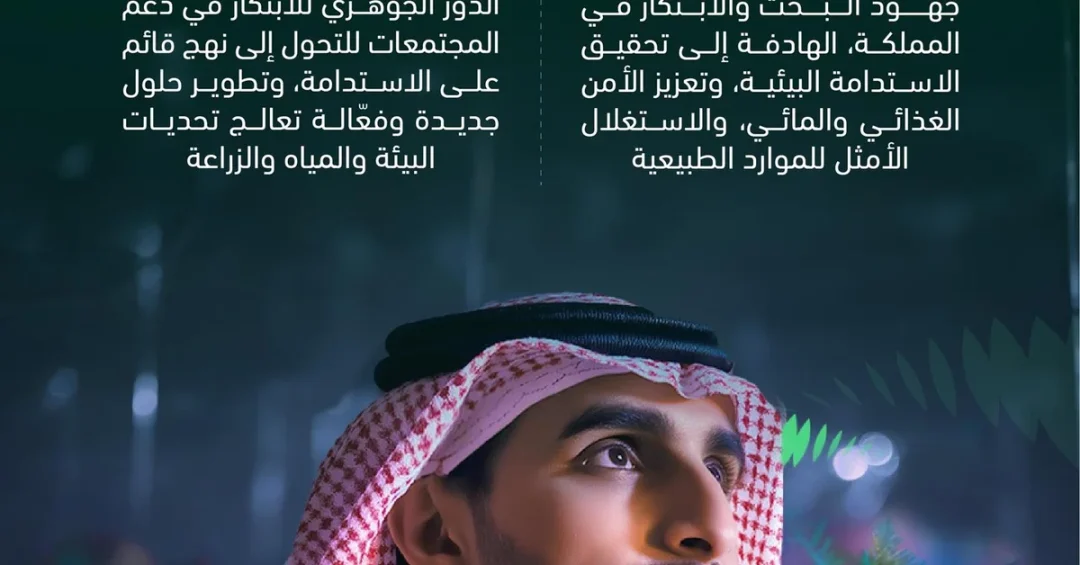
The Research, Development, and Innovation Authority (RDIA), in collaboration with the Ministry of Environment, Water, and Agriculture, is organizing Sustainability Innovation Week under the theme “Innovation for a Sustainable Tomorrow” from December 9 to 11, 2024, in Riyadh. The event will be held as part of the Kingdom of Saudi Arabia’s hosting of the 16th Conference of the Parties to the United Nations Convention to Combat Desertification (UNCCD COP16), a landmark global gathering that underscores the Kingdom’s growing leadership in environmental sustainability and international cooperation.
The announcement, released via official Saudi channels including the Saudi Press Agency (SPA), highlights Saudi Arabia’s commitment to harnessing research, development, and innovation to address some of the most pressing environmental challenges facing humanity. By convening scientists, experts, and researchers from around the world, Sustainability Innovation Week aims to accelerate solutions in water and food security—two areas where the Kingdom has developed significant expertise and where global demand for actionable strategies continues to rise. The event reflects a broader national effort to position Saudi Arabia as a hub for sustainability innovation, aligning with the goals of Vision 2030 and the Kingdom’s environmental initiatives.
Context and Background
Why does Sustainability Innovation Week matter now, and what makes it more than just another conference on the international calendar? The event takes place during a critical moment for global environmental governance, as UNCCD COP16 brings together member states, environmental organizations, and stakeholders to discuss coordinated action against desertification and land degradation. Saudi Arabia’s hosting of COP16 marks the first time the conference is held in the Middle East, signaling the region’s increasing role in shaping global environmental policy. Sustainability Innovation Week, organized by RDIA and the Ministry of Environment, Water, and Agriculture, serves as a dedicated platform within this larger framework to spotlight scientific and technological breakthroughs.
The Research, Development, and Innovation Authority was established to strengthen Saudi Arabia’s research and innovation ecosystem, bridging gaps between academia, industry, and government. Its partnership with the Ministry of Environment, Water, and Agriculture for this event reflects an integrated approach to national challenges. The Ministry oversees policies related to water resources, agriculture, and environmental protection, making it a natural co-organizer for a week focused on water and food security. Together, these institutions are showcasing how Saudi Arabia is moving from resource-dependent strategies to knowledge-driven solutions, a shift at the heart of Vision 2030.
Historically, Saudi Arabia has invested heavily in desalination and water management, becoming a global leader in desalinated water production. The Kingdom’s expertise in this area is not only a national asset but also a contribution to global sustainability efforts. By hosting Sustainability Innovation Week, Saudi Arabia is opening its doors to international experts, facilitating the exchange of ideas and technologies that can be adapted to different contexts. This collaborative spirit is central to the event’s theme, “Innovation for a Sustainable Tomorrow,” which emphasizes forward-looking, practical outcomes over theoretical discussion.
Key Details
What exactly will Sustainability Innovation Week cover, and who stands to benefit from its outcomes? The event focuses on two main areas: water and food security. Under water security, participants will address the management, sustainability, and conservation of water resources, exploring innovative solutions for challenges such as scarcity, quality, and distribution. Given that water scarcity affects billions of people worldwide, the insights shared in Riyadh could have far-reaching implications. Saudi Arabia’s own experience in managing limited water resources through advanced desalination and efficient irrigation systems provides a valuable case study for other nations.
On food security, the agenda includes discussions on ensuring food availability, sustainable agriculture, and resilience in food supply chains. The COVID-19 pandemic and geopolitical disruptions have exposed vulnerabilities in global food systems, making this topic increasingly urgent. Saudi Arabia has been investing in agricultural technologies, including controlled-environment agriculture and water-efficient farming, to enhance domestic production while reducing environmental impact. Sustainability Innovation Week will allow researchers and experts to present cutting-edge solutions, from precision farming to alternative proteins, and to discuss how these can be scaled up.
The event also provides a platform for exchanging strategies and international expertise, with the goal of collectively shaping a sustainable future. Participants will have the opportunity to attend sessions, workshops, and networking events designed to foster collaboration. Those interested in attending can register at the following link: https://www.unccdcop16.org/side-event/sustainability-week. The week is expected to draw a diverse audience, including scientists, policymakers, entrepreneurs, and representatives from international organizations, all contributing to a rich dialogue on sustainability.
International and Regional Impact
How will Sustainability Innovation Week influence global efforts to combat desertification and promote sustainability beyond the immediate event? By aligning with UNCCD COP16, the week amplifies the conference’s core mission: to address desertification and land degradation through coordinated international action. The Middle East, including Saudi Arabia, is particularly vulnerable to these issues, with arid climates and limited arable land. However, the region is also emerging as a source of innovative solutions, from large-scale afforestation projects to smart water management systems. Sustainability Innovation Week thus positions Saudi Arabia as a bridge between regional challenges and global solutions.
On the international stage, the event reinforces Saudi Arabia’s role as a responsible global stakeholder. The Kingdom has been increasingly active in multilateral environmental forums, including the G20 and the United Nations. Hosting COP16 and its associated events demonstrates a willingness to lead by example, investing in research and development that can benefit not only Saudi Arabia but also other countries facing similar environmental stresses. For international participants, the week offers a chance to engage with Saudi institutions, explore partnership opportunities, and gain insights into how the Kingdom is balancing economic growth with environmental stewardship.
Regionally, the event could catalyze greater cooperation among Middle Eastern countries. Water and food security are shared concerns, and collaborative approaches can yield more effective outcomes than isolated national efforts. By bringing together experts from across the region and beyond, Sustainability Innovation Week fosters a spirit of collective problem-solving. This aligns with Saudi Arabia’s broader diplomatic efforts to promote stability and prosperity in the region, using environmental cooperation as a foundation for trust and mutual benefit.
Economic and Strategic Significance
What economic and strategic advantages does Saudi Arabia gain from hosting Sustainability Innovation Week, and how does it fit into the Kingdom’s long-term planning? The event is a component of Saudi Arabia’s economic diversification strategy under Vision 2030, which seeks to reduce dependence on oil revenues by developing knowledge-based sectors. Research, development, and innovation are key pillars of this transformation. By showcasing its capabilities in water and food security, Saudi Arabia can attract investment, foster startups, and create high-skilled jobs in fields such as agritech, watertech, and environmental engineering.
Furthermore, the event supports the goals of the Saudi Green Initiative and the Middle East Green Initiative, both of which aim to combat climate change, improve air quality, and enhance quality of life. These initiatives involve substantial investments in renewable energy, afforestation, and conservation. Sustainability Innovation Week provides a platform to highlight progress and share lessons learned, reinforcing Saudi Arabia’s commitment to sustainable development. For businesses, the event offers opportunities to demonstrate technologies, forge partnerships, and access new markets, particularly as global demand for sustainable solutions grows.
Strategically, hosting UNCCD COP16 and Sustainability Innovation Week enhances Saudi Arabia’s soft power and influence in international environmental governance. It positions the Kingdom as a convener of global dialogues, capable of facilitating consensus and action. This is consistent with Vision 2030’s emphasis on a vibrant society, a thriving economy, and an ambitious nation. By investing in sustainability innovation, Saudi Arabia is not only addressing its own environmental challenges but also contributing to global public goods, thereby strengthening its reputation as a proactive and responsible member of the international community.
Vision 2030 Alignment
How does Sustainability Innovation Week exemplify the objectives of Saudi Vision 2030, and what does it signal about the Kingdom’s future direction? Vision 2030, launched in 2016, is a comprehensive plan to diversify the economy, empower citizens, and enhance international cooperation. Environmental sustainability is woven throughout the vision, with specific targets related to water efficiency, renewable energy, and biodiversity. The Research, Development, and Innovation Authority and the Ministry of Environment, Water, and Agriculture are instrumental in achieving these targets, and their collaboration on this event demonstrates the integrated approach required.
By organizing Sustainability Innovation Week, Saudi Arabia is investing in the knowledge economy and fostering a culture of innovation. The event’s focus on water and food security directly supports Vision 2030’s goal of ensuring the sustainability of vital resources. It also aligns with the National Environment Strategy and the Saudi Green Initiative, which aim to plant 10 billion trees and protect 30% of the Kingdom’s land and sea areas. These efforts are not only about environmental protection but also about economic resilience and social well-being.
Looking ahead, Sustainability Innovation Week is expected to yield tangible outcomes, such as new research collaborations, technology transfers, and policy recommendations. It reinforces Saudi Arabia’s role as a global leader in sustainability and a key partner in achieving the Sustainable Development Goals. As the Kingdom continues its journey toward a diversified, innovative, and sustainable future, events like this serve as milestones, showcasing progress and inspiring further action. The world will be watching Riyadh this December, and the outcomes will likely shape sustainability agendas for years to come.
20 Questions
Q1. What is Sustainability Innovation Week?
A1. Sustainability Innovation Week is an event organized by the Research, Development, and Innovation Authority (RDIA) in collaboration with the Ministry of Environment, Water, and Agriculture, held from December 9 to 11, 2024, in Riyadh, under the theme “Innovation for a Sustainable Tomorrow.”
Q2. Where and when will Sustainability Innovation Week take place?
A2. The event will be held in Riyadh, Saudi Arabia, from December 9 to 11, 2024, as part of the Kingdom’s hosting of the 16th Conference of the Parties to the United Nations Convention to Combat Desertification (UNCCD COP16).
Q3. Who is organizing Sustainability Innovation Week?
A3. The Research, Development, and Innovation Authority (RDIA), in collaboration with the Ministry of Environment, Water, and Agriculture, is organizing the event.
Q4. What is the main theme of the event?
A4. The main theme is “Innovation for a Sustainable Tomorrow,” emphasizing the role of science, technology, and innovation in addressing environmental sustainability challenges.
Q5. What are the two main focus areas of the event?
A5. The event focuses on water security and food security, addressing management, sustainability, conservation of water resources, and innovative solutions for food availability and sustainable agriculture.
Q6. Why is water security a key topic?
A6. Water security is crucial due to global water scarcity. Saudi Arabia’s expertise in desalination and water management provides valuable insights for sustainable solutions worldwide.
Q7. Why is food security important at this event?
A7. Food security is vital as global supply chains face disruptions. The event explores sustainable agriculture and resilience to ensure food availability for growing populations.
Q8. How does the event align with UNCCD COP16?
A8. It aligns by complementing COP16’s mission to combat desertification and land degradation, providing a platform for scientific and technological solutions within the broader conference framework.
Q9. Who can attend Sustainability Innovation Week?
A9. Scientists, experts, researchers, policymakers, entrepreneurs, and representatives from international organizations interested in sustainability can attend. Registration is available at the provided link.
Q10. What is the role of RDIA in Saudi Arabia?
A10. RDIA strengthens Saudi Arabia’s research and innovation ecosystem, bridging academia, industry, and government to drive progress aligned with Vision 2030.
Q11. How does the event support Saudi Vision 2030?
A11. It supports Vision 2030 by promoting innovation, economic diversification, and environmental sustainability, key pillars of the Kingdom’s long-term development plan.
Q12. What is the significance of hosting COP16 in Saudi Arabia?
A12. It marks the first time COP16 is held in the Middle East, highlighting Saudi Arabia’s growing leadership in global environmental governance and sustainability efforts.
Q13. What outcomes are expected from the event?
A13. Expected outcomes include new research collaborations, technology transfers, policy recommendations, and enhanced international cooperation on water and food security.
Q14. How does the event address desertification?
A14. By focusing on sustainable water and land management, the event contributes to efforts to combat desertification, a core goal of UNCCD COP16.
Q15. What innovative solutions will be discussed?
A15. Solutions include advanced desalination, precision agriculture, water-efficient irrigation, controlled-environment agriculture, and resilient food supply chain technologies.
Q16. How can international participants benefit?
A16. They can gain insights from Saudi expertise, explore partnership opportunities, and contribute to global sustainability dialogues, fostering mutual learning and collaboration.
Q17. What is the Saudi Green Initiative?
A17. The Saudi Green Initiative is a national effort to combat climate change, improve air quality, and enhance quality of life through afforestation, renewable energy, and conservation projects.
Q18. How does the event promote international cooperation?
A18. By bringing together global experts, the event facilitates the exchange of ideas, strategies, and technologies, underscoring Saudi Arabia’s commitment to collaborative environmental preservation.
Q19. What is the economic significance of the event?
A19. It showcases Saudi Arabia’s knowledge-based economy, attracts investment, fosters startups, and creates high-skilled jobs in sustainability sectors, supporting economic diversification.
Q20. How can one register for the event?
A20. Interested individuals can register at the following link: https://www.unccdcop16.org/side-event/sustainability-week.
Reader Feedback
We value your thoughts. Please share your feedback on this article.
Your feedback helps us improve our coverage.
Related articles
 Saudi Arabia Calls for Global Action on Hunger at Addis Ababa Summit
 International Fire Operations Conference Concludes in Riyadh
 KSU Showcases Advisory Services at WUF12 in Cairo
 Riyadh Deputy Governor Attends Zambia National Day Event
 OIC Secretary-General Meets Egypt Representative in Jeddah
 Saudi Forces Join Egypt’s Piercing Arrow 2024 Drill