


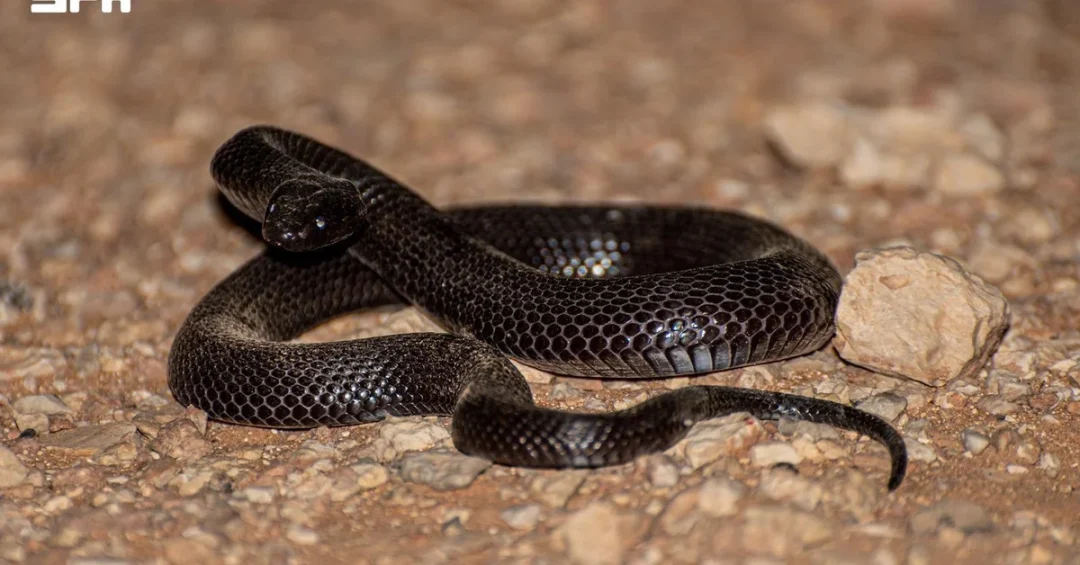
The black cobra, a venomous desert snake scientifically known as Walterinnesia aegyptia, has been documented as a vital component of the biodiversity of Saudi Arabia’s Northern Borders Region, where its presence helps regulate populations of rodents and other small organisms within the desert ecosystem, according to the Saudi Press Agency (SPA). The species, commonly called the desert cobra, is rarely observed because it is nocturnal and prefers to shelter in burrows and crevices across the region’s rocky and sandy terrain. Its recorded presence underscores the ecological richness of an area often perceived as barren, and it reflects the Kingdom’s broader commitment to documenting and protecting its natural heritage under Vision 2030.
Officials and environmental specialists note that the Northern Borders Region, with its desert expanses, rocky outcrops, valleys, and ravines, offers suitable habitats for several reptile species, including the black cobra. Rather than posing a threat to be eliminated, the snake functions as a natural regulator of ecosystems, feeding on rodents, some reptiles, and other small prey. Its role illustrates how even venomous wildlife contributes to ecological balance, a principle increasingly emphasized by Saudi environmental authorities as the Kingdom expands conservation efforts, protected areas, and public awareness campaigns across its vast territory.
Context and Background
Why should a rarely seen desert snake matter to anyone beyond the boundaries of the Northern Borders Region? The answer lies in the delicate balance that sustains desert life. The black cobra, Walterinnesia aegyptia, is a glossy, dark-colored venomous snake adapted to arid environments across the Middle East. In Saudi Arabia, its presence has been recorded in the Northern Borders Region as part of the area’s natural biodiversity. Because it is nocturnal and secretive, it is seldom encountered by people, which helps explain why many residents and visitors are unaware of its ecological importance.
The Northern Borders Region stretches across the northern part of the Kingdom, bordering Jordan and Iraq, and is characterized by desert plains, rocky plateaus, and seasonal valleys known as wadis. These varied landscapes create microhabitats that support a surprising range of wildlife, from reptiles and rodents to birds and larger mammals. Environmental associations in the region, including the Aman Environmental Association, work to study and protect these habitats. The association’s leadership has stressed that reptiles such as the black cobra are integral to the region’s natural system, not anomalies to be feared or removed.
Across Saudi Arabia, awareness of biodiversity has grown steadily as the Kingdom invests in environmental protection. National initiatives have expanded protected areas, supported wildlife surveys, and promoted responsible coexistence with native species. The documentation of the black cobra in the Northern Borders Region fits within this wider effort to understand and safeguard the Kingdom’s ecosystems. It also serves as a reminder that conservation is not limited to iconic species such as the Arabian oryx or the Arabian leopard; it extends to the lesser-known creatures that quietly maintain the balance of desert life.
Key Details
What exactly do we know about this elusive reptile and the guidance issued to the public? According to the Saudi Press Agency, the black cobra is characterized by its glossy, dark color and is rarely seen because it is nocturnal and prefers to live in burrows and crevices. It feeds on rodents, some reptiles, and other small prey, which makes it a natural check on populations that could otherwise grow unchecked and damage fragile desert vegetation or agricultural areas. Its scientific name, Walterinnesia aegyptia, places it among the venomous snakes of the region, and its presence has been recorded in the Northern Borders Region as one of the components of biodiversity.
Nasser Al-Majlad, Chairman of the Board of Directors of the Aman Environmental Association in the Northern Borders Region, explained that the nature of the region, with its desert and rocky environments, valleys, and ravines, provides suitable habitats for several reptile species. He warned against approaching wildlife, including the black cobra, or attempting to catch or provoke it if encountered. Instead, he advised people to keep a safe distance, noting that the snake may display defensive behavior when threatened. Al-Majlad also called for the assistance of relevant authorities if the snake appears in populated areas.
These recommendations reflect a balanced approach: respect for wildlife combined with practical safety measures. The black cobra is not aggressive by nature and typically avoids human contact, but like any wild animal, it will defend itself if cornered or handled. The guidance from the Aman Environmental Association therefore encourages residents and visitors to observe without interfering, and to rely on trained authorities when wildlife enters urban or residential spaces. Such protocols help protect both people and the animals that form part of the Kingdom’s natural heritage.
International and Regional Impact
How does the presence of a single snake species connect to broader regional and international conversations? Biodiversity conservation is a global priority, and Saudi Arabia’s efforts to document and protect native wildlife resonate with international commitments under frameworks such as the Convention on Biological Diversity. The Northern Borders Region, sharing borders with Jordan and Iraq, sits within a wider desert landscape that transcends political boundaries. Wildlife such as the black cobra moves through these arid zones regardless of national borders, making regional cooperation on habitat protection and species monitoring increasingly relevant.
Saudi environmental associations and government agencies have increasingly participated in international exchanges of scientific knowledge, sharing data on desert ecosystems and receiving expertise on conservation practices. The documentation of Walterinnesia aegyptia in the Northern Borders Region adds to the body of knowledge about reptile distribution in the Arabian Peninsula, which is valuable for researchers across the region. It also signals that Saudi Arabia is taking seriously its role as steward of vast desert habitats that are home to species found in few other places on Earth.
Economic and Strategic Significance
Why does ecological balance carry economic and strategic weight for the Kingdom? Healthy ecosystems underpin sustainable development. Rodents and other small animals, if left unchecked, can damage crops, stored food, and vegetation that stabilizes desert soils. By preying on such species, the black cobra provides a natural form of pest regulation, reducing pressures on agriculture and helping maintain the ecological integrity of rangelands. In a region where water and arable land are scarce, these services are more valuable than they might first appear.
Strategic significance also lies in the Kingdom’s broader environmental agenda. Saudi Arabia has launched ambitious initiatives, including the Saudi Green Initiative and the Middle East Green Initiative, aimed at planting billions of trees, restoring degraded land, and protecting biodiversity. These programs depend on accurate knowledge of local species and habitats. Recording the presence of the black cobra in the Northern Borders Region contributes to that knowledge base, supporting informed decisions about land use, conservation zoning, and public education. As the Kingdom diversifies its economy and promotes sustainable tourism, maintaining healthy wildlife populations becomes part of the national asset base.
Vision 2030 Alignment
How does a desert snake fit into Saudi Arabia’s Vision 2030? Vision 2030 is not only about economic diversification, mega-projects, and global investment; it also encompasses quality of life, environmental sustainability, and the preservation of the Kingdom’s natural and cultural heritage. The documentation and protection of species such as the black cobra align with the vision’s environmental goals, which seek to safeguard ecosystems for future generations. Environmental associations like the Aman Environmental Association in the Northern Borders Region play a grassroots role in this national effort, combining scientific observation with public outreach.
As Saudi Arabia continues to open its landscapes to tourism and research, understanding and respecting native wildlife becomes ever more important. The black cobra’s quiet presence in the Northern Borders Region is a reminder that the Kingdom’s deserts are living systems, rich with species that deserve protection. Through responsible journalism, public awareness, and continued cooperation between authorities and communities, Saudi Arabia is demonstrating that ecological balance and national development can advance together, in line with Vision 2030’s promise of a sustainable and prosperous future.
20 Questions
Q1. What is the black cobra and what is its scientific name?
A1. The black cobra, also called the desert cobra, is a venomous snake species scientifically known as Walterinnesia aegyptia. It inhabits desert environments and has been recorded in Saudi Arabia’s Northern Borders Region as part of local biodiversity.
Q2. Where has the black cobra been recorded in Saudi Arabia?
A2. Its presence has been recorded in the Northern Borders Region, according to the Saudi Press Agency. The region’s desert, rocky areas, valleys, and ravines provide suitable habitats for several reptile species, including this snake.
Q3. Why is the black cobra important to the ecosystem?
A3. It helps regulate populations of organisms within the ecosystem by feeding on rodents, some reptiles, and other small prey. This natural predation supports ecological balance and reduces pressures on vegetation and agricultural areas.
Q4. What does the black cobra look like?
A4. It is characterized by its glossy, dark color. Its appearance helps it blend into shadowed desert environments, and its nocturnal habits mean it is rarely seen by people during daylight hours.
Q5. Why is the black cobra rarely seen?
A5. It is nocturnal and prefers to live in burrows and crevices, avoiding open areas during the day. This secretive behavior explains why encounters with humans are uncommon despite its presence in the region.
Q6. What does the black cobra eat?
A6. It feeds on rodents, some reptiles, and other small prey. By controlling rodent populations, it provides a natural service that benefits desert vegetation and reduces potential crop damage.
Q7. Who is Nasser Al-Majlad?
A7. Nasser Al-Majlad is the Chairman of the Board of Directors of the Aman Environmental Association in the Northern Borders Region. He has spoken about the region’s suitability for reptiles and offered safety guidance to the public.
Q8. What advice did Al-Majlad give about encountering the black cobra?
A8. He warned against approaching, catching, or provoking wildlife, including the black cobra. He advised keeping a safe distance because the snake may display defensive behavior when threatened.
Q9. What should people do if a black cobra appears in a populated area?
A9. Al-Majlad called for the assistance of relevant authorities if the snake appears in populated areas. Trained professionals can handle the situation safely for both people and the animal.
Q10. Why does the Northern Borders Region support reptile species?
A10. The region’s desert and rocky environments, valleys, and ravines create varied microhabitats. These conditions provide shelter, breeding sites, and food sources suitable for several reptile species, including the black cobra.
Q11. Is the black cobra aggressive toward humans?
A11. The black cobra is not aggressive by nature and typically avoids human contact. However, like any wild animal, it may defend itself if threatened, cornered, or handled, so a safe distance is advised.
Q12. How does the black cobra contribute to biodiversity?
A12. As a predator of rodents and small prey, it occupies a specific ecological niche. Its presence indicates a functioning ecosystem and contributes to the overall balance of species in the Northern Borders Region.
Q13. What is the Aman Environmental Association?
A13. The Aman Environmental Association is an environmental organization active in the Northern Borders Region. Its leadership, including Nasser Al-Majlad, works to raise awareness about local wildlife and promote safe coexistence with nature.
Q14. Why is public awareness important regarding the black cobra?
A14. Awareness helps prevent unnecessary fear and harmful interactions. When people understand the snake’s role and behavior, they are more likely to keep a safe distance and contact authorities when needed.
Q15. How does the black cobra fit into Saudi Arabia’s environmental goals?
A15. Saudi Arabia’s environmental initiatives emphasize biodiversity protection and ecosystem health. Documenting species like the black cobra supports these goals by informing conservation planning and land-use decisions.
Q16. Does the black cobra pose a risk to livestock or pets?
A16. The snake primarily feeds on rodents and small prey. Encounters with livestock or pets are rare, but keeping animals away from known burrows and crevices is a sensible precaution in desert areas.
Q17. What role do rodents play in the black cobra’s diet?
A17. Rodents are a key food source. By preying on them, the black cobra helps prevent rodent populations from growing excessively, which can protect vegetation, stored food, and desert soil stability.
Q18. How can residents and visitors help protect the black cobra?
A18. They can avoid approaching or disturbing the snake, refrain from catching or provoking it, and report sightings in populated areas to relevant authorities. Respecting wildlife supports conservation efforts.
Q19. What does the black cobra’s presence indicate about the region’s environment?
A19. It indicates that the Northern Borders Region retains suitable habitat for reptiles, with adequate food sources and shelter. This suggests a functioning desert ecosystem worthy of continued protection and study.
Q20. How does this story connect to Vision 2030?
A20. Vision 2030 includes environmental sustainability and quality-of-life goals. Protecting species like the black cobra and raising public awareness align with the Kingdom’s broader commitment to safeguarding natural heritage for future generations.
Reader Feedback
We value your thoughts. Please share your feedback on this article.
Your feedback helps us improve our coverage.
Related articles
 Saudi Arabia Raises Localization of Project Management Jobs to 70%
 SEVEN Tabuk Opens: New Entertainment Destination in Saudi Arabia
 Jeddah Governor Receives Mauritania Consul General
 Border Guard Launches Seabed Clean-Up in Tabuk
 Palestinian Injured in Gaza as Ceasefire Violations Continue
 Saudi Ministry Bans Mobile Trading in Nine Locations