


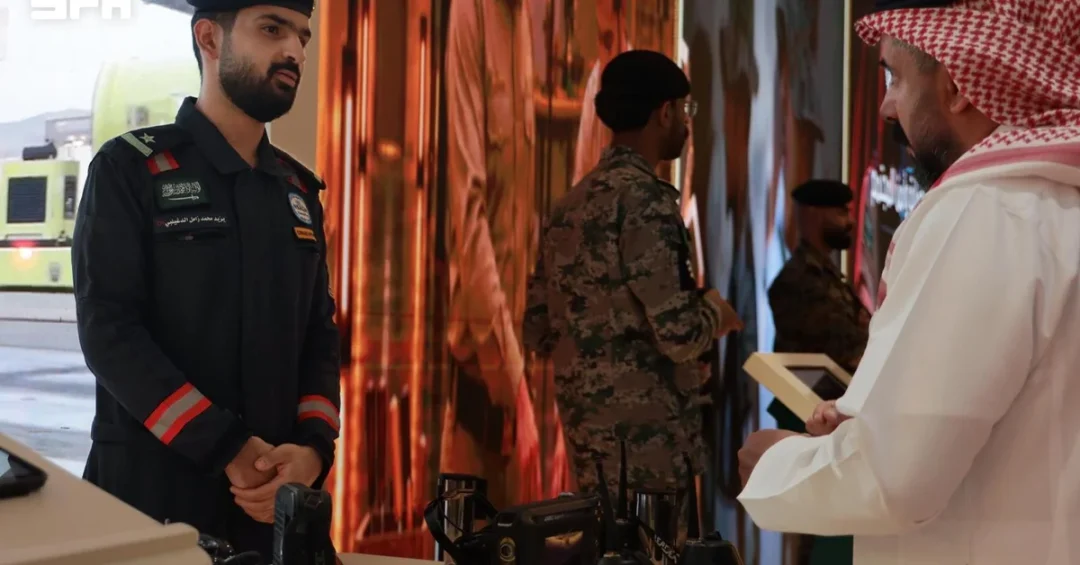
The Ministry of Interior’s pavilion at the Hajj Conference and Exhibition in Jeddah is showcasing the latest search and rescue technologies and equipment employed by the General Directorate of Civil Defense, alongside the Salamah electronic portal for online safety permits, in a display designed to enhance field readiness and response efficiency during the Hajj season. The exhibition, held in the Red Sea coastal city of Jeddah, brings together government agencies, service providers, and international stakeholders to review the operational capabilities that support the safe passage and wellbeing of millions of pilgrims arriving in the Kingdom each year.
Visitors to the pavilion are being introduced to advanced tools and systems that the Civil Defense relies upon in emergency and rescue scenarios, underscoring a broader national effort to harness modern technology in the service of public safety. The presentation also highlights the Salamah electronic portal, which allows establishments to issue, renew, amend, or cancel safety permits entirely online, streamlining procedures and expanding the reach of digital government services. Together, these exhibits reflect the General Directorate of Civil Defense’s commitment to adopting cutting-edge technologies and continuously improving its services for the benefit of pilgrims and residents alike.
Context and Background
Why does a single pavilion at a conference merit attention from an international audience? The answer lies in the scale and complexity of the Hajj season, one of the largest annual gatherings of humanity on earth, which demands meticulous planning across security, health, transport, and emergency response. The Hajj Conference and Exhibition serves as a central platform where Saudi agencies present their preparations and capabilities, and the Ministry of Interior’s participation places the Civil Defense’s operational readiness squarely within that national framework.
The General Directorate of Civil Defense operates under the Ministry of Interior and is responsible for firefighting, rescue operations, disaster response, and safety regulation across the Kingdom. During the Hajj season, its role intensifies as crowds converge on the holy sites of Makkah, Mina, Muzdalifah, and Arafat. The technologies displayed in Jeddah are therefore not abstract prototypes but practical instruments intended to function under extraordinary conditions, where rapid response and precise coordination can be decisive.
The Salamah portal represents a parallel strand of this effort: regulatory modernization through digitalization. By moving safety permit procedures online, the Civil Defense reduces administrative friction for establishments operating in and around the holy sites while reinforcing compliance with prevention requirements. The combination of field technology and digital service delivery illustrates how the Kingdom is approaching pilgrim safety as an integrated system rather than a collection of isolated measures.
Search and Rescue Technologies on Display
What exactly do these field technologies enable? The pavilion showcases equipment designed to strengthen search and rescue operations, improve situational awareness, and accelerate response times during the Hajj season. Such tools are intended to support Civil Defense teams working in dense crowds and challenging terrain, where conventional approaches can be constrained by congestion, visibility, and communication challenges.
The exhibition format allows visitors to examine the equipment and understand how it fits into the broader emergency response architecture. For international observers, the display offers a window into the operational standards Saudi Arabia applies to mass-gathering safety, a field in which the Kingdom has accumulated substantial experience over decades of hosting the pilgrimage. The emphasis on field readiness signals a continuous cycle of evaluation and improvement rather than a static inventory of tools.
Equally significant is the integration of these technologies into a coordinated command structure under the Ministry of Interior. Search and rescue capability depends not only on equipment but on trained personnel, clear protocols, and reliable communication between agencies. The pavilion presents the technologies as one component of that larger system, consistent with the Civil Defense’s stated commitment to adopting modern technologies and enhancing service quality.
The Salamah Electronic Portal
How does an online permitting system contribute to pilgrim safety? The Salamah portal enables establishments to issue, renew, amend, or cancel safety permits through a fully digital process, removing the need for in-person procedures and reducing processing time. This streamlines administrative workflows for businesses and institutions operating in the Hajj environment, allowing them to meet safety requirements efficiently and predictably.
Beyond convenience, the portal expands the reach of digital government services and reinforces safety and prevention requirements by making compliance more accessible and more traceable. When permits are processed electronically, authorities gain clearer visibility into which establishments have met their obligations, supporting more effective oversight. The service therefore serves both the regulated entities and the public interest in a secure environment for pilgrims.
The portal’s presence at the exhibition reflects a deliberate choice to present digital governance as part of the Civil Defense’s public-facing offering, not merely an internal administrative tool. For international audiences accustomed to digital permit systems, the Salamah portal demonstrates how Saudi Arabia is applying similar modernization principles to the specialized and high-stakes context of the Hajj season.
International and Regional Impact
Why should audiences beyond the Kingdom take note? The Hajj is a global event, drawing pilgrims from nearly every country, and the safety standards applied to it carry implications for international confidence in Saudi-hosted mass gatherings. The technologies and digital services presented at the conference contribute to a secure environment for pilgrims, which in turn supports the Kingdom’s reputation as a capable and reliable steward of the pilgrimage.
Regional stakeholders, including travel operators, religious tourism organizations, and emergency management bodies, have a direct interest in the systems that govern pilgrim safety. The exhibition provides a venue for exchanging expertise and demonstrating operational transparency. By publicly showcasing its capabilities, the General Directorate of Civil Defense reinforces a message of preparedness and professionalism that resonates across the region and among international partners.
The event also positions Jeddah as a hub for dialogue on crowd safety and emergency management, aligning with broader Saudi efforts to convene global expertise around shared challenges. Such exchanges can inform best practices that extend beyond the Hajj season itself, contributing to the wider field of disaster response and public safety management.
Economic and Strategic Significance
What does this mean for the Kingdom’s strategic priorities? A safe and well-managed Hajj season underpins the economic and social ecosystem surrounding the pilgrimage, from hospitality and transport to retail and services. Efficient safety permitting and robust emergency response reduce operational risk for establishments, supporting a business environment that can serve pilgrims reliably and at scale.
Digitalization of government services is a strategic objective in its own right, and the Salamah portal exemplifies how ministries are translating that objective into tangible tools. Streamlined procedures lower administrative costs, improve compliance rates, and generate data that can inform future planning. In the context of the Hajj, these efficiencies contribute directly to the reliability of the services on which millions depend each year.
Strategically, the display at the Hajj Conference and Exhibition communicates that the Kingdom invests continuously in the systems that protect pilgrims. This messaging supports Saudi Arabia’s broader role as a convenor of global stakeholders and as a leader in the application of technology to public safety challenges, reinforcing the credibility of its institutions on the world stage.
Vision 2030 Alignment
How does this connect to the Kingdom’s long-term vision? Saudi Vision 2030 emphasizes government service transformation, digital innovation, and the enhancement of quality of life, and the Civil Defense’s presentation aligns closely with each of these pillars. The adoption of modern search and rescue technologies reflects a commitment to operational excellence, while the Salamah portal embodies the digitalization of public services that Vision 2030 places at the heart of governance reform.
Vision 2030 also envisions the Kingdom as a global destination capable of hosting large-scale events with the highest standards of safety and hospitality. The pilgrimage sits at the center of that ambition, and the continuous improvement of safety and prevention systems serves both pilgrims and the national interest. The General Directorate of Civil Defense’s efforts, as showcased in Jeddah, are a practical expression of Vision 2030’s promise: a modern, capable state that harnesses technology to serve people, protect communities, and uphold the Kingdom’s enduring role as custodian of the holy sites.
20 Questions
Q1. What is being showcased at the Hajj Conference and Exhibition in Jeddah?
A1. The Ministry of Interior’s pavilion is showcasing the latest search and rescue technologies and equipment used by the General Directorate of Civil Defense, along with the Salamah electronic portal for issuing safety permits online.
Q2. Which government body operates the technologies on display?
A2. The technologies are employed by the General Directorate of Civil Defense, which operates under the Ministry of Interior and is responsible for firefighting, rescue operations, disaster response, and safety regulation in the Kingdom.
Q3. Where is the Hajj Conference and Exhibition being held?
A3. The conference and exhibition are being held in Jeddah, on Saudi Arabia’s Red Sea coast, bringing together government agencies and international stakeholders to review preparations for the Hajj season.
Q4. What is the stated purpose of the showcased search and rescue equipment?
A4. The tools are intended to enhance field readiness and improve response efficiency during the Hajj season, supporting Civil Defense teams operating in dense crowds and challenging conditions at the holy sites.
Q5. What is the Salamah electronic portal?
A5. The Salamah portal is an electronic service that enables establishments to issue, renew, amend, or cancel safety permits online, streamlining procedures and expanding digital government services while reinforcing safety and prevention requirements.
Q6. How does the Salamah portal benefit establishments?
A6. It allows establishments to complete safety permit procedures digitally rather than in person, reducing processing time and administrative friction while helping them meet compliance obligations efficiently and predictably.
Q7. Why is digitalization of safety permits significant for oversight?
A7. Electronic processing gives authorities clearer visibility into which establishments have met their safety obligations, supporting more effective oversight and helping reinforce prevention requirements across the Hajj environment.
Q8. What does the Civil Defense’s participation reflect about its priorities?
A8. It reflects the General Directorate of Civil Defense’s commitment to adopting modern technologies, improving its services, strengthening the safety and prevention system, and contributing to a secure environment for pilgrims.
Q9. Why is the Hajj season especially demanding for emergency services?
A9. The Hajj is one of the largest annual gatherings of humanity, requiring meticulous coordination across security, health, transport, and emergency response in dense crowds across the holy sites of Makkah, Mina, Muzdalifah, and Arafat.
Q10. Which holy sites do Civil Defense teams serve during Hajj?
A10. Civil Defense teams support operations across Makkah, Mina, Muzdalifah, and Arafat, where pilgrims congregate during the various stages of the pilgrimage, requiring rapid and coordinated emergency response.
Q11. How does the exhibition format benefit visitors?
A11. The exhibition allows visitors to examine the equipment and understand how it fits into the broader emergency response architecture, offering a window into the operational standards Saudi Arabia applies to mass-gathering safety.
Q12. What role does the Ministry of Interior play in the presentation?
A12. The Ministry of Interior hosts the pavilion that presents the Civil Defense’s capabilities, placing its operational readiness within the national framework for Hajj preparation and public safety.
Q13. Why does the Hajj matter to an international audience?
A13. The Hajj draws pilgrims from nearly every country, making the safety standards applied to it relevant to international confidence in Saudi-hosted mass gatherings and to global partners in religious tourism and emergency management.
Q14. How could the technologies improve response efficiency?
A14. The equipment is designed to strengthen search and rescue operations, improve situational awareness, and accelerate response times, which can be decisive in crowded conditions where conventional approaches face constraints.
Q15. What strategic objective does the Salamah portal exemplify?
A15. The portal exemplifies the digitalization of government services, a strategic objective that lowers administrative costs, improves compliance rates, and generates data that can inform future planning for the pilgrimage.
Q16. How does safety at Hajj connect to economic activity?
A16. A safe and well-managed Hajj underpins the ecosystem of hospitality, transport, retail, and services surrounding the pilgrimage, reducing operational risk for establishments that serve pilgrims at scale.
Q17. How does the presentation align with Saudi Vision 2030?
A17. It aligns with Vision 2030’s emphasis on government service transformation, digital innovation, and quality of life, reflecting operational excellence and the digitalization of public services at the heart of governance reform.
Q18. What message does the display convey to international observers?
A18. It conveys preparedness and professionalism, reinforcing the Kingdom’s reputation as a capable and reliable steward of the pilgrimage and a leader in applying technology to public safety challenges.
Q19. What does the Civil Defense say it aims to secure for pilgrims?
A19. The General Directorate of Civil Defense states that its efforts aim to strengthen the safety and prevention system and contribute to a secure environment for all pilgrims during the Hajj season.
Q20. What is the forward-looking significance of these efforts?
A20. The efforts represent a practical expression of Vision 2030’s promise of a modern, capable state that harnesses technology to serve people, protect communities, and uphold the Kingdom’s role as custodian of the holy sites.
Reader Feedback
We value your thoughts. Please share your feedback on this article.
Your feedback helps us improve our coverage.
Related articles
 Saudi FM Meets Ukrainian Counterpart, Signs Visa MoU
 Saudi Forces Highlight AI, Drones in Hajj Crowd Management
 Hajj Conference in Jeddah Reviews Service Integration and Pilgrim Experience
 GASTAT President Joins 15th GCC Statistical Committee Meeting
 Saudi Transport Ecosystem Integrates 13 Entities for Hajj
 Border Guard Showcases Thermal Surveillance at Hajj Conference