


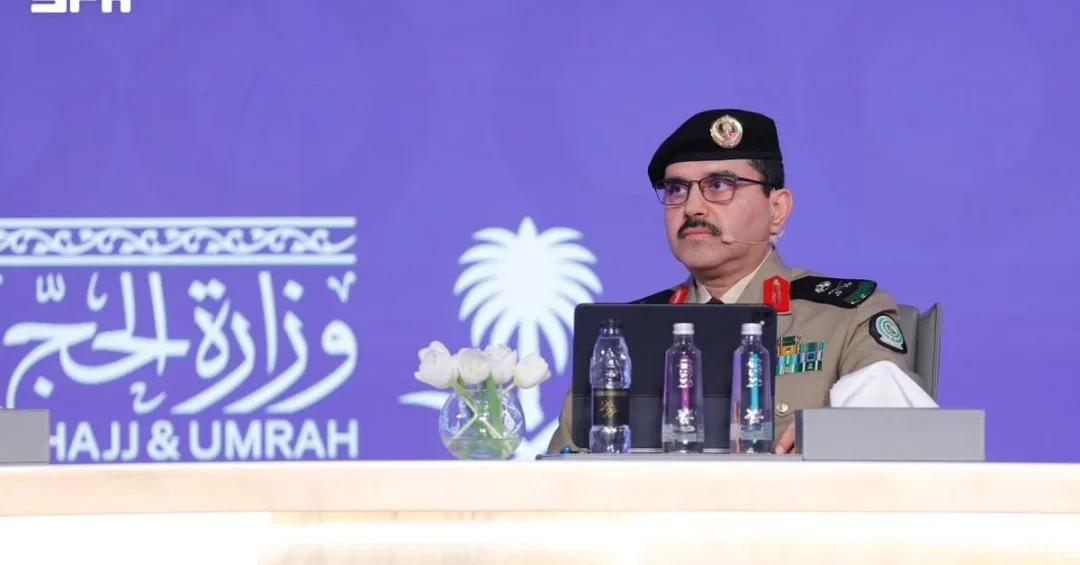
Major General Eng. Saad bin Abdulaziz Al-Mughaiseeb, Acting Commander of the Facilities Security Forces, outlined the Kingdom’s advanced technological approach to crowd management during Hajj at a panel discussion held alongside the Hajj Conference and Exhibition in Jeddah. The session, reported by the Saudi Press Agency (SPA), highlighted the integrated security ecosystem that protects millions of pilgrims annually. Major General Al-Mughaiseeb detailed how modern technologies and artificial intelligence are deployed to ensure safety and enable worshippers to perform their rituals with ease and peace of mind.
Have you ever wondered how Saudi Arabia manages the immense logistical challenge of hosting over two million pilgrims in a confined space? The answer lies in a sophisticated blend of human expertise and cutting-edge innovation. The Facilities Security Forces, operating under the Ministry of Interior, play a pivotal role in securing vital sites and facilities, managing pedestrian movement, and responding to emergencies. Their work is part of a broader national effort aligned with Saudi Vision 2030, which seeks to enhance the quality of life for citizens and visitors alike while showcasing the Kingdom’s capabilities on the global stage. This article explores the key details of Major General Al-Mughaiseeb’s remarks, the technologies involved, and the strategic implications for Hajj and beyond.
Context and Background
What makes the Hajj security challenge so unique? Every year, millions of Muslims from around the world gather in Makkah and the surrounding holy sites to perform the Hajj pilgrimage, one of the Five Pillars of Islam. The sheer scale of the event presents unprecedented logistical and security challenges. Crowd density during rituals such as the standing at Arafat, the stoning of the Jamarat, and the circumambulation of the Kaaba can reach critical levels, requiring precise planning and real-time monitoring. The Facilities Security Forces, a specialized unit within the Saudi security apparatus, are tasked with protecting critical infrastructure, managing crowds, and ensuring that pilgrims can complete their spiritual journey safely.
The Hajj Conference and Exhibition, held in Jeddah, serves as a platform for experts, officials, and technology providers to discuss innovations and best practices in Hajj management. It reflects Saudi Arabia’s commitment to continuous improvement and transparency in handling the annual pilgrimage. Major General Al-Mughaiseeb’s participation underscores the importance of integrating advanced technologies into security operations. His remarks come at a time when the Kingdom is investing heavily in smart city solutions and digital transformation, as part of Vision 2030, to enhance public safety and service delivery. The use of AI, drones, and smart devices is not merely a technological upgrade but a strategic shift toward proactive and data-driven security management.
How does Saudi Arabia balance tradition with modernity in the holiest sites? The answer lies in a careful integration of respect for religious sanctity and the adoption of non-intrusive technologies. The Facilities Security Forces work closely with other agencies, including the Ministry of Hajj and Umrah, the General Directorate of Public Security, and the Saudi Red Crescent Authority, to create a seamless security umbrella. This collaborative approach ensures that technological tools are deployed discreetly and effectively, without disturbing the spiritual atmosphere. The panel discussion provided a rare insight into the operational details that usually remain behind the scenes, highlighting the Kingdom’s readiness to share its expertise with the world.
Key Details of the Technological Deployment
What specific technologies are transforming crowd management during Hajj? Major General Al-Mughaiseeb detailed a suite of modern tools and artificial intelligence systems currently in use. Smart surveillance cameras equipped with AI algorithms can detect crowd density, identify potential bottlenecks, and alert operators to emerging risks in real time. These cameras are strategically placed across the holy sites, providing a comprehensive view of pilgrim movement. Smart wristbands, distributed to pilgrims, serve multiple purposes: they help in locating lost individuals, monitor health metrics, and facilitate quick identification during emergencies. This innovation has significantly reduced response times and improved the overall pilgrim experience.
Specialized vehicles equipped with preventive systems and field-monitoring devices are also part of the arsenal. These vehicles can navigate crowded areas and are fitted with communication systems that link directly to command centers. They enable security personnel to respond swiftly to incidents and provide assistance where needed. Additionally, drones are deployed for aerial surveillance, offering a bird’s-eye view of crowd dynamics and helping to coordinate ground operations. The use of drones is particularly effective in monitoring large open areas and tracking the flow of pilgrims between sites. These technologies are not just about security; they also enhance the efficiency of logistical support, such as waste management and medical assistance.
How are violations of Hajj regulations identified and addressed? The integrated systems allow authorities to detect individuals who may be violating regulations, such as those without proper permits or those engaging in unauthorized activities. The AI-powered cameras and monitoring devices can flag anomalies, enabling security personnel to intervene appropriately. This approach ensures that the sanctity of the pilgrimage is maintained and that all pilgrims can perform their rituals without disruption. Major General Al-Mughaiseeb emphasized that these measures are implemented with respect for privacy and religious sensitivities, focusing on safety and order rather than intrusion. The data collected is used solely for operational purposes and is handled in accordance with strict protocols.
Emergency Preparedness and Coordination
What happens behind the scenes to ensure readiness for any scenario? Major General Al-Mughaiseeb explained that emergency and evacuation plans are rigorously tested in coordination with operational and support entities. This includes training simulations involving relevant stakeholders, such as civil defense, medical teams, and transportation authorities. These exercises are designed to improve operational efficiency and ensure that all parties can respond seamlessly to potential incidents, whether they involve crowd crushes, medical emergencies, or security threats. The simulations are based on a comprehensive risk register that identifies potential hazards and outlines mitigation strategies.
The coordination extends to real-time communication systems that link field personnel with command centers. During the Hajj season, a unified command platform allows different agencies to share information instantly, enabling swift decision-making. This integrated approach was praised by experts at the Hajj Conference and Exhibition as a model for large-scale event management. The Facilities Security Forces also collaborate with international delegations and pilgrim groups to ensure that language barriers and cultural differences do not hinder emergency responses. Regular drills and debriefings help refine plans and incorporate lessons learned from previous years.
How does Saudi Arabia ensure that these plans remain effective as pilgrim numbers grow? The Kingdom continuously invests in research and development to upgrade its security infrastructure. The risk register is updated annually based on new data and emerging challenges. The use of AI and predictive analytics allows authorities to anticipate crowd patterns and preemptively deploy resources. This proactive stance is a hallmark of Saudi Arabia’s approach to Hajj management, reflecting a commitment to excellence and the safety of all guests. The successful execution of these plans has earned the Kingdom international recognition and serves as a testament to its organizational capabilities.
International and Regional Impact
Why does Saudi Arabia’s Hajj management matter beyond its borders? The Hajj is a global event, with pilgrims arriving from over 180 countries. The security and logistical measures implemented by the Kingdom have far-reaching implications for international public safety and crowd management practices. Major General Al-Mughaiseeb’s presentation at the Hajj Conference and Exhibition provided a platform for knowledge exchange, allowing other nations to learn from Saudi Arabia’s experience. Countries that host large gatherings, such as the Olympics or World Expos, can adapt similar technologies and coordination frameworks to enhance their own event security.
Moreover, the successful management of Hajj enhances Saudi Arabia’s soft power and reinforces its role as a responsible global leader. The Kingdom’s ability to safeguard millions of pilgrims while maintaining a welcoming and spiritual environment is a source of pride for the Muslim world. It also supports Saudi Arabia’s diplomatic efforts and strengthens ties with countries across Asia, Africa, and the West. The use of advanced technologies showcases the Kingdom’s modernization drive and its capacity to host mega-events, such as the upcoming Expo 2030 in Riyadh and the 2034 FIFA World Cup. These events will further test and display Saudi Arabia’s security and logistical expertise.
What can other nations learn from Saudi Arabia’s integrated security ecosystem? The model emphasizes inter-agency cooperation, technological innovation, and continuous training. It demonstrates that effective crowd management requires not only hardware but also a culture of preparedness and adaptability. The Facilities Security Forces’ approach balances central command with decentralized execution, allowing for flexibility in rapidly changing situations. This balance is crucial for any large-scale event. By sharing its expertise through conferences and bilateral agreements, Saudi Arabia contributes to global security knowledge and fosters international collaboration.
Economic and Strategic Significance
How does investment in Hajj security contribute to Saudi Arabia’s economic goals? The pilgrimage is a major economic driver, generating billions of dollars in revenue through travel, accommodation, and retail. A safe and well-managed Hajj experience encourages more pilgrims to perform the pilgrimage, thereby boosting the local economy and supporting job creation. The technologies developed for Hajj security often have dual-use applications in other sectors, such as smart city management and public safety, aligning with Vision 2030’s goal of diversifying the economy and fostering innovation. The Kingdom’s investment in AI and surveillance systems also stimulates the growth of its tech industry, creating opportunities for Saudi companies and entrepreneurs.
Strategically, the successful management of Hajj reinforces Saudi Arabia’s leadership in the Islamic world and its commitment to serving the guests of God. It demonstrates the Kingdom’s capability to handle complex operations, which is essential for its ambitions to host major global events. The security infrastructure built for Hajj can be repurposed for other large gatherings, providing a return on investment and enhancing national resilience. Furthermore, the emphasis on modern technologies aligns with the Vision 2030 objective of creating a vibrant society and a thriving economy. By ensuring the safety and satisfaction of pilgrims, Saudi Arabia strengthens its reputation as a preferred destination for religious tourism, which is a key pillar of its economic diversification strategy.
What role does the private sector play in this ecosystem? Saudi companies, both large and small, contribute to the development and deployment of security technologies. Partnerships between government agencies and private firms have led to innovations in surveillance, communication, and data analytics. The Hajj Conference and Exhibition itself is a marketplace for ideas and products, attracting exhibitors from around the world. This collaboration not only improves Hajj operations but also nurtures a local tech ecosystem that can export solutions globally. The economic ripple effects are substantial, from job creation in the tech sector to increased spending in hospitality and transportation.
Vision 2030 Alignment
How does the use of modern technologies in Hajj management reflect the broader goals of Saudi Vision 2030? Vision 2030, launched by Crown Prince Mohammed bin Salman in 2016, aims to transform Saudi Arabia into a diversified, innovative, and globally engaged nation. The integration of AI, drones, and smart devices in Hajj security is a direct manifestation of this vision. It showcases the Kingdom’s commitment to digital transformation, public safety, and enhancing the quality of life for citizens and visitors. The Facilities Security Forces’ efforts are part of a larger national strategy to leverage technology for the public good, as seen in projects like NEOM and the Smart Makkah initiative. These initiatives demonstrate that Saudi Arabia is not only preserving its heritage but also embracing the future.
Moreover, the emphasis on training, coordination, and continuous improvement reflects the Vision 2030 principles of accountability and excellence. The Kingdom’s ability to manage the Hajj safely and efficiently is a testament to the effectiveness of its reform agenda. As Saudi Arabia prepares to host 30 million Umrah pilgrims annually by 2030, the lessons learned and technologies deployed during Hajj will be crucial. The ongoing investment in human capital and infrastructure ensures that the Kingdom remains a leader in crowd management and event security. Ultimately, the success of Hajj security is a success for Vision 2030, reinforcing Saudi Arabia’s position as a global hub for innovation, tourism, and spiritual fulfillment.
In conclusion, Major General Eng. Saad bin Abdulaziz Al-Mughaiseeb’s remarks at the Hajj Conference and Exhibition highlight a sophisticated, technology-driven approach to ensuring the safety and comfort of pilgrims. From smart wristbands to AI-powered cameras and drones, Saudi Arabia is setting a global benchmark in crowd management. This is not just about security; it is about enabling millions to fulfill their spiritual journey with peace of mind. As the Kingdom continues to advance its Vision 2030 goals, such innovations will play an increasingly vital role in shaping a safer, smarter, and more welcoming Saudi Arabia for all.
20 Questions
Q1. What was the main topic of Major General Al-Mughaiseeb’s panel discussion?
A1. The discussion focused on the Facilities Security Forces’ role in crowd management during Hajj and their use of modern technologies, including AI, smart surveillance cameras, and drones, to ensure pilgrim safety and security.
Q2. Where was the Hajj Conference and Exhibition held?
A2. The conference and exhibition took place in Jeddah, Saudi Arabia, serving as a platform for experts to discuss innovations and best practices in Hajj management and security.
Q3. What are smart wristbands used for during Hajj?
A3. Smart wristbands help locate lost pilgrims, monitor health metrics, and facilitate quick identification during emergencies, enhancing overall safety and response times.
Q4. How do drones contribute to Hajj security?
A4. Drones provide aerial surveillance, offering a comprehensive view of crowd dynamics and helping coordinate ground operations, especially in large open areas and between holy sites.
Q5. What is the role of the Facilities Security Forces?
A5. They protect vital sites and facilities, manage crowd and pedestrian movement, and ensure pilgrims can perform their rituals safely and with peace of mind, as part of the integrated security ecosystem.
Q6. How are emergency plans tested for Hajj?
A6. Emergency and evacuation plans are tested through training simulations involving relevant stakeholders, based on a comprehensive risk register, to improve operational efficiency and readiness.
Q7. What technologies are used to identify violations of Hajj regulations?
A7. AI-powered cameras and field-monitoring devices detect anomalies, such as unauthorized individuals, enabling security personnel to intervene appropriately while respecting privacy and religious sensitivities.
Q8. Why is coordination important among Saudi security agencies during Hajj?
A8. Coordination ensures a seamless security umbrella, allowing real-time information sharing and swift decision-making, which is crucial for managing the massive crowds and potential emergencies effectively.
Q9. How does Saudi Arabia balance tradition with modern technology in Hajj?
A9. The Kingdom integrates non-intrusive technologies discreetly, respecting the sanctity of the holy sites while enhancing safety and order, ensuring pilgrims can focus on their spiritual journey.
Q10. What economic benefits does Hajj bring to Saudi Arabia?
A10. Hajj generates billions in revenue through travel, accommodation, and retail, and supports job creation, while also stimulating the tech industry through investments in security innovations.
Q11. How does Hajj security align with Vision 2030?
A11. It reflects Vision 2030’s goals of digital transformation, public safety, and economic diversification, showcasing Saudi Arabia’s commitment to innovation and enhancing quality of life for visitors.
Q12. What is the significance of the Hajj Conference and Exhibition?
A12. It serves as a global platform for knowledge exchange, allowing Saudi Arabia to share its expertise in crowd management and for other nations to learn from its advanced security practices.
Q13. How many pilgrims perform Hajj annually?
A13. Over two million pilgrims from more than 180 countries perform Hajj each year, making it one of the largest annual gatherings in the world, requiring meticulous planning and security.
Q14. What are specialized vehicles used for in Hajj security?
A14. Specialized vehicles equipped with preventive systems and field-monitoring devices navigate crowded areas, provide communication links to command centers, and enable swift response to incidents.
Q15. How does Saudi Arabia ensure continuous improvement in Hajj management?
A15. The Kingdom invests in research and development, updates its risk register annually, and uses AI and predictive analytics to anticipate crowd patterns and refine security strategies.
Q16. What role do international delegations play in Hajj security?
A16. International delegations collaborate with Saudi authorities to ensure language and cultural considerations are addressed, facilitating smooth communication and emergency responses for pilgrims from diverse backgrounds.
Q17. How does the private sector contribute to Hajj security technologies?
A17. Saudi companies partner with government agencies to develop and deploy security technologies, fostering innovation and creating economic opportunities within the local tech ecosystem.
Q18. What is the risk register mentioned by Major General Al-Mughaiseeb?
A18. The risk register is a comprehensive document identifying potential hazards during Hajj and outlining mitigation strategies, used to test emergency plans and ensure readiness for various scenarios.
Q19. How does Hajj security enhance Saudi Arabia’s global standing?
A19. It demonstrates the Kingdom’s capability to manage mega-events safely, reinforcing its role as a responsible global leader and supporting its ambitions to host events like Expo 2030 and the FIFA World Cup.
Q20. What future developments can be expected in Hajj crowd management?
A20. Continued integration of AI, IoT, and smart city solutions will further enhance real-time monitoring, predictive analytics, and seamless coordination, aligning with Vision 2030 and the goal to host 30 million Umrah pilgrims annually by 2030.
Reader Feedback
We value your thoughts. Please share your feedback on this article.
Your feedback helps us improve our coverage.
Related articles
 Hajj Conference in Jeddah Reviews Service Integration and Pilgrim Experience
 GASTAT President Joins 15th GCC Statistical Committee Meeting
 Saudi Transport Ecosystem Integrates 13 Entities for Hajj
 Al-Balad Al-Ameen Pavilion Showcases Makkah Investment
 Transport Minister Visits GFSA Early Warning Center
 Two Holy Mosques Authority CEO Highlights Shift to Proactive Facilities Management