


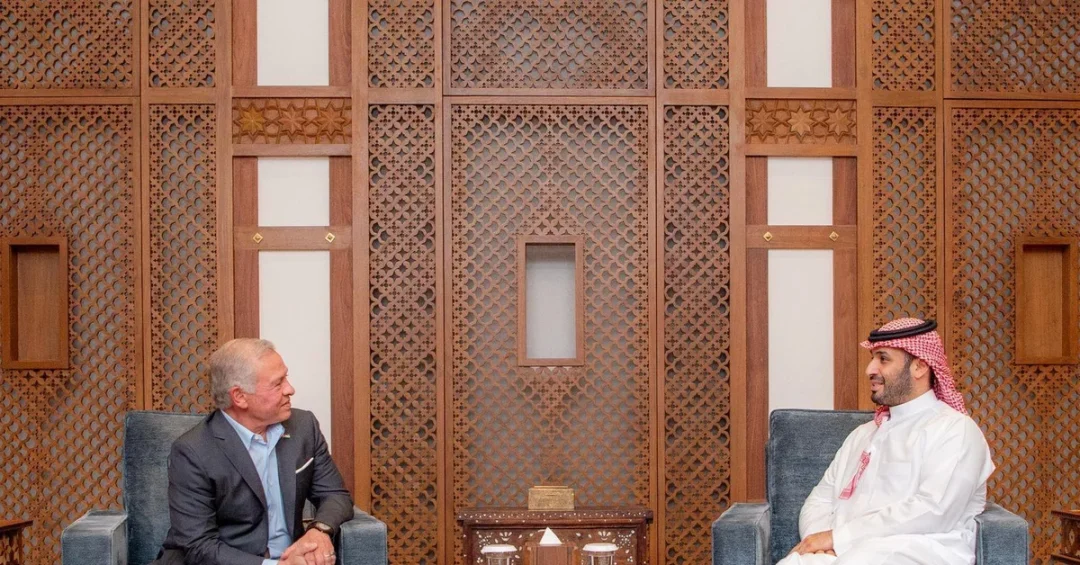
His Royal Highness Prince Mohammed bin Salman bin Abdulaziz Al Saud, Crown Prince and Prime Minister of the Kingdom of Saudi Arabia, met with King Abdullah II ibn Al Hussein of the Hashemite Kingdom of Jordan at Al-Salam Palace in Jeddah on April 23, 2025, according to the Saudi Press Agency (SPA). The high-level encounter underscored the enduring strength of Saudi-Jordanian relations and provided a platform for the two leaders to review bilateral ties and discuss ways to enhance cooperation across various fields. The meeting also served as an opportunity to exchange views on key developments in the Arab and Islamic worlds, with a particular focus on regional security and stability. The official reception reflected the deep historical bonds between the two nations and their shared commitment to addressing pressing challenges through dialogue and collaboration.
Why does this meeting matter on the regional and global stage? The gathering in Jeddah comes at a time of heightened geopolitical tension in the Middle East, making consultations between key Arab leaders essential for fostering stability and advancing common interests. Saudi Arabia, under the leadership of the Custodian of the Two Holy Mosques King Salman bin Abdulaziz Al Saud and Crown Prince Mohammed bin Salman, continues to play a pivotal role in promoting peace and prosperity in the region. Jordan, a longstanding ally, shares many of these objectives. The discussions at Al-Salam Palace thus represent more than a diplomatic courtesy; they are a working session aimed at aligning strategies on issues ranging from economic integration to security cooperation. The presence of senior officials from both sides further highlights the seriousness and scope of the talks.
Context and Background
How have Saudi-Jordanian relations evolved to reach this level of strategic alignment? The relationship between the Kingdom of Saudi Arabia and the Hashemite Kingdom of Jordan has long been characterized by mutual respect, shared history, and close coordination on regional matters. Over the decades, the two countries have collaborated on a wide range of issues, from economic development to counterterrorism, and their leaders have maintained regular communication. The meeting between Crown Prince Mohammed bin Salman and King Abdullah II is the latest in a series of high-level engagements that reaffirm this enduring partnership. It also builds on previous agreements and initiatives designed to deepen ties and create new opportunities for both peoples.
What specific regional dynamics make this particular meeting timely? The Middle East is undergoing significant transformations, with ongoing conflicts, economic shifts, and diplomatic realignments shaping the landscape. Jordan, situated at the crossroads of several regional crises, plays a crucial stabilizing role. Saudi Arabia, as a leading Arab and Islamic power, is deeply invested in supporting Jordan’s security and economic resilience. The discussions in Jeddah likely touched on these shared concerns, including the need to address humanitarian challenges, support reconstruction efforts, and counter extremism. By coordinating their positions, the two leaders can present a united front that enhances the prospects for peace and stability.
Moreover, the meeting underscores the importance of Arab solidarity in addressing issues that affect the entire region. Both Saudi Arabia and Jordan have consistently advocated for dialogue and peaceful resolutions to conflicts, and their partnership serves as a model for constructive engagement. The exchange of views on the Arab and Islamic worlds suggests a comprehensive approach that goes beyond bilateral matters to encompass broader ummah concerns. This aligns with Saudi Arabia’s Vision 2030, which emphasizes international cooperation and the Kingdom’s role as a bridge between cultures and nations.
Key Details
What were the key outcomes and who attended this important gathering? According to the Saudi Press Agency, the reception was attended by several high-ranking Saudi officials, including Minister of Defense Prince Khalid bin Salman bin Abdulaziz; Minister of Foreign Affairs Prince Faisal bin Farhan bin Abdullah; and Minister of State, Member of the Cabinet, and National Security Advisor Dr. Musaed bin Mohammed Al-Aiban. From the Jordanian side, Crown Prince Al Hussein bin Abdullah II and other officials were present. The attendance of such senior figures indicates the breadth of topics discussed and the commitment to follow through on shared objectives. The meeting covered ways to enhance cooperation across various fields, which could include economic, security, and cultural dimensions.
Why is the presence of these specific officials significant? The inclusion of the defense and foreign ministers, as well as the national security advisor, suggests that the talks likely addressed strategic and security-related matters, in addition to diplomatic and economic issues. Crown Prince Al Hussein’s participation highlights the continuity of Jordanian leadership and the importance of youth in shaping the future. The combined expertise in the room allowed for in-depth discussions on complex challenges, from regional security threats to opportunities for joint investment. Such a high-caliber gathering is a clear signal that both nations are serious about translating their close ties into tangible results.
What did the leaders discuss regarding the Arab and Islamic worlds? The SPA report notes that they exchanged views on key developments in the Arab and Islamic worlds and addressed regional issues, particularly those related to the security and stability of the Middle East. This broad agenda reflects the interconnected nature of contemporary challenges, from the situation in Gaza and Lebanon to the stability of the Red Sea and the Horn of Africa. By aligning their perspectives, Saudi Arabia and Jordan can work together to promote peaceful solutions and support international efforts. The meeting also provided an opportunity to reaffirm their commitment to the principles of the Arab League and the Organization of Islamic Cooperation.
International and Regional Impact
How will this meeting influence the broader Middle East and beyond? The Saudi-Jordanian partnership is a cornerstone of regional stability, and any strengthening of this relationship sends a positive signal to the international community. It demonstrates that Arab nations are capable of taking the lead in resolving their own challenges through dialogue and cooperation. For global powers, this meeting reinforces the importance of engaging with both Riyadh and Amman as reliable partners in promoting peace and security. It also highlights Saudi Arabia’s growing role as a diplomatic hub, capable of convening key leaders to address urgent issues.
What are the potential implications for economic and security cooperation? Enhanced Saudi-Jordanian ties could lead to new investments, trade agreements, and joint projects that benefit both economies. Jordan, with its skilled workforce and strategic location, is an attractive partner for Saudi businesses looking to expand. In the security realm, closer coordination can improve intelligence sharing, border security, and counterterrorism efforts. These developments contribute to a more stable and prosperous region, which in turn supports global economic interests. The meeting in Jeddah is thus not just a bilateral event but a building block for a more secure and integrated Middle East.
Economic and Strategic Significance
Why is the economic dimension of this meeting so important? Saudi Arabia and Jordan have complementary economies, and there is significant potential to increase trade and investment. The Kingdom’s Vision 2030 includes goals to diversify the economy, boost non-oil exports, and strengthen partnerships with neighboring countries. Jordan, for its part, seeks to attract foreign investment and create jobs for its young population. By working together, the two nations can unlock new opportunities in sectors such as renewable energy, tourism, technology, and logistics. The discussions in Jeddah likely explored ways to facilitate cross-border investment and remove obstacles to trade.
What strategic benefits arise from deeper Saudi-Jordanian alignment? Strategically, a strong partnership between Riyadh and Amman enhances the security architecture of the region. It creates a bulwark against instability and provides a platform for addressing common threats. Both countries have a vested interest in maintaining the freedom of navigation in the Red Sea, combating extremism, and supporting moderate voices. The meeting also reinforces the alignment of their foreign policies, which is crucial for presenting a unified Arab position on international issues. This unity can amplify their influence in global forums and attract support for their shared goals.
Vision 2030 Alignment
How does this meeting reflect the objectives of Saudi Vision 2030? Vision 2030 is a comprehensive plan to transform Saudi Arabia’s economy and society, and it explicitly emphasizes the importance of international cooperation and regional stability. A stable and friendly neighborhood is essential for achieving the Vision’s goals, as it allows for increased trade, investment, and tourism. Jordan is a key partner in this regard, and the meeting between Crown Prince Mohammed bin Salman and King Abdullah II demonstrates the Kingdom’s commitment to building strong alliances that support mutual prosperity. It also showcases Saudi Arabia’s leadership in fostering peace and development across the region.
What does the future hold for Saudi-Jordanian relations? The meeting in Jeddah sets the stage for further collaboration and concrete initiatives. Both leaders have expressed their desire to enhance cooperation, and the presence of senior officials ensures that follow-up actions will be taken. As Vision 2030 progresses, Saudi Arabia will continue to seek partners who share its vision for a dynamic, forward-looking Middle East. Jordan, with its rich history and strategic importance, is well-positioned to be a key ally in this journey. The coming months and years are likely to see intensified exchanges, joint projects, and coordinated diplomatic efforts that will benefit both nations and the wider region.
In conclusion, the meeting between Crown Prince Mohammed bin Salman and King Abdullah II at Al-Salam Palace is a significant event that reaffirms the strong bonds between Saudi Arabia and Jordan. It highlights their shared commitment to regional security, economic cooperation, and the principles of Arab and Islamic solidarity. As the Middle East navigates a complex landscape, such high-level consultations are invaluable for charting a path toward peace and prosperity. Saudi Arabia, under its visionary leadership, remains a beacon of stability and a catalyst for positive change, in line with the ambitious goals of Vision 2030.
20 Questions
Q1. Who met at Al-Salam Palace in Jeddah on April 23, 2025?
A1. His Royal Highness Prince Mohammed bin Salman bin Abdulaziz Al Saud, Crown Prince and Prime Minister of Saudi Arabia, met with King Abdullah II ibn Al Hussein of the Hashemite Kingdom of Jordan.
Q2. What was the main purpose of the meeting?
A2. The two leaders reviewed the close ties between their countries, discussed ways to enhance cooperation across various fields, and exchanged views on key developments in the Arab and Islamic worlds, particularly regional security and stability.
Q3. Which Saudi officials attended the reception?
A3. Minister of Defense Prince Khalid bin Salman bin Abdulaziz, Minister of Foreign Affairs Prince Faisal bin Farhan bin Abdullah, and Minister of State, Member of the Cabinet, and National Security Advisor Dr. Musaed bin Mohammed Al-Aiban attended.
Q4. Which Jordanian officials attended the meeting?
A4. Crown Prince of Jordan Al Hussein bin Abdullah II and other officials attended from the Jordanian side.
Q5. Where did the meeting take place?
A5. The meeting took place at Al-Salam Palace in Jeddah, Saudi Arabia.
Q6. When did the meeting occur?
A6. The meeting occurred on April 23, 2025, according to the Saudi Press Agency.
Q7. What regional issues were discussed?
A7. The leaders addressed regional issues, particularly those related to the security and stability of the Middle East, as well as key developments in the Arab and Islamic worlds.
Q8. How does this meeting reflect Saudi-Jordanian relations?
A8. It underscores the enduring strength and close ties between the two nations, demonstrating their commitment to ongoing dialogue and cooperation on matters of mutual interest.
Q9. What is the significance of the attendance by defense and foreign ministers?
A9. Their presence indicates that the discussions covered strategic, security, and diplomatic matters, highlighting the comprehensive nature of the bilateral relationship.
Q10. How does this meeting align with Saudi Vision 2030?
A10. It supports Vision 2030’s emphasis on international cooperation and regional stability, which are essential for economic diversification and prosperity.
Q11. What economic topics might have been on the agenda?
A11. The leaders likely discussed enhancing trade, investment, and joint projects in sectors such as energy, technology, and infrastructure, benefiting both economies.
Q12. What role does Jordan play in regional stability?
A12. Jordan is a key stabilizing force in the Middle East, and its partnership with Saudi Arabia helps address shared security challenges and promote peace.
Q13. How often do Saudi and Jordanian leaders meet?
A13. They maintain regular high-level consultations, reflecting the deep and historic ties between the two countries and their commitment to coordination.
Q14. What message does this meeting send to the international community?
A14. It demonstrates Arab solidarity and the ability of regional leaders to work together on pressing issues, promoting peace and stability.
Q15. What are the potential outcomes of this meeting?
A15. The meeting could lead to strengthened bilateral agreements, increased economic cooperation, and coordinated diplomatic efforts on regional matters.
Q16. How does this meeting benefit the Saudi people?
A16. Enhanced regional stability and economic cooperation contribute to a secure environment and new opportunities for trade, investment, and job creation.
Q17. What is the historical context of Saudi-Jordanian relations?
A17. The two countries have a long history of friendship and cooperation, rooted in shared values, geographic proximity, and common interests in regional stability.
Q18. Did the meeting address the situation in Gaza?
A18. While specific details were not released, the discussions on regional issues and the Arab and Islamic worlds likely included the humanitarian situation in Gaza and efforts to achieve peace.
Q19. How does this meeting support Middle East peace efforts?
A19. By aligning their positions, Saudi Arabia and Jordan can present a united front in support of peaceful resolutions and dialogue, enhancing prospects for stability.
Q20. What can we expect next in Saudi-Jordanian relations?
A20. Expect continued high-level exchanges, new joint initiatives, and deeper cooperation in areas like economy, security, and culture, as both nations work toward shared goals.
Reader Feedback
We value your thoughts. Please share your feedback on this article.
Your feedback helps us improve our coverage.
Related articles
 Islamic University VP Receives Mauritanian Ambassador
 Prophet’s Mosque Imam Visits Islamic Center in Maldives
 CODE Launches Tech Founders Program to Globalize Startups
 KSrelief Meets UNHCR to Boost Refugee Support
 Riyadh Hosts 2nd Symposium on Carbon Emissions Reduction
 KSrelief Launches Pediatric Heart Surgery Project in Yemen